Written by: Robynne Tindall - Posted on: July 17, 2014 |  Comments | 中国 (Chinese)
Google Translation: اُردو | 中文
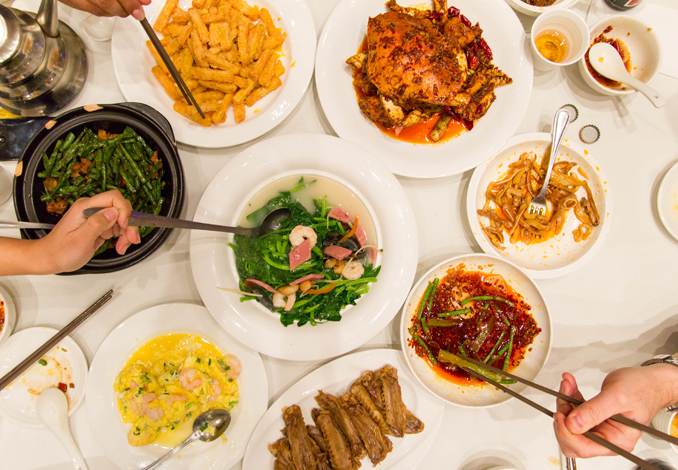
The forms and styles of China’s regional cuisines are as diverse as its geography, climate and peoples. Differences between southern Chinese and northern Chinese cuisine were being developed and recorded as early as the Spring and Autumn period (771 BC-476 BC). Over thousands of years of war and peace, local cuisines were consolidated and expanded by internal and external influences, and by the end of the Qing Dynasty (1644-1911) the cuisines of eight provinces had been popularized – Anhui, Guangdong, Fujian, Hunan, Jiangsu, Shandong, Sichuan and Zhejiang. Today, these are considered China’s eight “official” culinary traditions and they remain some of the most popular in China.
Attempts to categorize any cuisine naturally fail to sum up the true extent of its complexity; China has a great number of ethnic minorities (56 to be exact) who each have their own culinary traditions. This brief introduction marks the first in a series on China’s eight great cuisines.
Anhui’s mountainous, land-locked terrain has produced a cuisine that relies heavily on local ingredients such as game, mushrooms, and wild vegetables. As such, Anhui style food is less well known around China than its seven other brethren. Cooking techniques endeavor to capture the freshness and nutritional value of the ingredients themselves.
Originating from Guangdong province on China’s southern coast, many consider Cantonese cuisine to be the height of Chinese culinary sophistication and Cantonese chefs are thus highly sought after all over China. Cantonese cuisine emphasizes the use of delicate, high-quality ingredients so condiments are used sparingly and cooking methods are light.
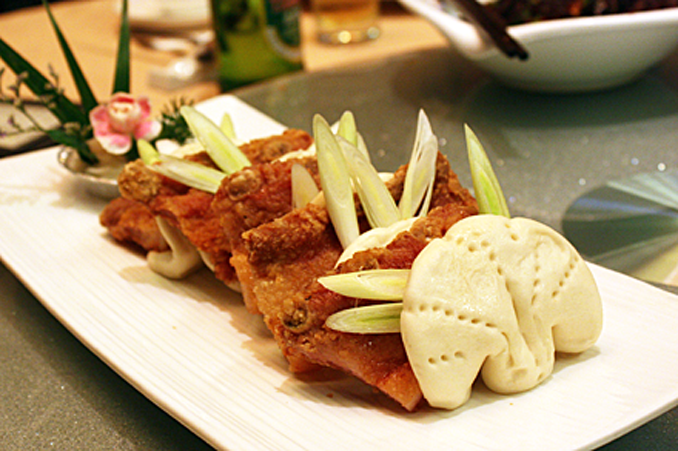 |
Xiamen Oysters - Fujian (worldofchinese.com) |
The food of Fujian is influenced by its coastal location, with seafood featuring heavily in many dishes. The cuisine is known for its extensive use of soups and the emphasis placed on fine knife skills, which are used to capture and enhance the flavor of different types of seafood. The Min people from Fujian were the primary settlers in Taiwan and as such the food there has many similarities with Fujian cuisine.
With its dry, spicy heat, smoky flavors and frequent use of pickles, Hunan cuisine is one of the boldest of the eight great cuisines and is increasingly popular with diners around China. Often compared with the food of Sichuan, Hunan cuisine is actually much spicier thanks to its liberal use of fresh and pickled chillies.
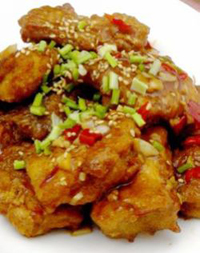 |
Sweet and Sour Fish - Shandong (about.com) |
On a par with Cantonese cuisine, Jiangsu cuisine enjoys a high reputation among the culinary elite for its refined, light cooking, which prizes high quality ingredients and complex, long-cooked stocks. The cuisine originates from the southern cities of Nanjing, Suzhou and Wuxi. Nanjing was a former capital of Imperial China, so the cuisine has strong imperial influences.
Shandong cuisine is considered the foundation for many of the cuisines of northern China, including Beijing. Hearty, salty sauces are common, even for seafood, perfectly suited to the region’s cold, dry winters. Thanks to Shandong’s location in the northern, wheat-eating region of China, steamed and baked breads also play a major part.
Sichuan cuisine is characterized by pungent, spicy flavors designed to counter the humidity and heat that plague Sichuan province. Key ingredients include chilli, garlic and doubanjiang (a paste made from broad beans and chillies), which combine to add complex layers of flavors to dishes such as dandan noodles and mapo tofu. The numbing sensation produced by its star ingredient, Sichuan pepper, is highly prized.
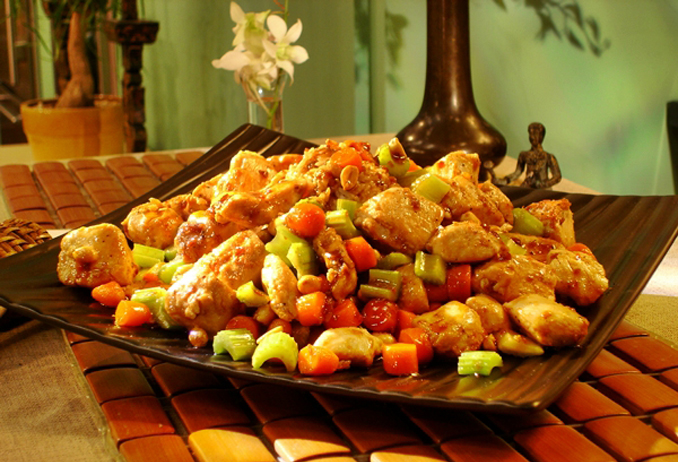 |
Kung Pao Chicken - Sichuan (impressivemagazine.com) |
Zhejiang cooking derives from Zhejiang province, located to the south of Shanghai. Dishes combine the delicate cooking methods of the south with the stronger, savory flavors of the north, so this is a popular cuisine with people seeking a balance between the two. Proponents of Zhejiang cuisine will also point out its lack of grease compared to the other regions.
 |
Robynne lives in Beijing, having moved there from the UK in 2011. During the day she is the food and dining editor for a local expat magazine and at night she can be found all over town searching out the most interesting restaurants.
twitter.com/gongbaobeijing
instagram.com/gongbaobeijing