Written by: Sirat Gohar Daudpoto
Posted on: March 06, 2026 |  | 中文
| 中文
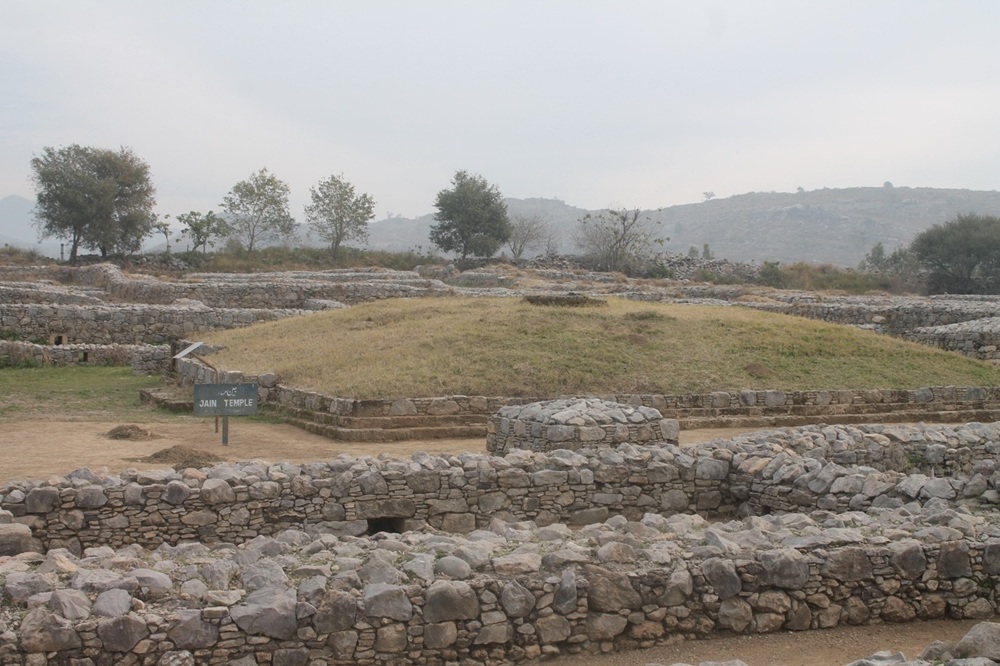
Jain Temple at Sirkap in Taxila.
The Indus country remained under the sway of the Achaemenid for about two hundred years, from the late sixth to the late fourth century BC. This period witnessed the diffusion and amalgamation of Indo-Persian cultures, and with respect to the socio-political and cultural environment, many things and events took place. But the Indus was largely at the receiving end, although overall exchange and dissemination of both cultures was two-way. It was possibly due to the constant presence and movement of Persians into the country.
As noted in the previous part, the Indus region was organized and governed in line with the Achaemenid imperial structure. They divided it into different provinces and appointed local satraps to govern them. But at the same time, they were also present there. As it is suggested that there existed Persian colonies in or near the big cities, such as Taxila, Pushkalavati, etc. These settlers brought with them Persian ways to this country and blended it with their arts, architecture, beliefs, and vice versa. Moreover, they also extended and established trade links to this region and started using metal (or coin) currency as per Achaemenid monetary standards. With governance, commerce, and finance, they also introduced a writing system based on the Aramaic language.
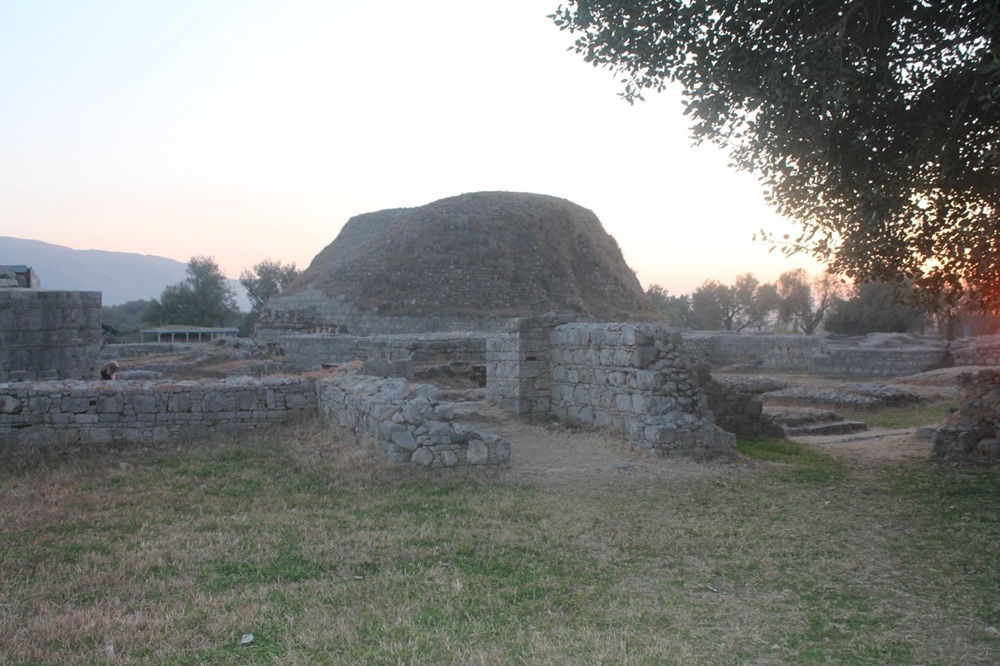
Buddhist stupa of Dharmarajika in Taxila.
Furthermore, another worth-mentioning development of this era was the birth and spread of three great religions: Zoroastrianism, Buddhism, and Jainism. In the sixth century BC, Zoroastrianism appeared in Achaemenid Persia. On the other hand, Jainism and Buddhism emerged in India as a dissent against the tenets of Brahmanism in the sixth and fifth centuries BC, respectively. These religions left a long-lasting impact on the people of the Indus region, as they are still followed in the region.
In the late fourth century BC, the Persian satrapies in the Indus got separated from the empire when the latter was shattered in bloody face-offs with the Greeks. In 331 BC, the Greeks gave the final blow to this already collapsing empire in the Battle of Arbela (also called the Battle of Gaugamela). In the battle, the Macedonian army under the command of Alexander the Great conquered the Persian forces led by Darius III and overthrew the Achaemenid empire. It appears that the Indus satrapies were dissolved after this battle, and the whole country was reorganized on the former local system of control into chieftainships.
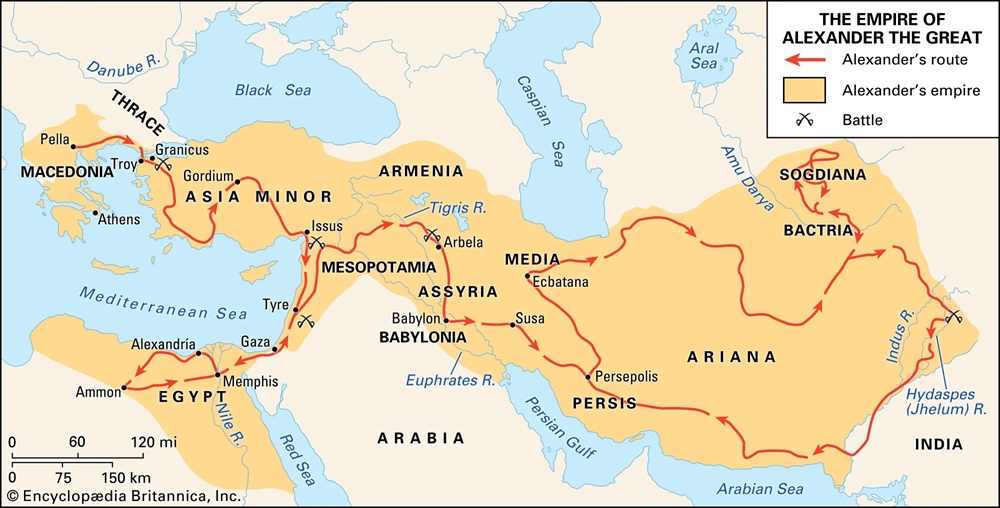
Map of The Empire of Alexander the Great. Encyclopædia Britannica.
We know that at the time of Alexander’s invasion, around 327-325 BC, this region was governed by native chiefs. Alexander’s historians make obvious references to these chieftains. In the north, Cleophis, the queen of the Assaceni (or Assakenoi) tribe, governed the Swat region, Omphis (Raja Ambhi) was the sovereign of Taxila and its surroundings, and Porus, the king of the Purus tribe, held sway over the territory between the Jhelum and Chenab rivers. Similarly, other parts of the Indus lands were also governed on the same patterns by local chieftains. On the other hand, archaeological and numismatic evidence, although very scarce, also adds to this information. Overall, it can be said that the country was divided into several local kingdoms between the fall of the Achaemenid Empire at Arbela and the invasions of Alexander into the Indus.
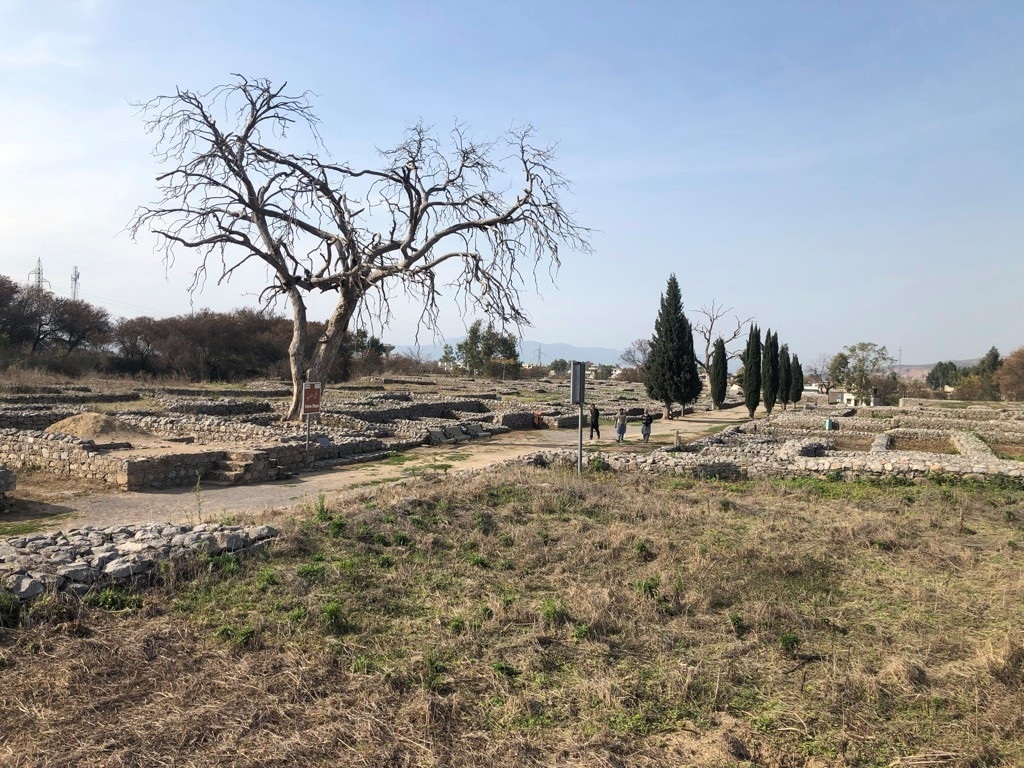
Ruins of the ancient city of Takshasila or Taxila at Sirkap near Taxila Museum.
Four years after the Battle of Arbela, Alexander led the Macedonian army towards the Indus in 327 BC. He marched into the country from the north via Kunar in Afghanistan. The first place Alexander and his army set on fire was the land of the Assaceni (Swat region). They exterminated settlements and massacred thousands of people, despite a truce called between the Assaceni and the invading Greeks. After terribly subjugating Assaceni, Alexander turned his eyes upon Pushkalavati and Taxila. The city of Pushkalavati was invaded and captured by them. Their next target was Taxila. Seeing the death at the door, King of Taxila Omphis wasted no time and presented himself before Alexander and surrendered his kingdom. Taxila welcomed invading forces with gifts and also provided them with basic supplies.
Alexander the Great camped for some time at Taxila, which allowed his weary army to recompose and regain strength. From Taxila, he marched towards the east, and the first chieftain Alexander and his army encountered was Raja Porus, who ruled over the country situated within the Jhelum and Chenab rivers. A very long, bloody battle was fought between the two armies on the banks of the Jhelum River in 326 BC. Porus proved to be an extremely powerful opponent in the battle. The Greek army received heavy losses, and even Alexander’s horse died. But, in the end, Alexander emerged victorious, and Porus became his ally after the battle.
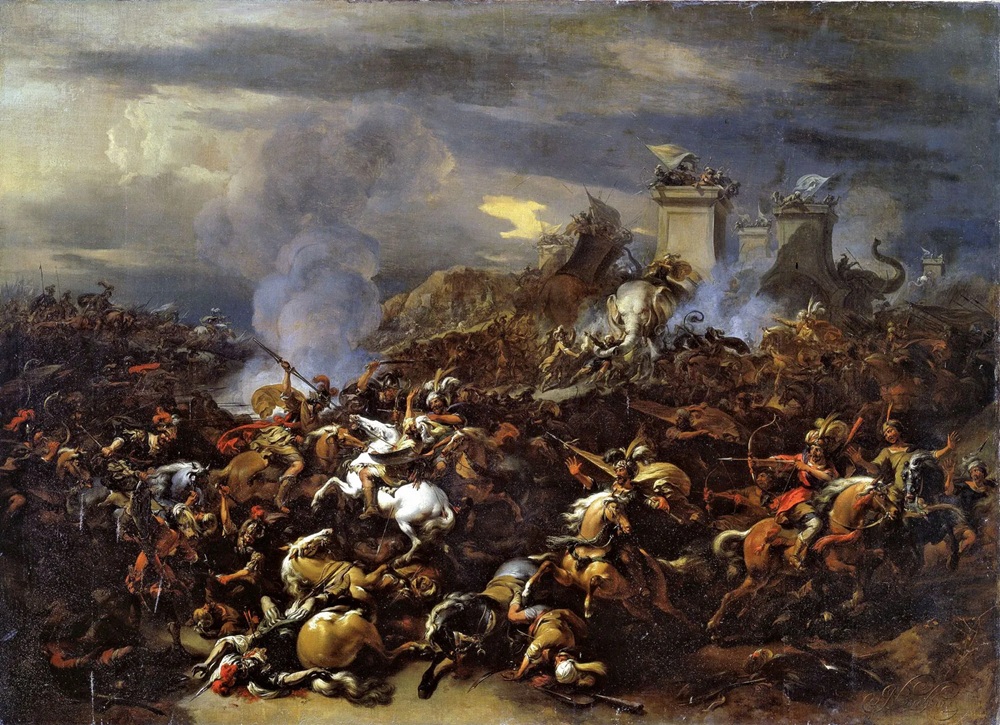
A 17th century painting The Battle between Alexander and by Nicolaes Pietersz Berchem. Encyclopædia Britannica.
He then marched downstream the Indus and fought with the chieftainships that came along the way. The Greeks penetrated as far as the Beas River in the east, but they did not cross into the territory of the Nanda Empire. Intense battles left the Greek army weakened, and in one of those fighting Alexander received deep wounds, which made him sick. Given their state, they realized how difficult it would be for them to invade further into the east. So, the Greek army defied their commander and compelled him to retreat, and Alexander agreed to return. In 325 BC, the Greek army retreated from the Indus lands via Sindh and Baluchistan.
Alexander built several cities and military outposts to celebrate his victories in the Indus. For example, after emerging victorious in battle with Porus, he established two cities there, namely Alexandria Nicaea and Alexanderia Bucephala. The latter was named after his horse Bucephalus, which died in the battle.
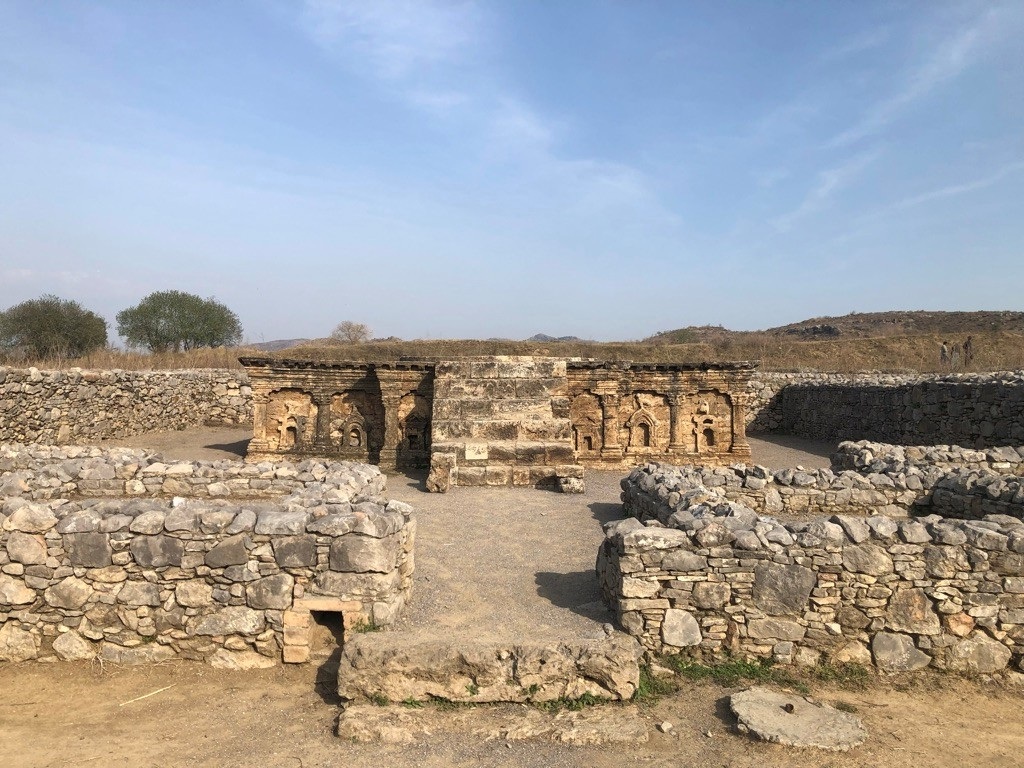
Buddhist stupa at Sirkap ruins shows Greek, Persian and local traditions of art and architecture.
Alexander’s invasions left Greek impressions on the country, like their predecessors Achaemenid, who brought with them Persian elements into the Indus. He made it part of his empire and appointed both Greek and local satraps to govern these newly annexed territories. Generally speaking, the Indus country became more and more multicultural as a result of these foreign invasions.
You may also like: