Written by: Aiza Azam - Posted on: February, 2012 |  Comments | 中国 (Chinese)
Google Translation: اُردو | 中文
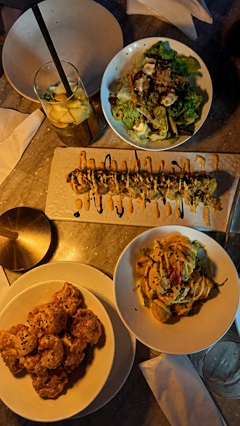
“Pakistani food is delicious; I especially like biryani and pulao,” enthuses Ayijiang as her husband nods in laughing agreement. She tells me how for the first two months after their arrival in Pakistan, they would only eat aloo chicken (chicken curry with potatoes). “It was only after a while that we began to cook Chinese food here.” They prefer to make traditional food at home, feeling that much of the Chinese food served in Pakistani restaurants caters to Pakistani taste buds only, and so is different from traditional Chinese tastes. “The food should either be authentic Chinese or authentic Pakistani…not both!” exclaims Yeersen.
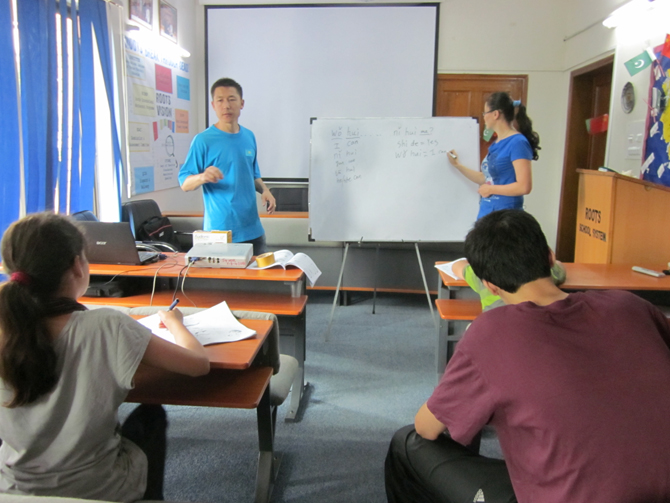
Ayijiang Bahat Han and Yeersen Patehe Bieke are Chinese expats from Urumqi, a city in China’s western province of Xinjiang, and a well-known business destination for Pakistani traders. The couple came to Pakistan in February 2011 to teach Chinese to Pakistani students at the Roots School System. On arriving in Islamabad, they set about getting the school’s Chinese department organized, and within a short time had it up and running. We talked about their work, their plans and expectations, and about their experience of life and work abroad.
I began by asking them how they find teaching Chinese to Pakistani students. It is a topic both are keen to talk about. They tell me about how they designed the course and laid down a teaching plan from scratch, moulding it to cater for various age groups and different skill levels, with the Pakistani student in mind. Classroom dynamics, they explain, are very different here from what they are used to in China. In their country, discipline is strictly enforced and the relationship between student and teacher is much more formal; a Chinese student will never interrupt a teacher until he or she is done with the lesson. It is only at the end that the student may venture a question, or ask to have a concept explained.
In Pakistan, though, things inside the classroom are different. “The students here are very confident,” says Ayijiang. “They are not afraid of anything.” She relates how, being used to the less casual student-teacher relationship in China, she was quite surprised when students in her classroom approached her and unhesitatingly asked personal questions: whether she was a Muslim, and even about her marital status! She is quick to explain that the questions were not offensive, but a change from the classroom culture that she was used to.
Both Ayijiang and Yeersen are proud of their students, which range from six-year olds to young adults. Their younger students are, quite naturally, much more adept at picking up the nuances of the Chinese language. They tell me how they speak Chinese with a flawless accent, and how it’s almost impossible to detect a Pakistani lilt when they converse.
Their teaching methods focus on all aspects of learning, and in addition to grammar, includes activities to enhance oral and written comprehension and expression. Particular attention is paid to imparting the correct pronunciation, a part of learning which students often find difficult to master. Learning to write the Chinese script is also difficult. Each word, or character, is essentially composed of a series of strokes or lines, which are arranged in a certain fashion. Part of the character explains the meaning of the word, and part of it gives the pronunciation. Any number of strokes can be added to a character, so it may be composed of as few as two strokes or as many as forty-two. Unlike English, for instance, where the twenty-six letters need only be arranged back and forth to form new words, a Chinese character can be thought of as a small drawing; and every drawing needs to be memorized by heart, since each one is unique. This is where the difficulty lies, as learning new characters necessitates consistent practice to ensure it is not forgotten. Moreover, every stroke in a character is added according to a fixed sequence, which must also be learned.
In the midst of questioning them, I comment on their command of English and wonder if they have been trained abroad. They tell me they haven’t, but their teachers back home were all native English speakers, which would account for their flawless delivery and an almost imperceptible accent. And this is not their first experience of teaching, for in China, they taught English to Chinese students. Interestingly, education was not their field of study at university. Ayijiang majored in English, while Yeersen majored in Applied Chemistry. They also trained in business, which was in fact where they met.
We talk more about how things were for them when they first moved here. Was it very difficult to adjust? They reveal that other than some initial culture shock it was not a difficult transition; both of them being Muslims (they belong to the Kazakh ethnic group), life in Pakistan was a rather smooth adjustment. And why was it that they chose to come here? What impelled them to leave their hometowns and go abroad? For Ayijiang, it was a long-held dream to go abroad to teach the Chinese language to foreigners, although, she admits, she did not know that she would do it so soon and specifically in Pakistan. When they were presented with the opportunity to come here and teach, both were excited about the prospect of going to a neighboring Muslim country.
But was it hard for them to adjust to life away from home, friends and family? They explain that both had lived away from home for years, since they were teenagers; they had left to study and then work in other Chinese cities, therefore the new change was not difficult for them or their families. In fact, they laughingly add, being in Pakistan, they are actually closer to their families; from here to Urumqi it is only a two hour flight, whereas while living in other cities of China, they were often thousands of miles away from their hometown. What they do miss about China though, apart from friends and family, is the excellent public transportation system, which is missing here.
And have they visited many places in and around Islamabad, or other cities? They relate their experience of having visited Murree, and especially praise the PC Bhurban, where they spent two days in luxurious comfort as they explored the beautiful countryside. Much of the rest of their spare time is taken up with participating in, and often organizing, cultural activities at the Chinese Embassy in Islamabad.
We discuss the concept of Pak-China friendship. I explain how in Pakistan, students from a very young age are taught about the strong bond between the two countries. I ask whether it is the same in China. They say that for a majority of the Chinese people, awareness of this all-weather friendship with their neighbor is not comparable to that which is found in Pakistan, with the exception of government employees or university students. They believe that the reason for this is that the focus of concern of the average Chinese citizen lies mostly in their studies and their work and not in politics. There is little reason to focus on this, or on international relations in general, unless it has a direct bearing on their education or professional careers.
We discuss their opinion on the best ways to foster greater people to people contact and to enhance cultural understanding between the peoples of the two countries. They believe that both the Chinese and the Pakistani people must visit each other’s countries with the purpose of inculcating better understanding; it is not enough to merely go for tourism; Pakistanis ought to live in China, to work and study there, so they are able to observe things first hand and form an informed opinion and a deeper understanding; the same goes for Chinese citizens visiting Pakistan. Yeersen explains that one of their biggest motivations for teaching Chinese here is to encourage Pakistani students to go to China for further studies, and enroll in Chinese universities.
Ayijiang says she feels the governments of both countries ought to promote greater cultural understanding. She argues that teachers of different subjects are required. There needs to be a formal and well organized structure which ensures that a number of teachers are sent to Pakistan on a regular basis to teach Chinese on a broader level.
Before we wind up, I ask them about their future plans, and they express their interest in pursuing higher studies. For the moment, however, they would like to continue teaching here, and contribute to laying a solid foundation for the teaching of the Chinese language in Pakistan at the school level.