Written by: Sirat Gohar Daudpoto
Posted on: November 04, 2025 |  | 中文
| 中文
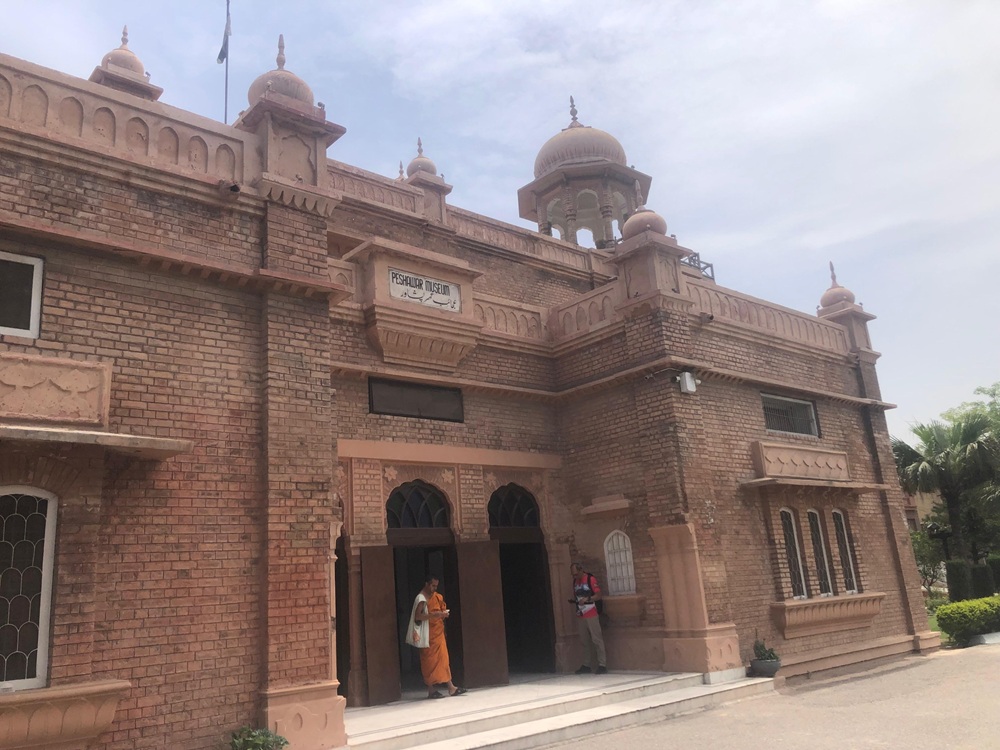
Peshawar Museum. (Picture credits to the author)
A few months ago, I went on a day-trip to Peshawar for my PhD project related work at Khyber Pakhtunkhwa’s archives department. It was a long summer day. I completed my work at the archives a little early. That saved me some time to visit Peshawar Museum, which is located next to the compound of the archives department, and meet the in-charge of the museum Dr. Saqib Raza, who is a friend of mine. Dr. Saqib kindly gave me a museum tour and told me about its development and activities. I want to acknowledge here the important work being done at Peshawar Museum under his supervision.

Dr. Saqib Raza giving a tour of Gandhara Gallery to the Deputy Ambassador of the Embassy of Spain and their family.
Starting with its history and collection. Pakistan’s Peshawar Museum is one of the oldest museums in South Asia. It was established in 1907 as a local/provincial museum of the newly created North-West Frontier Province of the British India, to exhibit and house the antiquities that were found in the province’s limits. However, before that, artifacts from this region were sent to the British colonial museums in Lahore, Calcutta and London, except for those which went in the hands of private collectors and dealers and ended up in the antiquity markets and the collections in different parts of the world. Overall, in the past over hundred years, Peshawar Museum has acquired a huge collection of artifacts. Its pre-1947 collections came from the excavations of the British Archaeological Survey of India. In addition, a considerable number of antiquities were also donated to the museum by the British colonial officers, who made those accumulations at different places during their government-service in the province. Whereas after 1947, the museum acquisitions were made through Pakistani government bodies, particularly federal and provincial archaeology departments, and also with the help of other organizations.
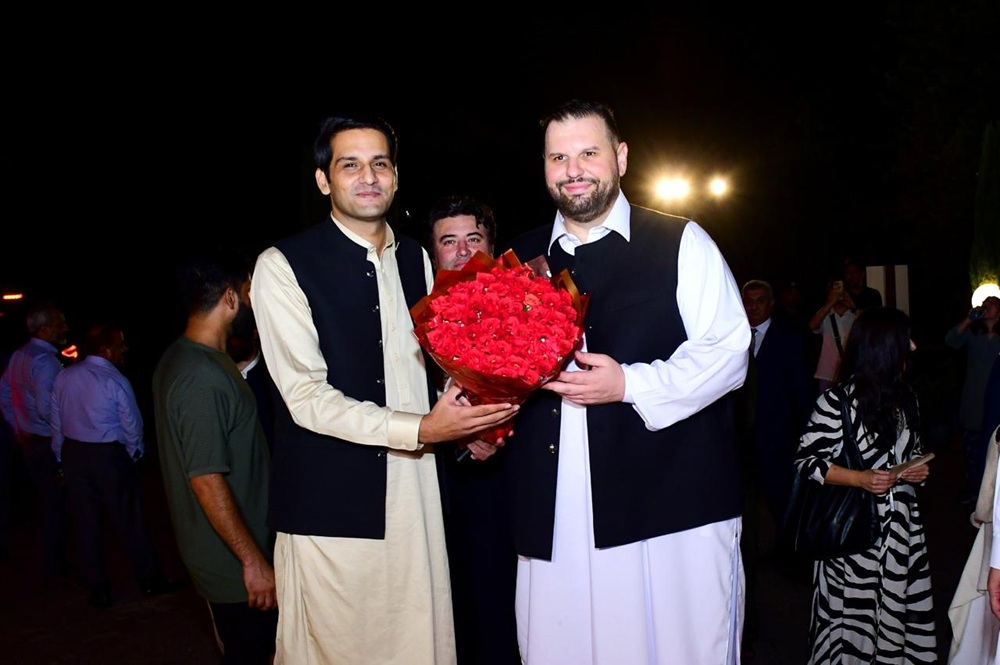
Dr. Saqib Raza receiving Mr. Dan Stoenescu, the Romanian Ambassador, in an event at Peshawar Museum.
The collections that have been amassed at Peshawar Museum mostly include Gandharan artifacts—specifically Buddhist art pieces of Gandhara. Carved out of the schist stone, colossal statues of the Gautama Buddha (Siddhartha), the Bodhisattvas and the other figures and the reliefs depicting the previous births and life stories of Siddhartha occupy prominent space inside the museum. And thousands of similar and other relics are preserved in its store. It is the world’s largest museum in terms of Gandharan collection, with over thirty-thousand artifacts on its display and in store.

Colossal statues of the Gautama Buddha (in the foreground) and the Fasting Buddha and the Buddhist reliefs (in the background) on display at Peshawar Museum.
“Peshawar Museum is an invaluable cultural asset of the country. Its safeguarding and development must be ensured, and we are taking necessary steps and proper measures in that direction”, Dr. Saqib said. Recently, he stated, the museum collection was digitally documented under the Digital Gandhara initiative of the Harvard FAS CAMLab (for further information about it see https://camlab.fas.harvard.edu/project/digital-gandhara/ . He further said that a new facility has been built beside the museum building as a store to house its reserve collections. This new store is spacious and is provided with the latest equipment, storage infrastructure and with trained personnel for its smooth working. Its building, Dr. Saqib pointed out, is designed in a way that it stands in harmony and looks beautiful with the museum’s historical building. Also, the museum hosts delegations of local and foreign tourists and organize guided tours of the museum for the visitors. On special occasions, programs, talks, gallery tours and children’s educational programs are also arranged. “We try to best utilize the resources of the museum for educational and research purposes. We facilitate all visitors so that they can experience the glorious past of our country through the rich collections of this museum”, Dr. Saqib added.
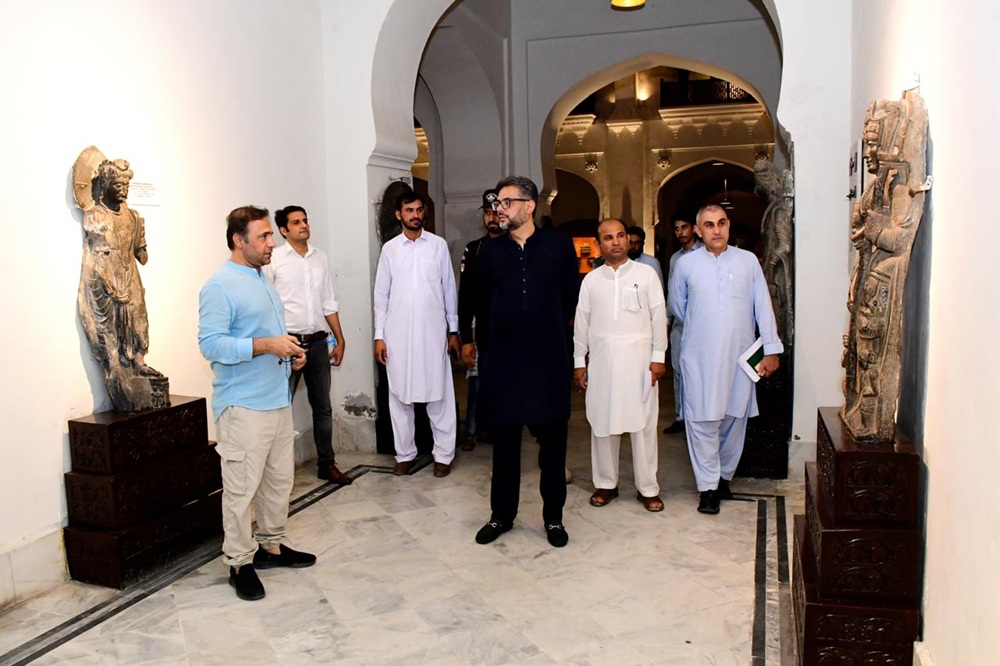
Dr. Samad Khan and Dr. Saqib Raza accompanying Mr. Muzammil Aslam, the Finance Minister of Khyber Pakhtunkhwa, in the Gandhara gallery.
Culturally speaking, Peshawar Museum is a must-visit place for a person full of curiosities in past and with deep interest in antiquities of the Khyber Pakhtunkhwa province. If you are the one interested in the past and you have not seen it, get your rucksack and set out. It would be surprising, especially, if you are an archaeologist based in Pakistan and you have not explored the museum yet. You are missing, my fellow-archaeologist, something extremely significant. As it is, indeed, a beautiful archaeological tourism destination in the Khyber Pakhtunkhwa province of Pakistan.
You may also like: