Written by: Saram Maqbool
Posted on: November 12, 2025 |  | 中文
| 中文
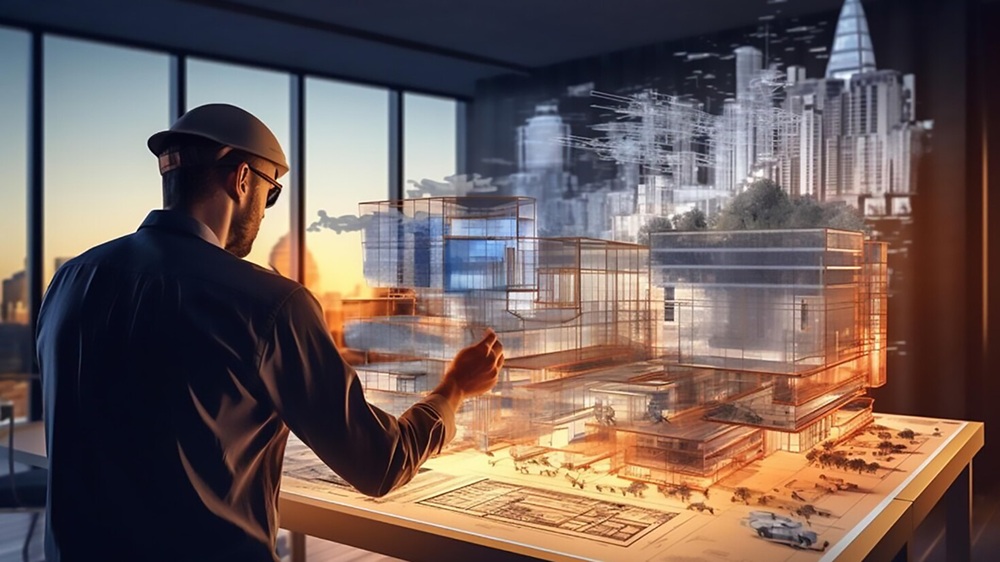
Architect using VR glasses to work on a project with advanced 3D technologies.
The architect’s sketch has long symbolized the presence of human thought in design, from the curve of a line drawn while lost in thought to the intentional use of proportion. But what happens when that gesture is replaced, or at the very least assisted, by an algorithm? What happens when artificial intelligence is used not only to optimize a plan but to propose one? In the rapidly evolving field of computational design, where machine learning can generate entire building forms from data, the question is no longer whether AI can design, but whether we are ready to redefine what it means to create.
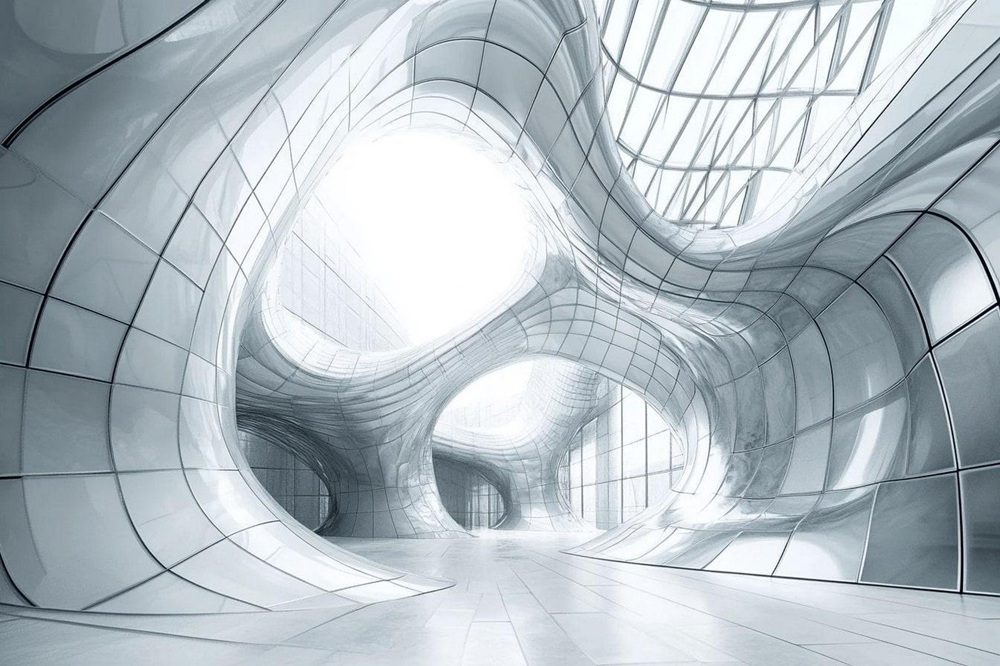
An architectural space imagined by AI
Architecture has always been shaped by its tools. The transition from hand-drawn plans to digital drafting, from CAD to parametric modeling, each represented a shift in how architects thought about form and function. But AI is different. It doesn’t just draw faster, but instead, it thinks differently. Through deep learning, generative design software, and neural networks, it can now analyze millions of variables simultaneously, producing designs that no human could manually conceive, at least not in the amount of time it takes for a computer. The architect no longer controls every line, but instead sets the conditions within which form emerges. The role begins to resemble that of a curator, editor, or conductor - someone who directs rather than dictates.
Zaha Hadid Architects, for instance, has been at the forefront of exploring algorithmic design tools. Many of their projects, from the Morpheus Hotel in Macau to the Beijing Daxing International Airport, owe their complex geometries to parametric systems that analyze structural performance, flow and aesthetics in ways far beyond human capability. These designs are not “drawn” in the traditional sense, but are computed. Yet behind the algorithms lie human intent, intuition and interpretation. The machine may generate endless possibilities, but it is the architect who decides what feels right. The creative act becomes one of selection and calibration, rather than invention in the old romantic sense.
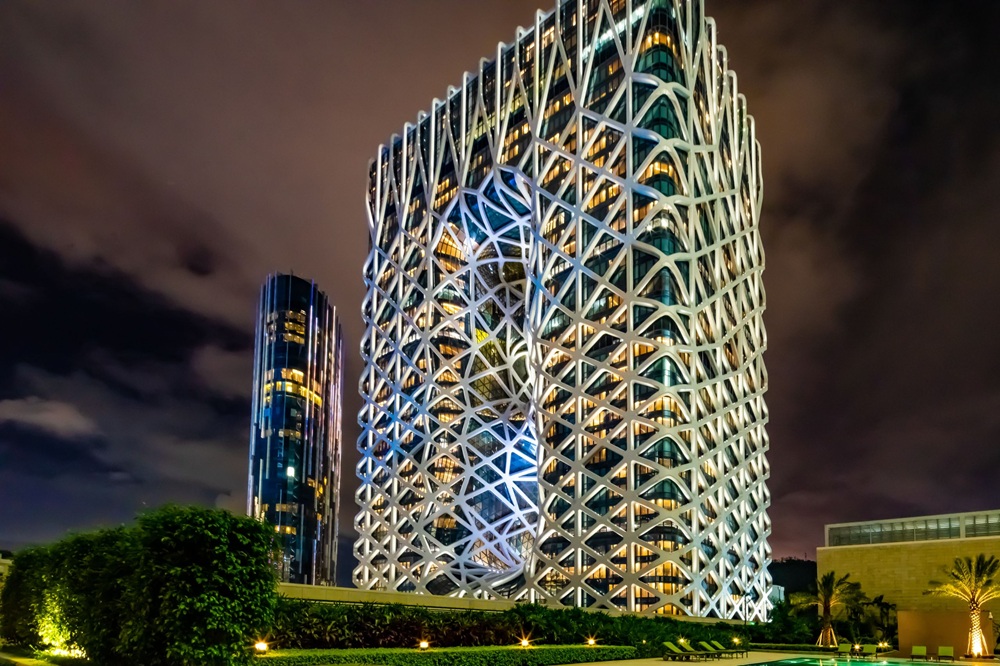
Morpheus Hotel by Zaha Hadid Architects
Parametric design such as this has already been a topic of debate among architects for decades. However, despite all the incredible work algorithms do to create such outputs, it does involve a significant amount of human input. With AI, the conversation has gone beyond the use of computational software to aid with design. The question now is regarding authorship. If a building’s design is the result of a generative algorithm trained on thousands of precedents, whose ideas does it contain? The programmer’s? The architect’s? The machine’s? When a generative design platform creates hundreds of iterations of a floor plan optimized for daylight, energy efficiency, and circulation, each variant exists in a kind of aesthetic limbo. It is part human, part algorithmic. The ownership of creativity becomes diffused, shared between human guidance and computational suggestion.
But perhaps this diffusion is not a complete loss. In some ways, it mirrors how architecture has always been collaborative. Cathedrals were not built by single geniuses but by generations of craftspeople whose names were forgotten. The architect’s ego, an invention of modernity, might finally be giving way to a more collective form of authorship. The “AI architect” could be seen as the latest member of the design team - a tireless, data-driven collaborator that expands the field of possibility.
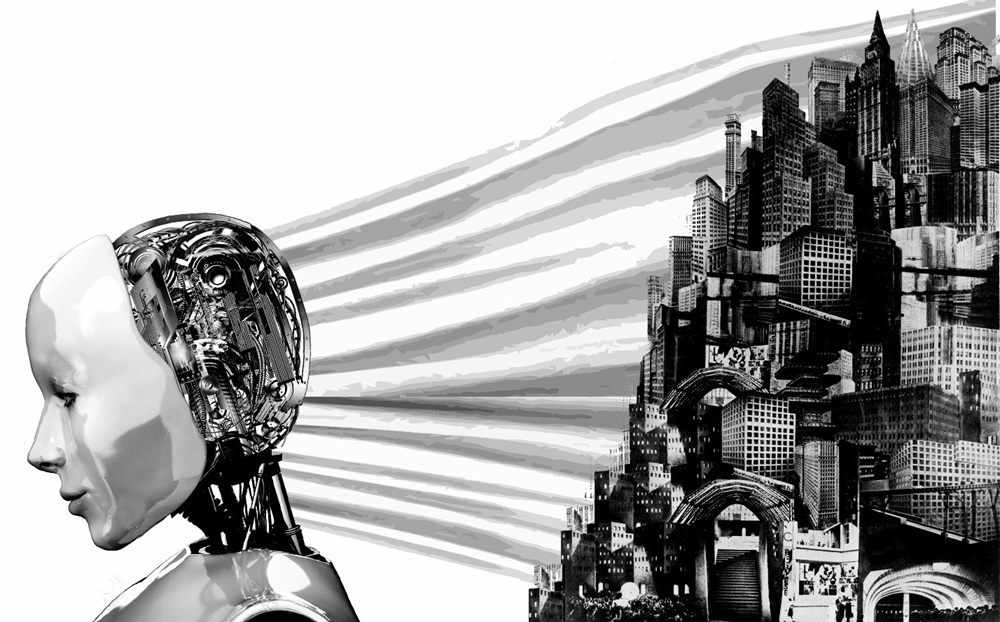
Architecture in the age of AI
Still, the question of ownership remains. Can an algorithm be an author? Legally, most intellectual property frameworks say no. Copyright belongs to the human or institution that directed the process. But philosophically, it’s not so simple. When a neural network trained on thousands of architectural drawings generates a new design that fuses Gothic rhythm with modern minimalism, it is channeling patterns without conscious intention. It has no memory, no emotion, and no awareness of meaning. And yet, the result can evoke emotion in us. The creativity, then, may not lie in the algorithm’s output, but in the human capacity to see meaning in it. Japanese architect Kengo Kuma has spoken about designing in response to the spirit of place rather than imposing form upon it. One can imagine AI as an extension of that philosophy, where it acts as an analytical partner capable of reading data about climate, material sustainability, and human behavior to propose forms that harmonize with their environment. If we train algorithms not just on efficiency metrics but on cultural and sensory qualities, then AI might begin to help architects design buildings that are both intelligent and humane.
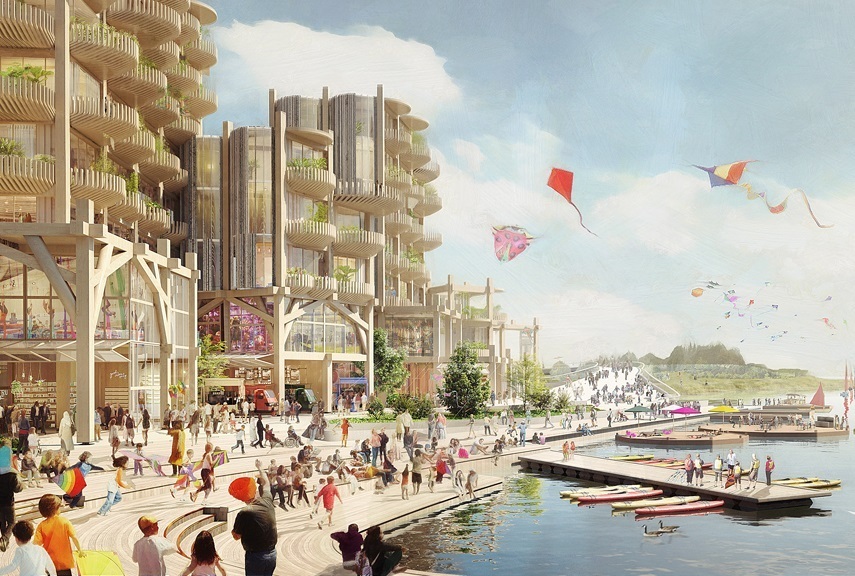
Masterplan proposal for Quayside by Sidewalk Labs
We already see glimpses of this fusion in projects like Sidewalk Labs’ smart city proposals, where AI analyses urban patterns to create responsive neighborhoods, or in Gramazio Kohler Research’s robotic masonry work at ETH Zurich, where algorithms guide construction robots to build free-form brick structures impossible by hand. In these examples, creativity is shared. The architect defines intent, the machine executes and refines, and the result is a hybrid intelligence that produces something neither could have achieved alone.
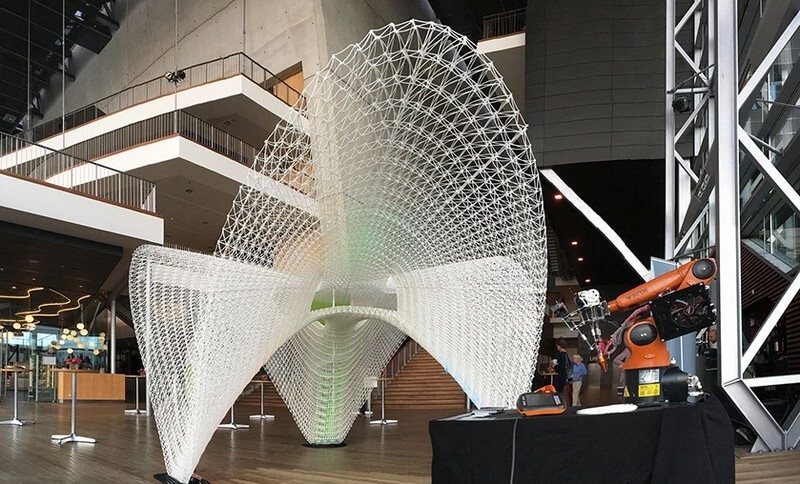
The Daedalus Pavilion by AI imagines how AI and robotics can be used to create complex structures.
But all that brings with it the risk of taking away the soul from architecture. Allowing AI to design purely through optimization could lead to cities that are efficient but not alive. I think it’s inevitable at this point that AI will become an essential tool in every architect’s arsenal, just like computer-aided design became decades ago. The real challenge is not to wonder who owns the design but rather how architects need to remain the interpreters of meaning in a world that is increasingly being built by code.
You may also like: