Written by: Muhammad Hamza
Posted on: January 30, 2026 |  | 中文
| 中文
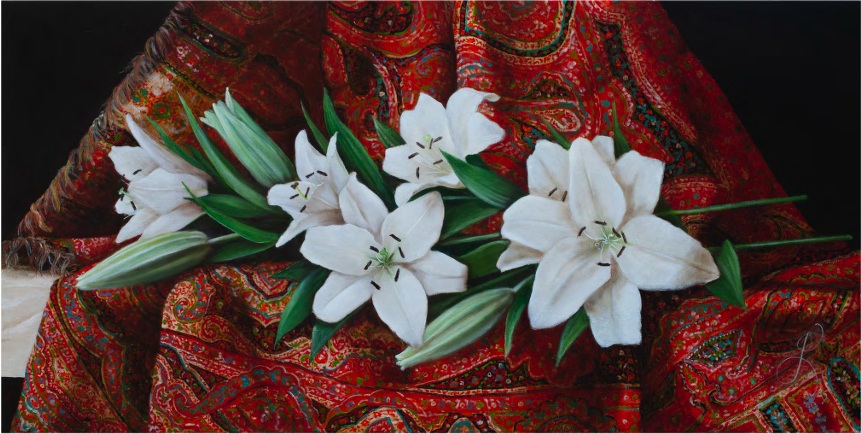
A Prayer to Impermanence III
Irfan Cheema’s latest solo exhibition, all is vanity, at Tanzara Gallery, marks his 11th solo show and continues his deep dive into still life painting. The artist, a Pakistani born painter now based in Shanghai, draws from classical traditions while adding personal and cultural touches from the Subcontinent. His works use everyday objects like fruit, birds, foliage and richly patterned Kashmiri shawls to explore themes of beauty, change and the passage of time. This show feels like a quiet meditation beautiful on the surface but thoughtful underneath, reminding viewers that nothing lasts forever.
Cheema’s style is realistic and detailed. He paints with oil on linen, capturing textures, light, and colors so precisely that objects almost feel touchable. Yet his paintings go beyond simple copies of reality. They mix symbols of life and decay, abundance and loss, inviting us to think about how we find meaning in things that will eventually fade.

The Quiet Witness II
Here are a few standout pieces from the exhibition that show the range and power of Cheema’s work.
This painting centers on a bright, colorful bird perched near a bowl of fresh apples and sliced fruit. A richly patterned Kashmiri shawl drapes behind, with its intricate designs and deep reds and greens adding warmth and luxury. Leaves scatter around, some fresh and others hinting at wilting. The bird looks alert, almost watchful, as if it knows the scene’s fleeting nature. The dark background makes the colors pop, drawing the eye to the contrast between vibrant life and subtle signs of time passing. It feels like a moment caught just before everything changes beautiful, but already slipping away.
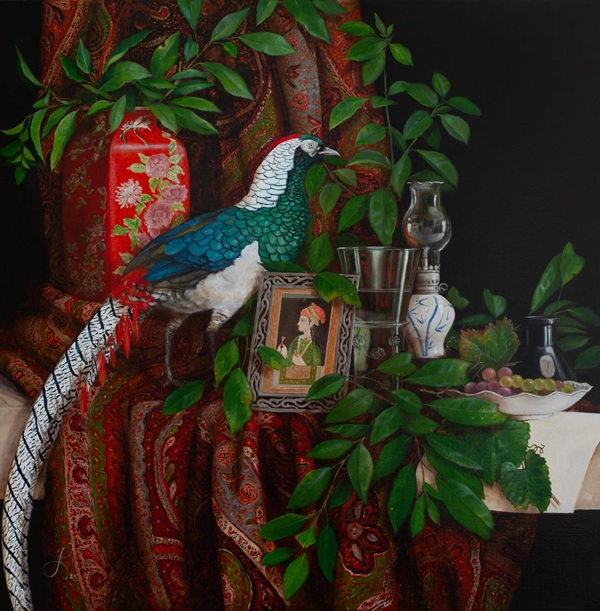
A companion piece, this one feature another striking bird with shimmering feathers, standing proudly amid grapes, a decorative vessel and more lush foliage. The shawl’s patterns are even more detailed here, with swirling motifs that echo the bird’s curves and the fruit’s round shapes. Light catches on the bird’s wings and the glassware, creating soft glows that add depth. The composition feels balanced yet tense, as if the objects are in quiet conversation about permanence. Cheema’s skill with light and shadow gives the scene a timeless quality while reminding us of impermanence through small details like a fallen leaf or an unlit lamp nearby.
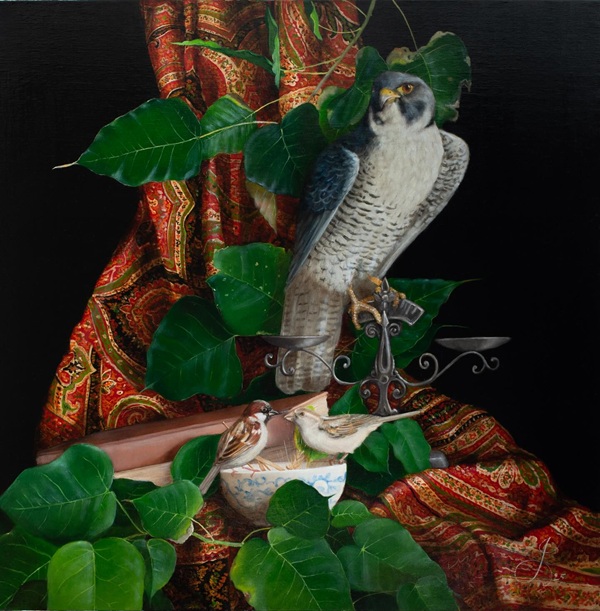
In this work, a falcon like bird perches on an ornate stand, surrounded by green leaves and a few small sparrows below. The background shawl’s paisley patterns create a rich, textured backdrop, while books and metal objects add layers of history. The birds seem to interact small ones looking up, the larger one gazing ahead suggesting a moment of quiet observation or uncertainty. Cheema uses soft lighting to highlight feathers and leaves, making textures feel real. The title hints at questions of balance and time: how do we measure what matters when everything shifts? It’s a thoughtful piece that blends nature, craft and reflection.
Vanity of Vanities II
This smaller painting focuses on intense red tones, with fruit, foliage, and perhaps a bird element implied through the rich arrangement. The shawl’s deep crimson and gold patterns dominate, creating a sense of warmth and drama. Objects are arranged carefully, with light falling in a way that emphasizes ripeness and potential decay. The red feels symbolic passion, life force, but also warning. Cheema’s brushwork here is precise yet fluid, capturing the way fabric folds and fruit skins shine. It tells a short story without words: beauty in abundance, but always under threat from time.
The Uncertain Measure
A more intimate piece, it highlights delicate elements perhaps seeds, grains or simple natural forms set against the familiar patterned shawl. The title suggests themes of growth and elegance, with small details that feel personal and tender. Light plays gently across the surfaces, creating a sense of calm grace. Unlike larger works with bold birds, this feels quieter, almost private. It shows Cheema’s range: he can shift from dramatic scenes to subtle ones while keeping the same careful attention to texture and light. The work invites slow looking, rewarding those who pause to notice tiny highlights or soft shadows. Across these paintings.

Parable in Red
Cheema masterfully uses recurring elements. Birds act as silent witnesses elegant, free, yet tied to cycles of life and death. Fruits like apples, pomegranates and grapes symbolize ripeness and rupture. Kashmiri shawls ground everything in South Asian craft traditions, their intricate weaves contrasting the fragility of organic forms. Stone surfaces, leaves, and occasional lamps add a sense of history and temporality. Nothing is random; every object carries weight.

Grain and Grace I
The exhibition’s title, all is vanity, comes from ancient wisdom about the emptiness of worldly pursuits. But Cheema does not preach. He asks gentle questions: How do objects gain meaning over time? Can beauty endure across places and histories? What stays when desire meets change? His still life paintings seduce the eye with rich colors and details, then quietly challenge the viewer to think deeper.
Cheema’s technique stands out. His realism is not cold or mechanical; it feels alive and warm. He pays close attention to how light moves across feathers, fabric or fruit skin, creating depth and emotion. The dark backgrounds make subjects glow, almost like jewels in shadow. This contrast heightens the sense of transience beauty shines brightly but only for a moment.

Vanity of the Unfinished
In all is vanity, Irfan Cheema shows growth as an artist. His visual language has become more refined, his themes deeper. These paintings are both comforting and unsettling comforting in their beauty, unsettling in their reminder of change. They invite us to look closely, appreciate the moment, and accept that all things pass.
You may also like: