Written by: Sirat Gohar Daudpoto
Posted on: December 11, 2025 |  | 中文
| 中文
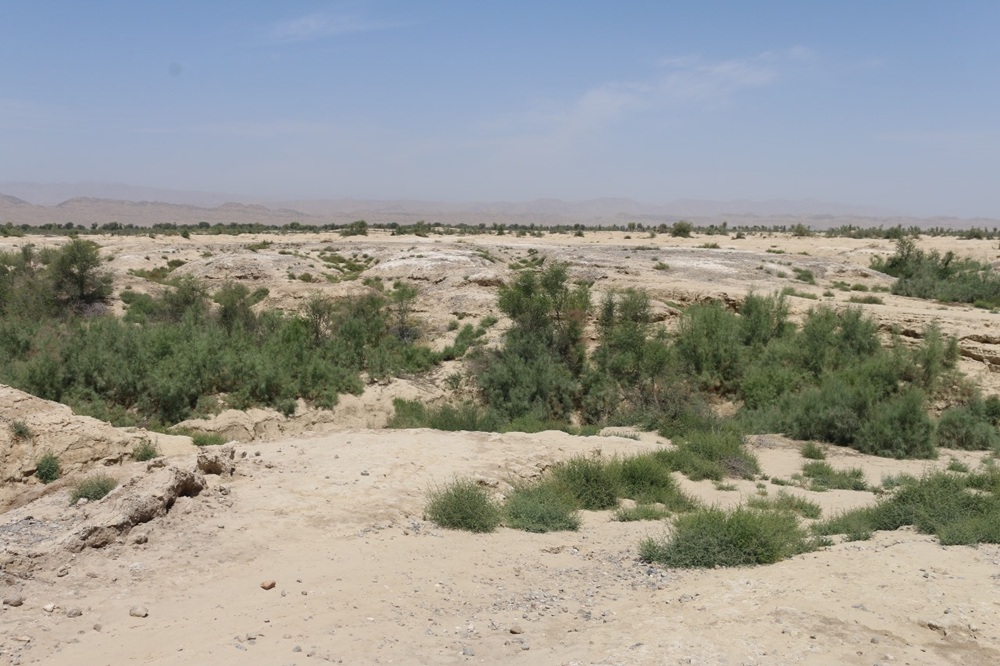
Ruins of Mehrgarh in Balochistan. (Photo by Zahir Qomi)
Life in the old stone age was nomadic. People lived solo or in small bands in natural environments and relied upon natural resources for subsistence. They were hunter-gatherer, as they are called based on the remains they have left behind. However, one thing can be detected from the stone utensils of the whole palaeolithic period, and it is constant progress and change in the life-ways. The tools were evolving, becoming increasingly sophisticated and more efficient which indicates an overall progress. With their consistent growth and their ability to adapt, people were slowly moving towards a new future, a settled life.
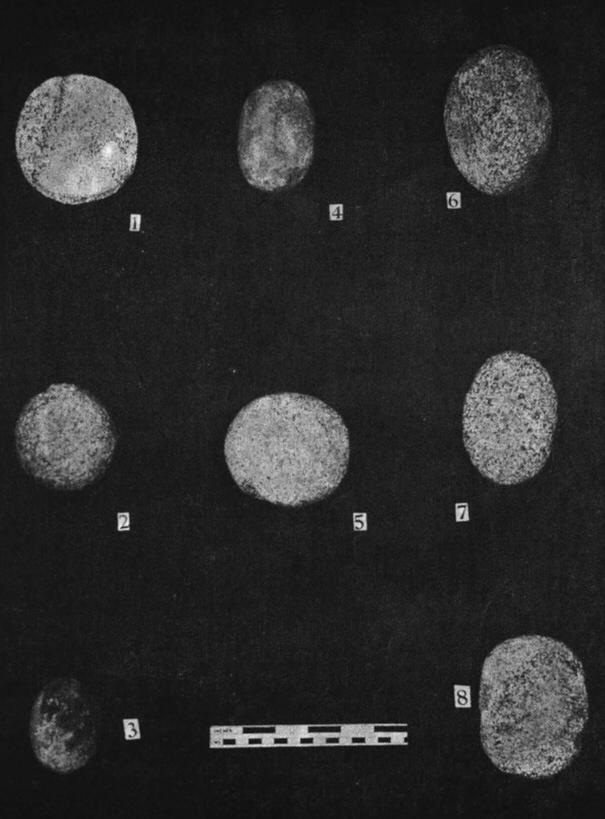
Hammer-stones of granite recovered at the Parkho-dara cave in Sanghao, Mardan. (Photograph by A.H. Dani)
This transitionary phase between the hunting-gathering-nomadic lifestyle and the settled living is called the mesolithic or the new stone age. It covers the time period from about 12,000 years before present to 7000 BC, when the first village settlement was built at a site locally known as Mehrgarh in the Balochistan province.
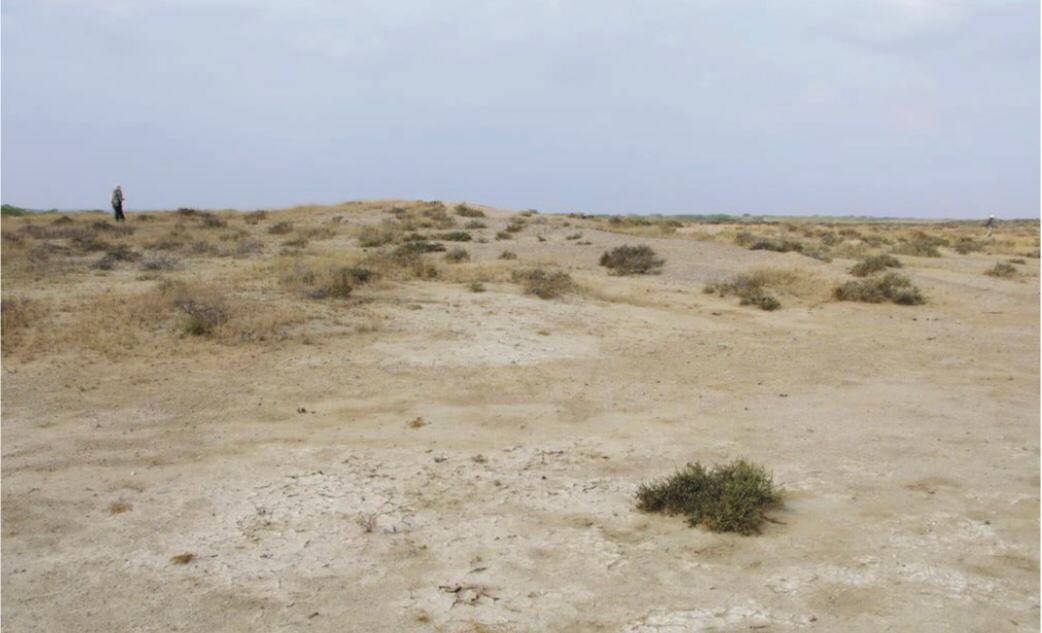
The Lake Siranda mesolithic site in Las Bela. (Photograph by P. Biagi. Published by P. Biagi et al. in 2018 in Pakistan Heritage.)
Mesolithic people had a cutting-edge stone-tool technology. They had very advanced stone utensils for killing, chopping, cutting etc. The tools of this stone age are versatile, sharp and handy as compared to the palaeolithic implements. Due to their small size, they are called microliths (or small stone tools) which include points, razors, cores, daggers, burins, axes etc. These mesolithic implements are found at several sites located in different parts of Pakistan. The principal sites among them include Goratai-kandao in the Kandak valley in Swat, Parkho-dara cave in the Sanghao valley in Mardan and the sites of Lake Siranda in Las Bela, Thari in Khairpur and Mulri Hills and Khadeji river in Karachi.
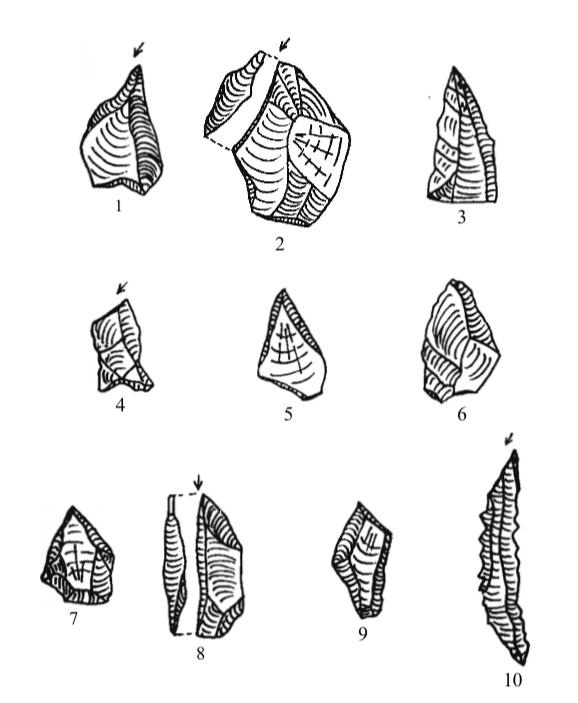
Blade, points and gravers recovered at the Parkho-dara cave in Sanghao, Mardan. Drawing by A.H. Dani.
It appears from the archaeological evidence of this era that people were living in groups, possibly they had already developed the family structure, as shown at Sanghao where mesolithic traces are found in and around a cave. This evidence indicates towards a new pattern of habitation in this period i.e. proto-settled life. However, the lack of evidence limited to the tools and some rock art representations hinders our efforts to fully understand proto-settled habitation patterns in the mesolithic epoch.
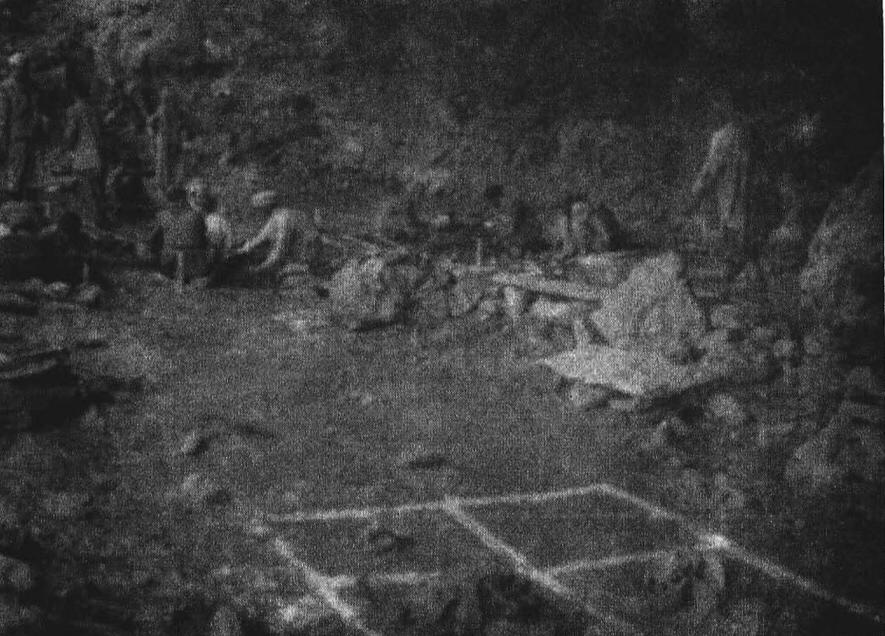
Excavation at the Parkho-dara cave in Sanghao, Mardan. (Photograph by A.H. Dani. Published by A.H. Dani in 1964 in Ancient Pakistan.)
In Pakistan, proper settled-life started in the neolithic or new stone age, during the seventh millennium BC, when humans began living in houses and cultivating animals and the land. This phase of human history is called neolithic because stone was the main material for making utensils, although copper was also used in the last centuries of this epoch. The sites belonging to this period, dated to 7000-2900 BC, are found all across the country. The most popular and well-documented among them are Mehrgarh in the Bolan river valley, Amri on the Indus River in Sindh, Jhandi Babar in the Gomal plain and Sheri Khan Tarakai in the Bannu basin, just to mention a few.
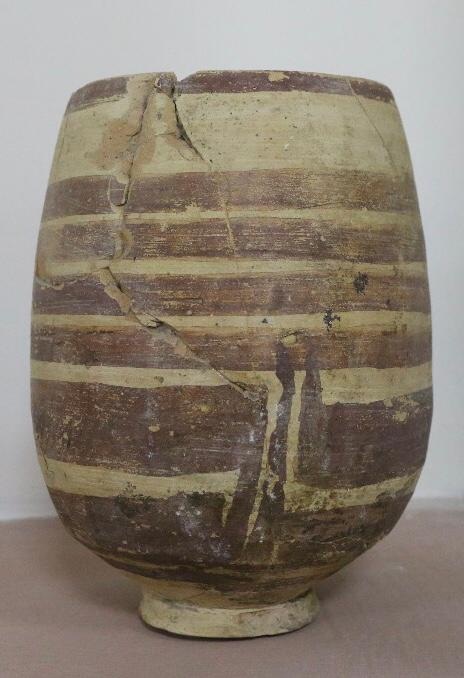
Painted vessel from Mehrgarh on exhibit at Mehrgarh Museum in Quetta. (Photo by Zahir Qomi)
Neolithic sites are generally categorized into two archaeological periods: aceramic (not having pottery traditions) and ceramic (having pottery traditions), and also on the basis of other material remains such as stone tools and figurines. The pottery is further identified with its making techniques and decorative features. Neolithic pottery is both handmade or wheel-thrown and has its own unique shapes and decorations. Particular the late neolithic pots are known for neat and clean colorful paintings of geometric and vegetal patterns and images of animals.
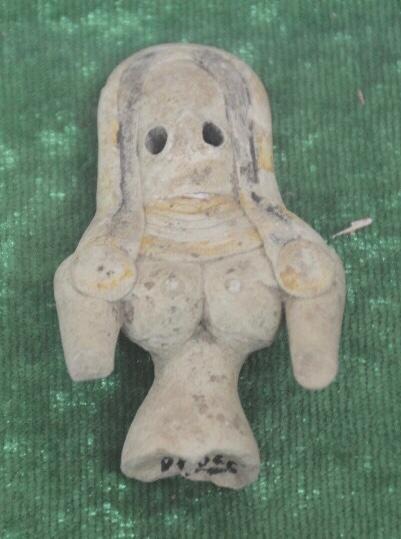
Female figurine from Mehrgarh on display at Mehrgarh Museum in Quetta. (Photo by Zahir Qomi)
The oldest traces of early settlers are recorded at the archaeological site of Mehrgarh located on the bank of the Bolan River in the Kacchi plain in Balochistan. Mehrgarh shows the ruins of a village that was built in the 7000 BC and where also discovered were seeds of different species of plants and bones of different animals. All this informs about the habitation and subsistence processes of the people of Mehrgarh. Particularly, in the early phase the houses were made of mud and the stone and bone was used for making utensils and other objects. It is archaeologically categorized as an aceramic period (in which pottery is not found). With the passage of time all things gradually improved and human life became more and more sophisticated. People built brick houses, designed storages for surplus corpses and invented things necessary in the settled life-ways. All these, and pottery and figurines in particular, gives a sense of an emerging complex society.
You may also like: