Written by: Sirat Gohar Daudpoto
Posted on: December 31, 2025 |  | 中文
| 中文
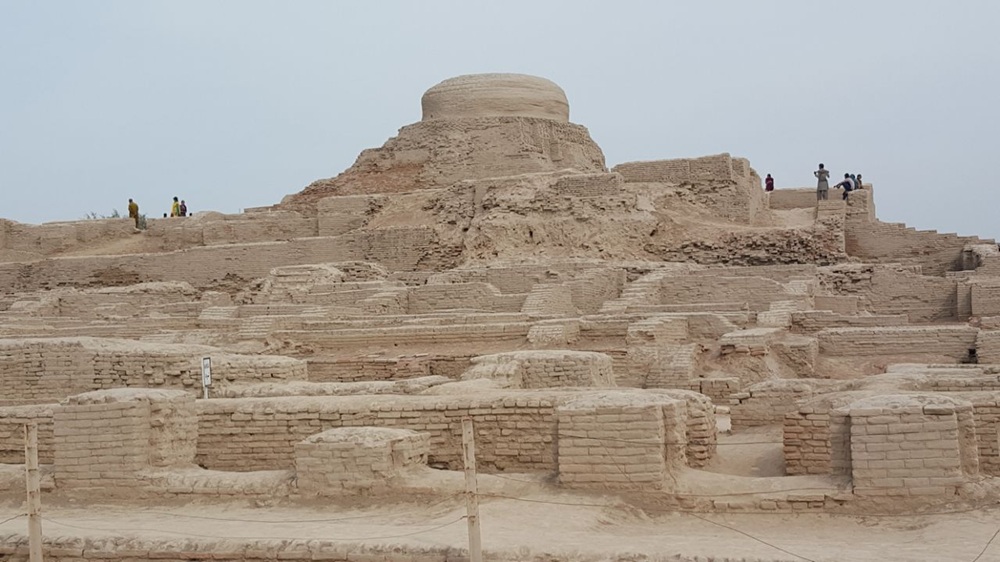
Citadel or upper settlement of the city at Mohenjodaro.
The following ancient period, roughly from about 2800 BC to the 7th century AD, can be termed as protohistoric, as the earliest known specimens of writing in Pakistan or the references to the ancient Pakistani cultures in other contemporary societies are dated to this era. In which, highly developed societies emerged on and in the country water by the Indus and now dried-up Harkra rivers, that together formed a civilization now called with different names i.e. Indus Civilization, Harappan Civilization, Indus Valley Civilization, Indus-Saraswati Civilization etc. Pakistan's Indus Civilization is one of the three oldest civilizations in the world. Protohistoric archaeology deals with the Indus Civilization and different cultures which existed following its decline.
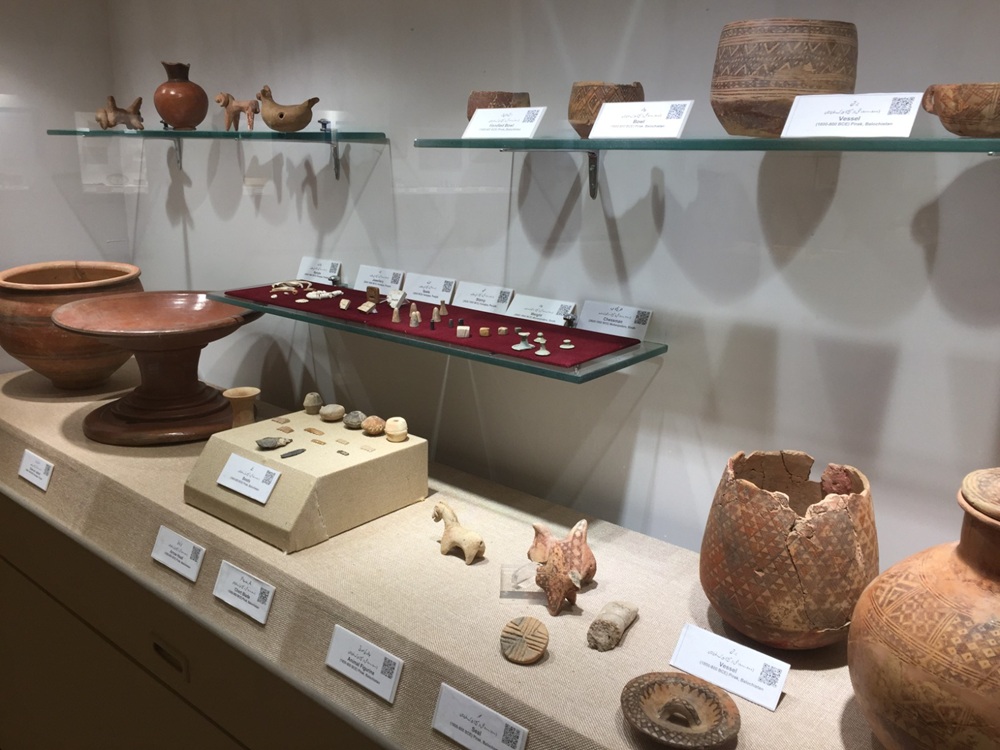
Artifacts belonging to the Indus Civilization on display at Islamabad Museum.
The elements that characterize civilization appeared on the panorama of the Indus valley in the third millennium BC, although this phenomenon started long ago in the neolithic times. They were noticed at the archaeological site of Kot Diji in the Sindh province. Several sites contemporaneous with Kot Diji are discovered in different regions in Pakistan and India. They bear witness to the human progress towards a civilized society in ancient Pakistan.
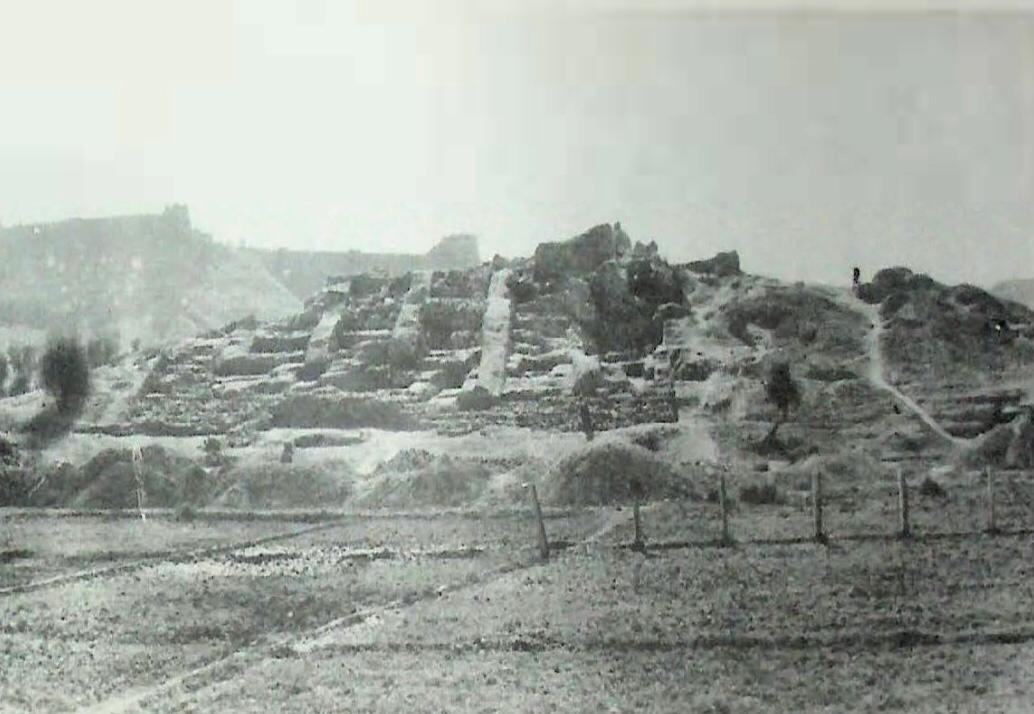
A view of ruins at Kot Diji after excavation in 1955-57. Photo published by F.A. Khan in 2002.
Kot Diji preserves sequences of the early and mature phases of the Indus Civilization. Archaeological explorations revealed that the settlement had fortification and was divided into the citadel or upper area and the lower area. It was the first settlement which was planned according to this pattern. This site plan was later on adopted by the Indus people to design and build the great cities and towns of Mohenjodaro, Harappa, Rakhigarhi, Dholavira, Lothal etc. These developments are also indicative of the emerging social system, for example the division of the settlement also shows divisions within society.
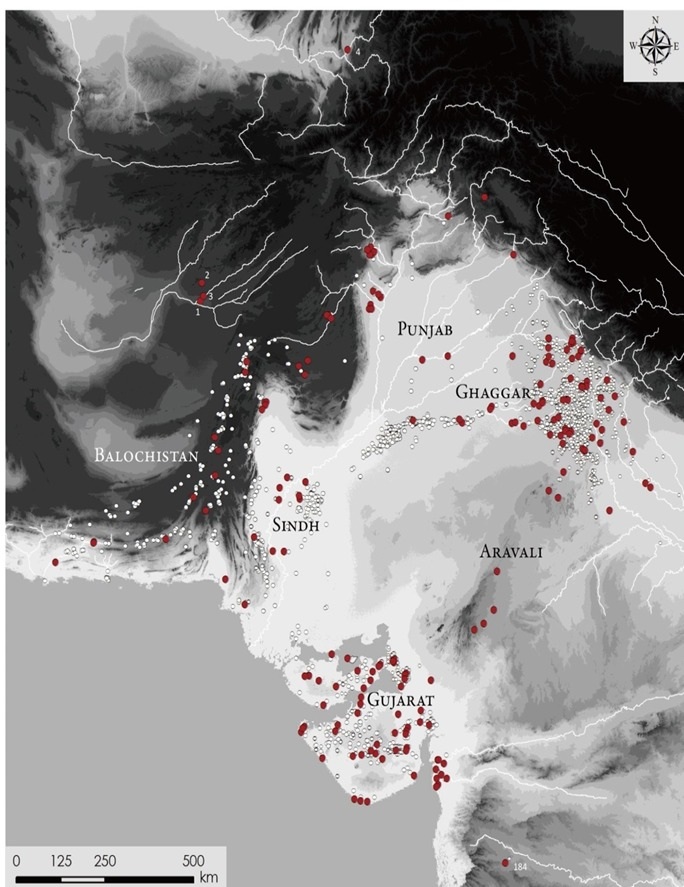
Map showing the distribution of Indus-related sites (white dots) and excavated sites (red dots). Published by Akinori Uesugi in 2018.
Indus Civilization flourished in the Indus and Hakra river valleys, in the present-day Pakistan and India, between the mid third and the early second millennium BC (circa 2600-1750 BC). Over 3000 Indus-related sites are estimated to have been located in the greater Indus valley, and a few sites are also discovered in Afghanistan. Nearly 200 of these sites are excavated, of which, 47 are in Pakistan. Generally, the Indus settlements based on their size are divided into three tiers: (1) city, (2) town and (3) village. The main concentration of the Indus-related sites in along the dried bed of Hakra river in Cholistan and along the Indus River. The most prominent among them are Mohenjodaro, Harappa, Chanhundaro, Lakhanjodaro and Ganweriwala.
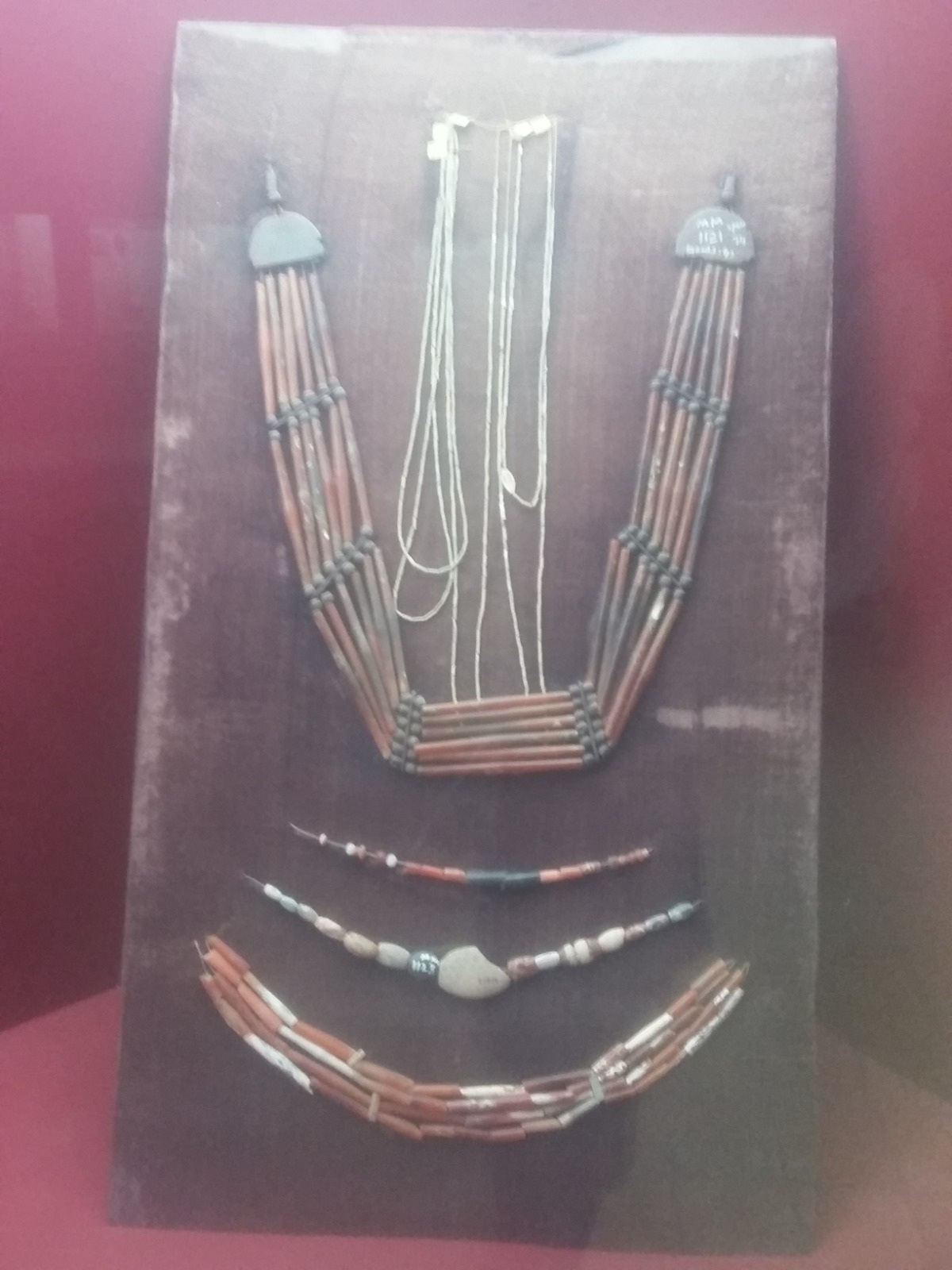
Indus jewelry from Mohenjodaro.
What we know about the Indus Civilization completely depends on the remains that have survived to date. Because, the historical records of Indus people still remain unknown, as their script and language is not deciphered despite several years of research by scholars from all across the globe. Given the enigmatic character of the Indus people's language and script, archaeologists and historians have to rely heavily upon the structures and artifacts to understand and interpret the ancient Indus Civilization. Much of which owes to Mohenjodaro and Harappa. These two sites, with prominent structures and buildings, shows the remains the great Indus cities where artifacts of various types have been discovered. The urban features of these cities demonstrate that the Indus people, divided into different classes, lived in highly sophisticated conditions. The Indus-settlement pattern and discovered material suggests an internal system and connectivity among the various populations of cities and villages, as well as their contacts with neighboring regions and contemporary civilization. At its zenith the Indus people were involved in trade with communities as far as Mesopotamia (modern Iraq). For we find in the records of the time of King Sargon of Akkad a reference to the Indus country, although it is vague. Nothing else is known about it from the contemporary civilizations of Mesopotamia and Egypt.
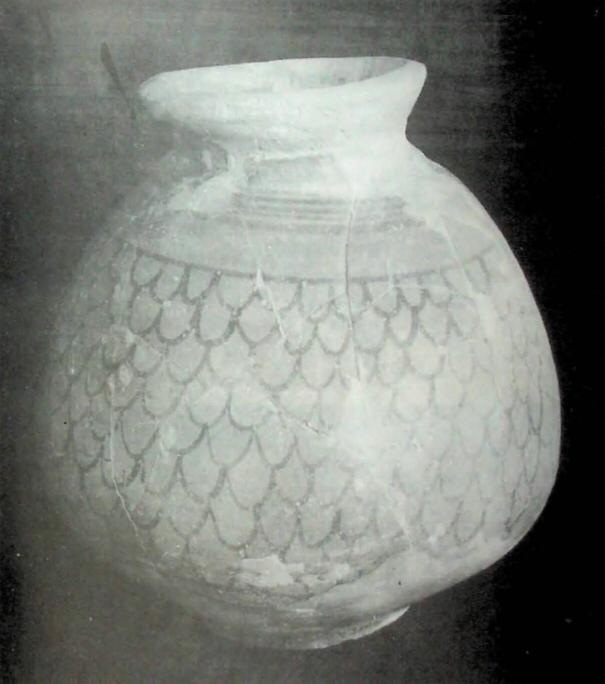
Painted vessel from Kot Diji. Photo published by F.A. Khan in 2002.
Lack of historical information and most importantly the enigmatic state of the Indus script hinders our understanding of the Indus Civilization. It is only with the decipherment of its script that we can have a better knowledge of the Indus world. How it flourished? Its socio-political and economic system, religion and decline or disintegration? And where did the Indus people go after abandoning their settlements?
You may also like: