Written by: Nadeem Alam
Posted on: December 23, 2025 | 
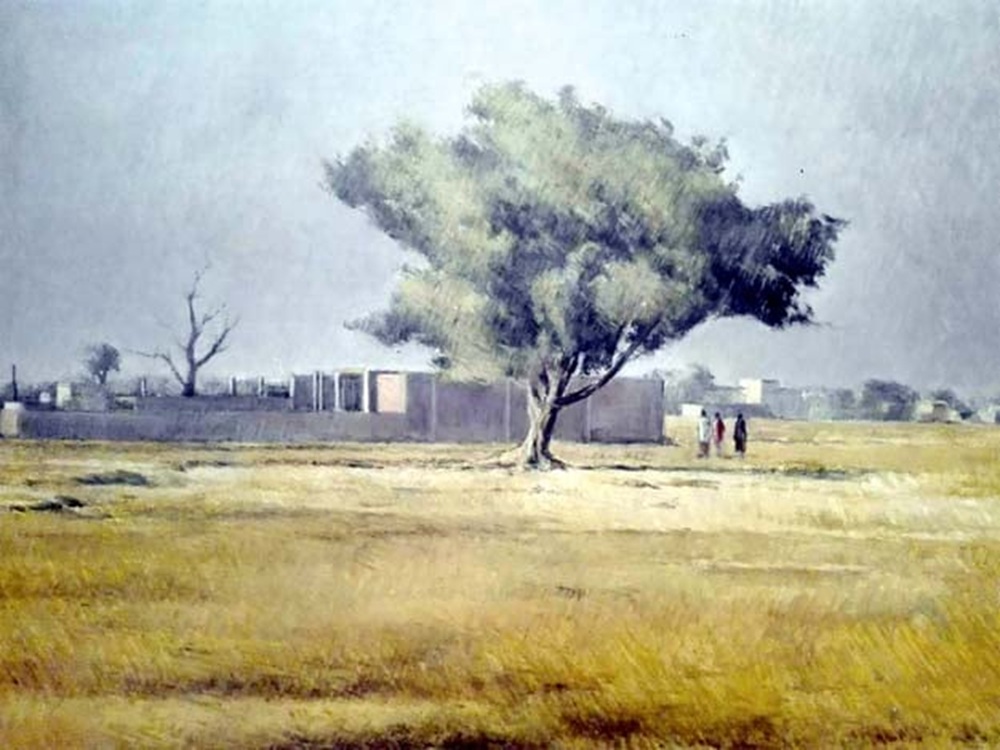
Khalid Iqbal's artwork
The recent exhibition at the historic walls of the colonial structure of Lahore Museum, under the title of Open-Air Odyssey, presented a culmination of two diversified schools: the artists trained and skilled at the academic art institutions, and the self-taught practitioners trained under the master of a specific genre, known broadly as the ustad.
The show was graced by the Consul General of the Republic of Turkey in Lahore, Mr. Mehmet Eymen Şimşek as the chief guest, alongside the maestro artist of Pakistan Mr. Saeed Akhtar, as guest of honour. Renowned plein air artist Ajab Khan, along with academician and artist Naela Amir, was also present as special guests.
The Khanaspur Plein-air residency, organised in collaboration with the Department of Fine Arts, University of the Punjab, Lahore and curated by Sumera Jawad, extended the landscape painting canvas, not only to the pedagogical possibilities but to the evocative lineage of self-taught and well-trained professional artists.
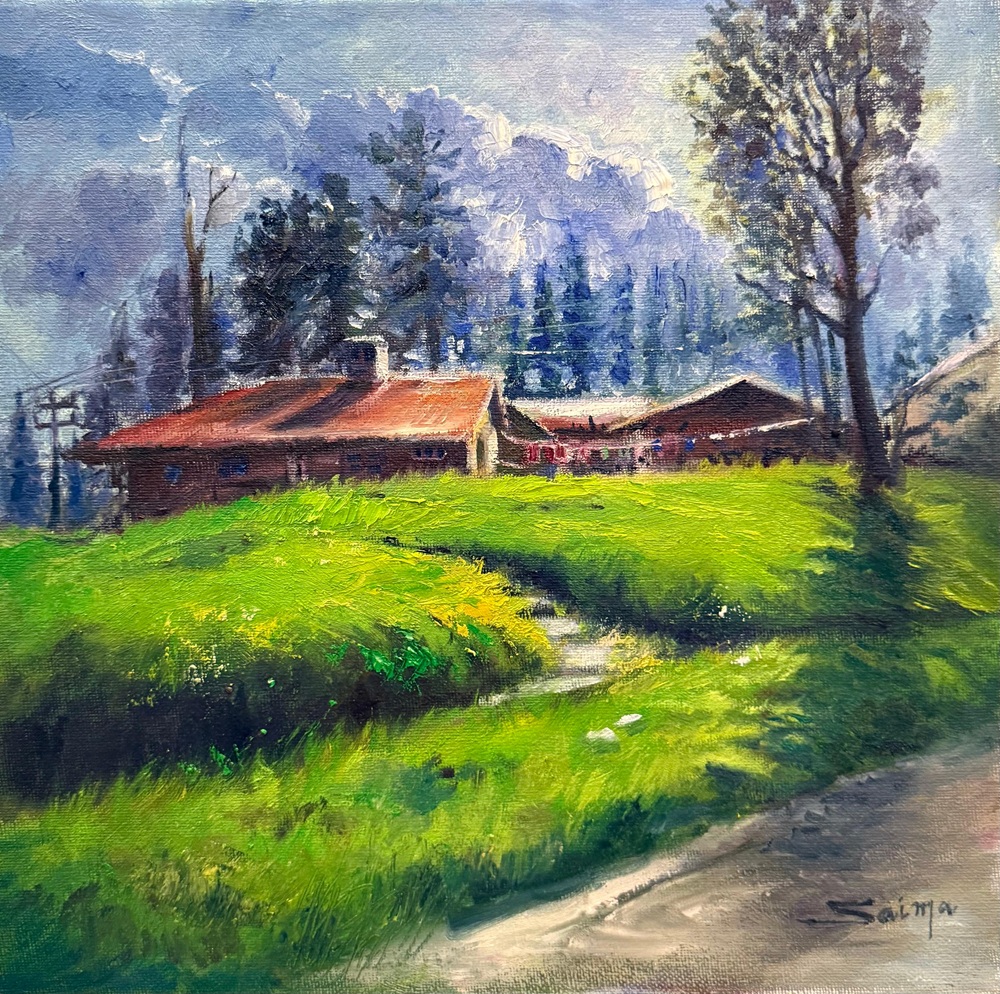
When the Hills Begin to Glow by Saima Amir
These two different traditions have always been present in the art practice of Pakistan; the landscape of formative years, Khalid Iqbal was the representative of academically attained excellence through his modern realism, and Ustad Allah Bakhsh represented the laboured-skill and raw talent. In Pakistan, the genre of landscape painting, owing to its nature and widespread public acceptance, evolved along this dual trajectory.
The work produced at the Khanaspur residency reveals a thoughtful synthesis between modern realism and plein air sensibility. Since all the artists rendered the same surroundings and environs, the atmospheric perspective and the woodland ambiance are common. However, the colour palette, technique, and medium vary from one artist to another.
Nine artists, each with a peculiar style, participated in a shared visual experience on their respective canvases: Ajab Khan, Ayesha Yasir, Danish Khan, Mana Shuja, Nasir Shehzad, Nouman Khan Nomi, Rifaat Saif Dar, Saima Aamir, and Shahzad Khalil.
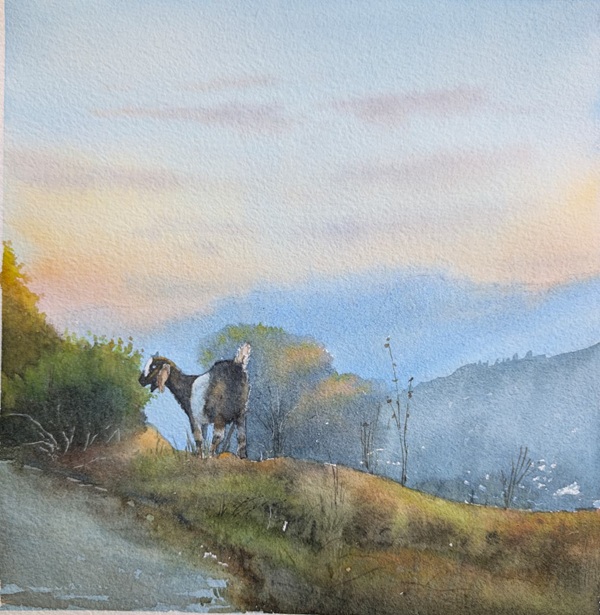
Intentions to Return by Shahzad Khalil
The fluid watercolour handling is a signature aspect in Shahzad Khalil’s play with transparent layers, play of light, representation of the terrain, and spontaneity. His work with a native goat corresponds to the mountain ecology in a classic diagonal composition. The excellence in watercolour is evident in Ayesha Yasir’s frames as well, capturing the traditional wooden architecture in thin layers of pigments.
Another watercolour by Nouman Khan prefers the bird’s eye-view upon the mountainous topography; negating the picturesque and intriguing atmosphere and focusing on the correlation between the geometry, foliage, and the hills.
However, the oil-colour canvas by Nasir Shehzad ‘Echoes of Green Silence’ carries the rich palette and impasto technique, advocating an artist, engaged in, and overwhelmed by the atmosphere. Riffat Saif Dar also employs thick paints to stimulate light in the foreground and the receding blues and greys in the contrasting background of the sky.
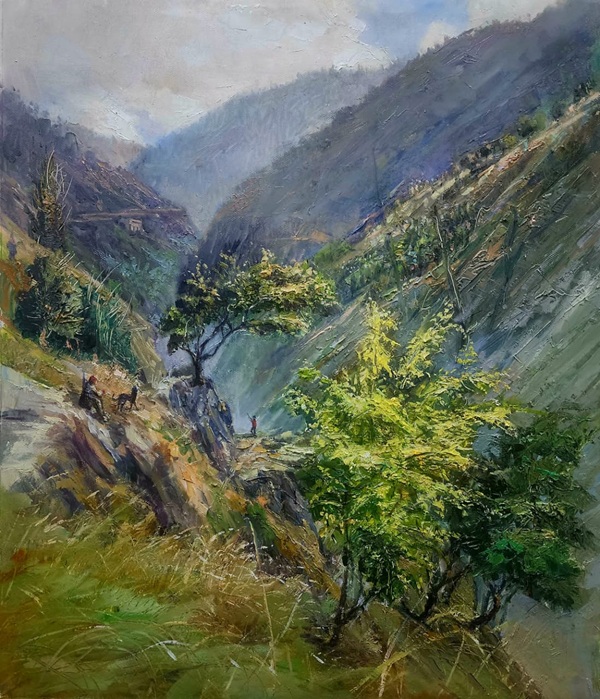
Echoes of the Green Silence by Nasir Shehzad
Saima Aamir, with her flamboyant oil colours, preserves the chromatic vibrancy of Khanaspur, while negotiating the crisp sunlight. The traditional compositions by Danish Khan appear deceptively simple, engaging huts, trees, and a layered backdrop of distant hills to create the visual charm. Meanwhile, a frame ‘The Clothesline’ by Mana Shuja showcases the exuberance of diversified and colourful hanging clothes against the green environment.
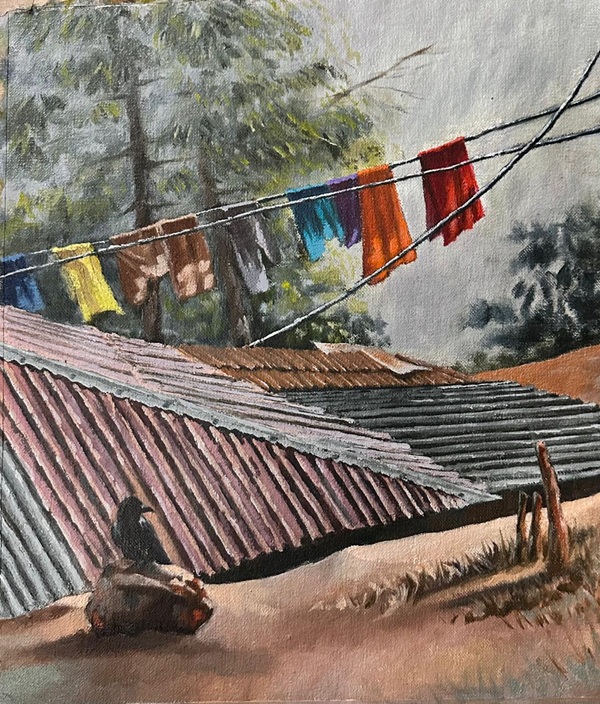
Clothesline in Hills by Mana Shuja
The canvases of Ajab Khan speak of experience and skill where he uses muted greens and earth tones to create atmospheric depth. The artist’s intentional restraint reflects through the articulated light, balanced compositions, and well-observed shades of the terrain; transforming the coarse surfaces into meditative landscapes.
This exclusive exhibition features the careful engagement of two parallel yet distinct traditions of artistic learning: by uniting the formal institutional art practice and the independent atelier training, structured through mentored self-directed learning.
You may also like:
From the Horn of Africa to Bahria Town: Habesha Café Brings Centuries of Coffee Culture to Rawalpindi
(October 15, 2026)