Written by: Sana Shahid
Posted on: July 03, 2025 |  | 中文
| 中文
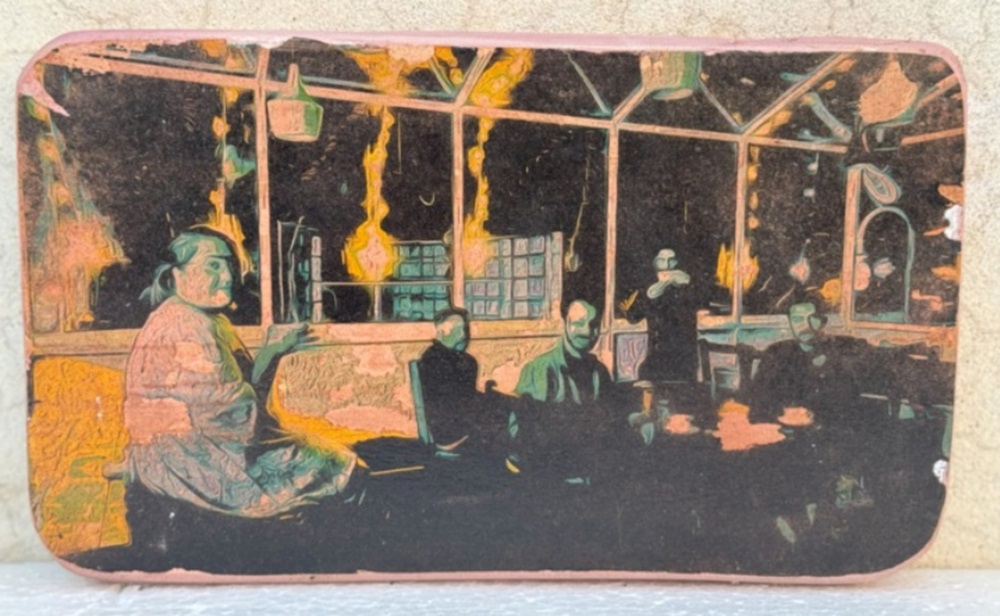
The Eyes Stayed Twice by Saad Ahmad
Porous is an exhibition shaped around the raw, physical reality of summer, its scorching heat, its stickiness, and the constant awareness of being in a body. It's about sweat, softness and the strange vulnerability that comes with simply existing. Summer in this context feels both overwhelming and charged, a time of stillness laced with unease. The show brings together works that explore this tension through the lens of sensuality, illness, longing and bodily experience. Whether expressed through drawing, painting, sculpture or mixed media, each piece echoes a certain porousness.
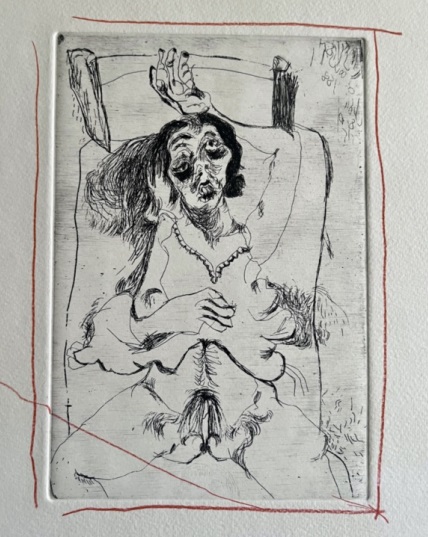
Daughter of a Donkey by Aisha Suria
Shameen Arshad’s Indian Summer radiates that exact closeness, the kind of heat that’s less about sun and more about what it leaves behind. Her canvas doesn’t just depict a scene; it takes you back in time. There’s a ghostly hush to the piece, like an abandoned room holding the scent of someone long gone. You don’t look at this painting so much as feel it settles onto your skin: the powdery residue of memory, the blurred edges of figures and objects speak to the way heat rearranges the world. It’s sensual but not indulgent, more like a slow exhale after trying to hold yourself together all day. Though the artwork reflects summer, it represents a serene quality where a figure is sitting either engaged in stitching or just fixing the soft and silky cloth in front of her. The intricate detailing in this artwork makes you want to look more and discover new objects every time.
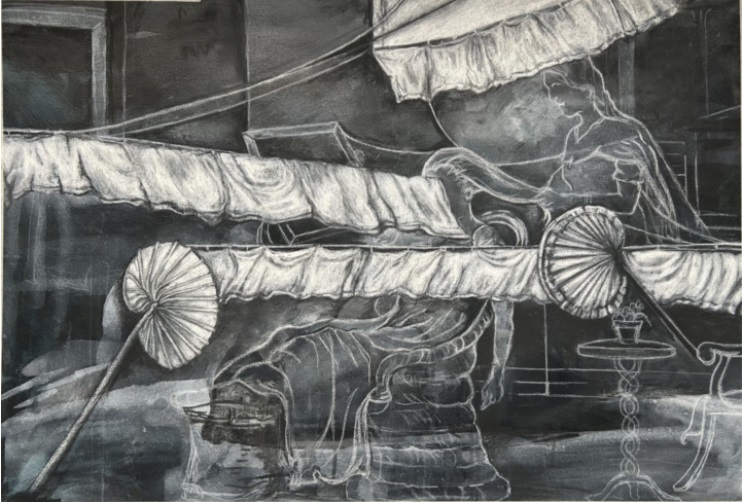
Indian Summer by Shameen Arshad
Saad Ahmad brings a very different bodily language, one that’s fractured, restrained and embedded in plaster. His two works, Inhale and The Eyes Stayed Twice, appear as fossilized impressions of breath and gaze, depicting permanence. They feel like artifacts pulled from a dream or a medical archive, clinical in medium, but emotionally dense. The faces or features aren’t always legible, but that’s the point: in the summer of the mind, even memory starts to fade. The plaster cast suggests healing or immobilization, but Ahmad doesn’t let them harden into certainty, instead, they hold tension: between softness and sculpture, between the need to breathe and the weight pressing on your lungs. This scene hints a subtle pop of yellow connecting it to summer gatherings where people would just sit and reminisce about old times and when someone starts taking a photograph, everyone tries to smile for the picture. It is fascinating how a scene is worth so many words and explanations that you can never stop imagining what could have been.
Mohsin Shafi’s The Biodegradable Bullets is a contradiction in the most tender sense. He gives us tools of violence, made from ice and petals, meant to melt rather than wound. They sit on a ceramic plate with a kind of ceremonial poise, as if waiting to be offered in an altar of unlearning. The fragility is deliberate; these bullets are already disappearing by the time you encounter them. What remains is the question: what if destruction could bloom instead? What if war softened at the edges? His piece is not simply about impermanence, it’s about a choice, a decision to let something dissolve rather than detonate. It’s not loud, but it is revolutionary promoting peace while playing with one of the most destructive objects in the world.
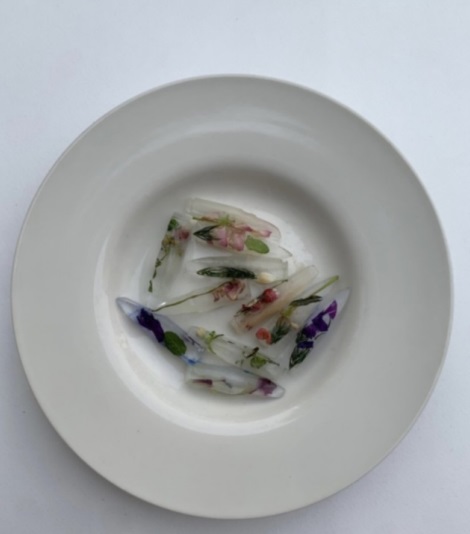
The Biodegradable Bullets by Mohsin Shafi
In Fragile Playground, Ammar Faiz stitches together a visual frenzy, scraps of paper, stains of ink, erratic textures. At first glance, it feels chaotic, like a child’s bedroom after a tantrum, but if you look longer, patterns emerge highlighting that there’s method in the mess. Faiz’s playground isn’t physical, it’s rather psychological, filled with precarious balances and joys. The layering feels feverish, as though the work was done during a sleepless night under a fan that kept clicking. The artist captures the heat not just as climate, but as tempo, a relentless rhythm of overstimulation and emotional spillage. The piece pulses with restlessness, asking how much we can hold before we, too, start to come apart at the seams.

Fragile Playground by Ammar Faiz
Vania Mazhar’s Last Visit to the Karachi Beach is tender in scale but vast in emotion. Painted over a worn hardback book cover, the piece carries the charm of something found, cherished, and reimagined. It’s not trying to replicate the sea or the city, it evokes the last feeling you had there, that in-between ache of leaving somewhere you’re not ready to say goodbye to. The oil painting is soft but deliberate, like a memory that refuses to fade. It feels like a photograph from a family album where everyone’s faces are turned just slightly away. It’s a painting of pause; a love letter scribbled in the margins of an old story with bold brush strokes and smokey colors.
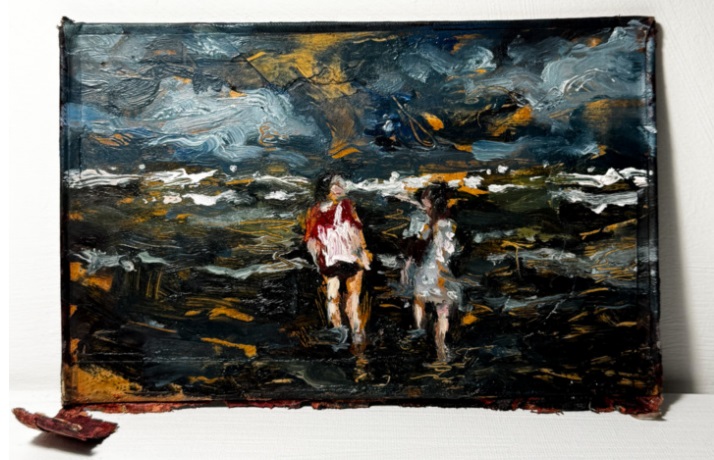
Last Visit to Karachi Beach by Vania Mazhar
Usama Joyia’s paired paintings, Mirage Hotel and Next to Hotel, unfold like stills from a film you half-remember watching during a heatwave. The buildings look familiar, yet unreal, too crisp at the edges, too golden in hue. They sit in an undefined space, between real location and psychic projection. Joyia doesn’t fill the canvas with detail, he leaves space, allows shadows, lets the viewer imagine what happens behind the windows. Are these places abandoned? Are they sanctuaries? The works resist clarity and follow a more minimalistic approach. They feel like destinations for dreams or fragments from a travelogue left out in the sun too long. You sense that someone was here, recently or long ago, but they’ve just stepped out of frame.
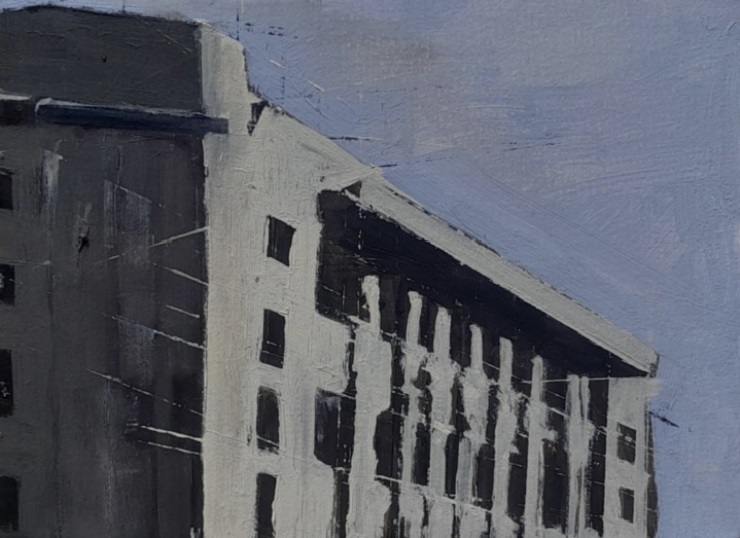
Mirage Hotel by Usama Joyia
Summer is the season where the heat melts you, but everyone is filled with joy, colors, memories of the summer holidays and activities. It is considered a season of celebration globally and this exhibition brings together all these associations. Though the heat becomes excruciating, it reminds you of how a human body can adjust to intensities in a matter of time. Porous is worth paying a visit and feeling all the emotions that the artists have worked day and night to express and put on a canvas immaculately.
You may also like:
From the Horn of Africa to Bahria Town: Habesha Café Brings Centuries of Coffee Culture to Rawalpindi
(October 15, 2026)