Written by: Muhammad Hamza
Posted on: February 20, 2026 |  | 中文
| 中文
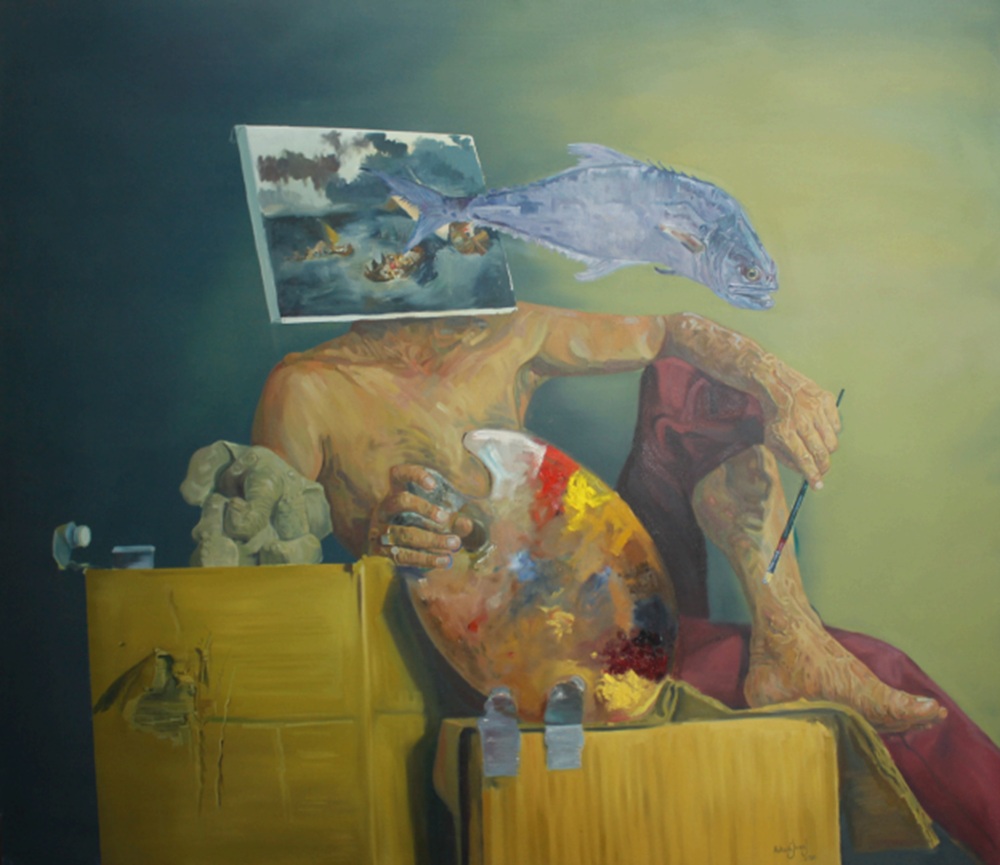
Let's Paint The Sea by Aakash Jivraj
The Orchard Gallery has emerged as a vibrant new addition to Islamabad’s evolving contemporary art scene. The gallery brings a fresh, intimate space for emerging voices in Pakistani art. Owned by Roma Larek, it represents a thoughtful venture into fostering artistic dialogue outside the traditional urban gallery hubs of Karachi and Lahore. By transforming a picturesque farm setting into a platform for reflection and exhibition, The Orchard emphasizes accessibility, community and a connection to natural surroundings that subtly echoes the thematic concerns of its inaugural show.
The gallery’s debut exhibition, “The Space We Inhabit” was curated by Syed Faraz Ali. This thoughtfully assembled group show features three Karachi-based painters, Aakash Jivraj, Shahzad Baloch and Zeenat Khan, all recent graduates of the Arts Council of Karachi, whose practices converge around introspection, everyday existence, and the psychological imprints of lived environments. The exhibition serves as a meditation on memory, conformity, inherited pressures, quiet resistance, stillness and preservation, exploring how spaces mold individuals and how traces of human presence linger within them. Through restrained yet evocative oil paintings, the artists invite viewers to consider the subtle ways personal and societal forces intersect in ordinary moments.
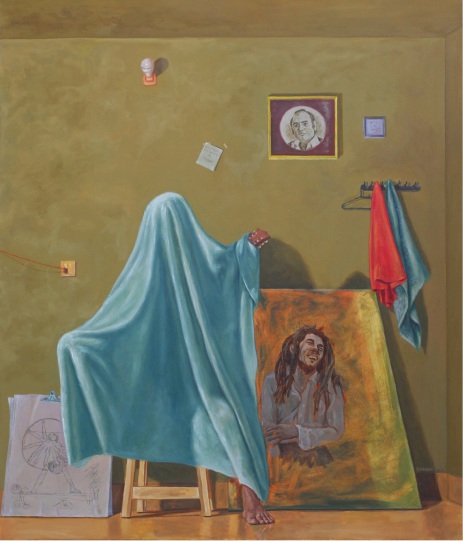
Listening Matters Most by Shahzad Baloch
Aakash Jivraj’s work stands out for its bold critique of conformity and the masks people wear to navigate societal expectations. His paintings employ expressive brushwork and recurring symbolic motifs, the slipper as a sign of domestic restraint and the fish as a metaphor for limited perception and illusion to probe tensions between individuality and assimilation.
The Portrait: a central figure sits vulnerably in underwear on a makeshift pedestal, holding a fish while a surreal fish head emerges from a mirror reflection and a diminutive red-clad figure dangle nearby. The striped blue background evokes confinement, like wallpaper in a domestic interior, amplifying feelings of exposure and self-scrutiny. The man’s direct gaze and the absurd yet poignant elements, a fish as both catch and illusion, underscore the delusion of self-completeness within narrow boundaries. Jivraj’s visceral strokes convey psychological unrest, turning the canvas into a site of resistance against inherited norms that stifle authentic expression.
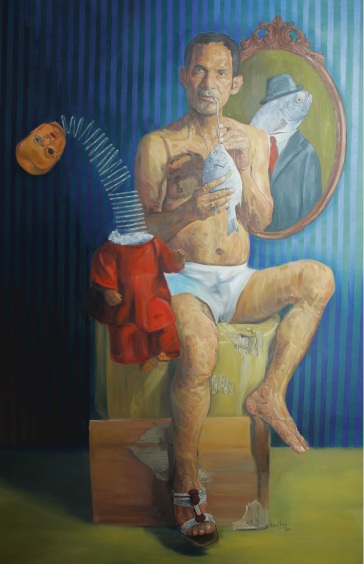
The Portrait by Aakash Jivraj
Let’s Paint The Sea! captures a painter in a moment of ironic aspiration. The figure, shirtless and seated amid art supplies, holds a brush while a large fish protrudes from his head, superimposed with a small canvas depicting an oceanic scene teeming with fish. The palette knife and scattered bottles suggest creative labor, yet the fish motif humorously yet poignantly highlights the irony: the artist attempts to “paint the sea” while trapped in personal limitation, much like the fish believing its bowl encompasses the ocean. Through material experimentation, blending painterly realism with symbolic intrusion, Jivraj exposes the quiet compromises of identity, urging viewers to question surface-level perceptions and embrace the discomfort of breaking free from conditioning.
Shahzad Baloch brings a cinematic restraint to his depictions of everyday solitude and introspection. Drawing from photography as a preparatory tool, he translates captured fragments of lived experience into contemplative compositions where mood, space, and subdued color palettes carry emotional weight. His works avoid melodrama, instead allowing subtle gestures and ordinary settings to evoke deeper narratives of unease or quiet reflection.
What’s Up Mate: a young man in a blue tank top sits cross-legged on the floor, one arm extended dramatically with white tape streaming like a banner, wearing a makeshift mask and surrounded by casual detritus: a skull, playing cards, and a bottle. The green wall and tiled floor ground the scene in a modest interior, while the theatrical pose contrasts with the figure’s apparent exhaustion or playfulness. Baloch’s careful lighting and atmospheric depth transform this seemingly trivial moment into a loaded tableau, perhaps commenting on performative masculinity, escapism or the absurd rituals that fill empty time. The restrained brushwork invites lingering observation, revealing how mundane spaces absorb and reflect inner states.
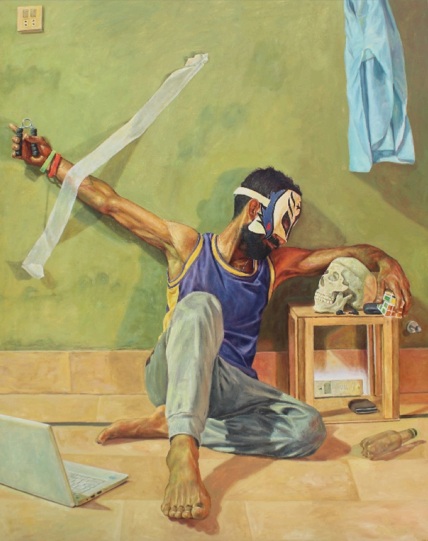
What's Up Mate by Shahzad Baloch
Remake presents an even more introspective vignette: a seated man in an office chair, head buried in his hands, wearing casual attire and slippers. Above him floats a small framed picture of two figures, suggesting memory or aspiration. The green wall and tiled floor create a sense of enclosure, with the figure’s posture conveying fatigue or defeat. Baloch masterfully uses negative space and soft tonal shifts to amplify emotional isolation, turning an ordinary chair-bound moment into a poignant meditation on repetition, regret, or the weight of routine. His practice reassembles photographic fragments into scenes that encourage viewers to pause and absorb the understated poetry of the everyday.
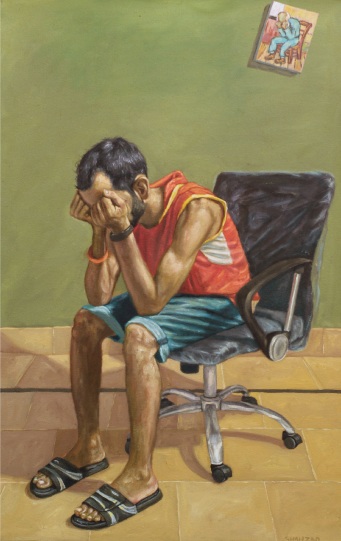
Remake by Shahzad Baloch
Zeenat Khan’s paintings offer a delicate counterpoint, rooted in realism and focused on memory’s fragility and the impulse to preserve. Her background in medical science lends precision to her observation, while bubble wrap and polythene recur as metaphors for protection, vulnerability, and emotional shielding. These everyday materials become visual anchors for exploring how selective recollection shapes personal narratives.
Time Flies depicting bubble wrap enveloping or framing intimate objects or figures as suggested by her thematic focus, Khan suspends moments in a state of careful guardianship. The translucent, textured wrap evokes both safeguarding and suffocation, preserving yet isolating what it covers. Her restrained palette and meticulous rendering highlight the tension between nostalgia’s comfort and its potential distortion, portraying memory not as static but as a continually reinterpreted construct. The paintings function as wrapped relics, inviting reflection on rituals like collecting or journaling that provide illusory control over fleeting experiences.
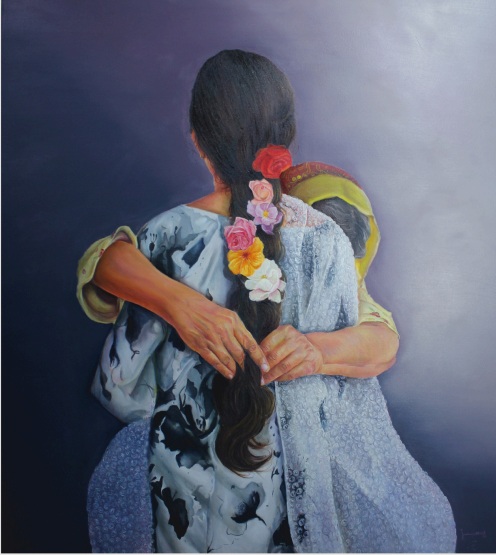
Time Flies by Zeenat Khan
Delusions extend this metaphor, perhaps showing polythene layers or wrapped forms that symbolize emotional barriers. Khan’s close attention to surface and texture transforms humble materials into profound symbols of attachment and loss. Her work gently probes how charged moments imprint psychologically, offering comfort through preservation while acknowledging memory’s inherent selectivity and fragility.
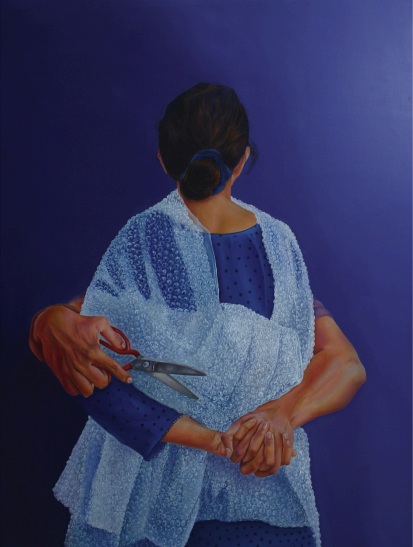
Delusions by Zeenat Khan
Collectively, “The Space We Inhabit” coheres around shared concerns with interiority and environment, yet each artist carves distinct paths: Jivraj through symbolic disruption, Baloch via atmospheric restraint, and Khan with metaphorical delicacy. Curated by Syed Faraz Ali, the exhibition benefits from his sensitive pairing of works that resonate without forcing uniformity.
The Orchard, under Roma Larek’s vision, provides an ideal setting its location blending art with nature to host such introspective dialogue.
As Islamabad’s art landscape grows, The Orchard stands as a promising space for emerging talent, prioritizing thoughtful curation and meaningful encounters. This inaugural show sets a high standard, reminding us that the spaces we inhabit - physical, emotional, societal - are continually shaping and shaped by the traces we leave behind.
You may also like:
From the Horn of Africa to Bahria Town: Habesha Café Brings Centuries of Coffee Culture to Rawalpindi
(October 15, 2026)