Written by: Muhammad Hamza
Posted on: February 27, 2026 |  | 中文
| 中文
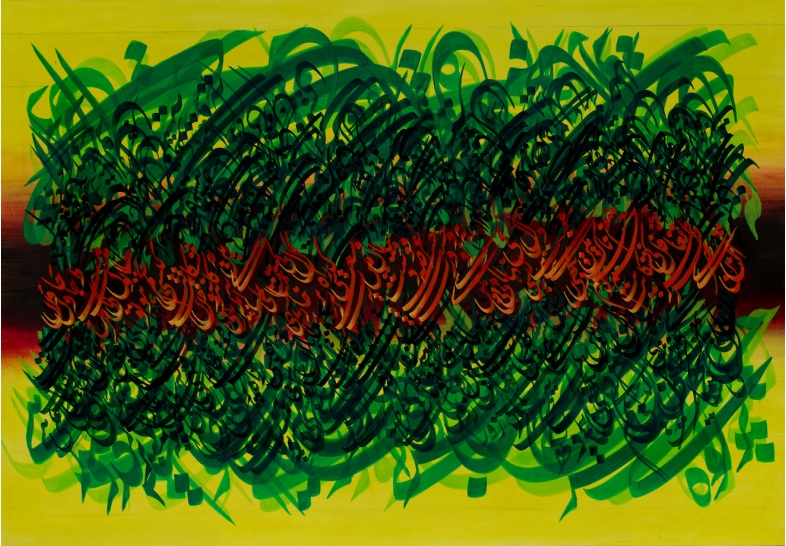
Untitled, 2026
In the exhibition Zikr at Satrang Gallery inside Islamabad Serena Hotel, artist Qasim Bugti invites viewers into a quiet world of reflection and spiritual rhythm, curated by Fatima Maqbool. The show brings together calligraphy and miniature painting traditions in a fresh way. Bugti, a talented artist from Balochistan, uses repetition like the Sufi practice of zikr, where words or phrases are repeated to remember the Divine.
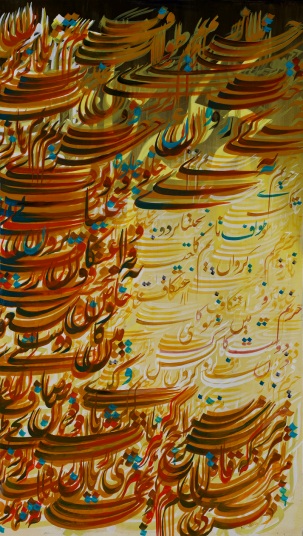
Untitled, 2026
His paintings feel like meditative prayers made visible through flowing lines, poetic words, and layers of color. As the director Asma Rashid Khan notes, these works are not just to be read literally but to be felt as an inner stillness. Bugti draws from Sufi poetry, especially verses by Professor Mirza Ghulam Rasool Azhar, turning familiar Nastaliq script into something deeply contemplative. Here are six standout pieces from the show that capture the heart of his vision.
Aalam-e-Arwah stands out with its deep blue and purple background that feels like a night sky or an endless spiritual realm. Sweeping curves in bright turquoise and red flow across the canvas like waves or rising flames. The Nastaliq letters twist and overlap in graceful motion, creating a sense of movement that pulls the eye along endless paths. This piece evokes the world of souls, where everything is connected and in constant gentle flow. The layers give depth, as if the words are emerging from darkness into light, reminding us of the soul’s journey beyond the material world. Bugti’s use of color here feels alive and breathing, turning abstract forms into a quiet celebration of existence.
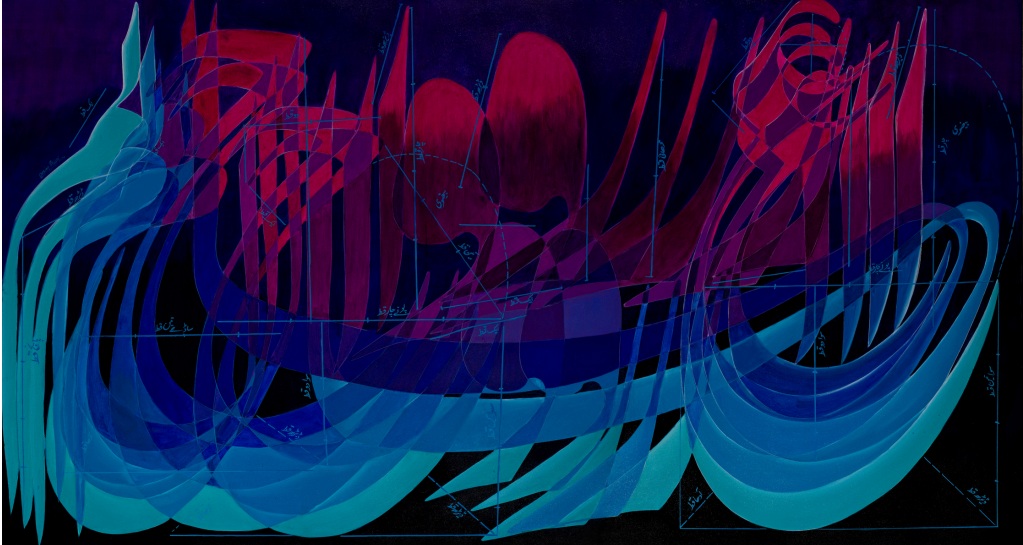
Aalam-e-Arwah, 2026
Ishq bursts with warm energy through bold yellows, reds and oranges against a dark ground. The calligraphy loops and curls in repeating patterns that look almost like hearts or flames dancing together. Each stroke builds on the last, creating a rhythm that mirrors the intensity of love in Sufi poetry. The word “ishq” itself suggests passionate divine love, and Bugti makes it feel alive through these vibrant, overlapping forms. The composition flows horizontally like a wave of emotion, pulling the viewer into its warmth. It shows how repetition can build power rather than tire the eye, much like chanting a name until it fills the heart.
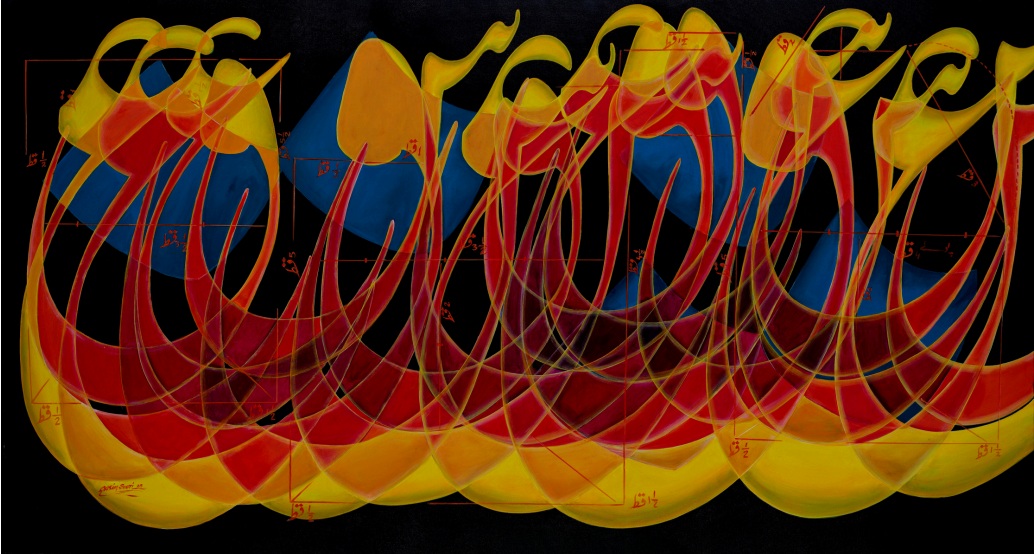
Ishq, 2025
One Untitled work from 2026 uses a mostly black and white palette to create strong contrast. Thick, bold strokes of black calligraphy rise and fall in layered waves across a light background. The forms stack and intersect, building a sense of depth and shadow. Some letters appear solid and grounded while others fade into lighter marks, suggesting layers of meaning or memory. This piece feels architectural, like a structure built from words, yet it remains fluid and organic. The absence of bright color lets the focus stay on the texture and movement of the lines, inviting slow looking and inner calm. It captures the idea of zikr as a steady, disciplined practice that leads to clarity.
Another Untitled piece glows in deep blue tones on a dark canvas. The Nastaliq script appears luminous, almost floating in the night-like space. Words stack vertically and curve softly, creating a column of light that rises upward. The blue varies from bright highlights to softer shadows, giving the calligraphy a three-dimensional quality. It feels like prayers ascending or light breaking through darkness. This work shows Bugti’s skill in making script feel alive and spiritual, not flat or decorative. The quiet intensity here echoes Sufi ideas of inner illumination, where repetition brings hidden truths to the surface.
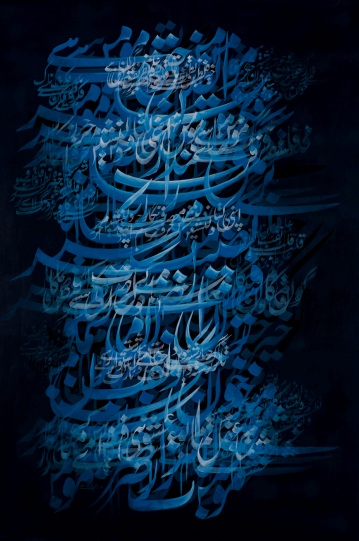
Untitled, 2026
Untitled from 2026 uses rich green as the main color, layered with subtle hints of other shades. The calligraphy forms a central mass that resembles a ribcage or a blooming flower made of words. Letters curve and overlap in tight formations, building a sense of fullness and life. The green evokes growth, nature, and renewal, common themes in Sufi thought about the soul’s connection to the Divine. This piece feels organic and breathing, as if the words are pulsing with quiet energy. Bugti’s layering technique makes the surface rich and textured, encouraging viewers to linger and discover new details with each look.
Untitled work from 2025 explodes with warm reds, oranges, and yellows in a layered composition. The calligraphy fills the canvas in overlapping bands, creating a fiery, energetic field. Words twist and turn in dynamic ways, yet the repetition keeps everything balanced. The colors shift from deep red at the base to brighter yellows above, suggesting a rising flame or a sunrise of emotion. This piece captures the passionate side of spiritual devotion, where love for the Divine burns brightly. The bold palette contrasts with the calmer tones in other works, showing the range of feelings Bugti explores through his meditative process.
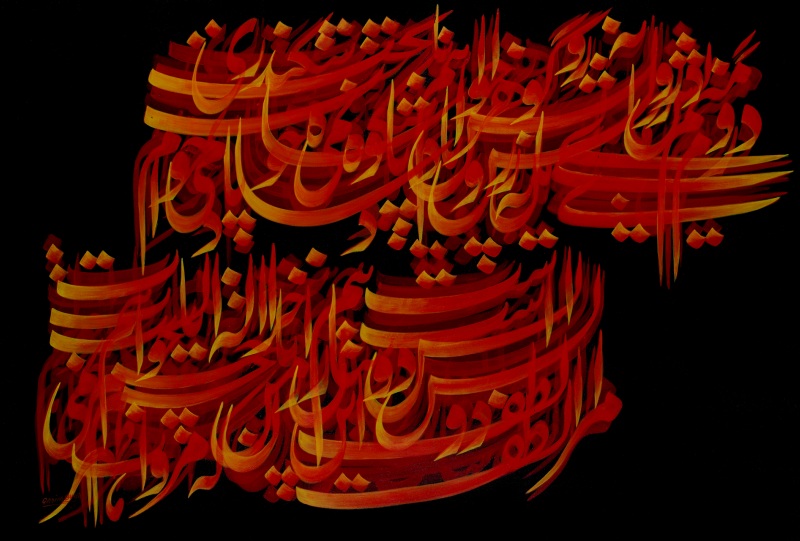
Untitled, 2025
Across these paintings, Bugti transforms everyday script into something sacred. He blends the precision of miniature painting with the freedom of contemporary expression, always rooted in discipline and reflection. Repetition becomes a tool for presence, turning canvas into a space for quiet prayer.
The influence of Sufi poetry adds emotional depth, making the works feel personal and universal at once. In Zikr, Bugti reminds us that art can be a path to inner silence and connection. His paintings do not shout; they whisper, inviting viewers to slow down, breathe, and remember. This solo show at Satrang Gallery celebrates not just skill but the timeless power of remembrance through line and color. Bugti’s journey as an artist shines here, offering a beautiful bridge between tradition and the present moment.
You may also like: