Written by: Muhammad Suhayb
Posted on: July 01, 2025 |  | 中文
| 中文
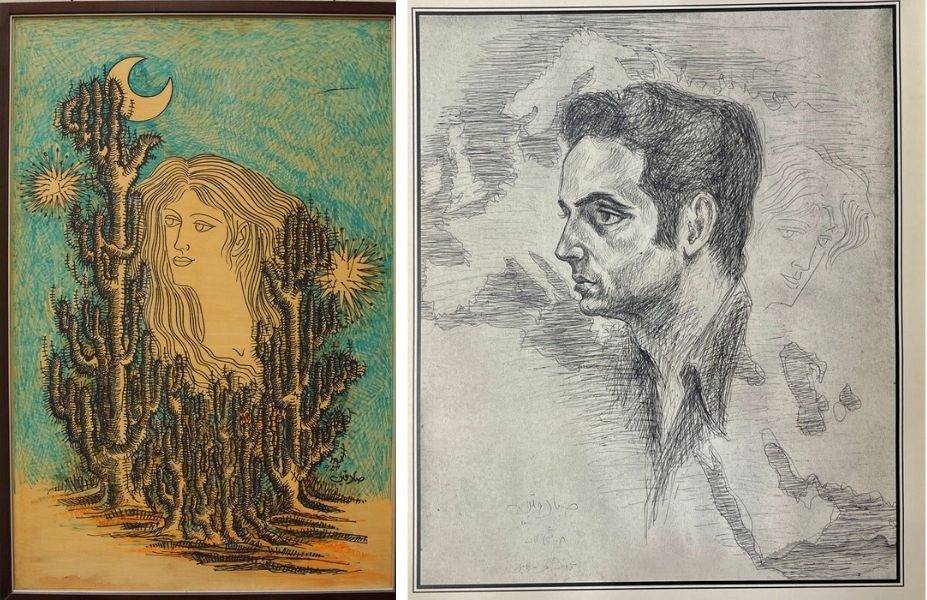
A Sadequain painting (L) and Mustansar Hussain Tarar’s poster (R) in Niklay Teri Talash Mein, Sadequain Edition by Mustansar Hussain Tarar.
For many in today’s generation, names like the legendary artist Sadequain, the master short story writer Saadat Hasan Manto or the unforgettable voice of Noor Jehan may feel like fading echoes from a bygone era. To reconnect with such towering figures, it takes someone equally gifted, and in Baata’n Mulaqata’n, seasoned writer Mustansar Hussain Tarar does just that. With his signature warmth, insight and storytelling flair, he brings these cultural icons to life, bridging the generational divide through vivid, intimate encounters.
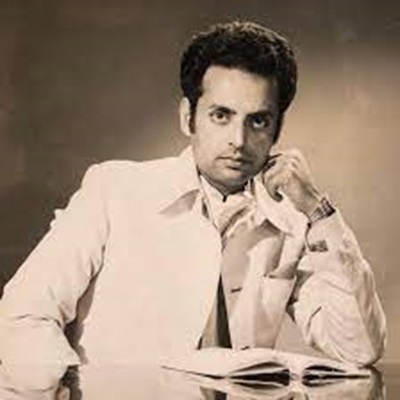
Young Mustansar Hussain Tarar
The 207-page book offers a profound exploration of Pakistan's cultural and literary heritage through the author's encounters. Tarar, himself an acclaimed actor, a charismatic television host, a seasoned traveler and a master with the pen, draws from a lifetime of rich experiences. Sadequain may have died nearly four decades back and Manto, another thirty years earlier, and Noor Jehan as recent as 1999, but Tarar's memory and words make them someone who had been just around.
The book, comprising eight chapters, devotes three to Abdullah Hussain, the acclaimed author of Udaas Naslain, one of the most celebrated novels in Urdu literature. The writer brings that narrative flair into his writing, with the chapter on Abdullah Hussain begins with his burial and unfolds through a moving flashback of their friendship.

(L to R) Abdullah Hussain, Sumair Tarar and Mustansar Hussain Tarar
As contemporaries and close family friends, Tarar and Hussain shared a profound personal bond, one that was deeply affirmed when, just before slipping into a coma, Hussain’s final words echoed Tarar’s name. Their very first meeting is a testament to Tarar’s curiosity and sharp perception: mistaking Hussain for a foreigner, Tarar did not initially recognize the famous author. However, once he did, what began as an accidental encounter blossomed into a lifelong friendship. Hussain died in 2015 and with him a huge part of nostalgia.
Similarly, the bond between famous writer Intizar Hussain and Mustansar Hussain Tarar was one of quiet respect and sincere camaraderie, a friendship without favor. Rooted in mutual admiration rather than personal gain, their relationship stood out in a literary world often marked by rivalry and ego. It was a bond built not on flattery or influence, but on a shared love for language, reflection and wisdom. Intizar Hussain, who passed away in 2016, was known for his sharp, incisive wit and a storytelling style steeped in quiet depth. According to Tarar, Hussain’s only recurring concern was his deep preoccupation with themes of nostalgia, migration and the cultural dislocation brought on by the Partition of India. Yet, the author acknowledges that with time, such themes inevitably seep into the fabric of a writer’s work, becoming not just personal obsessions but universal truths.
Another prominent figure in the book is Saadat Hasan Manto, Tarar’s former neighbor at the iconic Laxmi Mansion. From fleeting encounters with Manto in the 1950s to later interactions with his daughters recently, and ultimately a poignant return to the now-demolished building, Tarar weaves a narrative rich in nostalgia, warmth, and wit, one that could easily serve as the basis for a compelling documentary.
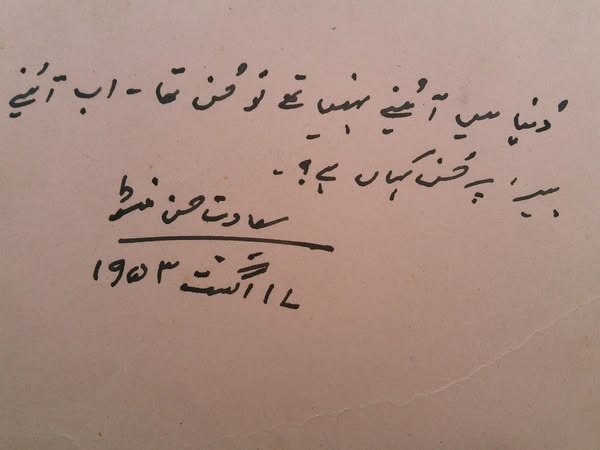
Manto's autograph
One particularly humorous anecdote recalls a teenage Tarar nearly becoming a character straight out of a Manto story, a moment both amusing and memorable. The author fondly remembers the affection Manto showed toward children, highlighting a softer, often overlooked side of the writer. He also firmly rejects rumors of Manto arriving tipsy at the gate of Laxmi Mansion, instead portraying him with admiration and the respect due to one of Urdu’s greatest literary minds.
Laxmi Mansion, where the author spent part of his childhood, also features prominently in the chapter on Saadat Hasan Manto. More than just a residence, Laxmi Mansion becomes a vivid character in its own right, a symbol of pre-Partition cosmopolitan Lahore. Tarar reflects on the diverse ethnic and cultural backgrounds of the residents who lived there, painting a rich portrait of a community shaped by coexistence, transition and history.
Interestingly, whether writing about Manto or Abdullah Hussain or others, Tarar maintains a narrative style that runs parallel to his own life story. Manto represents the writer’s connection to the Lahore of the 1950s, while Abdullah Hussain and Intizar Hussain reflect more recent chapters of his journey, creating a seamless blend of personal memoir and literary tribute.
One notable narrative recounts Tarar's collaboration with the renowned artist Sadequain for the cover and illustrations of his book Niklay Teri Talash Mein. Despite initial reluctance, the legendary artist agreed to the project, leading to a creative partnership filled with challenges and mutual respect. This chapter highlights the intricacies of artistic collaboration and the personal dynamics that influence creative processes.
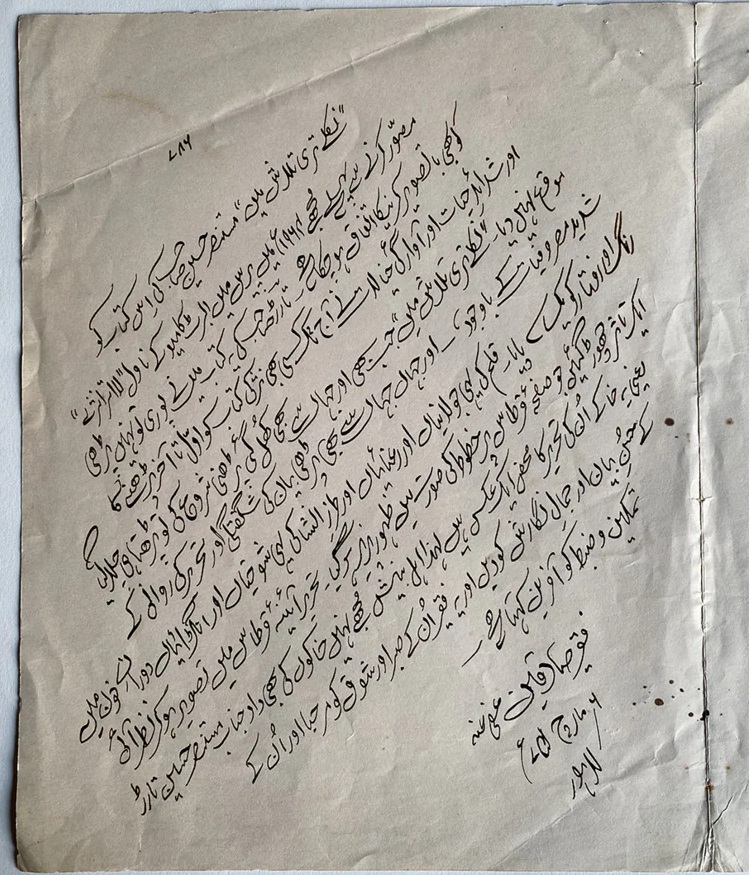
Sadequain's thoughts on Niklay Teri Talash Mein, Sadequain Edition by Mustansar Hussain Tarar
Known for his moody temperament, as is often the case with highly creative individuals, Sadequain's deep friendships with writers, philosophers and poets revealed a more thoughtful, engaged side, one that thrived on intellectual and artistic exchange. From the painter's fear of crossing a road, to donating a Tarar's portrait to a woman and excuses he made later, Sadequain and the author went a long way back. Their friendship started when Sadequain was in Lahore and the author was building his reputation as an anchor.
The final chapter of the book is devoted to Madam Noor Jehan, the legendary singer, actor and cultural icon. Though their association was not as long-standing as some of the author's other friendships, it was marked by mutual respect, admiration and a touch of playful charm. Noor Jehan, an admirer of Tarar’s writing, would teasingly ask him whether his name was spelled with a Seen or a Suaad, a light-hearted exchange that reflected her wit and warmth. According to Tarar, Madam Noor Jehan was not only a musical genius but also a natural storyteller, with a sharp sense of humor and an engaging personality. Their brief yet meaningful interactions offer readers a rare, personal glimpse into the human side of a woman revered across generations, making this final chapter a fitting tribute to her enduring legacy.
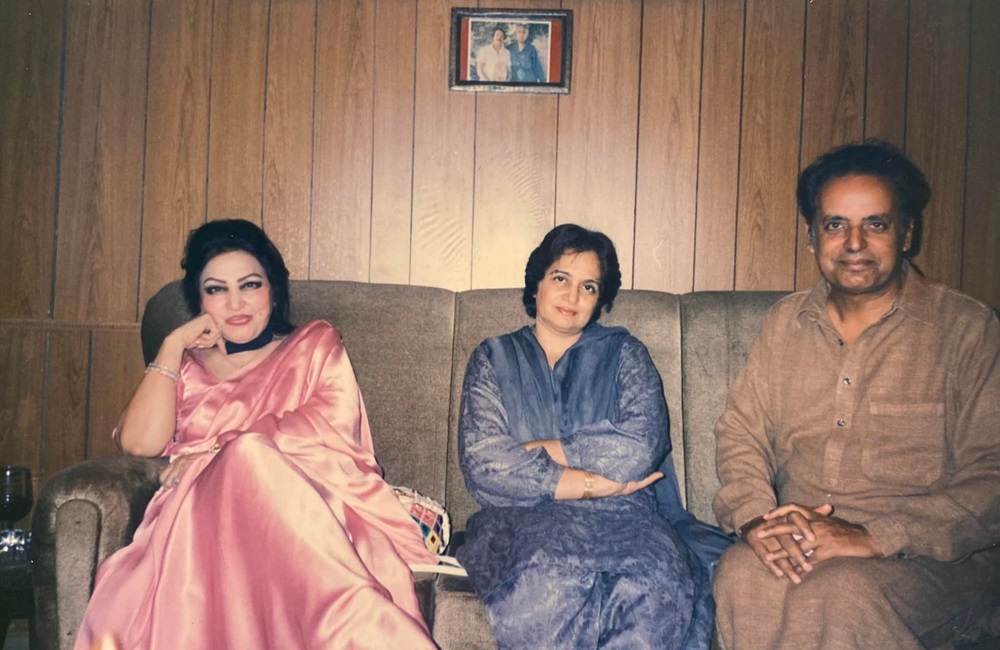
Mustansar Hussain Tarar with Madam Noor Jehan
In Baata’n Mulaqata’n, Mustansar Hussain Tarar brings to life the moments, voices and emotions of a fading era. With warmth, wit and storytelling finesse, he offers readers a close glimpse into the lives of some of Pakistan’s most legendary literary and cultural figures, so much so that the next time you hear their names, you will smile, feeling as if you know them personally.
You may also like:
From the Horn of Africa to Bahria Town: Habesha Café Brings Centuries of Coffee Culture to Rawalpindi
(October 15, 2026)