Written by: Muhammad Suhayb
Posted on: October 30, 2025 |  | 中文
| 中文
Introduction of the character, Manjula Nayak, in the show Broken Images.
Have you ever looked into a mirror and wondered — is that really me? Am I the person I claim to be, or just an image carefully built for the world to see?
Girish Karnad’s Broken Images begins from that uneasy question: the split between the self we live with and the one we project. It is a haunting psychological drama that turns a simple act of self-reflection into an interrogation of truth and identity. The play follows a writer, basking in sudden fame, who finds herself confronted by her own recorded image: one that knows her secrets and refuses to stay silent. Through sharp dialogue and layered storytelling, Broken Images unravels the fragile line between truth and illusion, identity and imitation, guilt and glory.
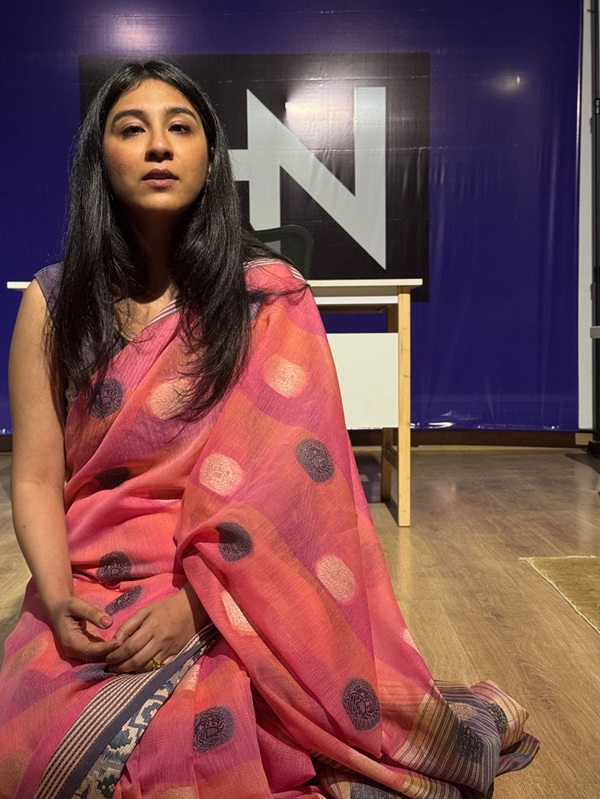
A close-up of Rana's performance
Originally written in Kannada over two decades ago, the play was later translated and staged in English as Broken Images. Many may remember Girish Karnad as Salman Khan’s boss in Ek Tha Tiger, but his real legacy lies in his writing. He was also a noted political activist and public intellectual, who passed away in 2019 at the age of 81.
Coming back to the play, Broken Images was first produced in India in 2005, quickly transcended linguistic and cultural boundaries. Its universal themes of guilt, self-deception, and the masks people wear resonated with audiences everywhere, earning critical acclaim wherever it was staged. Over the years, the play has travelled across continents, performed by some of the most respected names in theatre.

The character watching her on television
Over the weekend, MOUJ, a small yet dynamic theatre company founded by Raana Kazmi, Sana Toaha Fraidi and Yogeshwer Karera, brought this celebrated drama to life at T2F in Karachi, reintroducing local audiences to Girish Karnad’s genius through a beautifully restrained and emotionally charged performance. Much like the fabled line “Mirror, mirror on the wall,” the reflection here did not flatter, it exposed. It became the mirror that speaks back, forcing the writer to face the truths she had long concealed, setting the stage for the unsettling self-confrontation that was to follow.
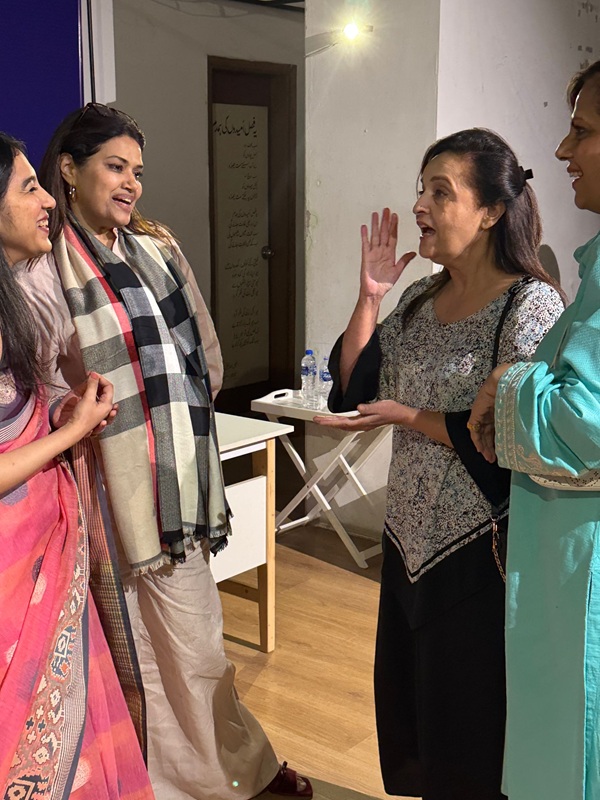
Sana Toaha Fraidi and Rana Kazmi with guests
The original story of Broken Images revolves around Manjula Nayak, a modestly successful writer who gains sudden fame after publishing an English novel, a work that might not entirely be her own. Manjula, married to Pramod Nayak, has a younger sister, Malini, who was mostly confined to a wheelchair and lived with them for six years before her death. Pramod, a software engineer who worked from home, gradually formed a close bond with Malini, a relationship that would later cast long shadows over Manjula’s conscience and success.
What follows is not a conventional narrative, but a tense and intimate dialogue between Manjula and her recorded image, presumably her dead sister, which gradually blurs the line between truth and illusion. Through this haunting confrontation, the audience witnesses the collapse of a carefully constructed identity.
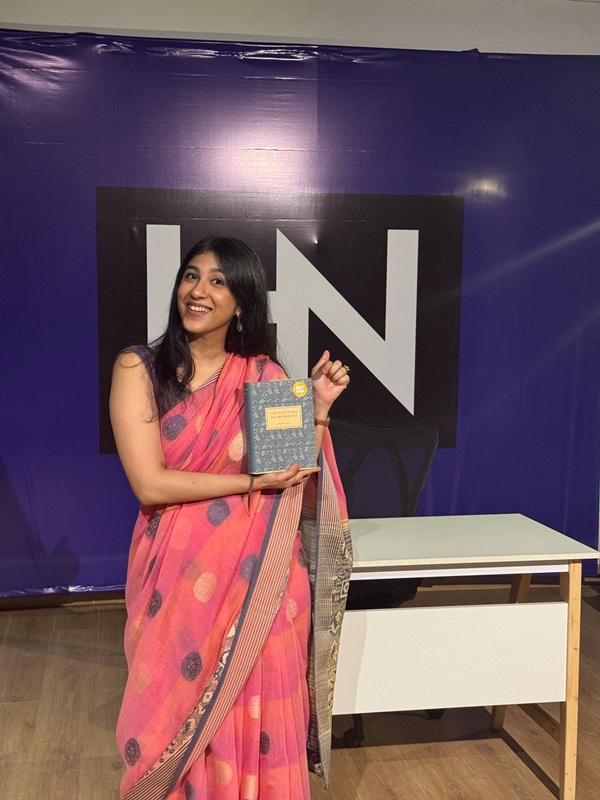
Showing off her book
MOUJ’s adaptation brought a refreshing local texture to the performance, blending subtle humor with emotional depth while remaining faithful to Karnad’s writing. Raana Kazmi, who earlier portrayed Sita in Ramayan, a production that was applauded when staged in Karachi earlier this year, delivered a commanding performance in the dual role of Mehreen and Mehjabeen. Her nuanced expressions and controlled delivery gave the illusion of two distinct women - one real, one virtual - engaged in a battle of conscience and memory. The way she shifts from one emotional extreme to another, the moment she appears trapped in the room, and the intensity with which she confronts her other self, made it clear that this lady meant business.
Much like Ramayan, the play was directed by Yogeshwer Karera with remarkable precision. With no other actors sharing the stage, Karera’s direction relied entirely on timing, tension and the choreography between the live actor and the projected image. The result was a gripping hour of theatre that held the audience’s attention through silence as much as through speech. The seamless synchronization between the two “selves” created a striking illusion of dialogue between reflection and reality, leaving the viewers questioning what was real and what was performance.

MOUJ team
Performed across the world by theatre greats such as Shabana Azmi, Broken Images has long been regarded as a benchmark for psychological drama. The MOUJ production, however, offered a refreshing and grounded take, stripped of theatrical excess, focused instead on intimacy and inner turmoil. It gave the Karachi audience a clear view of how the story unfolds beneath the surface, how fame can fracture a person, and how one’s “image” can become one’s harshest critic.
In the end, Broken Images is less about fame or deceit and more about the human condition — the fragile layers of identity that we build, often on borrowed truths. Through its simple setting and powerful performance, MOUJ reminded us that sometimes the greatest confrontation is not with another person, but with the reflection staring back at us.
You may also like:

From the Horn of Africa to Bahria Town: Habesha Café Brings Centuries of Coffee Culture to Rawalpindi
(October 15, 2026)