Written by: Anum Zaeem
Posted on: March 05, 2026 |  | 中文
| 中文
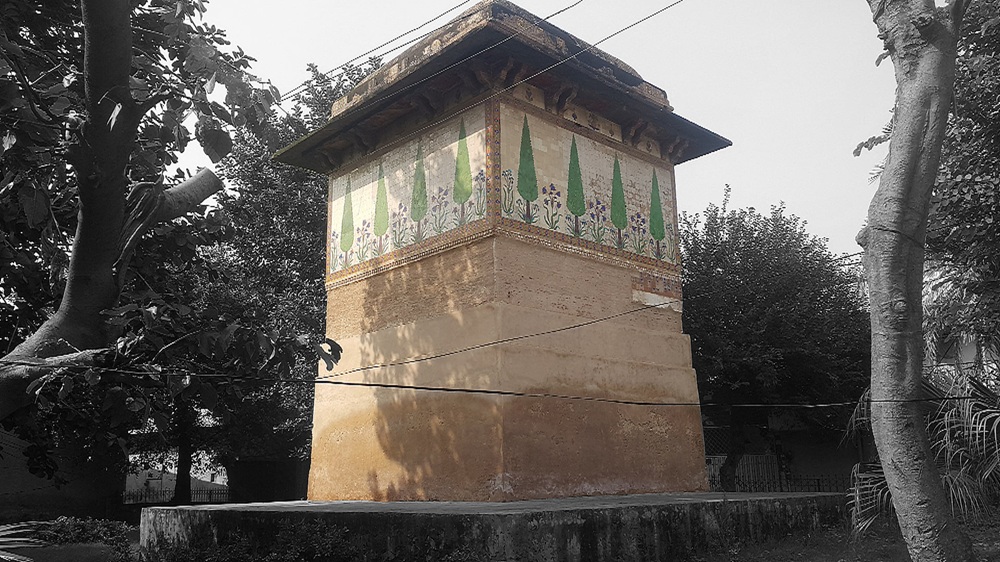
Cyprus Tomb, Lahore
In the historic city of Lahore, where magnificent Mughal monuments define the cultural landscape, the Cypress Tomb stands quietly as a lesser-known yet deeply meaningful architectural treasure. Overshadowed by grand structures nearby, this tomb carries its own unique charm, artistic depth, and historical mystery. Though smaller in scale compared to royal mausoleums, it reflects the elegance, symbolism and craftsmanship of the Mughal era.
The Cypress Tomb dates back to the 17th century during the height of Mughal rule in the Indian subcontinent. Historians believe it was constructed during the reign of either Jahangir or Shah Jahan. However, the exact identity of the individual buried inside remains uncertain. Most scholars suggest that it belonged to a nobleman, court official, or a high-ranking member of the Mughal administration.
The tomb is located near the River Ravi and stands not far from the majestic Tomb of Jahangir. This proximity places it within one of Lahore’s most historically significant Mughal zones, an area that once flourished with imperial gardens and royal architecture.
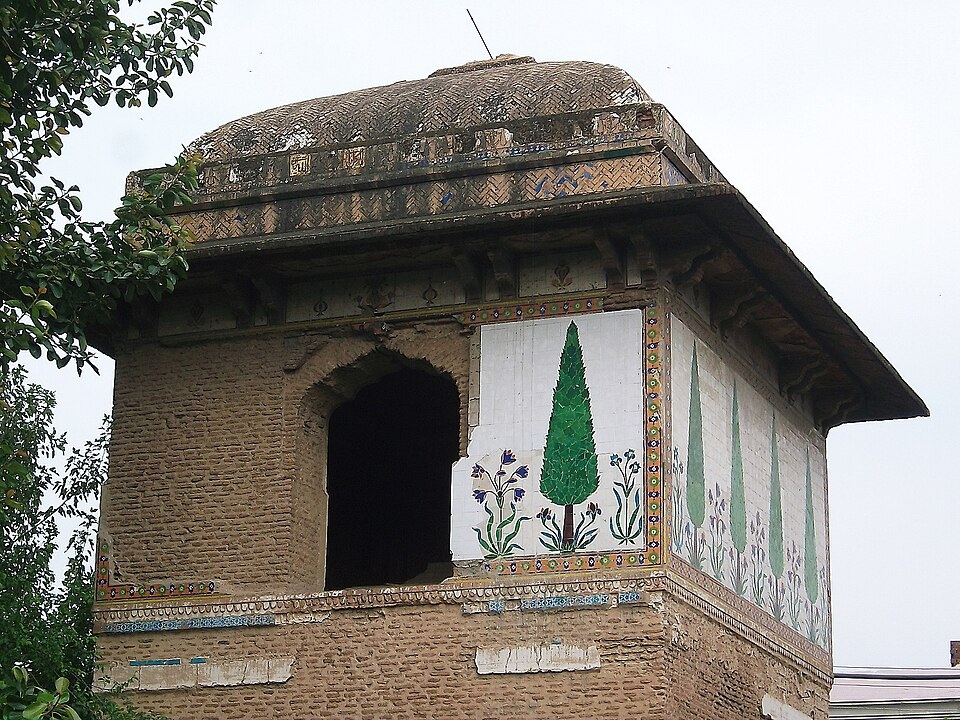
Elevated Entrance to the chamber
The name “Cypress Tomb” comes from the decorative cypress tree motifs found within the structure. In Persian and Mughal symbolism, the cypress tree, known as sarv, represents eternity, strength and immortality. Because of this symbolic meaning, the tree frequently appeared in Mughal art and funerary architecture. Its presence inside the tomb reflects the spiritual concept of everlasting life after death.
The tomb is also locally referred to as Sarwala Maqbara, which directly connects to the cypress design theme.
Although modest in size, the Cypress Tomb beautifully reflects Mughal architectural traditions. The structure is square in shape and crowned with a dome, a common design element in Mughal mausoleums. Each side features arched openings, creating symmetry and balance, key characteristics of Mughal architecture.
The building materials include brick masonry covered with lime plaster. Despite the damage caused by time and weather, one can still observe intricate frescoes and stucco decorations on the interior walls. These decorations once displayed vibrant colours and detailed floral patterns typical of Mughal artistry.
Unlike grand monuments such as the Badshahi Mosque, which were built to impress with scale and royal power, the Cypress Tomb offers a more intimate and peaceful architectural experience. Its beauty lies in its detail rather than its size.
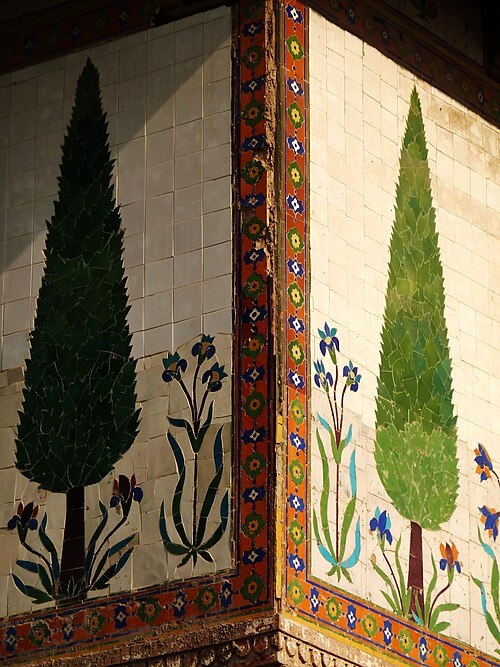
The Cypress motif
The interior decoration of the tomb is particularly noteworthy. The fresco paintings include floral motifs, geometric patterns, and the famous cypress tree illustrations. These elements reflect Persian artistic influence, which heavily shaped Mughal art and architecture.
The cypress motif symbolizes not only immortality but also spiritual resilience. In Islamic Garden design, the cypress tree often stands tall among flowering plants, representing dignity and faith. This symbolic layering gives the tomb both artistic and spiritual depth.
Though some artwork has faded over centuries, conservation efforts have helped preserve portions of the original frescoes, allowing visitors to glimpse the monument’s former grandeur.
While Lahore is famous for iconic Mughal landmarks, smaller monuments like the Cypress Tomb are equally important in understanding the city’s layered history. These structures reveal how Mughal architectural beauty was not limited to emperors alone but extended to nobles and influential personalities within the empire.
The tomb also reflects the Mughal tradition of building garden tombs near rivers. Water symbolized purity and paradise in Islamic architecture, and the River Ravi once enhanced the tomb’s serene atmosphere.
Today, the Cypress Tomb stands as a reminder of Lahore’s rich past and the artistic sophistication of the Mughal period. It may not attract large crowds like Lahore Fort, but its quiet presence speaks of forgotten stories and timeless artistry.
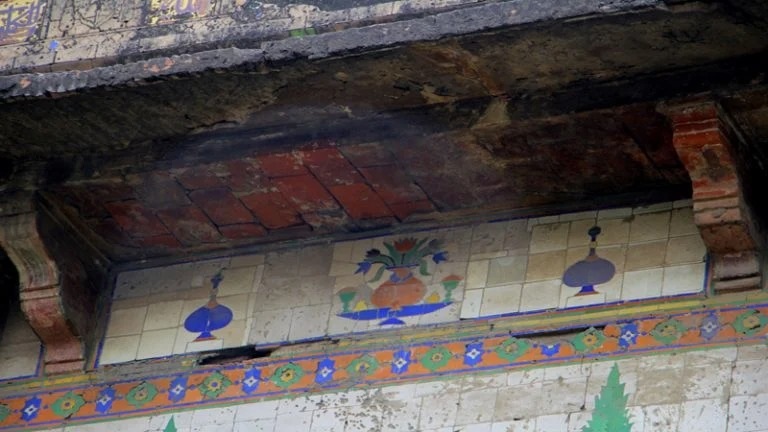
A closer look at the delicate tilework of the Cypress Tomb, where floral motifs and traditional patterns quietly decorate the weathered brick façade.
Visitors who explore the Mughal heritage sites around Lahore often find the Cypress Tomb to be a peaceful stop away from the busier tourist attractions. The calm surroundings allow one to appreciate the architectural details without distraction. The structure’s aged walls, faded frescoes, and historic atmosphere create a sense of stepping back into the 17th century.
For students, historians and cultural enthusiasts, the tomb offers insight into Mughal decorative techniques and funerary architecture. Photographers also find its textures and patterns visually compelling.
Like many historical sites in the region, the Cypress Tomb has faced challenges due to environmental exposure and urban development. However, heritage authorities have made efforts to preserve the structure and protect its remaining artwork. Continued awareness and conservation are essential to maintain this important piece of Mughal history for future generations.
The Cypress Tomb may not be the largest or most famous monument in Lahore, but it carries quiet historical significance. Its symbolic cypress motifs, Mughal-era architecture, and artistic frescoes make it a valuable part of the city’s heritage. Nestled near grand imperial monuments, it reminds visitors that history is not only written in massive forts and mosques but also in smaller, elegant structures that hold stories of devotion, artistry, and remembrance.
You may also like: