Written by: Muhammad Suhayb
Posted on: June 27, 2025 |  | 中文
| 中文
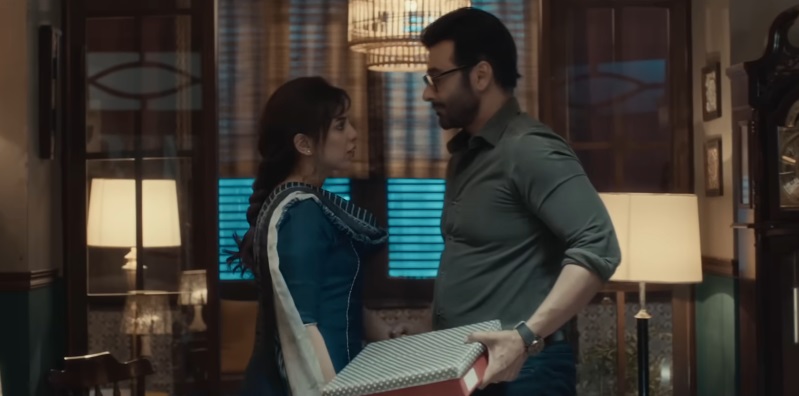
Faysal Qureshi and Sonia Hussyn in Deemak
I was writing a piece the other day, literally, when the curtain in my study suddenly moved. I froze, heart racing, convinced for a split second that a djinn had entered the house. That’s the kind of lingering impact Deemak, a psychological horror film released on Baqr Eid, leaves on its viewers.
Director Rafay Rashdi’s second full-length feature may not be a typical crowd-pleaser—it doesn’t have thumkay-daar songs or a flawlessly polished narrative, but it offers an experience worth a trip to the cinema. A long-time admirer of ad and film director Saeed Rizvi, the man behind Sar Kata Insaan (1994), arguably Pakistan’s last notable horror film, Rafay has come a long way since his 2017 misstep Thora Jee Le. With Deemak, he finally delivers a film that resonates. Following his work on the web series Baadshah Begum and the internationally acclaimed short film Jaamun Ka Darakht, Rafay shows clear growth as a filmmaker. With more experience, one can imagine him creating even more refined and impactful cinema.
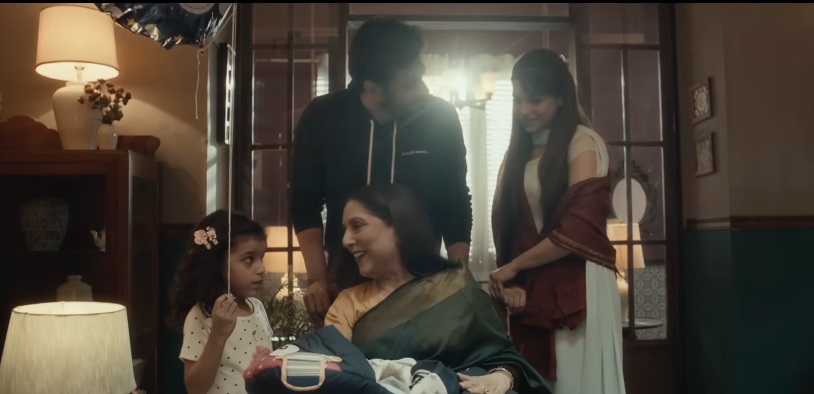
Faysal Qureshi, Samina Peerzada and Sonya Hussyn in one of the scenes.
Deemak blends traditional family drama with creeping supernatural tension, marking Lollywood’s latest venture into the horror genre. The title, Urdu for “termites”, is a powerful metaphor for the hidden decay quietly eating away at both the family unit and their spiritual safety. Screenwriter Ayesha Muzaffar, known for novels like Jinistan, Abu Jinn, and Jinnistan Ki Wapsi, brings her signature touch of the supernatural to the script. The 100-minute film evokes nostalgic memories of STN’s Mystery Theatre, which introduced many in my generation to psychological horror.

Sonya Hussyn, Faysal Qureshi and the kid in one of the haunting scenes.
The story opens with an earthquake, eerily coinciding with real-life tremors in Karachi around the time of the film’s premiere. In its aftermath, djinns escape from the disturbed area and take refuge in the home of Faraz, his wife Hiba, their children, and his domineering mother. As unexplained events begin to plague the household, long-buried tensions rise to the surface. Actor/Host Faysal Quraishi makes a powerful return to the big screen; his last lead role predates co-star Sonya Hussyn’s acting debut as she was just a toddler then. As Faraz, a man torn between logic and superstition, he brings emotional depth, especially in portraying a character haunted by childhood trauma and his father’s abuse. His performance is both restrained and effective.
Sonya Hussyn, often unfairly compared to Bollywood actresses, shines as Hiba, a woman slowly unraveling under the weight of psychological and supernatural pressures. Samina Peerzada, whose character carries emotional scars of her own, commands the screen as the stern matriarch Kulsoom Begum. The way the veteran actress carried herself, combined with her powerful expressions, was absolutely captivating. Bushra Ansari, Javed Sheikh and Saman Ansari round out the cast with grounded performances that keep the story rooted in realism and help steer it away from typical horror clichés. Bushra Ansari, as the character who communicates with the djinns, plays a key role in helping Faraz accept the supernatural reality invading his home. Javed Sheikh, who also played Quraishi’s father in Panaah (1995), delivers a short but poignant performance, lending warmth and gravitas. Saman Ansari, though limited in screen time, adds quiet emotional strength that enhances the overall balance of the ensemble.
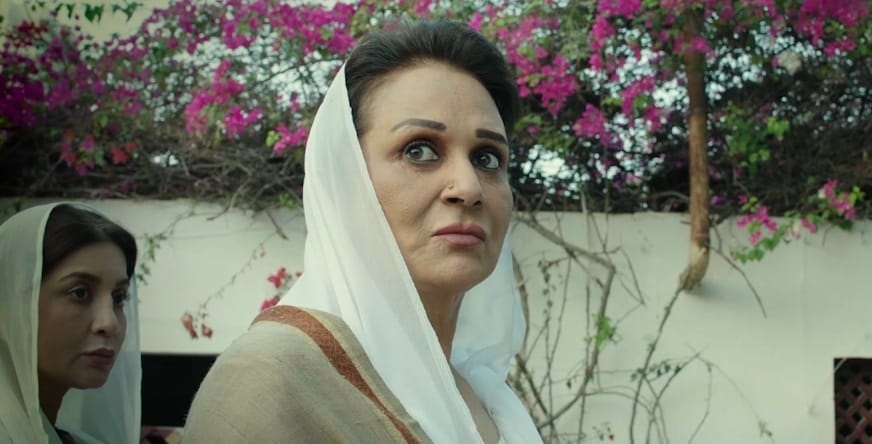
Saman Ansari and Bushra Ansari
Deemak distinguishes itself among Eid releases, outshining dubbed imported horror flicks. Much of its success is thanks to its excellent cinematography and immersive sound design. Cinematographer-turned-director Rana Kamran brings a sharp eye for detail that’s visible in every frame. The sound design, too, deserves applause, especially in scenes punctuated by spectral laughter or the creaking of unseen doors, where sound often overpowers visuals to great effect.

Sonya Hussyn and the kid
Canadian VFX producer Julia Millais brings a level of polish rarely seen in local horror productions. Floating objects, eerie shadows, and ghostly jinns are rendered convincingly and enhance the film’s unsettling tone. However, some CGI moments feel inconsistent, particularly during high-stakes scenes where full immersion is critical. Credit goes to the make-up team for amplifying the eerie presence of Samina Peerzada’s character in Deemak. Through nuanced detailing, like her weary eyes, ashen skin tone and aged features, they deepened Kulsoom Begum’s unsettling persona, making her appear suspended between the real and the otherworldly.
For those unfamiliar with or typically disinterested in horror, Deemak may feel ambiguous. The line between reality and the supernatural isn't always clearly drawn, demanding a more attentive viewing experience. Still, even viewers outside the horror fanbase can appreciate the film’s rare cinematic finesse, something still emerging in Pakistani filmmaking.
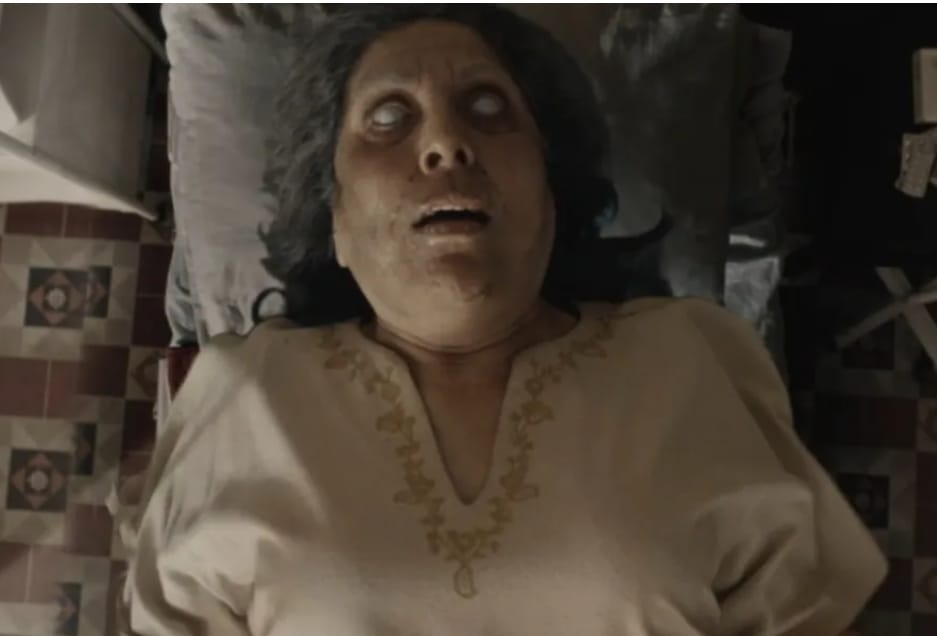
Samina Peerzada
In a film industry dominated by rom-coms and action-packed entertainers, Deemak is a bold experiment. It reimagines horror through a culturally relevant lens, one that explores not just haunted homes but haunted relationships, generational trauma and the quiet erosion of trust within families. Deemak isn’t just another release, it is a sign of Pakistani cinema evolving. It’s willing to break from formula, take creative risks, and tell stories that are deeply rooted in our culture while remaining universally resonant. It opens the door for more genre-defying films that aren’t afraid to be daring, thoughtful and different.
You may also like:

From the Horn of Africa to Bahria Town: Habesha Café Brings Centuries of Coffee Culture to Rawalpindi
(October 15, 2026)