Written by: Haroon Shuaib
Posted on: July 21, 2025 |  | 中文
| 中文
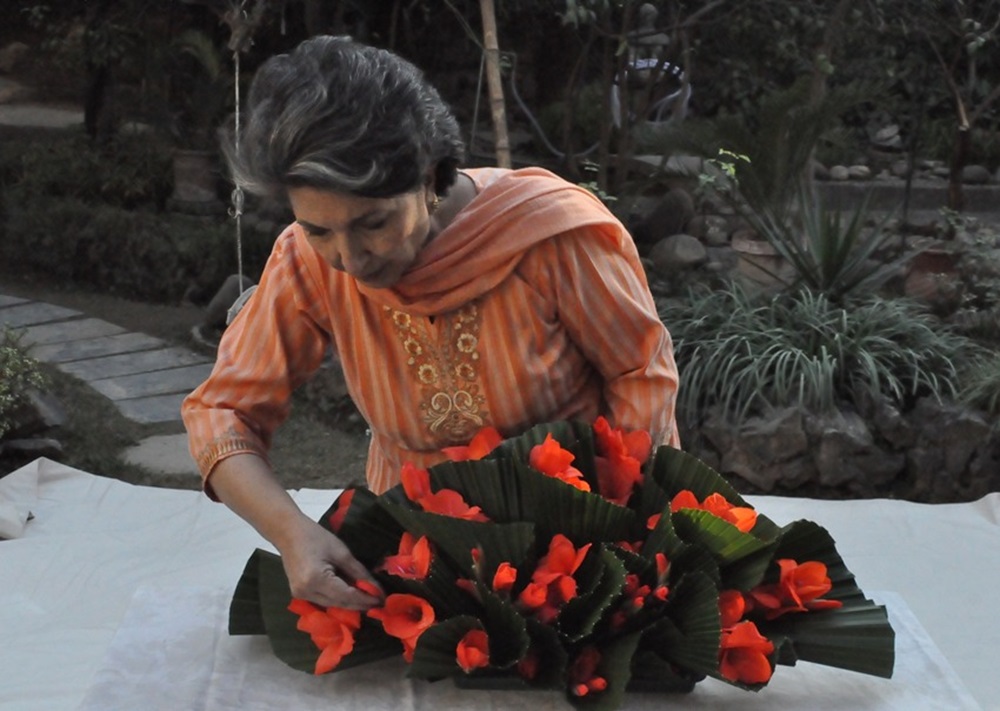
Farhana Azim is a founding member and former president of the Floral Art Society of Pakistan (FASP).
In a country where flowers play an unspoken role in both joy and sorrow, Farhana Azim has spent decades giving them a voice. A founding member and former president of the Floral Art Society of Pakistan (FASP), she has taken her passion for floral design from homegrown gardens to international arenas, her journey is as intricate as a layered bouquet, equal parts skill, spirit and soul. Farhana is more than a floral artist, she is a custodian of a craft that merges tradition with experimentation, and elegance with wisdom. Today, Farhana is known for her poetic design style, so fluid, organic and transcendent that she was once dubbed the Queen of Curves at an international show in Vietnam. Her compositions have an almost motion-like quality - as if they are constantly evolving, yet frozen in time.
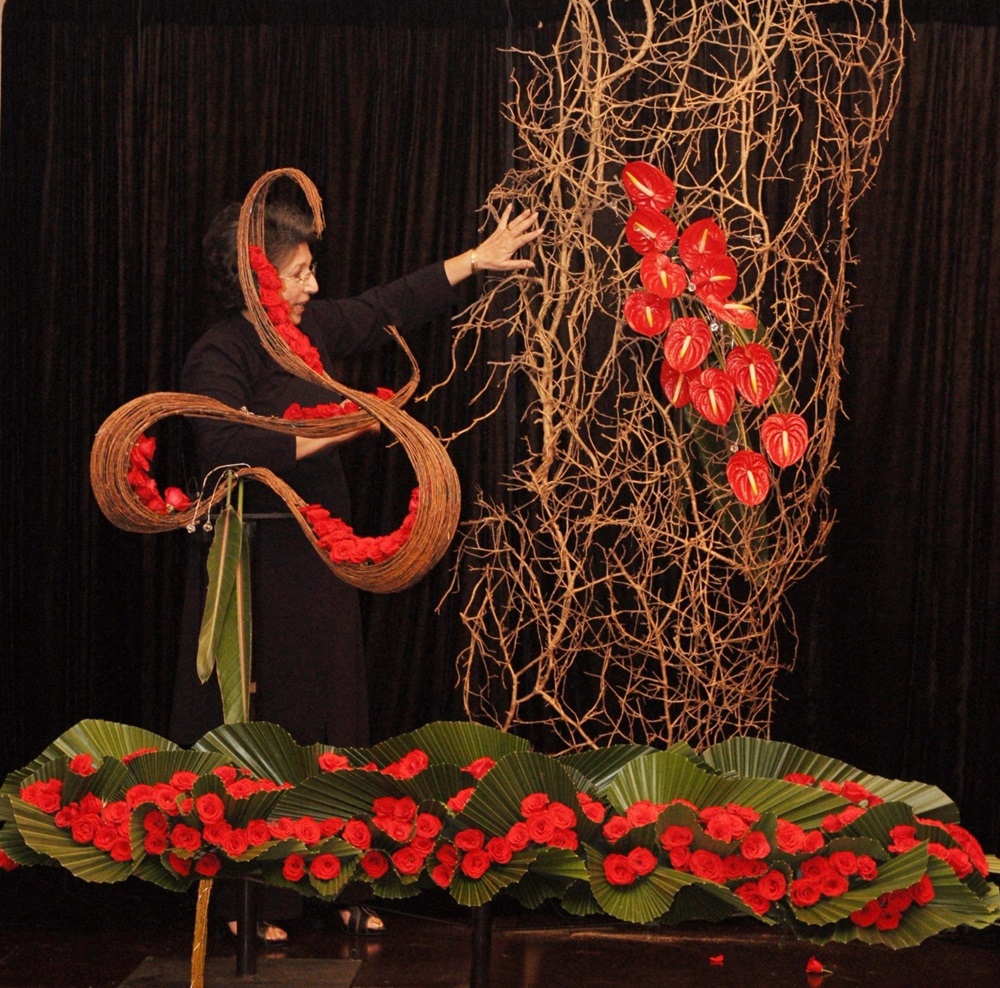
Farhana’s floral compositions have an almost motion-like quality.
Farhana developed a love for flowers very early in her life while growing up in an environment adorned with a large variety of flora and fauna, laid out painstakingly and formally in the gardens her family meticulously cultivated. She enjoyed decorating the house with flowers and green plants from an early age, a passion she inherited from her grandmother. Over the years this passion led her to compete in her student days and later to design and arrange flowers voluntarily for different occasions like state dinners, dinner parties and special events like weddings. Creating is stimulating for her and has been her life-long passion.
“My love for flowers is generational, ” Farhana says. “My grandparents and parents nurtured gardens that were full of soul.” That early exposure turned into a lifelong passion. Though she didn’t receive formal training, Farhana honed her skill through workshops, community events and international exhibitions, gaining recognition for her signature curved designs. She further went on to represent Pakistan as a demonstrator in Boston.
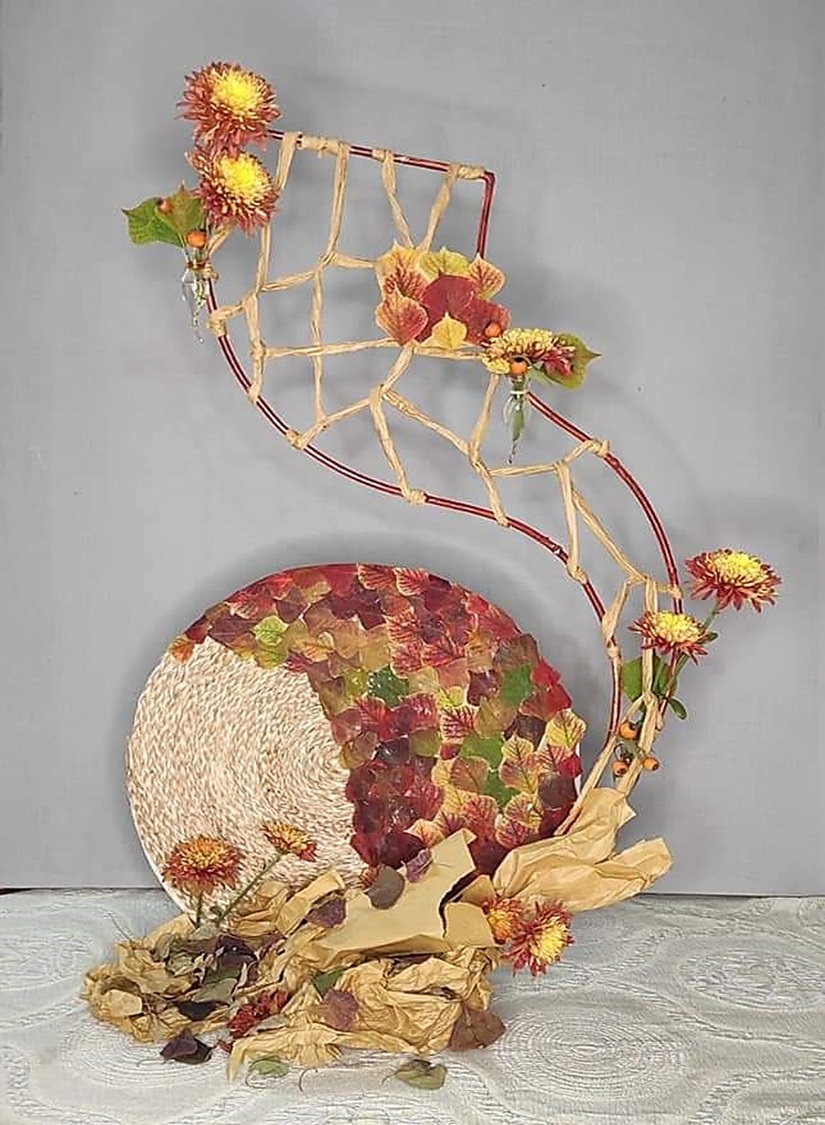
The act of arranging flowers is as much about inner balance as it is about beauty.
Founded in the 1980s, FASP started as a small group of women exploring flower arranging as a hobby. Today, it is a nationally recognized organization affiliated with the World Association of Flower Arrangers (WAFA) and has six registered chapters in Pakistan, all named after flowers. Islamabad and Karachi have two each; Magnolia and Orchid active in Islamabad and Gardenia and Jasmine in Karachi. Lahore Chapter is named after Rose. The city of Peshawar too has a Floral Art Society named after the magical Lotus.
Farhana was associated with different floral clubs and successfully competing before joining FASP. Since she became a part of it, she has been actively involved in the Society's activities as the Show Chairperson and the Vice President. She was selected as the Coordinator Judges Panel for the 9th WAFA World Show held in 2008 in Pakistan. As a competitor she won several prizes. She has to her credit: 'The Best in the Show', 'Runner-up to the Best in the Show' 'Best Use of Foliage' and 'The Best New Concept'. Internationally, she was awarded the second prize in the Imposed Class at the 8th World Show in Yokohama, 2005 in Japan.
Under Farhana’s leadership, FASP has represented Pakistan regularly on many international platforms, including a landmark participation in WAFA Boston, where Pakistan competed in 30 categories and secured prizes in 25. “Pakistan’s floral artists have proven they belong on the world stage, " says Farhana.
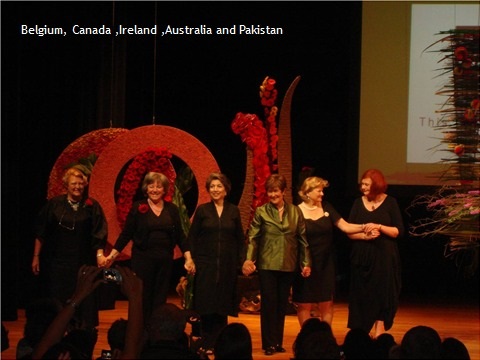
Farhana and other members of FASP have taken their passion for floral design from homegrown gardens to international arenas.
Farhana sees floral arrangement not merely as an art but a form of meditation and emotional expression. “Plants have a soul,” she says. “You bring a plant into a room, and suddenly, the space feels alive.” For her, the act of arranging flowers is as much about inner balance as it is about beauty.
She reflects on Pakistan’s floral heritage; from garlands and nosegays (small posies) used in weddings and religious ceremonies to the use of rose petals in funerals and prayer rituals. “Flowers have always been part of our culture, but now we are blending that with modern techniques and global styles,” she says.
Pakistani floral art today is a synthesis of influences, from Ikebana and Sogetsu in Japan to South East Asian pave styles and Western sculptural arrangements. Yet, Farhana notes that Pakistan is moving toward its own expressive identity. “We’re experimenting more than the West,” she says, citing her own large-scale demonstration on Pakistan’s natural treasures at an international WAFA event.
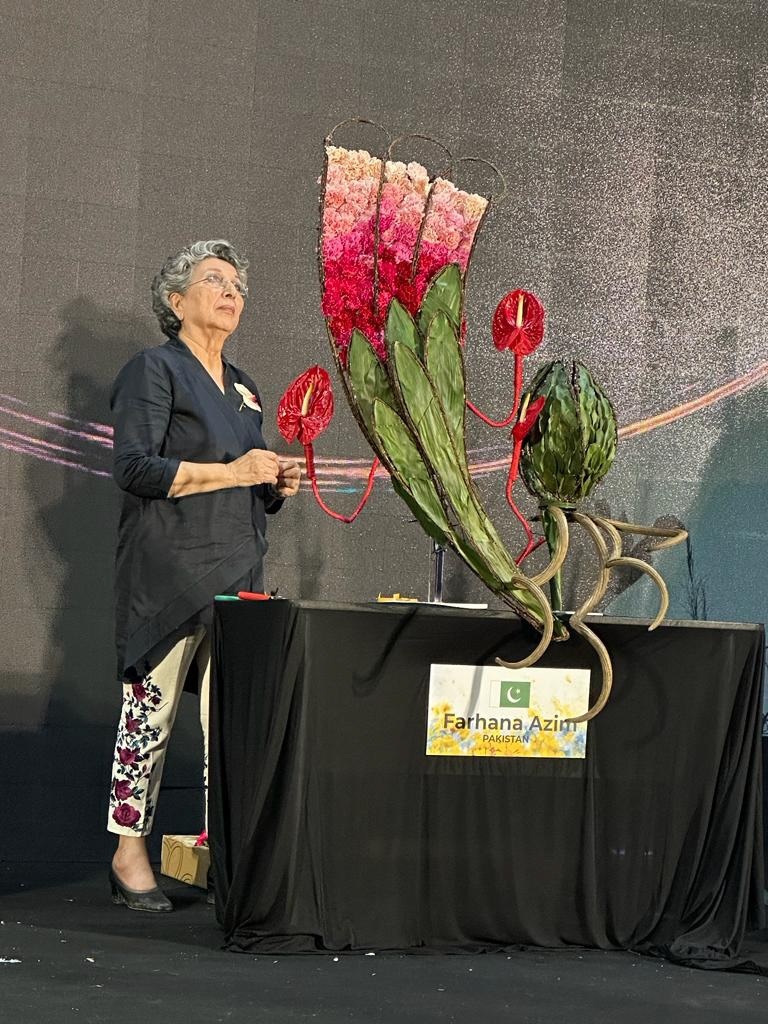
Farhana Azim is a founding member and former president of the Floral Art Society of Pakistan (FASP).
Farhana’s love for statement flowers like heliconia, bird of paradise, carnation and celosia is evident in her work. She also emphasizes materials like aspidistra, a perennial herbaceous plant with solitary leaves that arise more or less directly from the rhizome, rather than being borne on stems. Each leaf has a long stalk (petiole) and a blade with many veins. Farzana humorously likens aspidistra to the reliable husband: "Indispensable and highly adaptable!"
One of the most practical takeaways from Farhana’s experience is her wisdom on flower care. Among her top tips is to always cut stems underwater at an angle to prevent air blockages. She also recommends submerging leafy greens in water for 24 hours to keep them firm before including them in an arrangement. One can add to the longevity of flowers and leaves by simply adding sugar, aspirin or mixing a small quantity of any carbonated colorless sweet beverage to the vase water. This keeps the arrangement nourished for longer. Farhana also recommends singeing milky stems like poinsettia to lock in energy. The process can keep them fresh for more time. For more skilled flower arrangers, drying leaves using silica gel in a microwave can be a good source of reusable materials. Above all, she reminds us, “We can manipulate nature so much in so many creative ways. We must respect and cherish it endlessly.”
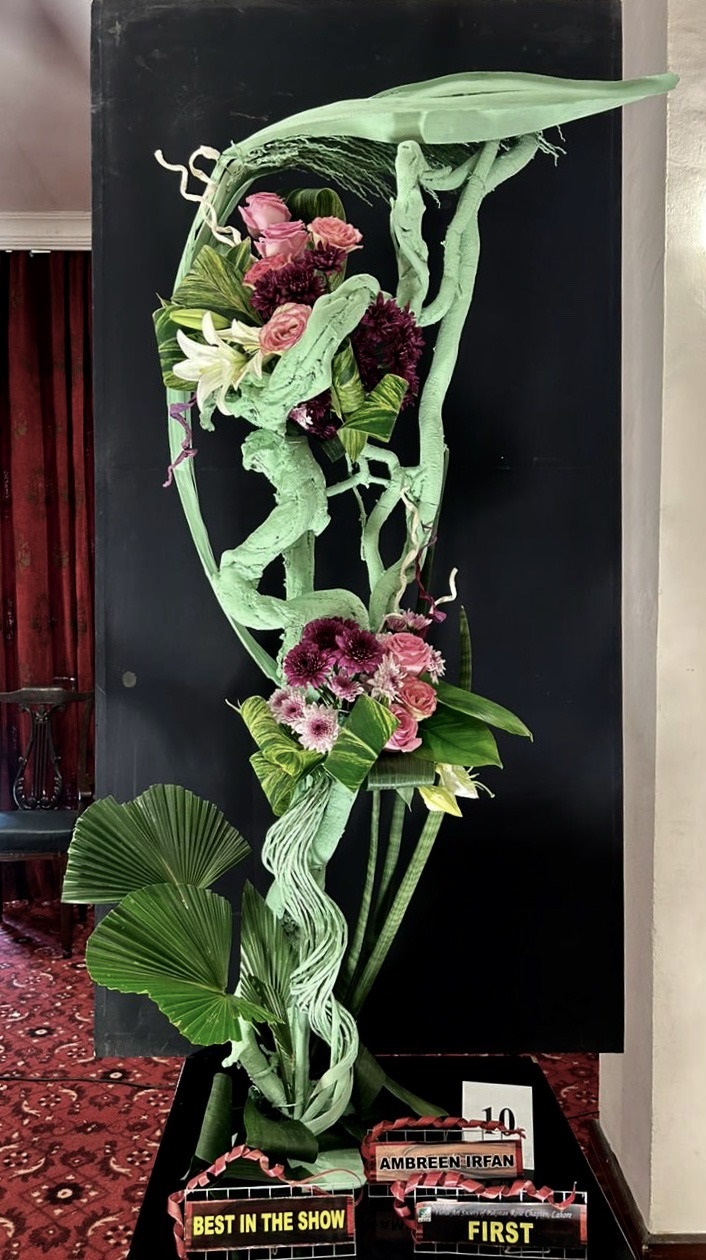
Founded in the 1980s, FASP has been actively involved in promoting floral arts in Pakistan.
Despite the challenges; limited flower varieties, insufficient education on preservation, and lack of cold storage infrastructure, Farhana is optimistic about the future of floral arts in Pakistan. New flowers like lilies, long-stem roses, and even white magnolias are now cultivated in Pakistan. Efforts are growing to teach flower preservation and design, especially to younger generations. She encourages more flower lovers to take up floral arts not just as a hobby but as a career path. “Bouquet-making is a booming business globally,” she says. “Hotels, weddings, restaurants — the demand is huge.” Though she has not yet published a book, Farhana plans to document her decades of experience. “I realize now how important it is to record my creations, my props and the stories behind them,” she reflects.
For Farhana, the ephemeral nature of flowers only deepens their meaning. “You make something with love, knowing it will wilt, but you still do it,” she says. “That’s life. That’s beauty. That’s the soul of floral art.” She once received a bouquet, and among the vibrant stems was a single rosebud. It bloomed quietly over the course of a couple of days, and by the time it wilted, Farhana had an almost meditative realization: that tiny rose had lived its entire life with her. As they say, a thing of beauty, is a joy forever.
For Farhana, it is not just about arranging flowers, but about honoring the life within them. Through every stem she places and every composition she creates with all her love for nature and her imagination, Farhana also channels a quiet reverence for the world around her, the time, and the transformation. Her creations tell stories, carry legacies and reflect a spirit unique to nature and spoken through the language of flowers.
You may also like: