Written by: Muhammad Suhayb
Posted on: August 27, 2025 |  | 中文
| 中文
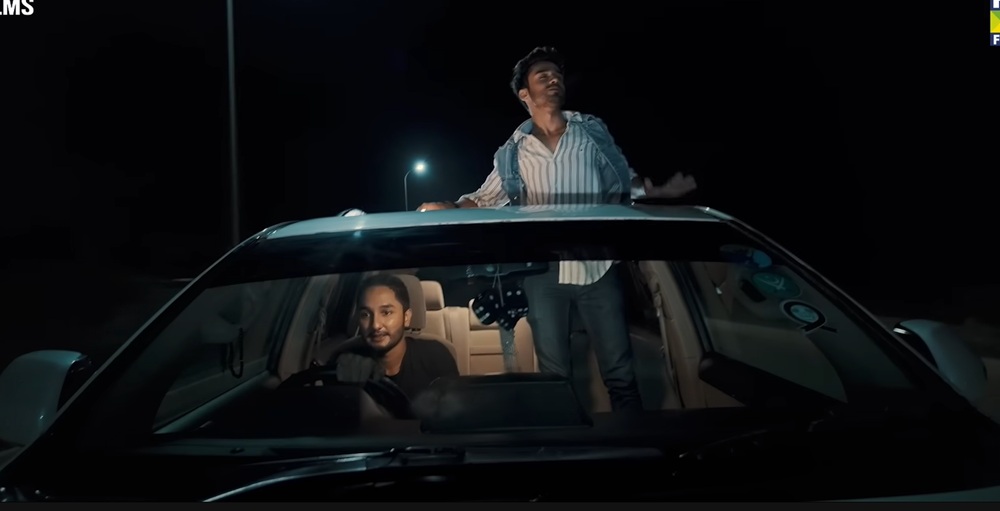
Zuhab Khan and Fazal Hussain with the stolen car in the opening scene.
In Pakistan, film lovers often argue about what Lollywood should do when it runs out of fresh ideas. Some argue that the industry should simply remake hit films from other countries, scene by scene, in the local language, so that local audiences can enjoy strong stories. At first, the idea sounds convincing. Why not? However, recent experience shows otherwise. Hum Sub, a copy of the Oscar-winning Hollywood film Crash (2004), tried exactly this and failed badly.
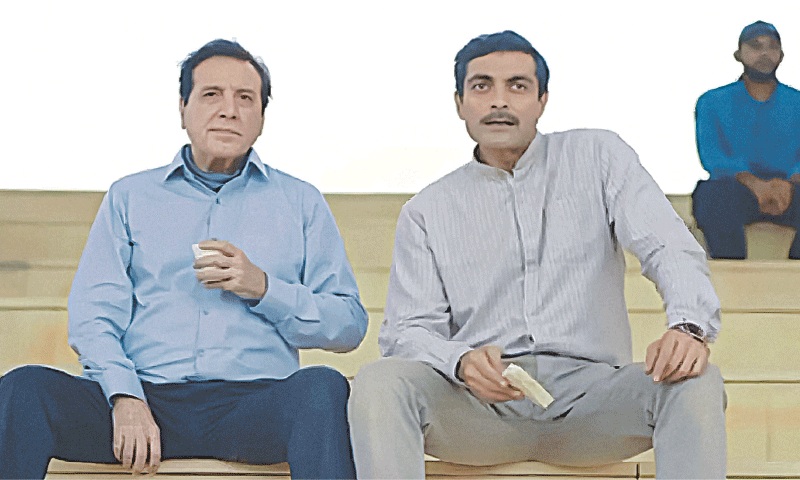
Javed Sheikh and Alyy Khan
On paper, Hum Sub looked like a decent project. The cast was strong with exposure of international projects: Alyy Khan, Javed Shaikh, Sajid Hassan, Adnan Shah Tipu and Noman Habib. Saud, a seasoned actor, and Juveria, making her debut, were linked to the project through its producer, AZ Qasmi, who is Saud's brother. The producers selected a relevant topic, but instead of feeling like a serious film, it came across as something made just for convenience. Written by Zeeshan Junaid and directed by Tehseen Khan, the movie had no songs, no big-screen vision and little depth. Khan, best known for directing the popular drama serial Baby Baji, seemed to have stepped into the film too soon. In fact, with Sunita Marshall and Hassan Ahmed missing (the second pair of husband and wife in the drama serial), most of the Baby Baji cast was present, making it feel more like a reunion than a new film.
The story begins with characters played by Fazal Hussain and Zuhab Khan (surprisingly good in a grown-up role), who were denied entry into a fancy Karachi restaurant. Angry, they steal a parliamentarian’s car after threatening his arrogant wife (Javeria Saud) at gunpoint. The politician (Saud), embarrassed at being robbed, sends a hired killer to track down the boys. Soon, the car is abandoned, and the story becomes messy, losing focus.
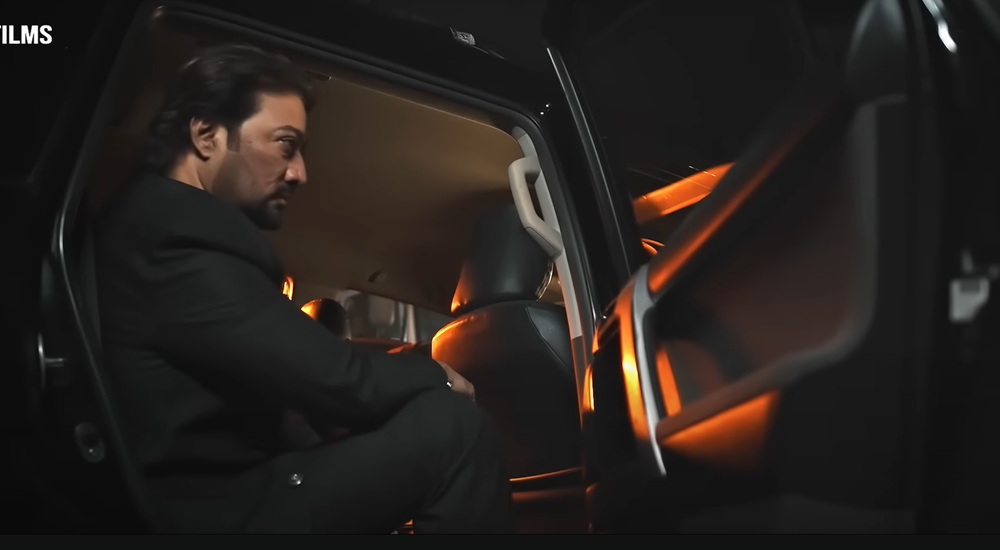
Veteran actor Saud in pensive mood
In another thread, Junaid Jamshed Niazi and Azekiah Daniel play a young couple stopped by a police officer. The cop, Ali Josh, himself Punjabi, harasses the Punjabi wife and insults her for marrying a Pathan. Her husband does nothing at the time but later complains at home, calling the incident racial discrimination. The scene was supposed to highlight prejudice, but came across as forced and weak. Ali Josh's character, tried to help the same lady in the end, but she refused the help, as she recalled the trauma she had. Ali's character had problems of his own, and like his partner, Noman Habib, he was going through turmoil
There is also an inter-religious story. Sajid Hasan plays a Hindu father pressured to leave Pakistan. Actually, it was a neighbor who was planning to have their young daughter sent to Dubai for obvious reasons. Suspecting his 'other' neighbor for the attack on his house, Sajid's character shoots the daughter of the Makrani carpenter (Adnan Shah Tipu). The acting in this scene, especially by the child and Tipu, was good. However, the problem is that the same scene exists in Crash. It was copied, not recreated.
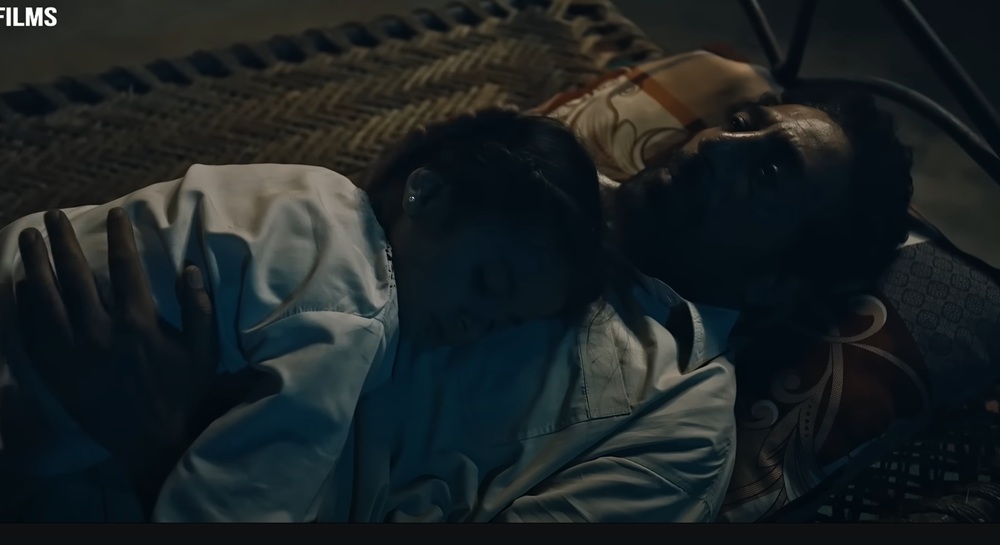
Adnan Shah Tipu with his daughter
Noman Habib and Javed Shaikh were wasted with insignificant roles. Things could have gone well, without the Noman Habib angle. It was good to see veteran television actor Akbar Subhani, who plays the disabled father of the police officer. Subhani, famous for his work in Hasina Moin and Anwar Maqsood’s dramas from the 1970s to 1990s, naturally brought sympathy and depth, even to a small part.
The film keeps adding more subplots: a half-baked story about girl trafficking that goes nowhere, a police officer planting drugs in the stolen car to trap the politician, and finally, a moral lesson at the end. The last scene shows the officer asking the politician to pass a law banning weapons for youngsters. Strangely enough, this was the only moment in the whole film that offered any real meaning, though it came across as heavy-handed.

Javed Shaikh and Alyy Khan with the crew
The big themes of Hum Sub were discrimination, identity crises, and prejudice in the lives of Karachi’s people. These are important issues, worth exploring in Pakistani cinema. Nevertheless, the weak writing and confused direction ensured the film left less impact. It arrived quietly and disappeared just as quietly.
Why did it fail? The answer lies in comparing it to Crash. Set in Los Angeles after 9/11, Paul Haggis’s film brought together many characters in different stories, weaving them into one powerful narrative. Its cast: Brendan Fraser, Sandra Bullock, Terrence Howard, Don Cheadle, Jennifer Esposito, Matt Dillon, Ryan Phillippe, Thandie Newton and Michael Peña, delivered layered and memorable performances. The film worked not just because of its subject, but also because of its careful writing, editing and cultural context. It felt real in Los Angeles at that time.

Alyy Khan at a crime scene
This is what Hum Sub missed. What works in Los Angeles cannot just be dropped into Karachi without careful adaptation. Simply replacing a Mexican locksmith with a Makrani electrician, two black thugs with Mohajir boys, inserting a family of Hindu faith or an American attorney general with a Pakistani parliamentarian does not make the story relevant. Needed was cultural rethinking, not blind copying.
This is not the 1990s, when anything can work at the box office. The local audience today has access to global films. They can spot when a story is copied poorly. In addition, even when the idea is borrowed, strong writing, confident direction and believable acting are still needed. Without these, the flaws stand out even more.
As a whole, Hum Sab aspired to be thought-provoking, yet its potential was undermined by flaws in execution, reminding us how even noble intentions can lose their meaning when the form fails the spirit.
You may also like:

From the Horn of Africa to Bahria Town: Habesha Café Brings Centuries of Coffee Culture to Rawalpindi
(October 15, 2026)