Written by: Prof. Dr. Mamoona Khan
Posted on: October 02, 2025 | 
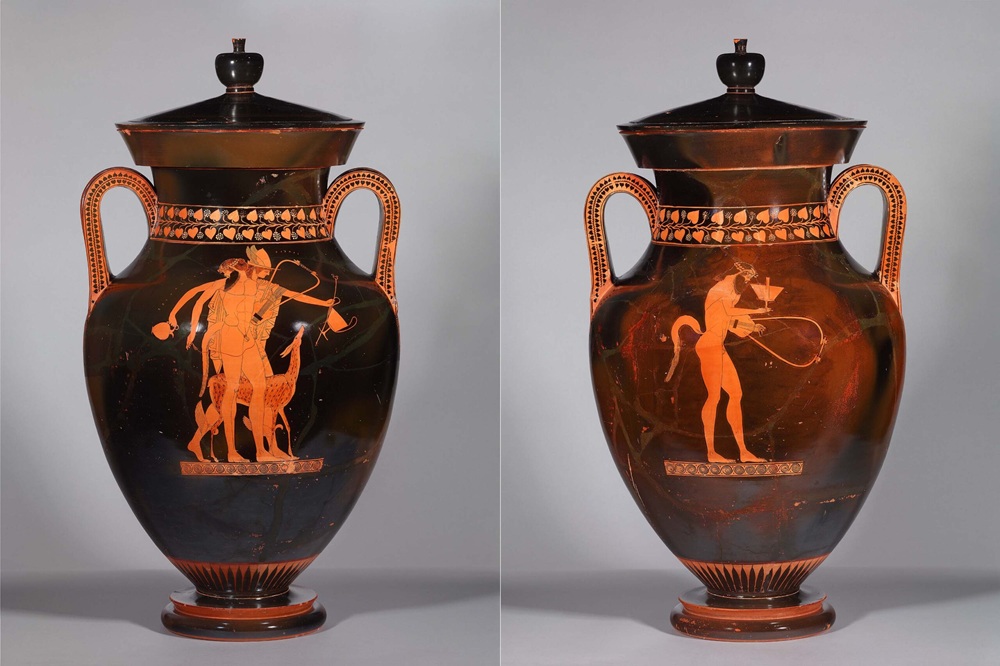
Two views of Red-figure Amphora, 500-490 BCE
Among the creative pursuits of humans, one of the earliest crafts is pottery making. From utilizing the natural pot-like stones to the making of crude hammers and sharp knifes and even to the invention of delicate needles with eye to put thread inside, define potential of the primitive humans. Apart from the natural stone-pots, molding of clay into required shapes of utility; manually and then on potter’s wheel, excels in the modern course of inventions. The story of preeminence continued with contriving of kilns that added durability to the fragile clay pots, and eventually its ornamentation, naively recording cultures and realms of their times. Greeks in this field appears to be the most scientific, and their pottery, known as red or black-figure pottery is enigmatically produced without using any color.
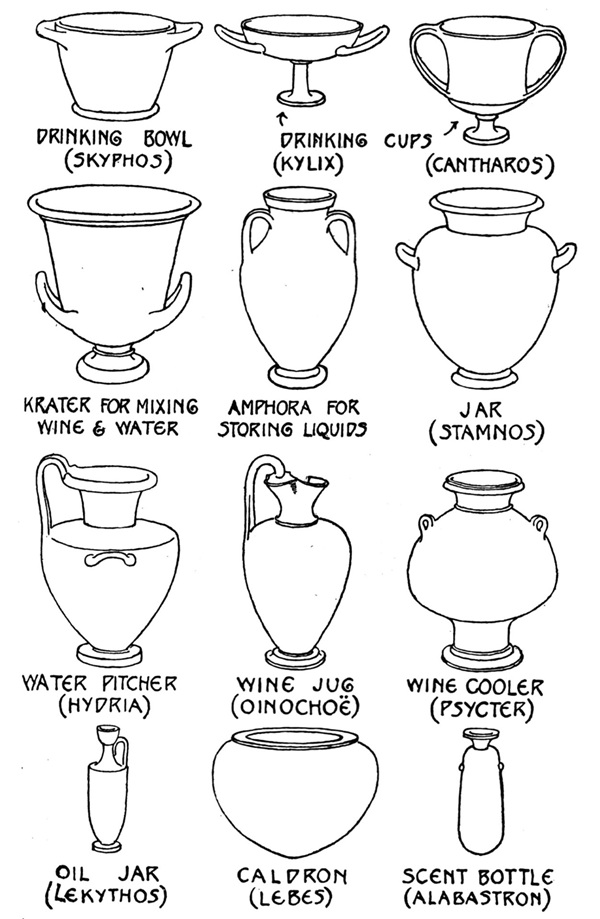
Titled shapes of Greek pottery
Greek Art, to date, is called the “Mother of all Arts”, brought about exemplary models in all fields of art and design. Perfect human figure was chiseled out of stone, imprinting the softness of flesh on the hardness of monoliths, apart from their accurate bodily proportions. The general craft of clay pottery attained its meridian in the hands of Greek potters, inventing variety of shapes, all logically functional and aesthetically appealing, replete with painted details too. Greek vase paintings are pivotal sources of Greek Painting that had vanished long ago for being executed on perishable materials. It reflects upon the subjects of their painting, style, specifically the sagacity of the Greek culture.

Black-figure Lekythos (oil flask, 550-530 BCE
The term “Greek Vases” was devised for the Greek pottery in the 18th century, although it had no decorative function analogous to the modern-day vases, that are shaped purely for decoration. Greek potters always had a specific purpose in mind while devising shapes of their pottery, such as drinking vessels, storage jars, bottles for perfumes and ointment, and liquids’ containers used in ceremonies. For each purpose there are variety of shapes but logically relevant to the function. Narrow mouth and long-necked containers were reserved for storage of liquids, deep but broad mouthed were used for mixing of water and wine, drinking cups were lesser in depth, etc. Every shape and size of vessel was logically linked with its purpose. Similar is the case of painting on vases, narrating stories, preoccupied with human figure, and intertwined with their mythologies. Most interesting is the coloring process of black and red figure pottery.
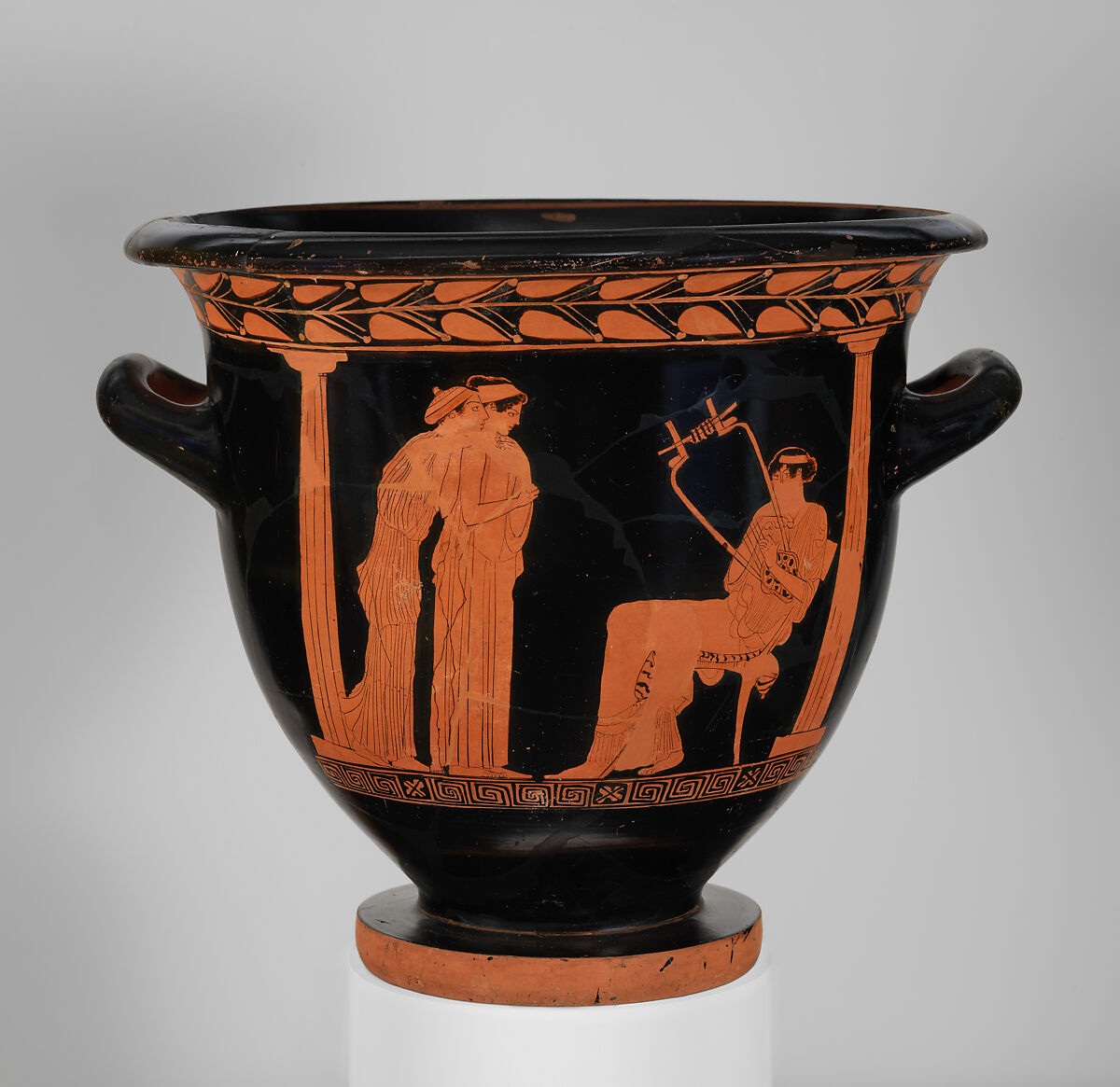
Rd-figure Skyphos (drinking cup)
After decades of mind-boggling experimentation, Greek artists evolved scientific methods to shape and adorn their pots known as vases. From preparing of clay by taking out impurities, then kneading and removing air bubbles to make it flexible to be worked out. They evolved numerous shapes of pots, the larger ones were made in parts and smaller singularly shaped. Clay was horizontally placed on the potter’s wheel, manually rotated by an apprentice and the potter used to pull it softly with fingers and thumb, bringing it to the required form. Handles of jars were separately shaped and then joined with the pot’s body with the help of slip made up of finely sifted clay, mixed in water.
It is an established norm to think that there would be some sort of pigment in vogue to paint a colored pot but it startles researchers that neither pigments nor glazes were used in Greek black or red-figure pottery. The amazing effects were attained by the “Three-tiered Firing Process” combined with the auxiliary help of “engobe”; the slip prepared from sifted clay and water. Figures and areas to be kept black on a pot, were worked out with engobe and baked simply in the kiln. It is called “oxidizing process” that brought reddish tint to the entire pot without visibility of any design. The second baking of the pot is known as “reducing phase”, where oxygen supply to the kiln was shut-off, that turned the pot black, again without appearance of any figure or design on it, formerly worked out with engobe before the 1st firing. In the third baking, known as “re-oxidizing phase”, oxygen is again supplied to the kiln, analogous to the 1st phase that used to bring the real magical impacts. The courser parts of the pot turned reddish by absorbing oxygen, while portions with sealed pores, due to engobe application remained black, making figures and designs visible. It is called black figure pottery because the pot is reddish brown and figures on it are black.
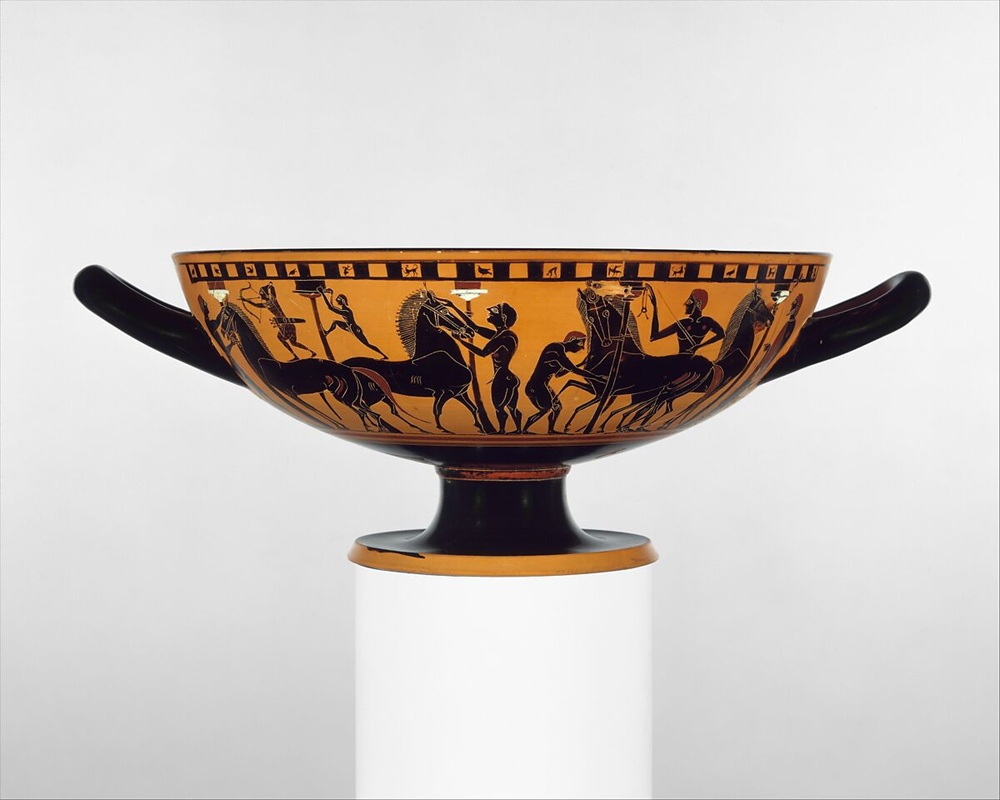
Black-figure Kylix (drinking cup), 540 BCE
On the contrary, the process of black figure was reversed for the red-figure pottery. Engobe was applied on the backgrounds and on delicate details of red figures, while pores of the pot were left open for red-figures and designs. Here figures are red while their details are black. Inquisitive brains did not stop here, through continuity of experimentation, Greeks attained a velvety Jet-black by baking their vases on very high temperatures, not less than 950 Celsius that is 1742° Fahrenheit. Without using any sort of glazes, they attained a glossy shine on their pots. The most celebrated aspect is that, in both red-figure and black-figure styles, the decoration fuses into the clay fabric, which did not fade even after centuries and remains crisp even when a pot is broken. Apart from these two, white-ground pottery is another type, named after the slip of white clay that the Greeks used to create the background for painted figures.
White ground is an alternative of the red-figure pottery but didn’t become as popular as the exemplary black and red figure pottery. The pot was covered with very fine slip of white clay then figures and objects were drawn with the black glaze, and then colored with diluted brown, red, purple and white, before baking. These colors are heat resistant while others like yellows or greens change their hue in the process of firing, hence applied after baking. Restricted use of colors and lacking durability equivalent to red or black-figure are the causes of restricted production of white-ground pottery. Though started in the 6th century BCE by the Greek painter Andokides but gained popularity in the next century.
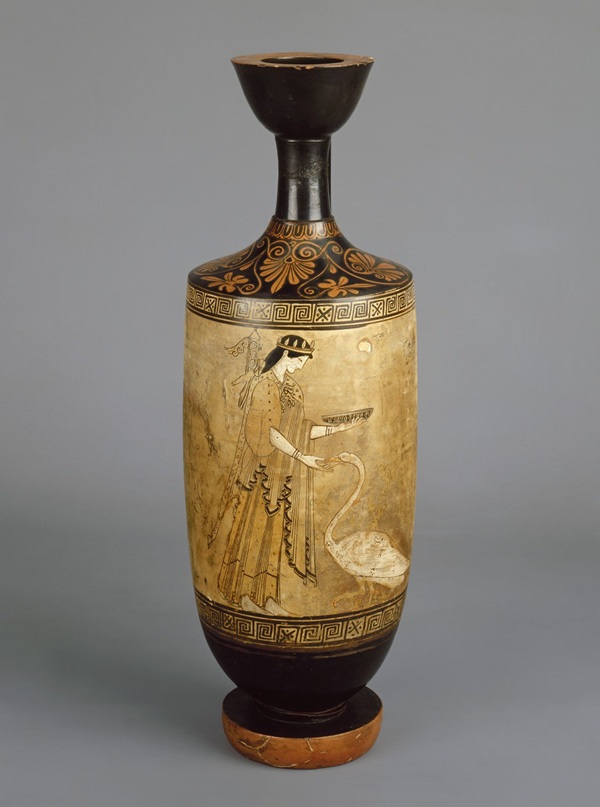
White ground Lekythos, 590 BCE
Athens was a merchandise of Greek vases and in the 6th century BCE Athenian vases were imported to the far-off lands like France, Russia and Sudan, including Etruria. A time when status of potters was elevated who used to sign their pots, owned shops and employed painters for adornment, a countermand of modern culture. No ancient culture kept their artisans or artists in so high esteem as in the Greek civilization, it was to commemorate their genius to be kept for posterity. The enigma of Greek pottery is still celebrated in the modern times
You may also like:
From the Horn of Africa to Bahria Town: Habesha Café Brings Centuries of Coffee Culture to Rawalpindi
(October 15, 2026)