Written by: Prof. Dr. Mamoona Khan
Posted on: February 25, 2026 |  | 中文
| 中文
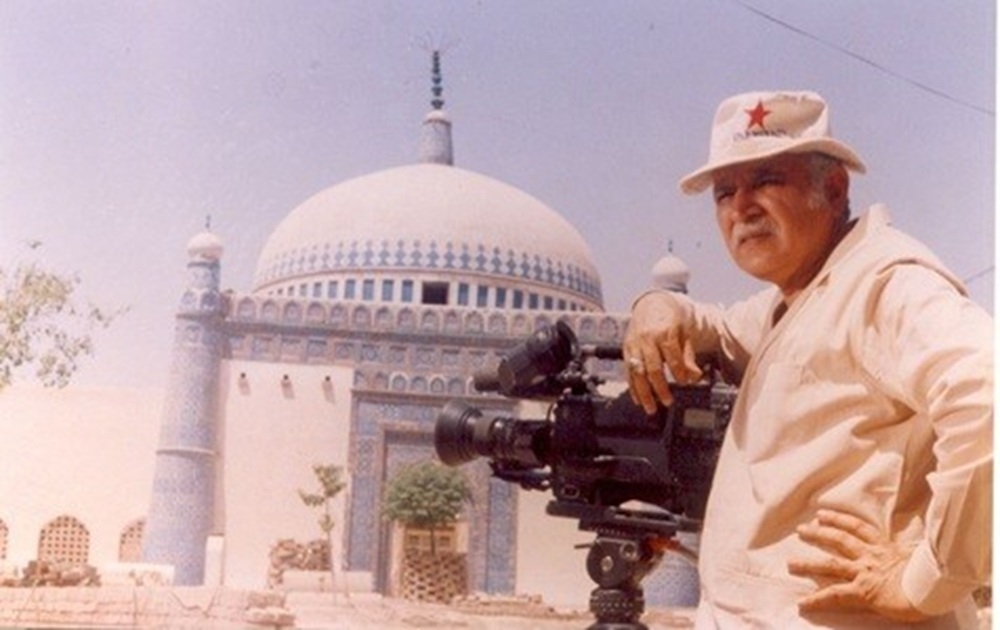
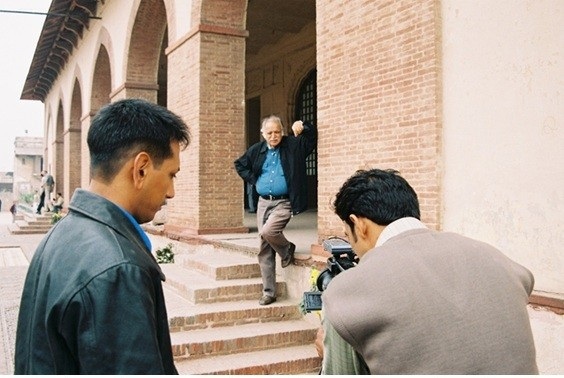
Dr. Shaukat Mahmood during the shot of a television documentary on the architectural heritage of Pakistan.
Men of learning are mobile encyclopedias and they are custodians of history too. Sitting with them, listening to, or to have discussions with them, pours down enormous information and knowledge. In learning they teach and in teaching they learn. Chronicles written by historians remain bereft of many paramount facts, either ignored by them as trivial, not worthy to be added, or consciously avoided as a discomfit, not realising that it might gain prime importance in the times to come. Recollections of the erudite in their trivial conversations decipher many truths buried under the debris of time. Prof. Dr. Shaukat Mahmood is among the resourceful personages who have spent decades in teaching learning pursuits. Mutely, he passes on ample information simply and humbly through his conversations.
This article will covers his practical life that began from the University of Engineering and Technology, Lahore, started as a lecturer and accomplished as a Dean. Thinking back the days when he was seeking a job after completion of Masters in Fine Arts from the university of the Punjab with a Gold Medal, his affectionate teacher Ms. Qazi came to his mind, who guided to meet her uncle, the Dean of Architecture at UET. He recollects his short interview with the Dean where he was promptly offered the post of lecturer in the architecture department which was to be initiated on December 12, 1962. In UET he met Dr. Abdullah Chughtai also, whose doctorate was on the Taj Mahal. He was an elder brother of the renowned Pakistani artist Abdul Rahman Chguhtai.
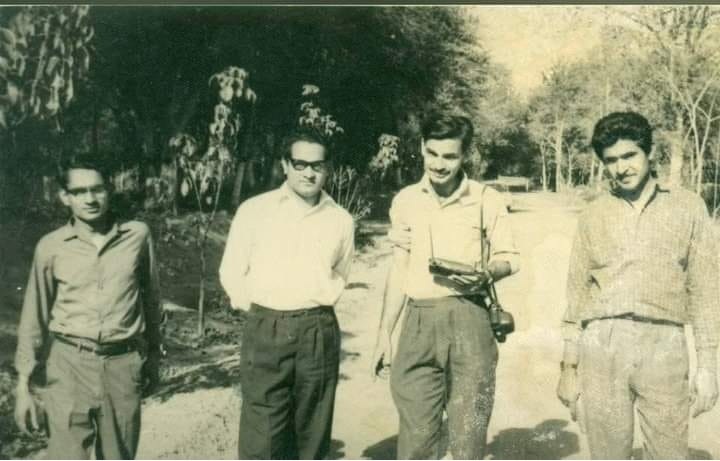
Founding fathers of Architecture Department at UET, Lahore. (L to R) Mr. Pervaiz Vandal, Prof. Irshad Burney, Waqar Sheikh and Shaukat Mahmood.
Dr. Shaukat was teaching Free-hand Drawing, History of Architecture and Perspective, he narrated an interesting event of his earliest lectures, when a student asked a question that he could not satisfactorily answer. With a giggle he describes, that fortunately the bell of break rang and he promised to answer after the break. His personal vehicle at that time was only a bicycle, and he commuted from UET to the Punjab University, a distance of approximately 19km one-way. Discussed with his teacher Prof. Khalid Iqbal, returned to UET before the next bell rang, and satisfied the student with a thoroughly correct answer. He stopped for a while, laughed and said that the day passed without lunch and not even a cup of tea. Answering students’ questions to their fullest satisfaction has remained the hallmark of his long teaching career.
Recollecting a particular event of 1965, when on an early morning, on his way to the university, crossing the bridge of Gharhi Shāhhu, a plane with a thundering sound, flying very low, crossed over his head. Its sound was terrifying, because it was speedily crossing the sound-barrier. It was 6th September, after reaching the university, he found that India had attacked Pakistan. UET was on the GT Road connecting to Amratsar, across the border and he recalled the poor people, residents of Indo-Pak border, moving in caravans on donkey-carts, bull-carts, or on foot with luggage on their heads to take refuge at a safe place. The site was very depressing, but Lahorites were not afraid of war at any point, they viewed the dogfight of India and Pakistani military aircrafts overhead from the open terraces of their houses, shouting the slogans of Allah- hu Akbar (Allah is the Greatest), and Pakistan Zindabad (Long live Pakistan).
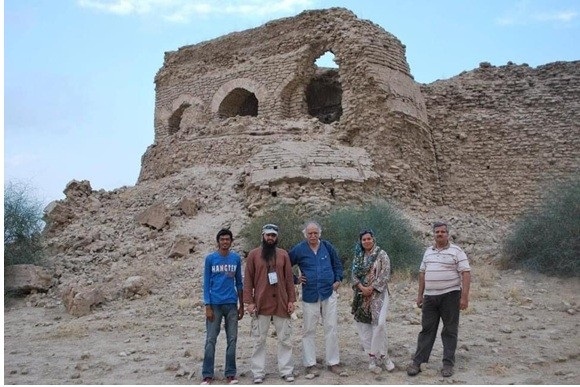
Dr. Shaukat Mahmood with a Ph.D. student (2nd from right) in Cholistan Desert along with their guide.
Apart from the ever-alert and brave fighters of Pakistan Army and Airforce, he gives credit to the Radio and Television of Pakistan that continuously aired National Songs of Sufi Ghulam Mustafa Tabassum in the melodic and enthusiastic voice of Malika-i Tarannum (the Queen of Melody) Nurjahan. These martials were so enthralling that they invigorated spirits not only of the fighters but of the general public as well, like “Aiy putar hat՛t՛ān tay nai viqday, tu labdi phīrain bazār kūr՛ay” (these sons are not sold on shops, and you are searching them in bāzārs). He highly appreciates Nurjahan, who visited borders to chant live before the ones ready to embrace martyrdom, a great present for the pure souls. The entire nation, he recalls, unified as one whole and the reverie of the enemy to “enjoy a peg” at Lahore Gymkhana, was fiercely shattered. But still Dr Shaukat grimly recalled some incidents, disapproving war, viewing it as a massacre of innocents.
When the war ended with a severe blow on the face of the enemy, because many parts of the Indian territory were captured by Pakistan, like a small town of Khem Karan. Major Aziz Bhatti, the recipient of 4th Nishan-e-Haider was martyred on that border. Dr. Shaukat narrated his visit to the Khem Karan with his brother-in-law working in the department of Animal Husbandry (Live Stock Department), and he had to collect cows and buffalos left behind by the fleeing Indians. The heinous site of burnt Indian tanks along with their drivers and the crew inside the tanks are still alive in his memory. The view of burnt dead bodies was the most unpleasant recollection, but more horrific was the site of swollen female bodies in a well of Khem Karan. They must have committed suicide by jumping into the well after seeing the Pakistani forces approaching. They were lying unattended, neither cremated nor buried.
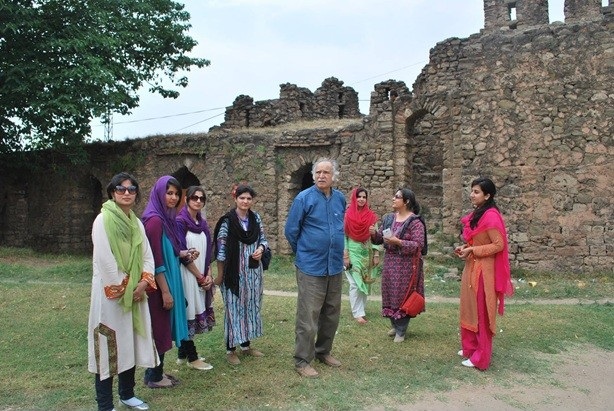
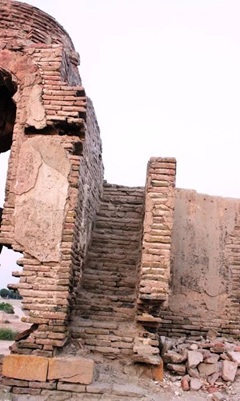
Dr. Shaukat Mahmood with students at Rawat Fort.
Dr. Shaukat also remembered a school at Khem Karan that he visited, while roaming around took a book of history lying on the floor of the school’s library mentioned Mahmud of Ghazna as a dacoit who attacked and looted the temple of Somnath seventeen times. We view him as a hero, “one man and his two conceptions”, Dr Saheb explicated that we interpret people in the context of our perceptions. It reminded him the famous poet Firdausi at the court of Ghazna, writing the famous ode Shahnama, because Mahmud promised to present one Ashrafi (basic unit of their currency) for each couplet but reneged when it was completed, giving him only a hand full of gold coins, which he distributed among beggars outside the palace. Dismayed Firdausi then composed a Hijv (Poetical vituperation). Realising his mistake, Mahmud sent gold loaded mules to the poet but when the caravan reached the house of Firdausi he had already passed away. This is how recollections convert into a chain of events, one linked with the other, disclosing important facets of history.
Dr. Shaukat further recalled Mahmud of Ghazna that he annexed Punjab within his sovereignty appointing his slave Ayaz as governor. Severe ailment caught Mahmud while he was staying in the Lahore fort, disappointed physicians asked Ayaz to inform the Sultan about his approaching end, he did, requesting him for his bequest. Dr Shaukat quotes the words of Mahmud about which very few historians are aware, and these are about Lahore and Lahorites:
“I wanted to destroy Lahore and raze every bit of it to the ground. People of Lahore are untrustworthy, they curry favour with every invader. They cannot protect the honour and dignity of their sisters and daughters and mothers. No leader will ever be born here.” What Mahmud said almost a thousand years ago, holds water even today.
Dr Shaukat further added some blatant truths that people were selected as touts during British rule by bestowing lands and property, every vadera (landlord), every influential person was bought by the British. The sons, grandsons and great grandsons still enjoy the fruit of shamelessness of their elders. Most of them have become leading corrupt politicians.
He recalls some devouts of the past; there was a Sikh National College on GT Road near the bridge of Ghari Shāhhu. Its hostel was in Amritsar, at a distance of almost thirty miles. In pre-partition days students used to come in the morning and left for their hostel in the evening. UET’s first building was in the McLagan College of Engineering which is about half mile distance from the Sikh National College. The new building of Architecture Department was built between these two.
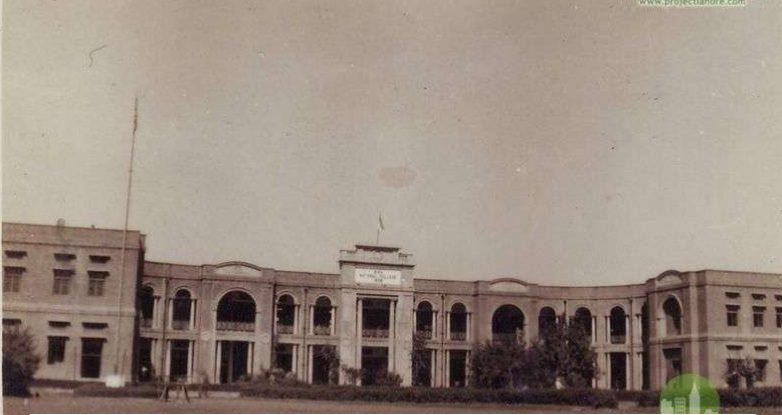
Sikh National College
After getting an OTS (Overseas Training Scholarship) Dr. Shaukat left for Edinburgh, UK in October 1976. There, studying at Edinburgh College of Art and Heriot-Watt University he completed his M.Sc. in Environmental and Architectural Conservation.
Then a progress letter was required to get admission in Ph.D, that worried him because he had not yet enrolled in Ph.D. and with any supervisor. He, however, went to meet the renowned scholar Dr. Robert Hillenbrand reluctantly describing the situation. Hillenbrand proved to be a thorough gentleman and an aspired teacher, a role model for Dr. Saheb. He recollects that Hillenbrand opened an old leather handbag, extracted an old Lilliputian typewriter that sounded “tick tick “, typed a letter declaring that he (Shaukat) was his student and he was fully satisfied with his performance and handed it over to Dr Saheb, without creating any fuss. He is the one who told Dr Shaukat Mahmood that “you are not made for Pakistan”, which Dr. Saheb realized very late.
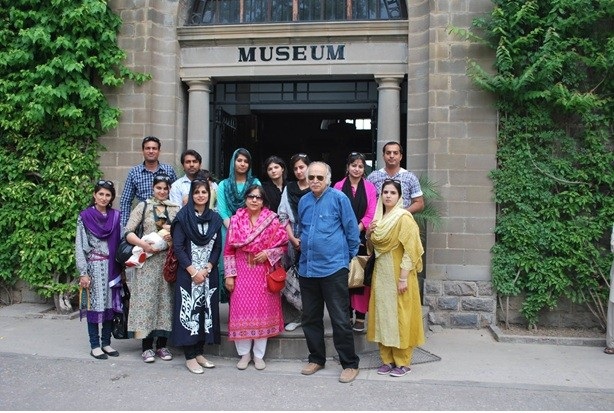
Dr. Shaukat Mahmood with students at Taxila Museum.
Reminiscing about his Ph.D. was lovely, he was busy in research and the teacher was ready to help, support, crediting his efforts. If Dr. Hillenbrand had two copies of one book, he used to present one to his student, like a book on Muslim Calligraphy written by Dr. Dr. Annemarie Schimmel, one day when Dr Saheb was so absorbed in his studies that evening passed and he was not conscious about passing time, paths outside were covered with snow. The busses time was over. “Busses time is over but you don’t have to walk. I’ll drop you.”, this is how devotion to learning, acquiring and supporting quest for knowledge was respected there. Dr Saheb tried to provide that environment to his students throughout a career of six and a half decades and mostly he achieved his desired goals. But many captivating anecdotes are still remain to be narrated.
You may also like:
From the Horn of Africa to Bahria Town: Habesha Café Brings Centuries of Coffee Culture to Rawalpindi
(October 15, 2026)