Written by: Muhammad Suhayb
Posted on: June 24, 2025 |  | 中文
| 中文
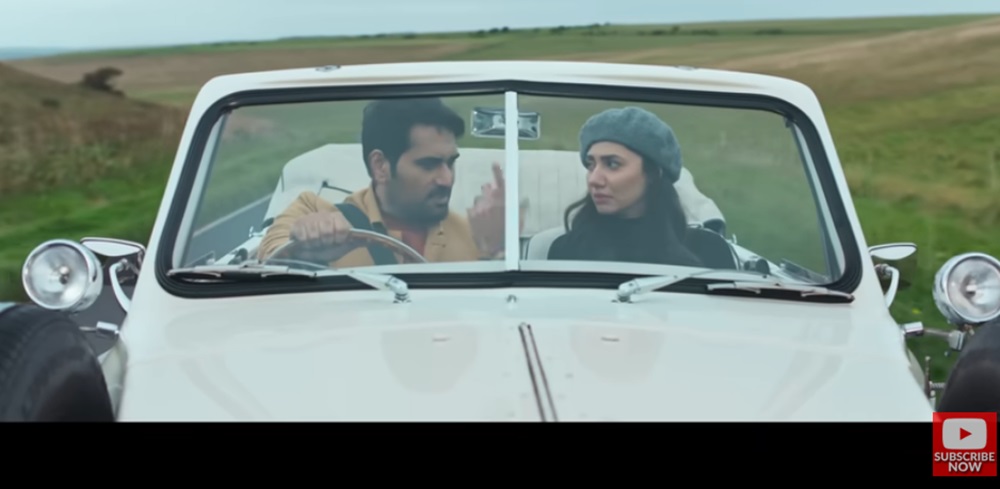
Hamayun Saeed and Mahira Khan in Love Guru
The Eid-ul-Azha, Humayun Saeed and Mahira Khan's Love Guru was released in cinemas. A no-brainer entertainer, Love Guru quenches the thirst of local cinegoers who have long been deprived of romantic films. With action and horror taking on the scene, rom coms were missed, and Six Sigma Films brought out a film continuing the legacy of nahi jaungis and nahi aanis.

Director Nadeem Baig, Mahira Khan and Hamayun Saeed
Directed by Nadeem Baig, this Love Guru should not be mistaken for the 2008 Mike Myers comedy of the same name. Instead, it’s a familiar extension of the cinematic formula we have seen time and again: Vasay Chaudhry on writing duties, Humayun Saeed as the lead (and producer), and Ahmed Ali Butt playing the comic sidekick. Love Guru turns out to be the film that manages to bring people to barren cinema, and may continue to be screened for next few months. Vasay, Humayun and Ahmed trio has been together in many films but this time, they have brought Mahira Khan, an actress who has not only shared screen space with Humayun in Bin Roye (2015), but also with Vasay’s obvious admiration of Bollywood King Shah Rukh Khan, in Raees (2017).

Momina Iqbal and Hamayun Saeed
Cashing on the anti-Bollywood sentiment after the 87-hour war, Love Guru leans heavily on Humayun Saeed’s star power. Though he has been around for as long as the Khans, his screen presence compensated for a script lacking depth. Mahira Khan, while bringing her trademark poise and elegance, is let down by an underwritten character. She remains largely reactive, with limited influence on the narrative.

Hamayun Saeed and Mira Sethi in Love Guru
The plot of Love Guru closely mirrors that of the French romantic comedy The Heartbreaker (2011), where the bride-to-be’s father hires a charming man to sabotage her upcoming wedding. Similarly, in Love Guru, Adil (Humayun Saeed) is brought in to stop the marriage of Sofia Khan, only to fall for the bride himself. The bride, Mahira Khan as Sofia, has been living in UK for eight years and is dreaming of marrying her true love. Adil's past clearly shows that he has been successful in breaking such marriages, but Sofia is a tough nut to crack. Rather than carving its own identity, the film feels more like a patchwork tribute to the Khans of Bollywood. We get a watered-down version of the 3 Idiots climax, echoes of Kal Ho Naa Ho's self-sacrifice, kuch kuch (something) from Kuch Kuch Hota Hai, and bahut kuch (many things) from Dilwale Dulhania Le Jayenge. Dragged scenes remind me of movies that are written after the production work has begun.

Mahira Khan and Hamayun Saeed in Love Guru
Worn-out humor and 'have heard them before' dialogues run throughout the film, and despite the star power, the chemistry between the leads felt noticeably flat. Even Mahira Khan, usually a strong screen presence, seemed at times to be mimicking Alia Bhatt’s walk or channeling Katrina Kaif’s dance style, making her feel oddly out of place. The film often felt like watching a telefilm, with the 'love' between Humayun Saeed and Mahira Khan rendered in such a conventional, television-style manner that it desperately needed a few frames of boldness. Ramsha Khan, playing Mahira’s free-spirited friend, brings a much-needed breath of fresh air to a film anchored by Mahira, who is in nearly every other television commercial, and Humayun, who’s been a constant presence on screen for what feels like forever.

Ramsha Khan and Mahira Khan as friends
The soundtrack, too, was largely forgettable, with the sole exception of a Pashto track that offered a refreshing break from the overused Punjabi wedding anthems typically heard at Urdu-speaking family functions in Karachi. ‘Bekhabrya’ by Shiraz Uppal is a soothing, pleasant track, though its composition bears a noticeable resemblance to ‘Gerua’ from Dilwale, featuring Shah Rukh Khan and Kajol.
Lots of actors patched in could have been better, had there been fewer actors doing BIG roles. Usman Peerzada, as the father of the one Mahira's character is going to marry, must have been there for a day's shoot, while Marina Khan as phupoo (seriously!) was wasted in the few scenes she had. Javed Shaikh as bride's father was there for just a few minutes more than Marina and a sidekick, not Ahmed Ali Butt, but similarly shaped as Ghareeb was not at all amusing.
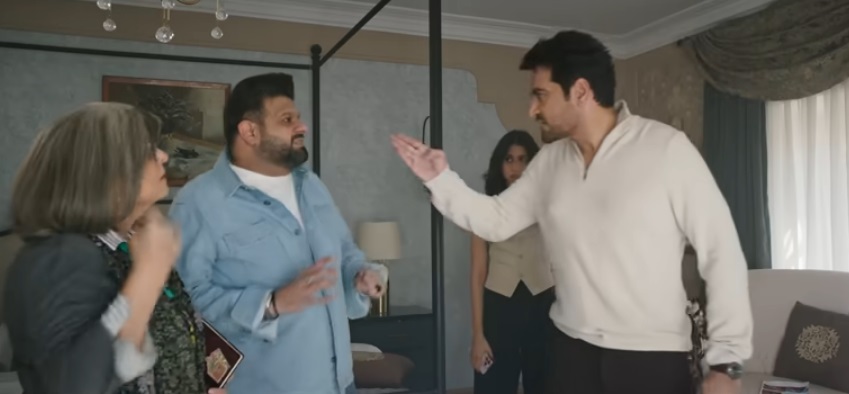
Hamayun Saeed, Mani Liaqat and Marina Khan
Ironically, the most authentically Pakistani elements in the script were the fleeting references to poets Munir Niazi and Jaun Elia, a nod to depth that the rest of the film rarely attempts.
Given the current state of Pakistani cinema, marked by struggling productions, limited releases and frequent cinema closures, Love Guru feels like a one-time watch at best. It offers fleeting entertainment but lacks the substance or originality to leave a lasting impression. In a time when the industry needs bold storytelling and fresh ideas, this film plays it safe, relying on recycled tropes and familiar faces rather than pushing boundaries.
You may also like:
From the Horn of Africa to Bahria Town: Habesha Café Brings Centuries of Coffee Culture to Rawalpindi
(October 15, 2026)