Written by: Nadeem Alam
Posted on: February 03, 2026 |  | 中文
| 中文
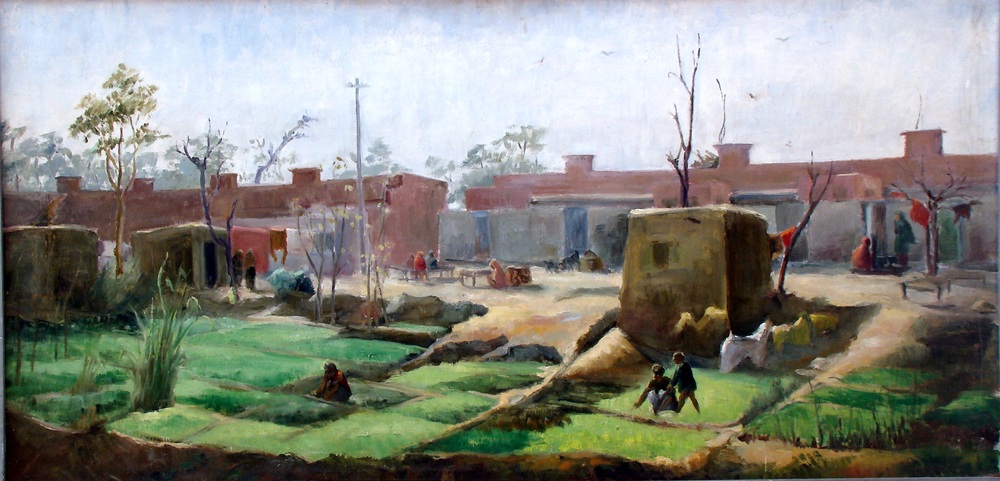
A Village Scene by Naseem Hafeez Qazi (1970s)
Naseem Hafeez Qazi holds a distinguished place in the history of art in Pakistan as a pioneering female artist and academician. She opened her eyes in Wazirabad in 1928, and later her family moved to Quetta, where she received her school education. For her BA program, Qazi joined Lahore College for Women and started taking art classes at the Fine Arts Department of the University of the Punjab, Lahore. There, amid the red-brick structure of the Old Campus, she met the strident Anna Molka Ahmed, whose mentorship shaped young Qazi into a dynamic individual, and a trailblazer artist.
Her bicycle rides between the two institutions in those years marked Qazi’s uncompromised commitment, and a dedication for knowledge and skill; in an era when women, especially the Muslim women, were mostly deprived of higher education.
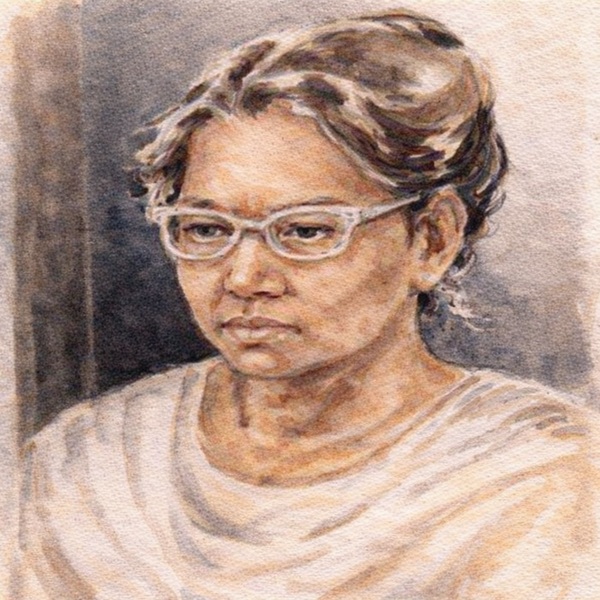
Naseem Hafeez Qazi (AI refined image based on the only available picture)
After successful completion of her BA degree in 1948, she formally joined the Fine Arts Department as a full-time student. The next year in 1949, she started her professional career as a Lecturer in Fine Arts, from the Lady Mclagan Training College; that was a rare teacher training institution for women only, established during the British rule in 1933, and today well-renowned as the famous University of Education Lahore.
Naseem Hafeez Qazi is one of the earliest practitioners of art in Pakistan, who emerged during the first decade after the creation of Pakistan in 1947. Educated and skilled at the Fine Arts Department of the University of the Punjab, Lahore, Qazi went on to enhance her academic and artistic qualifications in Madrid, Spain in 1957.
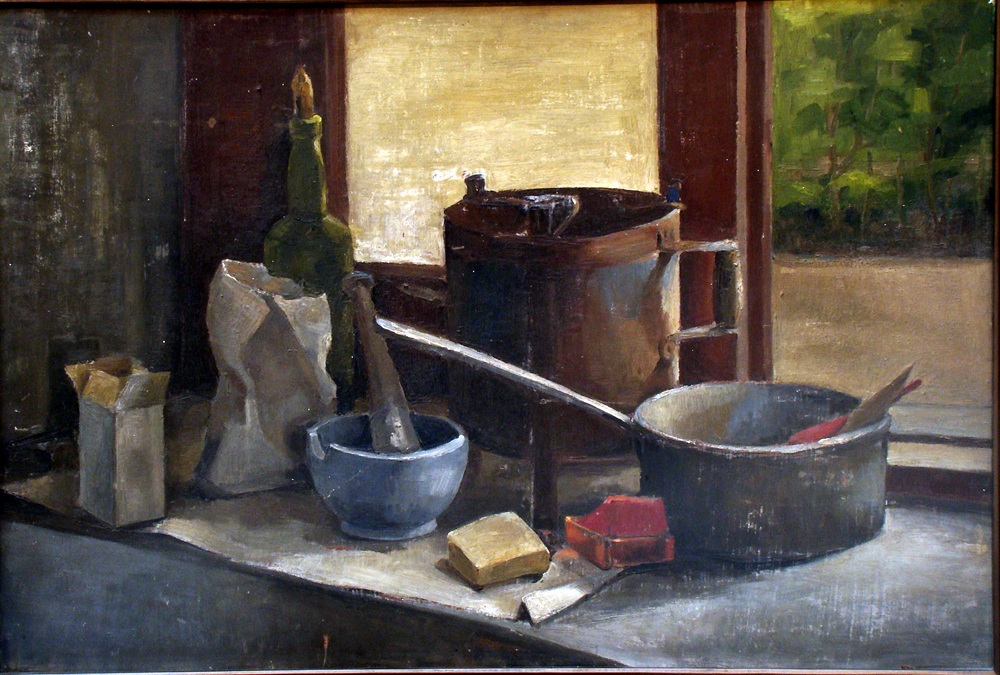
Still Life with a Pan and Angithi by Naseem Hafeez Qazi (1970s)
Having western art skills and style behind her, she explored the indigenous visual idiom of Pakistan with her local palette and western genres. In 1952, Qazi was studying for her MA in Fine Arts, when Anna Molka Ahmed offered her to teach at the Fine Arts Department. Moreover, Ms. Ahmed also foresaw Qazi’s talent and entrusted her with the challenging task of initiating and establishing the Department of Fine Arts at the Lahore College for Women, which was considered the prime educational institution for female education in the town in those days. Her passion and commitment resulted in successfully establishing that Department in the early years of Pakistan, around 1953-55.
It was only the second such facility for girls after the Fine Arts Department at the Punjab University. During a period when the arts were frequently disregarded in the larger educational system, particularly for women, Qazi argued that visual culture was an important and valid area of study. In the formative years of Pakistan, Naseem Hafeez Qazi represents the unique role of the female artist in Lahore’s cultural and artistic endeavours.
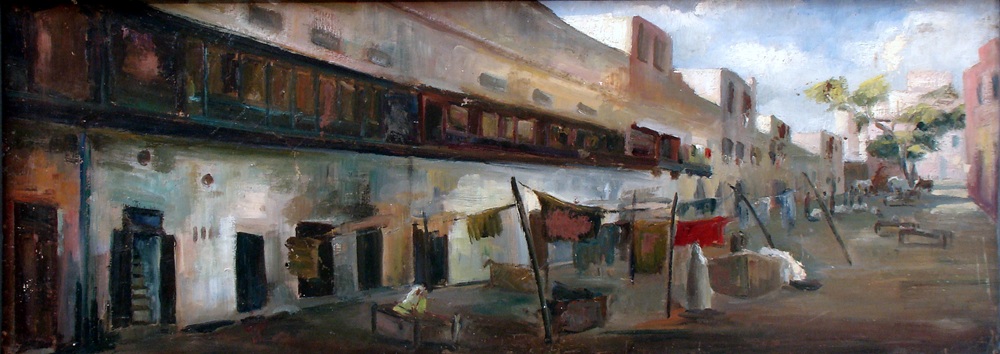
View of Rasulnagar by Naseem Hafeez Qazi (1960s)
Qazi was an unrest soul; she started teaching drawing at a private school in Peshawar during her stay there in 1950, and in 1952 she facilitated the Lahore Corporation teachers to attend a three-month course on teaching art. The same year, she won the University Sheild for women in all Punjab painting exhibition that was arranged by Anna Molka Ahmed under the banner of the Fine Arts Department. Renowned artist Ahmed Parvez won the same title for men, showing the standards and value of this exhibition in the making of art in Pakistan as early as in 1950s.
During 1952-53, Qazi served as Drawing Instructor at the Sketch Club in Karachi, a USIS (United States Information Service) sponsored venture to highlight the art of drawing and sketching for the public, students and hobbyists. In Karachi, she also won First Prize in an International Women’s Art Exhibition held in 1954.
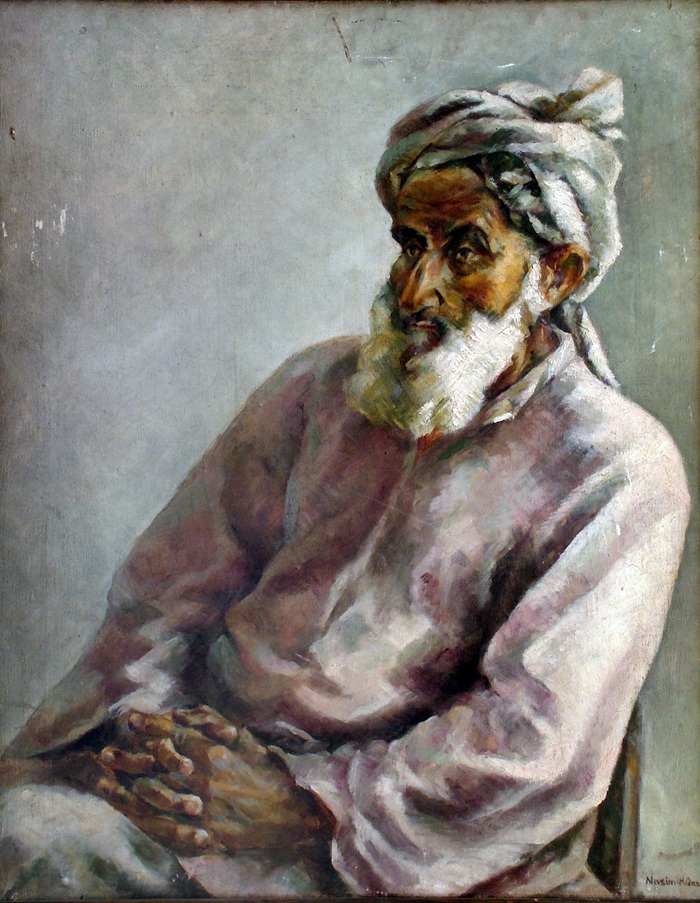
Portrait of an Old Man by Naseem Hafeez Qazi (1970s)
While managing various artistic and academic pursuits, N. H. Qazi obtained her MA degree in Fine Arts in 1957, in First Class First division, and won the university Gold Medal. Immediately, she was appointed as the first full-time Lecturer in Art at the Lahore College for Women. The same year marks her departure from Lahore to Madrid after receiving a two-year scholarship at the prestigious La Escuela Royal de Bellas Artes de San Fumondo, where she attended drawing courses and made replicas of the paintings of European old masters at the Prado Museum.
This juncture proved in Qazi’s life, renewing her technique, style, and precision of perspective. Upon her return to Lahore in 1960, she held her first solo exhibition at the Pakistan Arts Council, Lahore; showcasing her newly discovered skills.
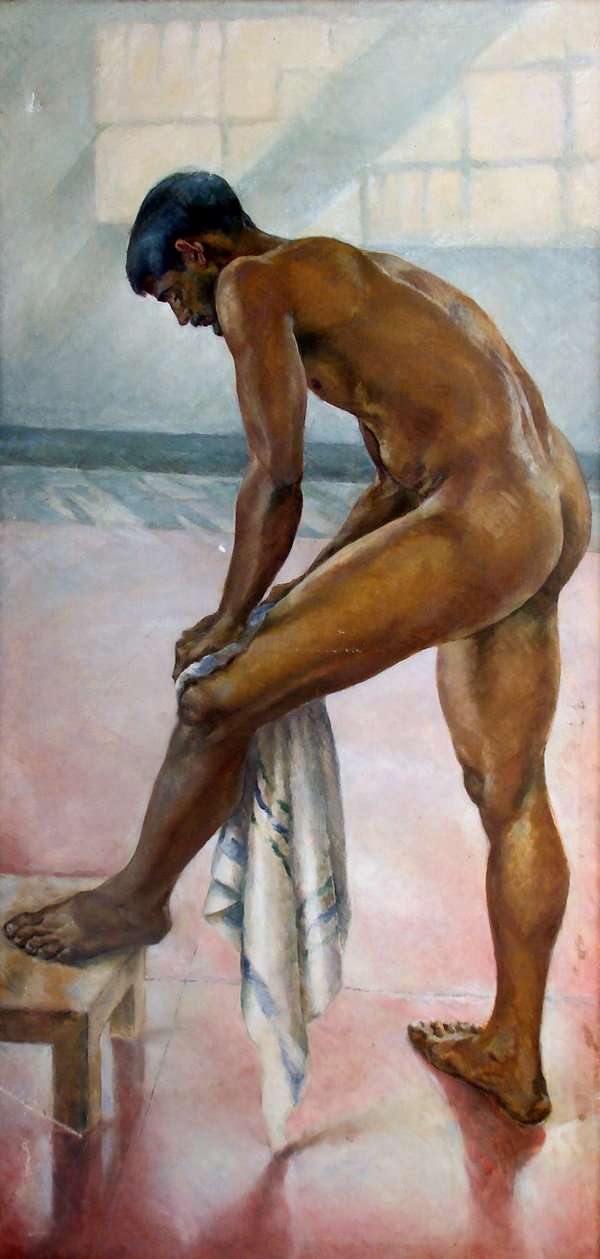
Study of Male Figure by Naseem Hafeez Qazi
In those years, alongside Anna Molka Ahmed, Khalid Iqbal and Colin David, Qazi started teaching and conducted drawing classes at the Pakistan Arts Council; later named the Lahore Arts Council in 1983, and now famously known as the Alhamra Arts Council. At the same venue, Qazi also arranged art classes for children on Saturday mornings. In 1965, she returned to the Lahore College for Women, and served this institution as Head of Fine Arts Department, with sincere and notable efforts until her retirement in 1988.
In 1986, following the success of the Young Artists’ Association, a new platform for the professional and amateur artists was established as the Artists’ Association of Punjab (AAP). Naseem Hafeez Qazi was elected as its first chairperson whereas the executive committee included prominent artists like Khalid Iqbal, Ajaz Anwar, Zulqarnain Haider, Salima Hashmi, Ijazul Hasan, Ghulam Rasul and Ghulam Mustafa.
Qazi, after returning from Spain, executed a few very intense life studies of human figure, only the second artist after Colin David; and likely the first female artist in Pakistan to practice nudes as a proper genre. However, later, due to the socio-political shifts and continuously changing socio-religious norms, she confined her practice to cityscapes, still-life painting, landscapes, and portraits. In fact, she may be considered one of the pioneers in cityscape painting in Pakistan.
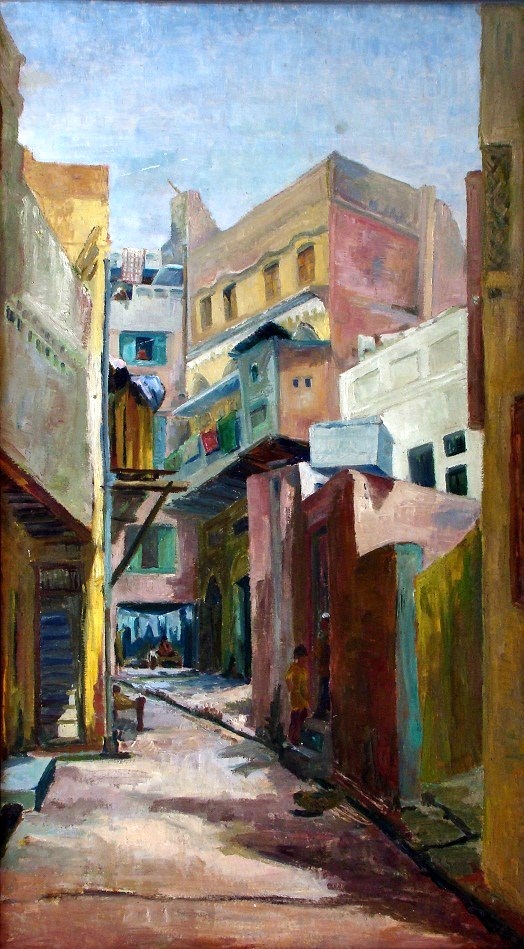
Street in the Old City of Lahore by Naseem Qazi (1960-61)
Naseem Hafeez Qazi remained active in the art circles, even with her deteriorating health, until she breathed her last in 1995. The art gallery at the Lahore College, now the University, was named as NHQ Gallery, acknowledging Qazi’s unparalleled contribution to this institution.
In 2008, as an outcome of the research project conducted by the foreign faculty Dr. Barbara Schmitz along with the faculty and students at the Lahore College for Women University, a retrospective exhibition was arranged at Alhamra Art Gallery Lahore, and later at the National Art Gallery of Islamabad. This exhibition showcased Qazi’s available work as a tribute to the pioneer artist of Pakistan.
You may also like: