Written by: Sana Shahid
Posted on: August 22, 2025 |  | 中文
| 中文
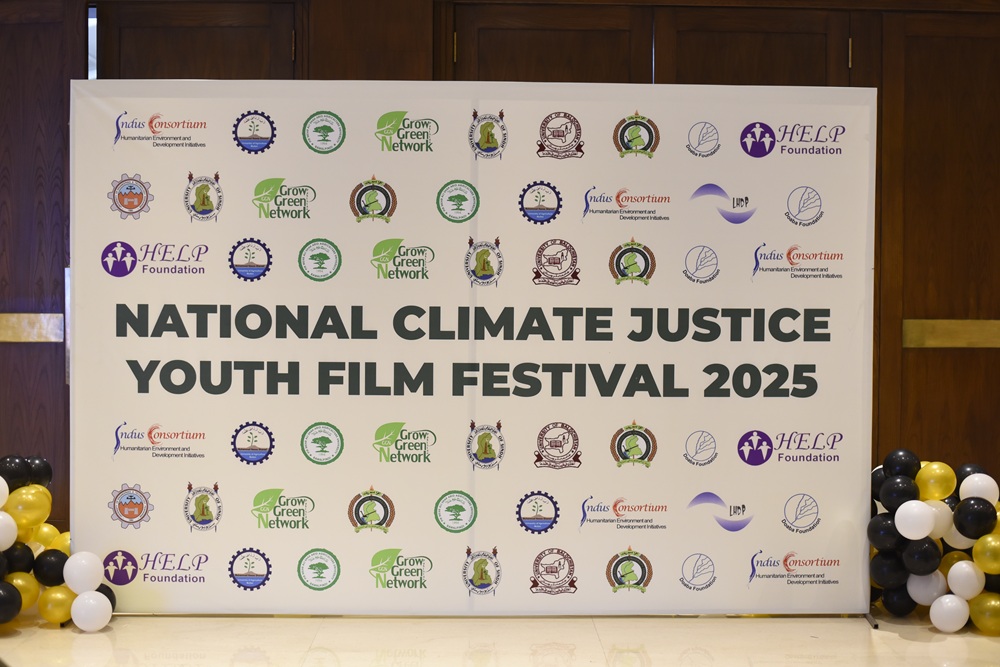
National Climate Justice Youth Film Festival 2025
Climate change has become a buzz word of the 21st century affecting the overall stature of a country across the globe. It’s an unresolved puzzle consisting of countless pieces, and all the countries are losing control over time.
What is climate change? What does it mean? How does it affect people like you and me sitting at home and staring at the situation on social media? These are all valid questions, but the bigger mystery is, what can we do to tackle climate change? This is a question that has caught the attention of the entire world, determined to settle this dispute with Mother Nature. In simple words, Mother Nature is demanding justice in response to what humans have been consuming all these years and it is high time for redemption.
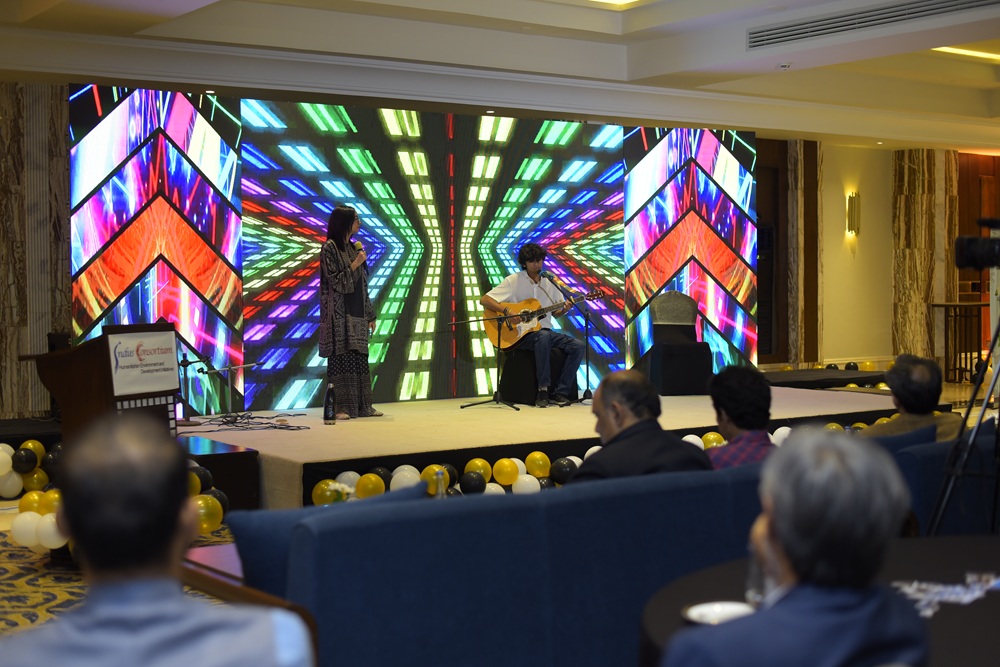
Live musical performance by university students.
A non-profit organization, Indus Consortium held their third National Climate Justice Youth Film Festival on Monday, 18th August, 2025 to shed light on this specific concern with the help of young and enthusiastic students belonging to diverse backgrounds. The students prepared thirty to sixty seconds of short documentaries depicting their own regions, Peshawar, Balochistan, Rawalpindi, etc., followed by a speech by the chief guest, Senator Sherry Rehman. Each documentary unraveled multiple aspects of climate change, including intense winter and summer weather conditions, floods in the monsoon season and clouds bursting. Although these were developed by the students, their passion was eminent in the filming as they tried to spread awareness and solutions in their own personal capacity.
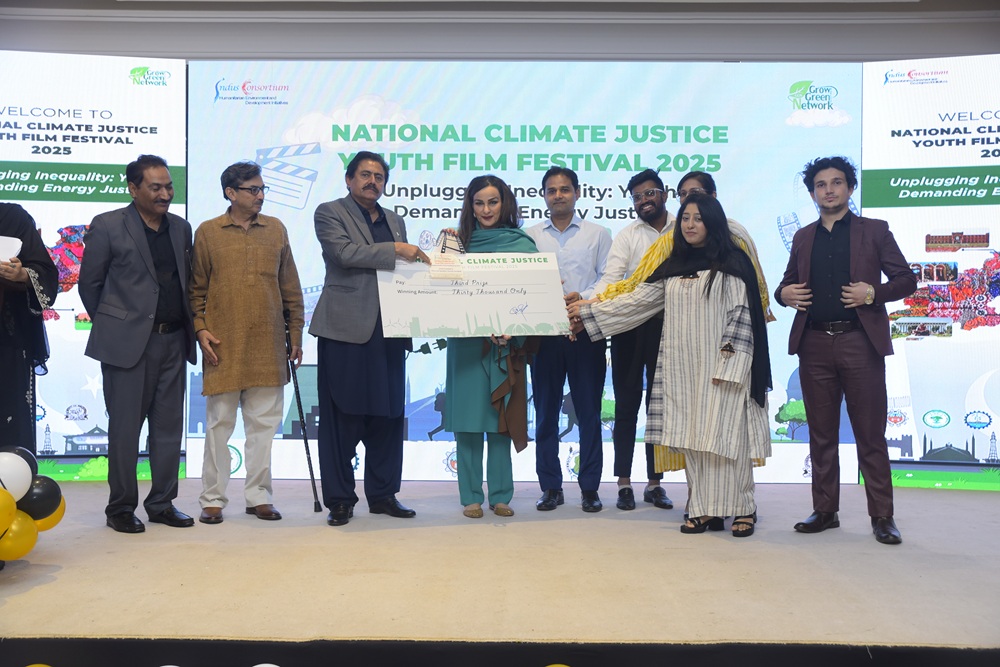
Senator Sherry Rehman distributing prizes to the participants.
Humans are known to be resilient, but to put it fairly, we are slowly becoming immune to the hardships of climate and this event acted as a wakeup call for people, further pressing that climate change is devastating and it is here to stay, with underdeveloped regions paying the price for the actions of the rather more developed world. Senator Sherry Rehman taught an insightful lesson to the audience, preaching to start taking measures from our own houses and incorporating cleaner choices in our everyday routine. She said is only then that the efforts to reverse climate change will become tangible.
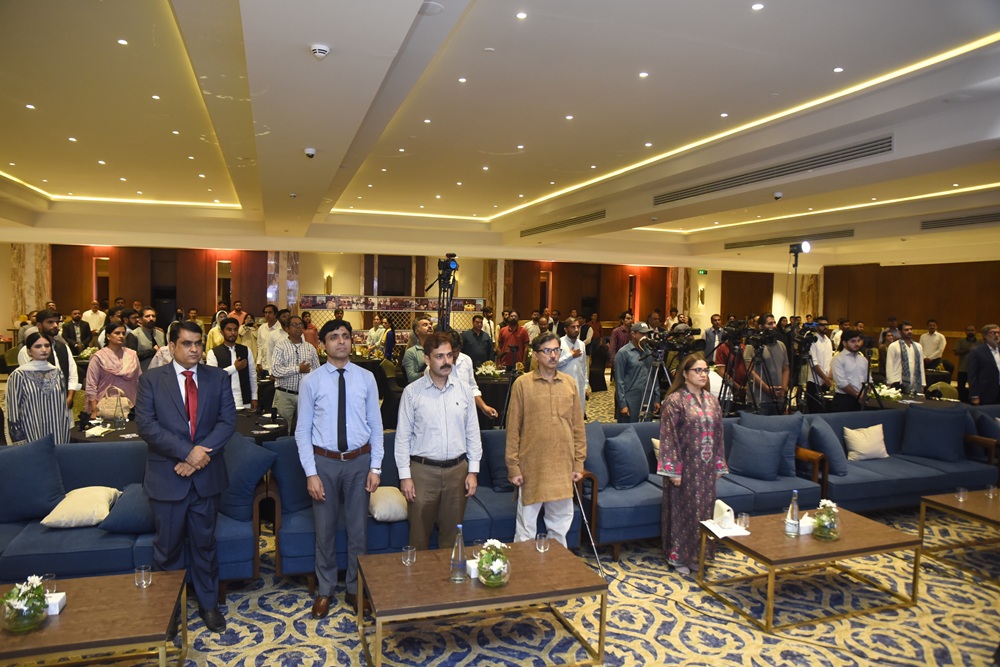
Guests stood up for the national anthem.
It is criminal to neglect climate change at this stage, especially when Pakistan is facing ruthless floods every monsoon, resulting in losing human lives to angry water coming down from the mountains, cloud bursting or the rising ocean level. The films gave voices to otherwise silent communities facing floods without any control over how it affects their lives. The students also depicted people’s financial struggles and their lack of basic healthy living standards within the most affected regions. The devastating floods of 2022, and now 2025, have destroyed one third of Pakistan, leading to a long recovery time. It is upsetting to see that a country already struggling with its economy now must pay the price of climate change, with millions of people who have been displaced and became homeless. Climate change is not just a phenomenon, it is a reality and the earlier we accept it, the better we’ll be able to manage its effects.
The festival also highlighted the role of youth as the torchbearers of climate justice. In a country where half of the population is under the age of 30, their involvement becomes not only necessary but also transformative. The energy of these students stood as a reminder that climate change is not just an environmental issue, but it is deeply tied to justice, equity, and the right to survival. This is where the true power of storytelling lies, combining a strong narrative with real data to make people truly understand the urgency of the current circumstances.
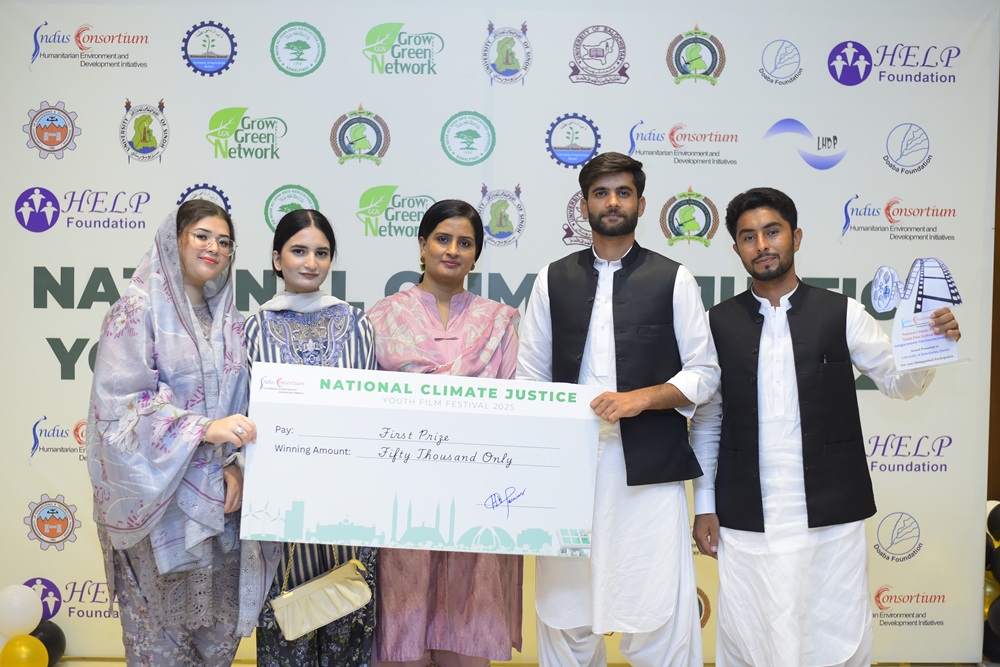
First prize went to University for Balochistan, Quetta.
Another pressing theme that emerged was the imbalance between responsibility and suffering. Pakistan remains among the top ten most vulnerable countries to climate change even though it is not in the list of top emitters globally. The irony of this inequity was not lost on the audience. While developed nations continue to industrialize with little accountability, communities in Pakistan are left to pick up the pieces after each disaster. This raises the broader question of climate justice: who should pay for the damage, and who should take responsibility for ensuring that vulnerable nations have the means to adapt and recover? The underdeveloped countries are left to pay for their own damages while 7 trillion dollars are being awarded to the fossil fuel companies as subsidies. This is not just a shocking number, it is climate injustice as these companies remain indifferent to their actions. The documentaries, in their own humble way, were a plea to the global community for fairness and recognition.
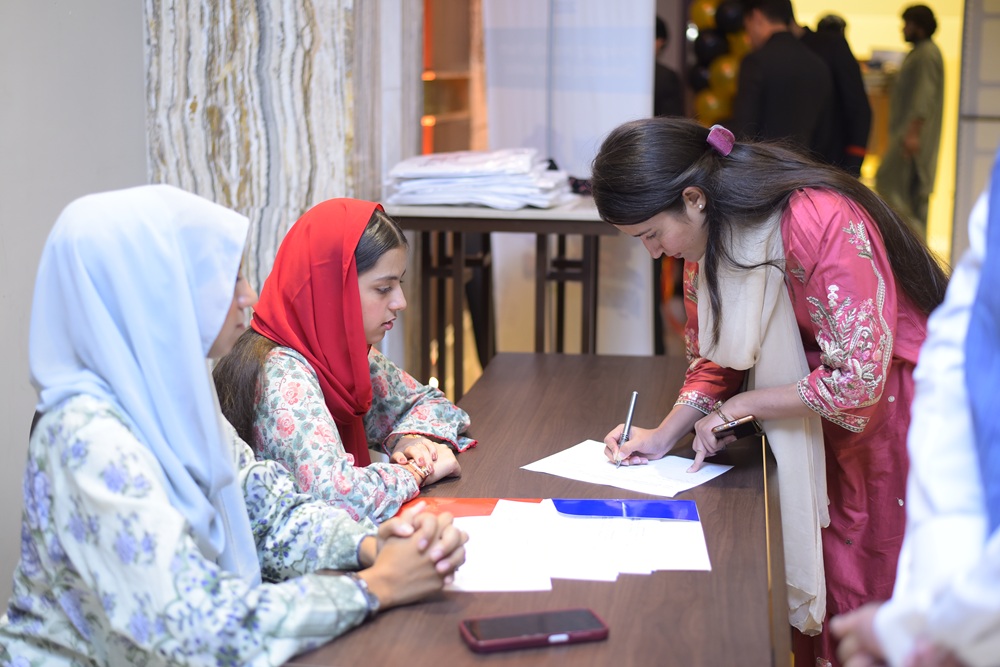
Guests registering at the registration desk.
Perhaps the most powerful takeaway from the event was the reminder that solutions do not always have to be monumental. Sometimes, they begin with simple, conscious choices like planting more trees, reducing waste, recycling, conserving energy and adding more renewables, or even demanding cleaner policies from leaders. The ripple effect of these small actions, multiplied across millions of households, can create a force strong enough to demand a systemic change. The youth that participated in this festival are not just filmmakers; they are change-makers, creating ways toward a future where humanity learns to live in harmony with the planet rather than taking it for granted.
You may also like:

From the Horn of Africa to Bahria Town: Habesha Café Brings Centuries of Coffee Culture to Rawalpindi
(October 15, 2026)