Written by: Muhammad Suhayb
Posted on: December 03, 2025 |  | 中文
| 中文
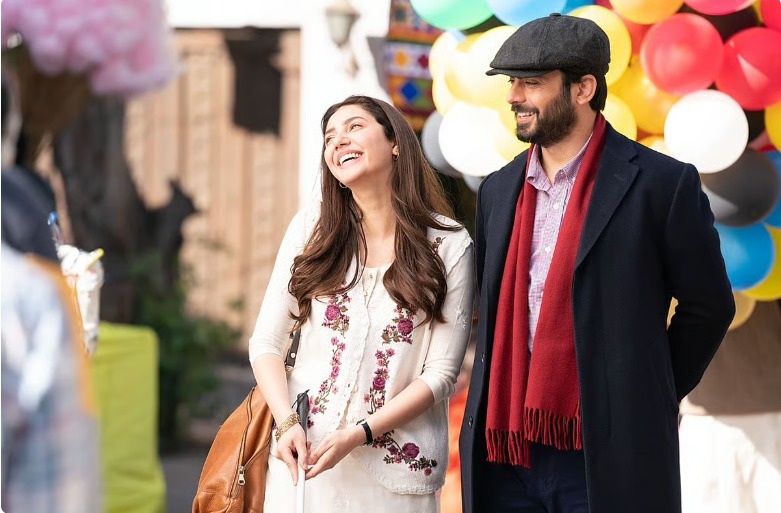
Mahira Khan and Fawad Khan in Neelofar
Director Ammar Rasool’s latest offering Neelofer brings together Pakistan’s biggest stars, Fawad Khan and Mahira Khan, in a film that feels both delicate and emotionally resonant. At its core is the story of a celebrated writer whose life takes an unexpected turn when he grows close to a blind young woman, setting off a journey as subtle as it is transformative.
The lead pair have long crossed national borders with their talent. Fawad, currently judging fresh talent on Pakistan Idol, stands out with a rare international repertoire spanning Hollywood (Ms. Marvel), Bollywood (Khoobsurat, Kapoor & Sons) and, of course, Lollywood. With Neelofar, he steps confidently into the role of producer, once again choosing his most trusted and successful screen partner, Mahira Khan. The film, a two-hour emotional journey, revolves around a blind girl whose world quietly intertwines with that of a thoughtful literary figure who slowly, inevitably, falls for her.
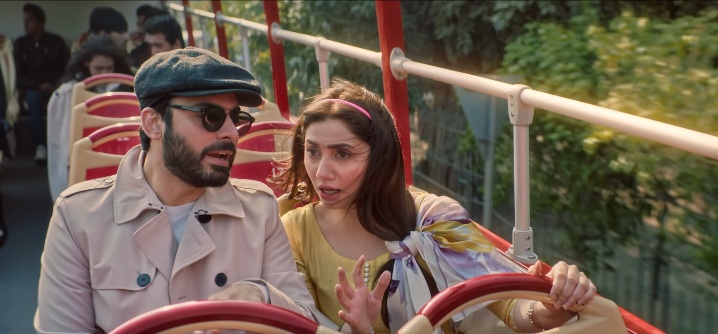
Fawad Khan and Mahira Khan in the film
This film marks the second cinematic outing for both stars in 2025. Fawad Khan’s long-awaited project Abeer Gulal, opposite Bollywood actress Vaani Kapoor, finally released worldwide (not India and Pakistan) after years of delays due to India–Pakistan tensions, while Mahira recently appeared in Love Guru with Humayun Saeed. Neelofar leans into the classic metaphor “love is blind,” building its entire narrative around this idea and exploring it with gentle emotional depth.
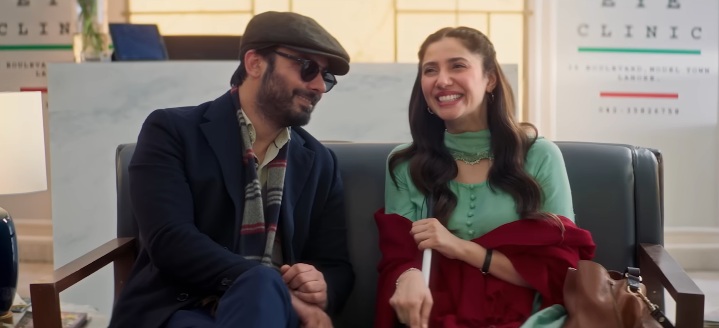
Mahira and Fawad in Neelofar
If you walked in expecting a sequel to The Legend of Maula Jatt (2022), or if you’re someone unmoved by tender storytelling, you’d be in for a surprise. Despite the familiar trio of Fawad, Mahira and Gohar Rasheed hinting at something grand or action-packed, this film is nothing like The Legend of Maula Jatt. Instead, it offers a soft, feel-good journey, a blend of tragedy, warm moments and just enough rejection to keep everything grounded and relatable. Its unhurried pace lets the characters slowly settle into your mind and grow on you, so much so that by the time the climax arrives, you’re no longer just watching; you’re feeling it with the audience.
The star cast also gets you guessing whether the big names have important role to play. The actors who played Fawad Khan’s parents in the drama Humsafar appear here again, but in entirely different roles. Senior actor Atiqa Odho plays Mrs. Kashif, in whose haveli our hero resides, and whose daughter, played by Madiha Imam. Veteran actor Behroz Sabzwari shines as Fakhru Chacha, Neelofar’s driver cum guardian, delivering one of the film’s standout supporting performances. Interestingly, around the time Mahira was born, Behroz was shooting AH Siddiqui’s KhushNaseeb with super star Nadeem, where he also played a Pathan contractor; the dialect he uses for Fakhru Chacha subtly echoes that earlier role.
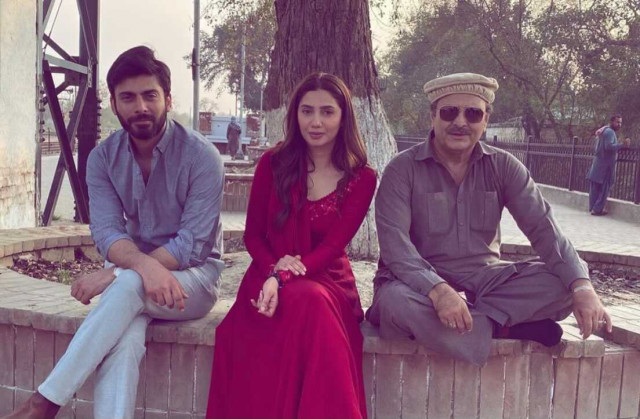
Fawad Khan, Mahira Khan and Behroz Sabzwari
Madiha Imam appears as Sara, Mansoor Ali Khan’s manager and his mentor’s daughter. She has been quite friendly with Mansoor and carry a quiet soft spot for him. Actors like Navid Shehzad, Rashid Farooqui, Gohar Rasheed and Faisal Qureshi (the comedian who earlier directed Fawad in Money Back Guarantee) appear briefly, while Samiya Mumtaz, Seemi Raheel and Sarwat Gilani (though present throughout) are limited to a handful of scenes.
The story opens with Fawad as Mansoor Ali Khan, a celebrated poet and author who is also a widower. He addresses a packed auditorium attending the reading of the latest edition of the only book he has written, a book that has shattered publishing records. Through a reflective flashback, he revisits the moment his life collided with Neelofar, a blind young woman living with her grandmother, waiting patiently for an eye donor who could finally give her sight. He recollects their encounters, their tentative companionship, their growth, and eventually the zaalim samaaj that tears them apart.

Fawad Khan and Mahira Khan
The story immediately evokes memories of Waheed Murad and Zeba’s Armaan (1966), where the first half was filled with comedy of errors and the second half dipped into full-blown tragedy. With songs like Ko ko ko rina and Akele na jaana to boast of a soundtrack, the songs are still relevant. Visually, Neelofar’s first half is tender and romantic, while the second half grows heavy with emotion, but one area where Neelofar differs from Armaan is the music. Zeeshan Haider, from a distinguished family of music directors, puts in a sincere effort, yet the songs lack the strength and memorability needed to elevate the film’s emotional beats.
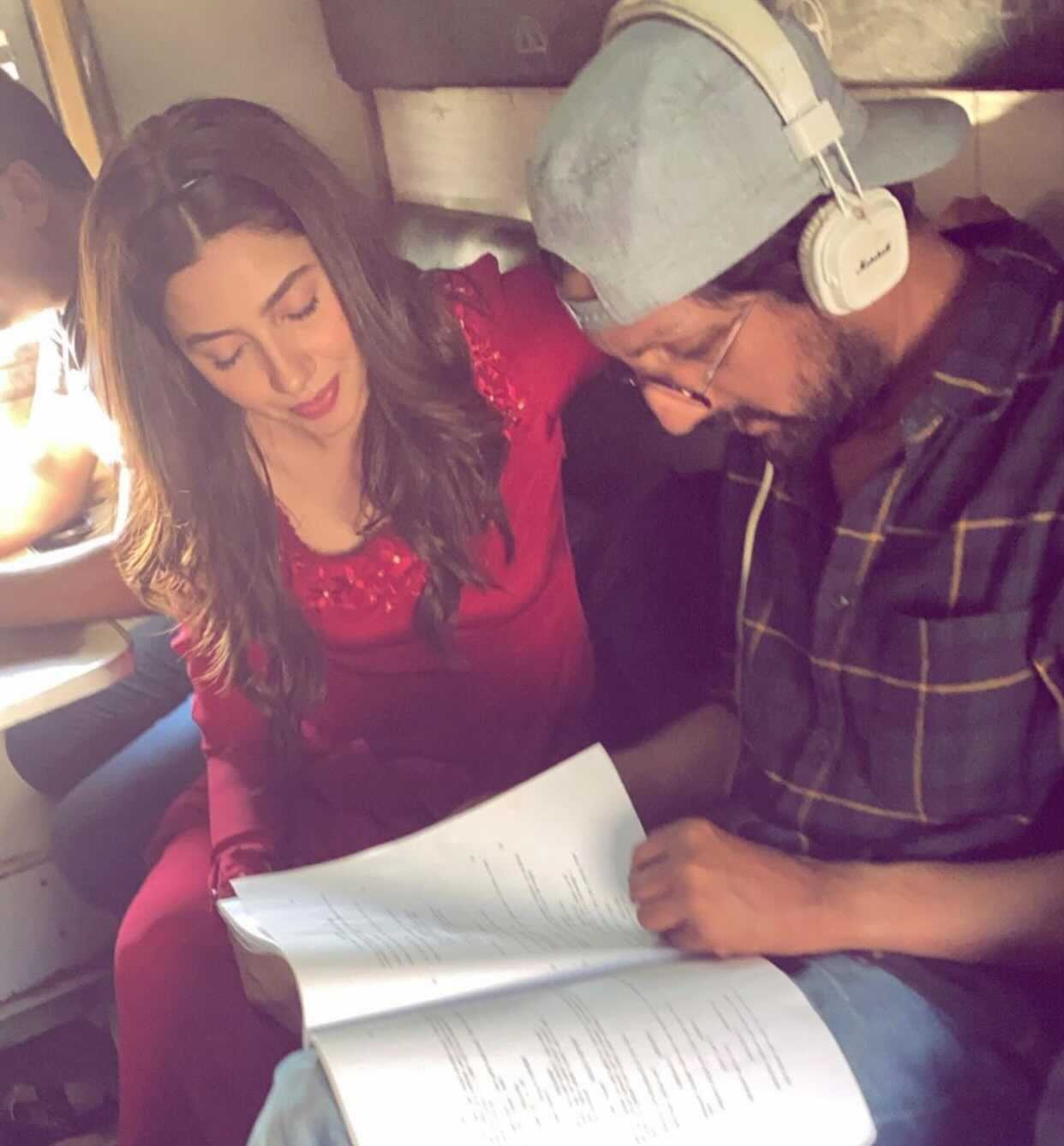
Mahira Khan with the Director
Where the film truly excels is in its portrayal of Lahore. It captures the city in all its layered beauty: wide open spaces washed in soft light, majestic Mughal-era structures standing in quiet dignity, leisurely open-roof bus rides that add an old-world charm, and even the railway station filmed with nostalgic intimacy. Lahore becomes more than a setting; it becomes an essential character in the film.
The movie ultimately cashes in on the chemistry between its lead, their shared silences, their delicate bond and the emotional journey they undertake. And perhaps the biggest compliment to the film is this: when you walk out of the cinema, it’s not a dialogue or a soundtrack that lingers, but an unexpected urge to plan a trip to Lahore.
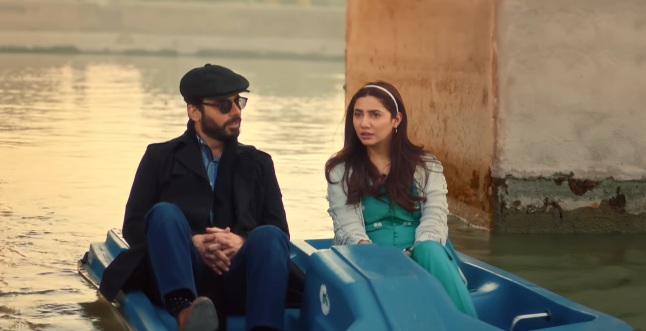
Fawad Khan and Mahira Khan in Neelofar
Had Neelofer released at a time when Pakistan’s cinema industry was thriving, when local films were competing strongly and ticket prices were more accessible, it might have shattered box-office records. But today, with every new release being marketed as part of a “cinema revival,” Neelofer unfortunately arrives out of sync with the times. In many ways, the movie becomes a litmus test for its audience, a quiet challenge to our ability to feel, pause and truly connect.
You may also like:
From the Horn of Africa to Bahria Town: Habesha Café Brings Centuries of Coffee Culture to Rawalpindi
(October 15, 2026)