Print

    Prickly Pear and the Green Silk Road: Bridging Arid Landscapes of Pakistan and China

    Written by: Ayesha Shoukat
    Posted on: July 11, 2025 | | 中文

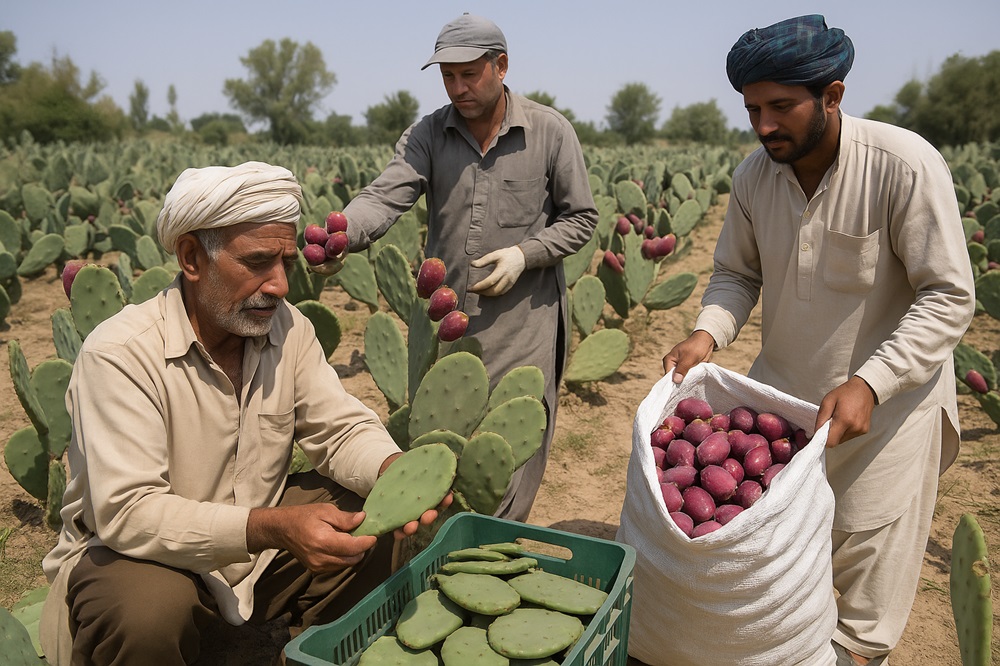
    Farmers harvesting nutritious prickly pear pads and fruits in a desert field.

    The prickly pear cactus, scientifically known as Opuntia ficus-indica, is a unique plant that grows well in hot and dry areas. In Pakistan, it is commonly called Nagphani or Anarphalī, while in China it is known as Xiānrénzhǎng guǒ, which means "fruit of the prickly pear cactus." This cactus is strong and needs very little water to grow, making it perfect for desert regions where most crops cannot survive.
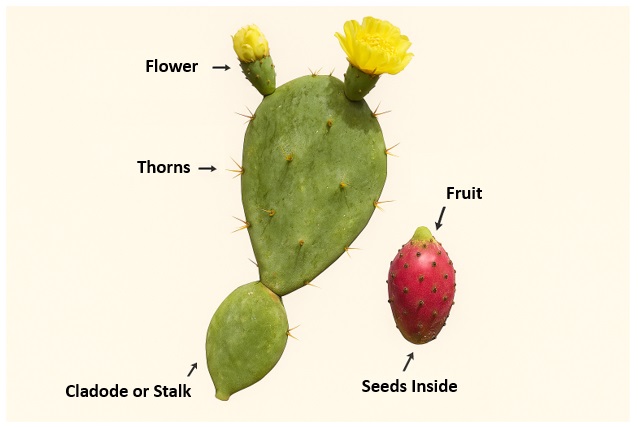
    In Pakistan, prickly pear grows naturally in deserts like Thar, Cholistan and Kharan. It helps prevent soil erosion and provides fruit and pads that are full of nutrients. In China, it is also used in dry areas to support food supply and fight desertification. Both countries face similar challenges in their arid regions. That is why this cactus can play an important role in the Green Silk Road, a project that focuses on green development and cooperation between Pakistan and China. The fruit of the prickly pear is rich in vitamins, minerals and antioxidants. The pads are hydrating and low in calories, making them a healthy food. In other countries like Mexico, people use prickly pear to make jams, juices and even feed for animals. Pakistan and China can learn from these ideas and create their own products from this plant. This can help local farmers, create jobs and improve food security in desert areas.

    One great way to add prickly pear to the modern diet is through simple recipes. A refreshing prickly pear sharbat can be made with the following ingredients:
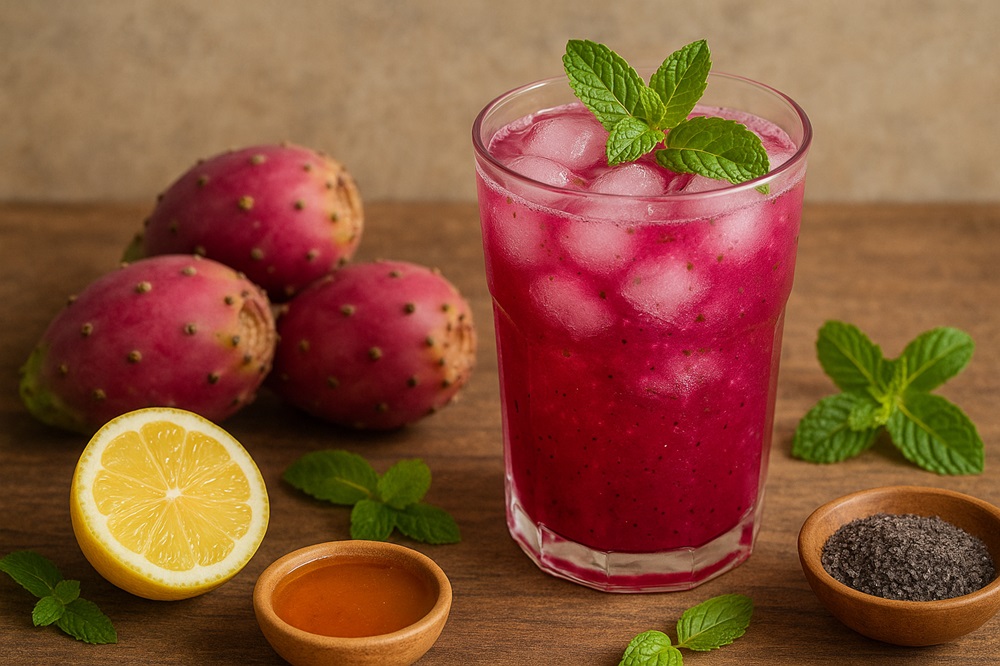
    • • 2 peeled prickly pear fruits
    • • 1 tablespoon lemon juice
    • • 4 – 5 mint leaves
    • • 1 teaspoon honey or jaggery
    • • A pinch of black salt
    • • 1 cup of chilled water or soda

    Blend all the ingredients until smooth, then strain to remove the seeds. Pour the drink over ice and top it with mint. This beverage is not only delicious but also rich in antioxidants and electrolytes, making it especially beneficial during the hot summers in Pakistan and China.

    Prickly pear also has other uses. Its sticky substance, called mucilage, can be used to clean water and make biodegradable packaging. With China's experience in green technology, both countries can work together to turn this plant into useful eco-friendly products.
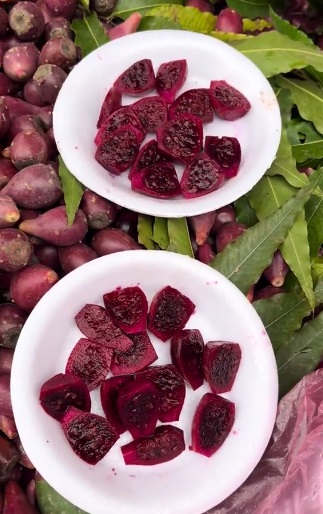
    To make full use of the prickly pear, there needs to be more research, investment, and awareness. Teaching farmers to grow thornless types of prickly pear or sharing simple recipes can be a good start. The Green Silk Road is not just about trade; it is about finding shared solutions to common problems. By working together, Pakistan and China can turn this cactus into a symbol of hope, health and sustainability. This desert plant can help improve lives and protect the environment in both countries.


    As the new year begins, let us also start anew. I’m delighted to extend, on behalf of the Embassy of the People’s Republic of China in the Islamic Republic of Pakistan and in my own name, new year’s greeting and sincere wishes to YOULIN magazine’s staff and readers.

    Only in hard times can courage and perseverance be manifested. Only with courage can we live to the fullest. 2020 was an extraordinary year. Confronted by the COVID-19 pandemic, China and Pakistan supported each other and took on the challenge in solidarity. The ironclad China-Pakistan friendship grew stronger as time went by. The China Pakistan Economic Corridor projects advanced steadily in difficult times, become a standard-bearer project of the Belt and Road Initiative in balancing pandemic prevention and project achievement. The handling capacity of the Gwadar Port has continued to rise and Afghanistan transit trade through the port has officially been launched. The Karakoram Highway Phase II upgrade project is fully open to traffic. The Lahore Orange Line project has been put into operation. The construction of Matiari-Lahore HVDC project was fully completed. A batch of green and clean energy projects, such as the Kohala and Azad Pattan hydropower plants have been substantially promoted. Development agreement for the Rashakai SEZ has been signed. The China-Pakistan Community of Shared Future has become closer and closer.

    Reviewing the past and looking to the future, we are confident to write a brilliant new chapter. The year 2021 is the 100th birthday of the Communist Party of China (CPC) and the 70th anniversary of the establishment of diplomatic relations between China and Pakistan. The 100-year journey of CPC surges forward with great momentum and China-Pakistan relationship has flourished in the past 70 years. Standing at a new historic point, China is willing to work together with Pakistan to further implement the consensus reached by the leaders of the two countries, connect the CPEC cooperation with the vision of the “Naya Pakistan”, promote the long-term development of the China-Pakistan All-weather Strategic Cooperative Partnership with love, dedication and commitment. Mohammad Ali Jinnah, the founding father of Pakistan said, “We are going through fire. The sunshine has yet to come.” Yes, Pakistan’s best days are ahead, China will stand with Pakistan firmly all the way.

    YOULIN magazine is dedicated to promoting cultural exchanges between China and Pakistan and is a window for Pakistani friends to learn about China, especially the Xinjiang Uygur Autonomous Region. It is hoped that with the joint efforts of China and Pakistan, YOULIN can listen more to the voices of readers in China and Pakistan, better play its role as a bridge to promote more effectively people-to-people bond.

    Last but not least, I would like to wish all the staff and readers of YOULIN a warm and prosper year in 2021.

    Nong Rong Ambassador Extraordinary and Plenipotentiary of
    The People’s Republic of China to the Islamic Republic of Pakistan
    January 2021