Written by: Hurmat Majid
Posted on: March 18, 2026 |  | 中文
| 中文
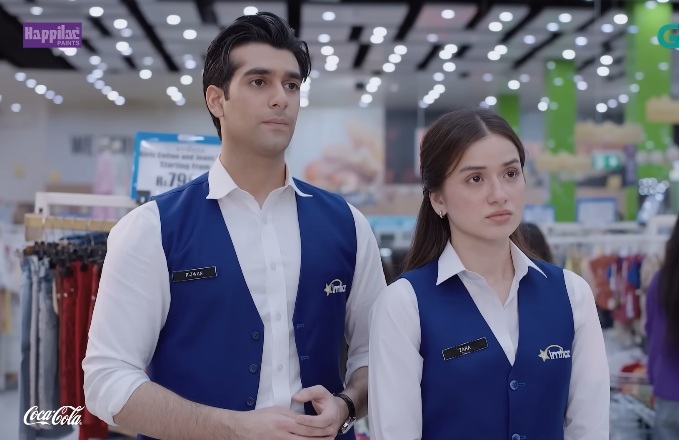
Shuja Asad and Aena Khan in Fasana Mart Ka
Every Ramzan, Pakistani television undergoes a seasonal transformation. The intense melodramas that dominate most of the year temporarily give way to lighter storytelling: romantic comedies, family dramas, and ensemble shows designed for relaxed viewing after iftar. The tradition, popularized by hits like Suno Chanda and Chupke Chupke, has become one of the most anticipated programming windows on Pakistani television.
Ramzan 2026 continues this trend with a handful of feel-good dramas aimed at family audiences. Among the most talked-about this year are Tum Larkay Bhi Na, Fasana Mart Ka, and Dekh Zara Pyar Se, each offering a different spin on comedy, romance and family dynamics. While all three shows contribute to the festive viewing landscape, one in particular stands out as the season’s most compelling watch.
Airing daily at 7:00 PM on HUM TV, Tum Larkay Bhi Na is positioned as a pre-iftar watch, combining youthful romance with family comedy. The drama premiered on 19 February 2026 and is written by Faseeh Bari Khan, directed by Yasir Nawaz, and produced by Momina Duraid under the banner of MD Productions.
The series stars a young ensemble cast led by Aina Asif and Ali Dayyan Walji, with supporting performances from Sami Khan Jr., Emaan Syed, Vaneeza Ahmed, Faiza Hassan and Yasir Nawaz himself.
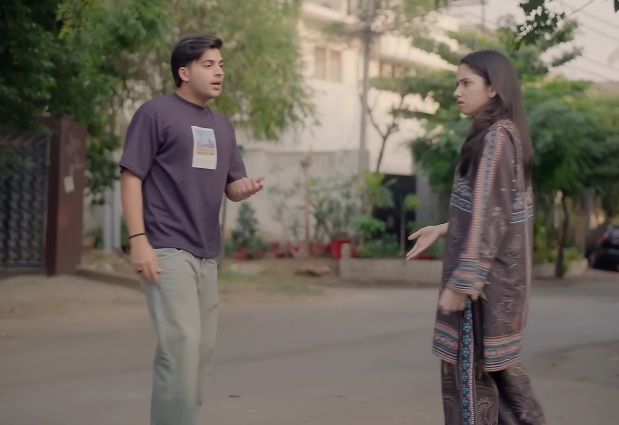
Aina Asif and Ali Dayyan in Tum Larkay Bhi Na
At its heart, Tum Larkay Bhi Na is a story about family life inside a crowded joint household. The plot revolves around two sisters whose contrasting personalities shape the atmosphere of the home. One is strict and competitive, constantly comparing achievements and status; the other is more relaxed and emotionally supportive. Their rivalry spills over into the lives of their children, turning everyday situations into comic confrontations.
The central romantic thread follows Badriqa and Zoyan, two cousins whose playful arguments gradually evolve into a budding romance. As misunderstandings pile up and relatives begin interfering in their lives, the pair must navigate family expectations alongside their growing feelings.
Like many Ramzan dramas, the show relies heavily on relatable domestic humor. Conversations around the dining table, friendly rivalries between siblings, and exaggerated parental anxieties form the backbone of the narrative. The writing balances comedy with small emotional moments, exploring generational differences in how relationships are understood.
While the storyline may feel familiar to seasoned viewers of Ramzan television, Tum Larkay Bhi Na succeeds largely because of its youthful energy and accessible storytelling. It is light, comforting television, exactly the sort of show that works well during the Ramzan season.
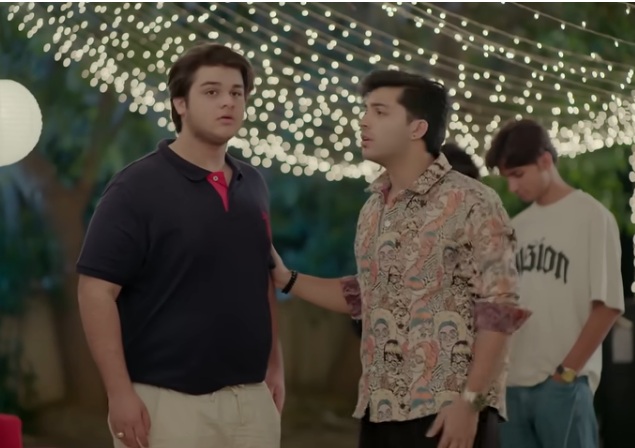
Ali Dayyan and Sami Khan in Tum Larkay Bhi Na
If Tum Larkay Bhi Na explores family life at home, Fasana Mart Ka takes its comedy to a completely different setting: a bustling supermarket.
Broadcast on Green Entertainment beginning 20 February 2026, the show airs on weekends and offers a workplace comedy format rarely seen in Ramzan programming.
The ensemble cast includes Aena Khan, Shuja Asad, Omair Rana, and Faryal Mehmood, alongside several supporting performers who populate the fictional supermarket.
The premise is simple yet effective: a busy hypermarket becomes the stage for a variety of comic situations involving both employees and customers. The store manager struggles to maintain order while dealing with eccentric staff members and unpredictable shoppers, especially during the chaotic rush hours typical of Ramzan.
Within this setting, the drama introduces several overlapping storylines. There is a slow-burn romantic subplot between two employees, a rivalry among workers competing for recognition, and a steady stream of comedic encounters with demanding customers.
Unlike the more traditional family-centered Ramzan dramas, Fasana Mart Ka adopts an episodic ensemble structure. Each episode presents a new workplace dilemma, often exaggerated for comic effect. The supermarket setting allows the writers to bring together characters from different social backgrounds, turning the store into a miniature reflection of urban life.
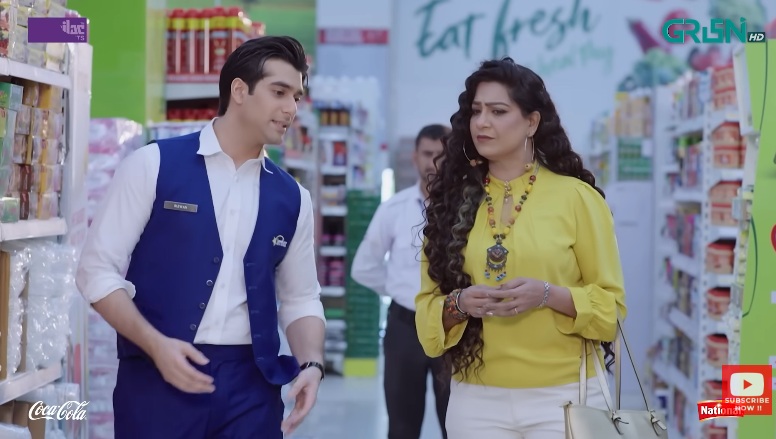
Shuja Asad with a client in Fasana Mart Ka
The show’s appeal lies in its novelty. Pakistani Ramzan dramas often rely on extended family homes as their primary setting, so placing the action in a public space introduces fresh possibilities for storytelling. However, the episodic format means that the emotional depth remains relatively light compared to more character-driven narratives.
Still, for viewers looking for a breezy, situational comedy, Fasana Mart Ka offers a fun alternative to the typical Ramzan rom-com formula.
Among this year’s offerings, the drama generating the most conversation is Dekh Zara Pyar Se, airing nightly on HUM TV at 9:00 PM.
Written by Saima Akram Chaudhry, directed by Ali Hassan, and produced by Momina Duraid Productions, the series brings together one of Pakistan’s most reliable Ramzan drama writers with a strong cast led by Yumna Zaidi and Hamza Sohail.
Saima Akram Chaudhry’s scripts have long defined the modern Ramzan rom-com. Known for combining witty dialogue with heartfelt emotional arcs, her work consistently balances humor and romance, an approach that is fully on display here.
The story centers on Romaila, played by Yumna Zaidi, a fiercely independent woman shaped by her parents’ separation. Having grown up emotionally self-reliant, she is skeptical of relationships and cautious about letting people into her life.
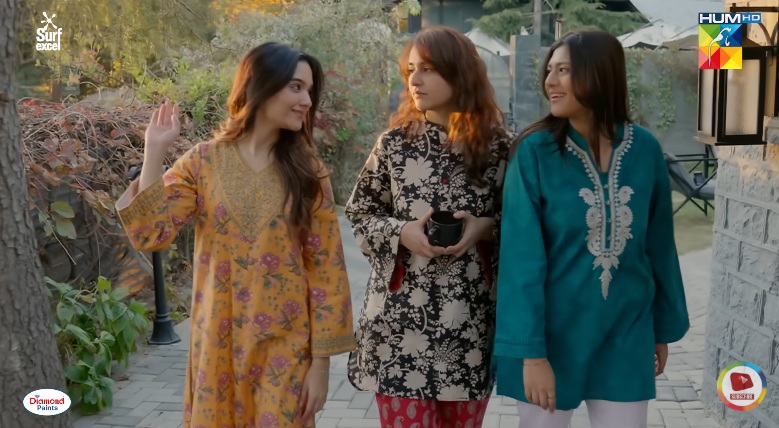
Romaisa Khan, Yumna Zaidi and Momina Munir in Dekh Zara Pyar Se
Opposite her is Zoraiz Ali Khan, portrayed by Hamza Sohail, an ambitious advertising professional who lost his parents at a young age. While disciplined and outwardly composed, Zoraiz carries his own emotional vulnerabilities beneath the surface.
Their worlds collide through family connections, and what begins as a series of awkward encounters gradually evolves into a relationship marked by humor, misunderstanding, and emotional growth. Both characters must confront their past experiences before they can fully embrace the possibility of love.
The supporting cast adds depth and warmth to the story. Veteran actors Bushra Ansari, Arshad Mehmood, and Saleem Sheikh provide the familial backdrop that anchors the romantic storyline, while younger performers such as Romaisa Khan and Momina Munir bring lively energy to the ensemble.
Visually, the drama leans into soft aesthetics and intimate character moments, giving it a polished feel that stands out among the season’s productions. The soundtrack, featuring vocals by Asim Azhar, further enhances the emotional tone of the series.

Yumna Zaidi and Hamza Sohail in Dekh Zara Pyar Se
What makes Dekh Zara Pyar Se particularly compelling is its focus on emotional maturity. Rather than relying solely on slapstick comedy, the show explores themes of vulnerability, second chances, and personal healing. The romance between Romaila and Zoraiz unfolds gradually, allowing viewers to connect with their individual journeys before the relationship takes center stage.
Ramzan television thrives on comfort viewing, stories that can bring families together after a long day of fasting. This year’s lineup offers a variety of options.
Tum Larkay Bhi Na provides familiar family comedy and youthful romance, making it a pleasant early-evening watch. Fasana Mart Ka, meanwhile, experiments with a workplace setting that injects a dose of novelty into the genre.
But if there is one drama that truly captures the spirit of Ramzan entertainment this year, it is Dekh Zara Pyar Se. With Saima Akram Chaudhry’s sharp writing, Ali Hassan’s polished direction, and the charming pairing of Yumna Zaidi and Hamza Sohail, the show manages to blend humor, romance and emotional depth in equal measure. It is heartfelt without being heavy, comedic without being frivolous, and visually elegant without losing its warmth. In short, if you’re only adding one drama to your Ramzan watchlist in 2026, Dekh Zara Pyar Se is the one that deserves your time.
You may also like: