Written by: Saram Maqbool
Posted on: September 22, 2025 |  | 中文
| 中文
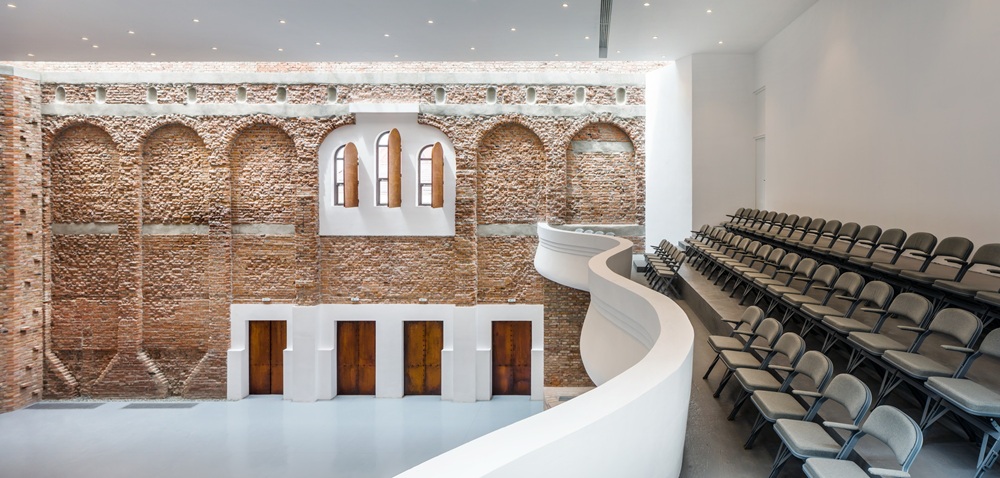
Blaj Cultural Palace Refurbishment by Vlad Sebastian Rusu
To think that, someday, millennia ago, someone stood or sat right where you and I are standing or sitting today, is something not fully fathomable. As human beings, we often need tangible remnants of the past to fully grasp the idea that there have been civilizations before us, with full lives and unique stories that have been lost to time. I think the built environment acts as one of the greatest reminders of what's now gone. Buildings that have stood their ground for centuries speak of those who inhabited these spaces before us. And that is one reason why architects today are trying to save these structures, even if they're in ruin, and blending them with modern design to create a fusion of eras. For centuries, architects approached ruins as fragile relics to be preserved, protected and frozen in time. Modern projects that integrate with historical decay are more than architectural exercises - they are dialogues between times, where memory and innovation exist side by side. These buildings tell us that ruins are not endings, but beginnings in another form.
Few projects embody this philosophy as profoundly as Peter Zumthor’s Kolumba Museum in Cologne. The museum rises from the remains of St. Kolumba, a Gothic church bombed during World War II. Rather than erase or restore the ruins, Zumthor chose to cradle them, enveloping fragments of stone and shattered walls in a new structure of pale gray brick. Inside, visitors walk on quiet paths that weave between the surviving columns and chapels. The experience is not of visiting a museum alone, but of entering into a dialogue with memory itself. What Zumthor creates is neither pure ruin nor pure modernity, but an architecture of continuity, where absence is allowed to breathe within presence.
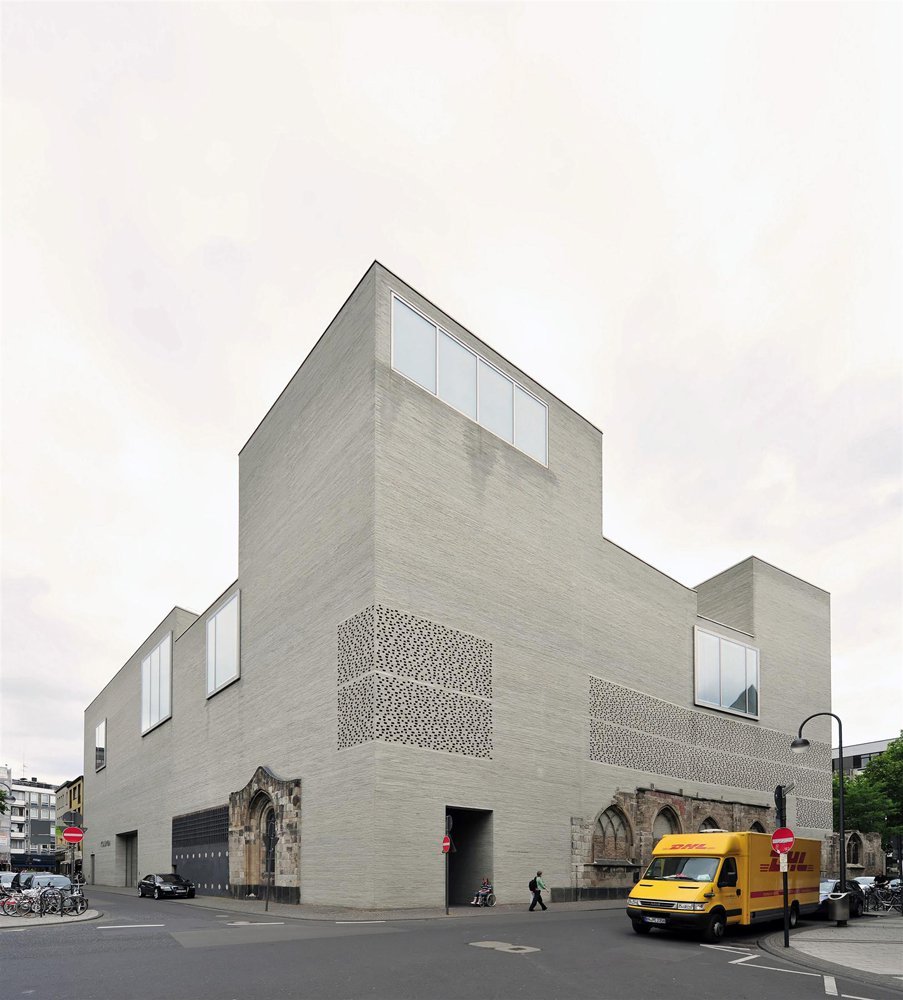
Kolumba Museum by Peter Zumthor
In London, Caruso St John’s transformation of the Tate Britain galleries echoes this same sensitivity. Here, the ruin was not one of bombed stone, but of Victorian excess and decay. Instead of stripping the building clean or imposing a strikingly modern identity, the architects allowed the faded grandeur of worn marble and peeling plaster to exist alongside their crisp interventions. The dialogue between deterioration and refinement creates a strangely beautiful tension. In places, the decay seems to speak louder than the restoration, reminding visitors that history is not polished, but layered, imperfect and alive.
A more radical example stands in Matera, Italy, a city carved into stone caves that were once abandoned slums. For decades, the Sassi di Matera lay in ruin, declared a “national shame” by the government. Today, those very caves have been transformed into hotels, galleries and cultural spaces. Projects like Sextantio Le Grotte della Civita preserve the texture of the ancient stone interiors, the rough surfaces and shadowed volumes, while carefully inserting modern comforts like glass, light fixtures and plumbing, so subtly that they feel like they belong. Guests sleep in rooms where centuries of human life left their traces, but the space does not feel frozen. It feels reborn, a reminder that ruins can be both lived in and honored.
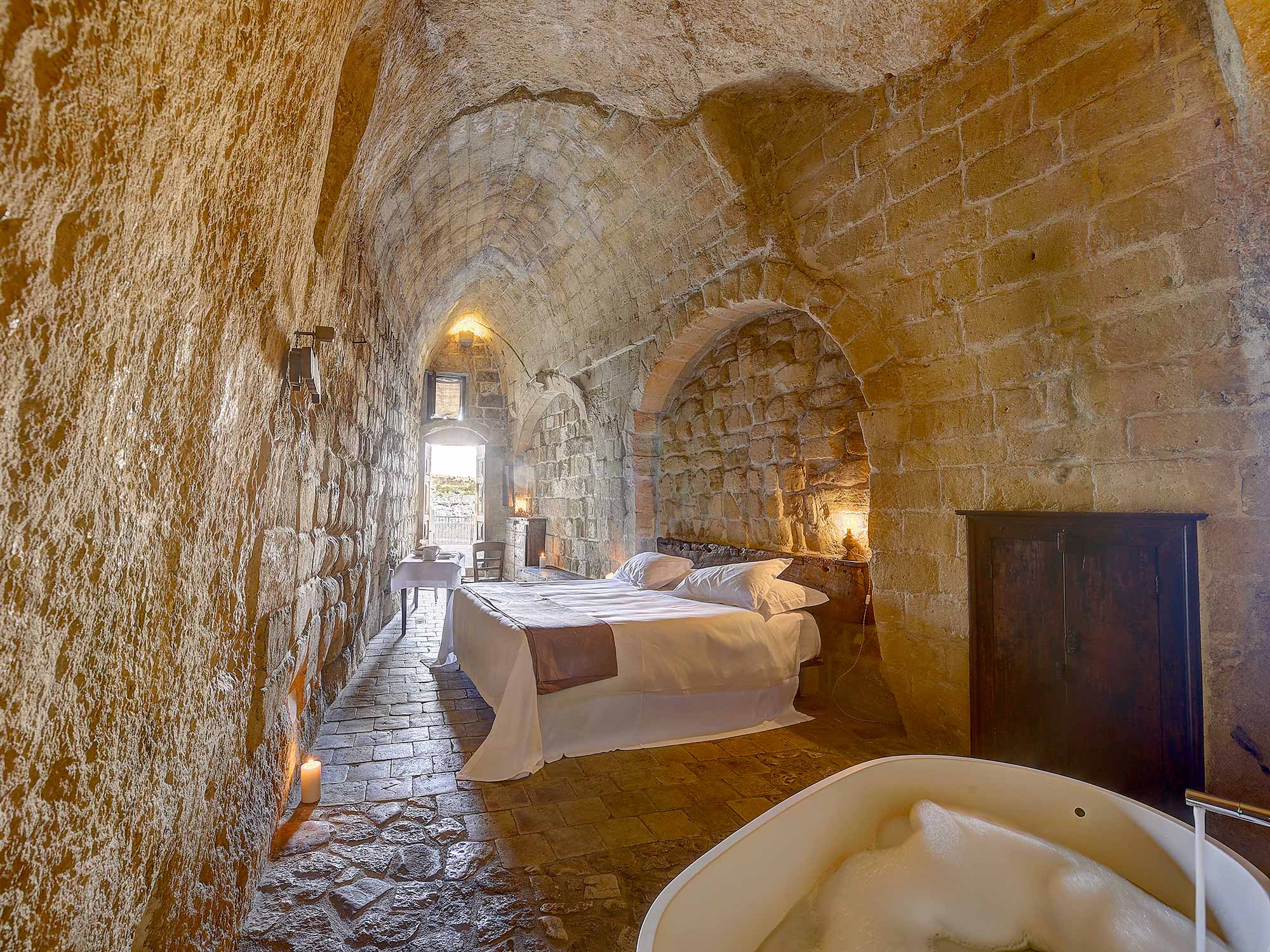
A Bedroom in Sextantio Le Grotte della Civita, Italy
Ruins also pose questions of scale and spectacle. In Beijing, the transformation of the Dashilar neighborhood around the old hutongs has inspired projects that balance conservation with innovation. Architects have worked to stabilize collapsing walls and repair structures without erasing their scars, while layering in new functions like cafes, design studios, and cultural centers. These interventions don’t impose themselves onto the past but rather keep the patina of time intact. The modern is allowed to coexist without overwhelming the fragile fabric of history.
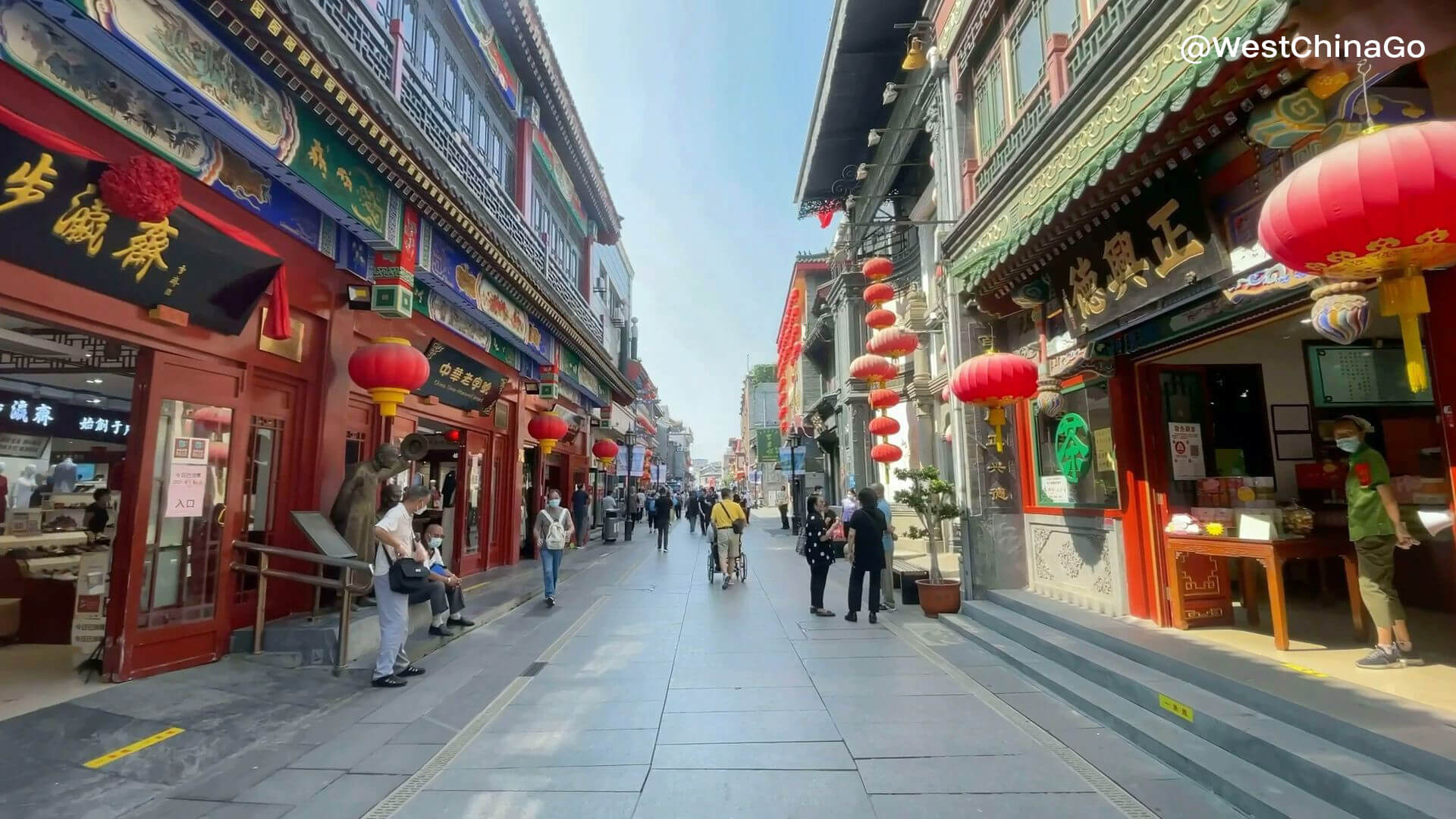
Dashilar Street in Beijing
Sometimes, integration with ruins becomes a literal act of resurrection. The Neues Museum in Berlin, restored by David Chipperfield, is a masterclass in this balance. Severely damaged during World War II and left to crumble during the Cold War, the museum could easily have been demolished or entirely rebuilt. Instead, Chipperfield approached it with what he called “a process of conservation rather than reconstruction.” Missing sections were rebuilt not as replicas, but with modern brick and concrete that contrast gently with the original. Bullet holes and burn marks remain visible on old walls. Walking through its halls, one is acutely aware of history’s violence and resilience, of the building’s survival as both ruin and rebirth. It is a place where architecture does not hide wounds, but reveals them with dignity.
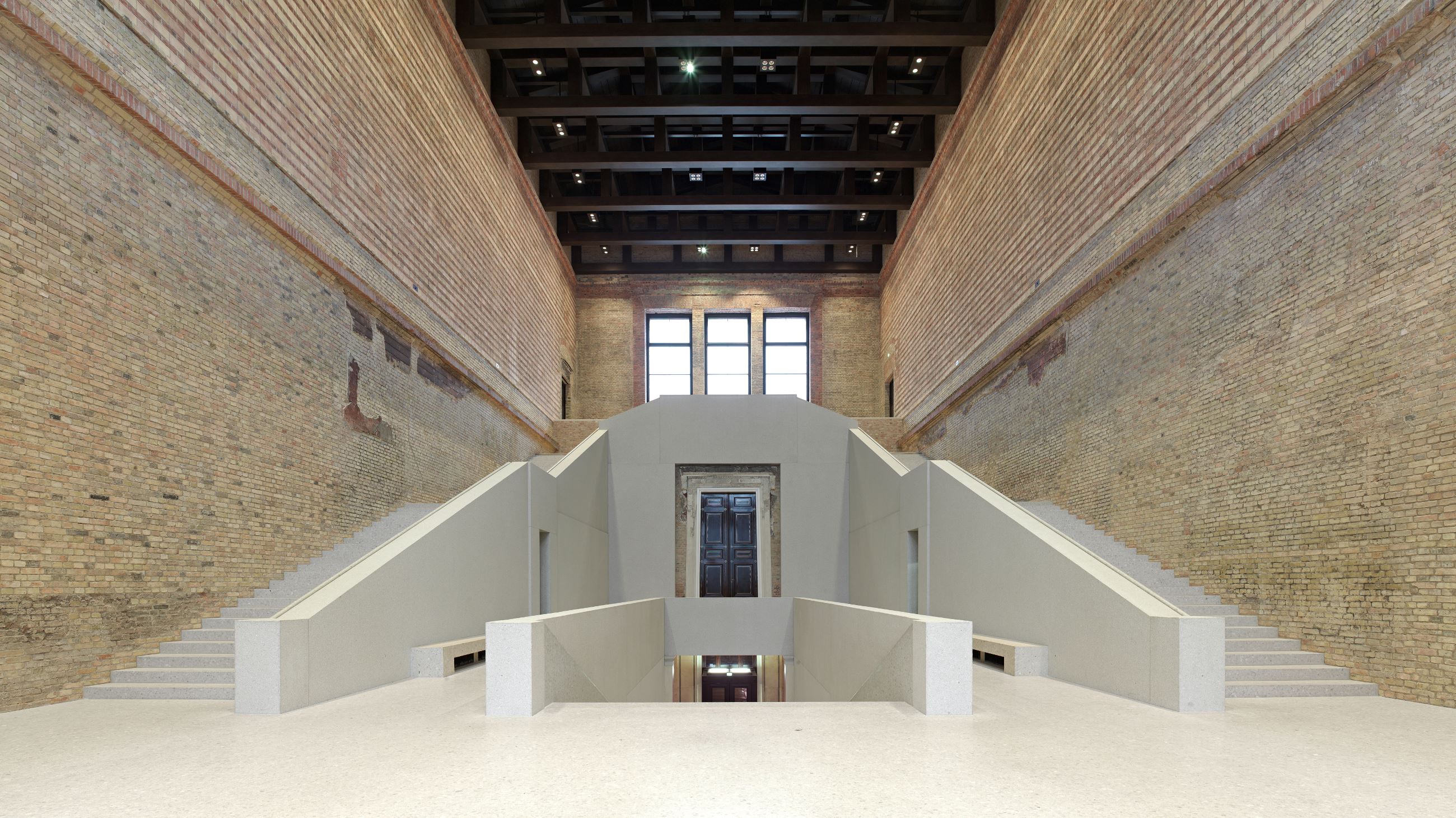
Neues Museum in Berlin
In Romania, the Blaj Cultural Palace refurbishment by Vlad Sebastian Rusu is another striking example of breathing life back into ruins. Once a prominent cultural venue, the building was ravaged by fire in 1995 and stood abandoned for nearly two decades, its charred shell a reminder of loss. Rather than reconstruct the palace as it was, Rusu’s team embraced its fragmented state. The refurbishment preserved the scorched walls and surviving fragments, stitching them together with contemporary interventions of glass and steel. By layering transparency and lightness against the weight of ruin, the project transforms tragedy into resilience, allowing the Cultural Palace to serve once again as a gathering place for the city while honoring the memory of what it endured.
In a time when cities often chase novelty and spectacle, the resurrection of ruins offers another vision. It suggests that progress is not always about building higher, shinier, or newer but sometimes about standing still, about finding meaning in what has already been left behind. These projects remind us that architecture is not just about creating structures, but about shaping experiences. And sometimes the most powerful experience is not of perfection, but of imperfection, of walking through walls that are crumbling, yet still alive, carrying the weight of memory into the present.
You may also like: