Written by: Muhammad Suhayb
Posted on: January 1, 2026 | 

Salah Uddin Ayubi's AI picture in the film
Is there a single, sustained voice in global media that captures Gaza’s resistance amid the atrocities inflicted by Israel? Has any Muslim country gone beyond statements: condemning the attacks through a feature film, a cultural intervention, or a serious effort to unite the ummah in purpose rather than rhetoric?
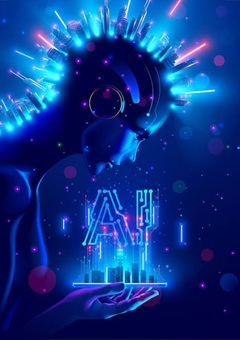
The Next Salahuddin, an AI-powered Pakistan–Malaysia co-production, offers both an answer and a message of hope: for those living through the devastation, and for local filmmakers searching for a voice, a medium and a future.
With no professional actors, no location scouting and no clashes of egos, the film represents a new paradigm in filmmaking, positioning Pakistan as a country capable of producing impactful, story-driven cinema without relying on star power.
The 54-minute feature premiered at Karachi’s Nueplex Cinema, marking the nation’s first AI-powered full-length film. Written and directed by Farhan Siddiqui, a Pakistani creative designer, the project is counted among what the director describes as the world’s first five feature-length films created primarily through artificial intelligence.

Director Farhan Siddiqui during post production
The film centers on Yousuf Ayub, a young boy whose family is destroyed by Israeli attacks. Even before this tragedy, he is raised on stories of Salahuddin Ayyubi, the legendary Muslim warrior revered even by his enemies, narrated to him by his grandmother. These early lessons shape Yousuf’s understanding of courage, justice and moral responsibility. As he grows older, his admiration for Salahuddin deepens, compelling him to rise and fight, stepping into the path laid before him. He manages to united the Muslims of the world in the fight against oppression, eventually raising the Palestinian flag over Masjid-e-Aqsa.

Young Yousuf Ayub a.k.a Salahuddin
The Next Salahuddin weaves the imagery and legacy of Salahuddin Ayyubi with the current situation in Gaza, drawing striking parallels between historical resistance and contemporary struggle. The narrative also recalls pivotal moments in modern history, including the 1967 Six-Day War, when multiple Muslim nations united in an attempt to challenge Israeli oppression in Palestine. Though ultimately outmaneuvered, their efforts remain a testament to resilience and solidarity. The story further reaches back centuries, reminding audiences that Palestine was once peacefully entered by the second Muslim Caliph, Hazrat Umar.
The writer/director Farhan Siddiqui brings over 25 years of international experience in compositing, animation, architectural visualization and production leadership. He has collaborated with studios and organizations across the UAE, Singapore and the United Kingdom, contributing to Hollywood films, animated features and major broadcast productions, including work for BBC World. His portfolio also spans Spanish and British cinema. During his time in the UK, he specifically studied filmmaking and visual effects, later serving as a VFX producer. Collaborations with leading news channels like Geo, ARY and Al Jazeera further honed his storytelling skills, which he successfully translated into cinematic form for this groundbreaking project.
Reflecting on the film’s origins, Siddiqui explains that constant exposure to the suffering in Gaza, and personal connections with vloggers documenting life on the ground, became a turning point for him. Hearing firsthand accounts of the realities unfolding in Palestine sparked a deep moral awakening. Believing that standing for justice is a responsibility for every Muslim, he chose to respond in the way he knew best. Unable to fight with weapons, he turned to storytelling, picking up his pen to prove that ideas, art and truth can be mightier than the sword. With travel restrictions and limited permissions to enter Palestine, Farhan chose to turn to AI as the means to bring his vision to life.

AI of a survivor
In The Next Salahuddin, the characters’ facial features are crafted with striking precision, allowing viewers to immediately recognize the region and cultural lineage each character embodies. This meticulous attention to detail deepens authenticity while illustrating how AI can enhance, rather than replace, artistic storytelling. On a global stage, the film distinguishes itself through its ambition, purpose, and cultural rootedness.
Fittingly, given its entirely Islamic subject, the production employs no musical instruments, only daffs and vocal humming, underscoring its spiritual and thematic integrity. Crafted for a generation drawn to fast-paced, visually bold storytelling, when the trailer of The Next Salahuddin premiered at the Global Muslim Content Summit in Malaysia, it immediately drew attention for its vision and ambition. The impact was evident when a single trailer screening in Kuala Lumpur persuaded a partner to join the project as a solo investor, underscoring the strength of its creative direction. Originally planned as a short film, the project expanded into a near one-hour co-production following the involvement of Malaysian production partners.

Muslim General from North Africa
Beyond its technical achievements, The Next Salahuddin delivers a powerful social message focused on humanity, peace and solidarity with Palestine. Its narrative mirrors contemporary realities while engaging younger audiences through fast-paced animation and compelling storytelling. This pioneering effort demonstrates how the fusion of technology and creativity can reshape the future of filmmaking in Pakistan, offering a new model for storytellers to craft meaningful, globally relevant cinema.
At a time when Pakistan’s filmmaking industry faces historic challenges, where films are often limited to festival circuits and the domestic market remains regionally constrained, the release of The Next Salahuddin serves as a beacon. Its emergence signals that innovation, courage and vision can open fresh avenues, allowing Pakistani filmmakers to tell stories that resonate locally and internationally. Much like the resilience and perseverance depicted in the film, the project itself embodies the transformative potential of combining technology, artistry and socially conscious storytelling.

An AI generated image of the spirit that guides Yousuf
This landmark movie, set to release in January 2026, represents more than just technological innovation. The film exemplifies the possibilities for meaningful storytelling in the 21st century, proving that when vision, technology and artistry align, even the most ambitious projects can reach their full potential.
You may also like:

From the Horn of Africa to Bahria Town: Habesha Café Brings Centuries of Coffee Culture to Rawalpindi
(October 15, 2026)