Written by: Anum Zaeem
Posted on: February 19, 2026 |  | 中文
| 中文
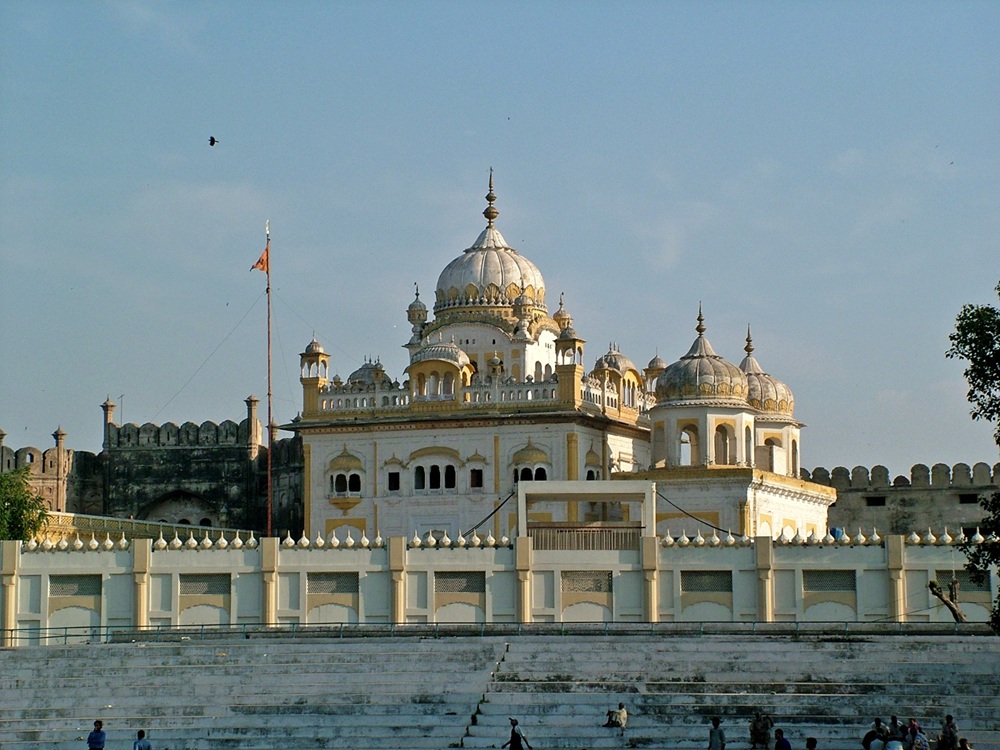
The grand facade of the Samadhi of Ranjit Singh is viewed from the expansive courtyard of the Lahore Fort.
The Samadhi of Maharaja Ranjit Singh is one of Lahore’s most historically rich yet quietly powerful heritage sites. Located beside the Badshahi Mosque and near the Lahore Fort, this sacred monument marks the cremation place of Maharaja Ranjit Singh, the founder of the Sikh Empire. More than a tomb, the samadhi represents leadership, unity and a shared cultural past of Punjab.
For travelers seeking history beyond Mughal grandeur, the Samadhi of Maharaja Ranjit Singh offers a deeply reflective and meaningful experience.
The Samadhi of Maharaja Ranjit Singh was built in 1839 following the death of the Sikh ruler who unified Punjab into a powerful empire. Maharaja Ranjit Singh ruled from Lahore, making the city the political and cultural capital of the Sikh Empire.
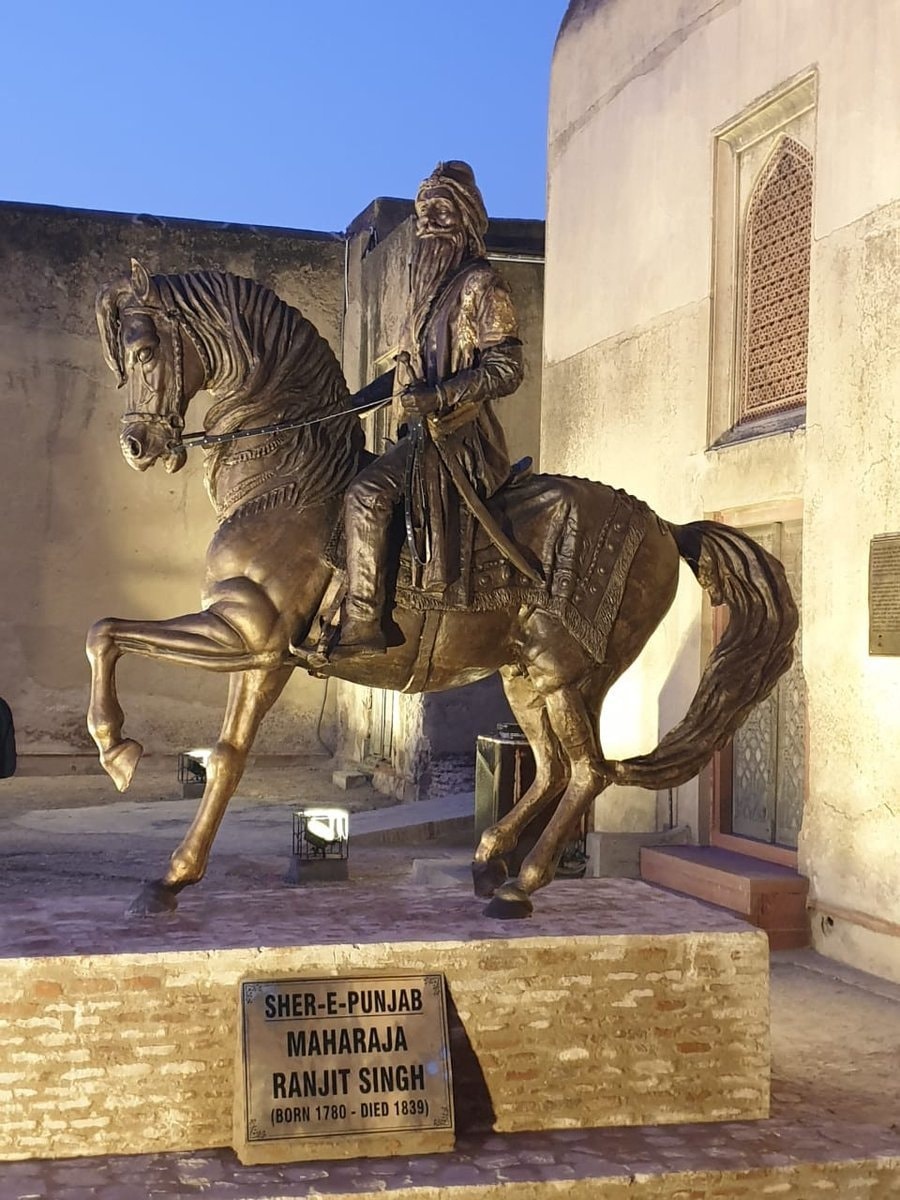
Statue of Maharaja Ranjit Singh in Lahore Fort
Known as Sher-e-Punjab, he was admired for military strength as well as religious tolerance. Muslims, Hindus and Sikhs held high-ranking positions in his administration. After his death, internal conflicts weakened the empire, eventually allowing British colonial rule to expand. The samadhi stands as one of the final architectural symbols of Sikh sovereignty in the region.
The architecture of the Samadhi of Maharaja Ranjit Singh is a rare blend of Sikh, Mughal and Hindu design traditions. Unlike elaborate Mughal mausoleums, this structure reflects controlled elegance and spiritual restraint.
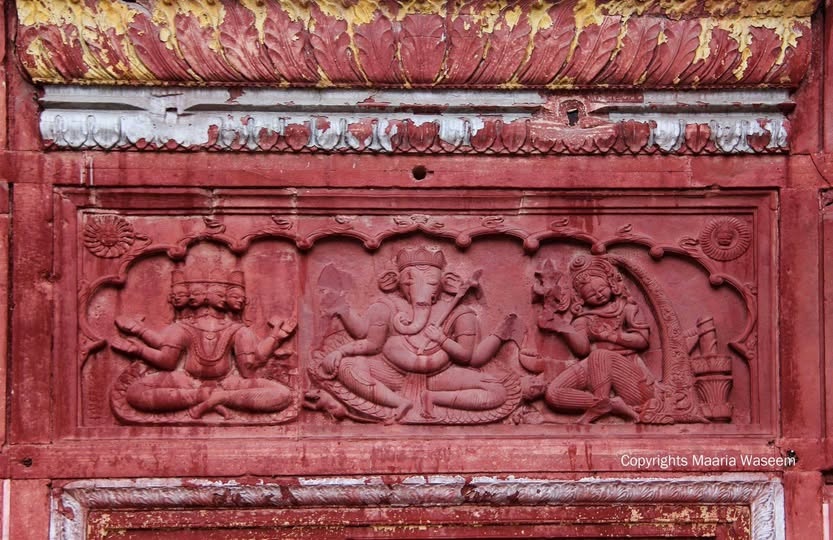
Fine terracotta carvings of Hindu deities highlight the diverse cultural artistry of the Sikh Empire era.
This fusion reflects Maharaja Ranjit Singh’s inclusive vision and the cultural coexistence of his reign.
The marble craftsmanship of the Samadhi of Maharaja Ranjit Singh plays a vital role in defining its serene character. Rather than excessive ornamentation, the marble work focuses on refinement and durability.
White and off-white marble is used for flooring, platforms, and lower wall sections. The marble surfaces are finely polished, allowing natural light to reflect softly within the structure. Subtle floral and geometric carvings drawn from Sikh and Mughal artistic traditions- add quiet detail without overpowering the spiritual atmosphere.
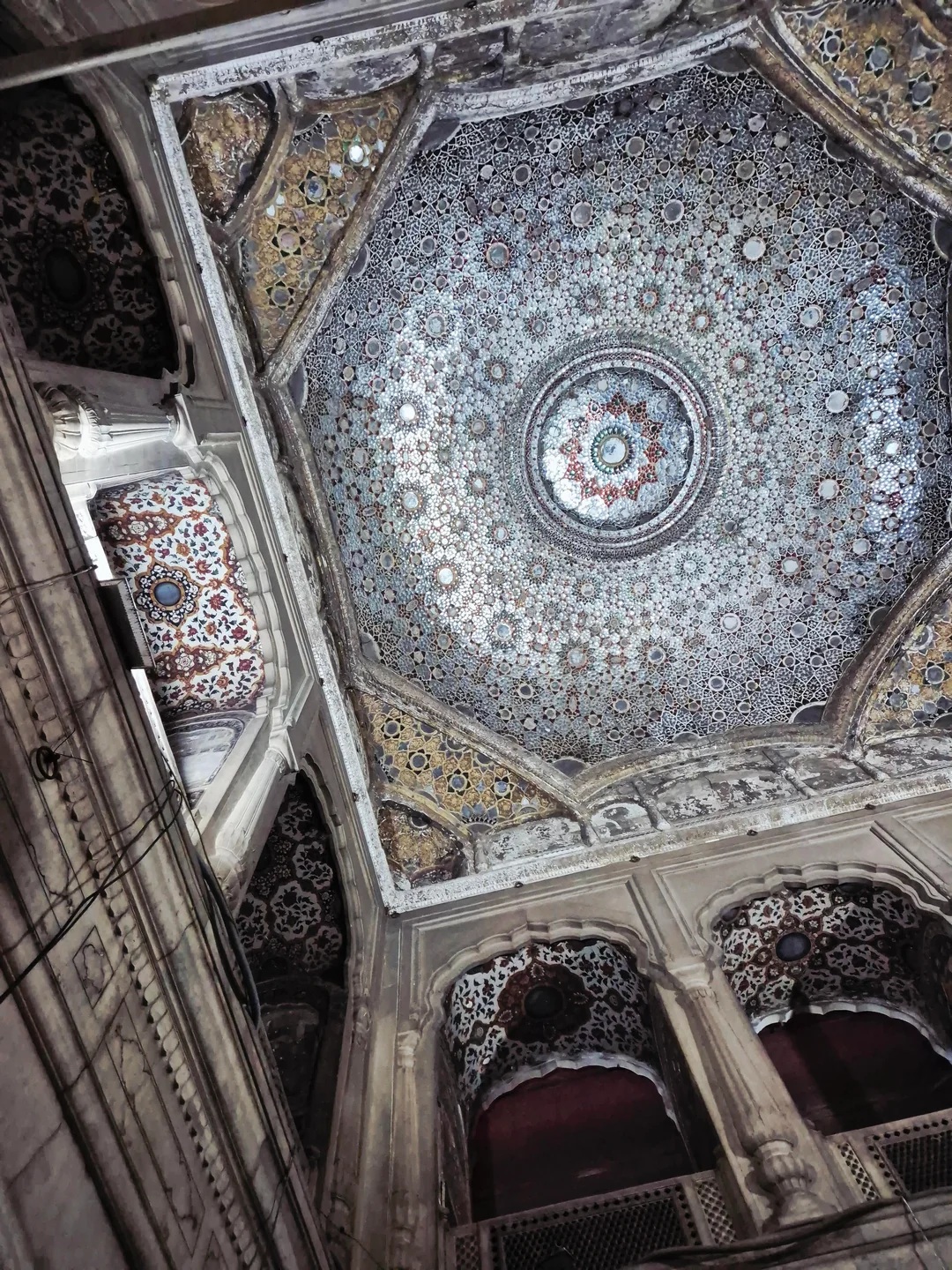
Intricate mirror work and floral patterns adorn the dazzling ceiling of the Samadhi's interior.
The restrained use of marble aligns with Sikh architectural philosophy, emphasizing humility, balance and reverence. Over time, natural aging has given the marble a historic patina, enhancing the monument’s authenticity and timeless appeal.
The Samadhi of Maharaja Ranjit Singh holds deep importance for Sikhs as a place of remembrance and respect. It is not a site of worship but a symbolic space honoring a ruler who protected religious freedom and unity.
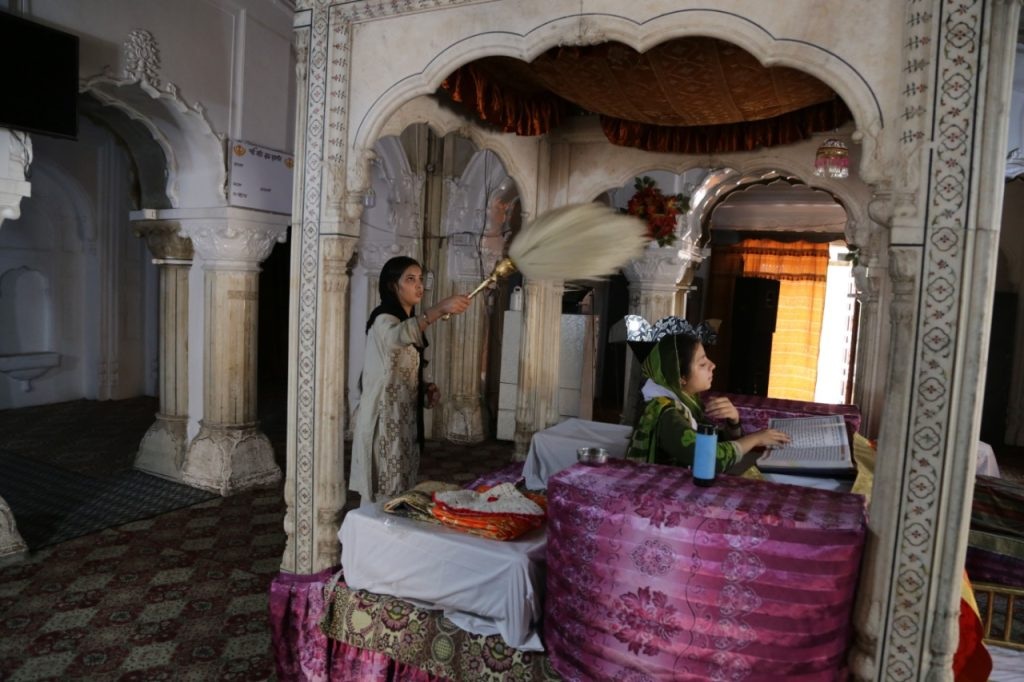
Devotees perform a respectful Chaur Sahib service inside the serene sanctuary of the Gurdwara.
Culturally, the samadhi represents a period when Lahore served as a shared capital for multiple faiths. Its presence near Islamic and Mughal landmarks highlights the city’s layered and pluralistic history.
Location: Adjacent to Badshahi Mosque, near Lahore Fort, Lahore, Pakistan
Entry Fee: Generally free; a nominal fee may apply to foreign visitors.
Its central location makes it ideal for inclusion in a full-day Lahore heritage tour.
As both a heritage site and a place of reverence, visitors to the Samadhi of Maharaja Ranjit Singh are expected to follow specific guidelines. Entrance Criteria:
These rules help preserve the monument’s structure and maintain its peaceful environment.
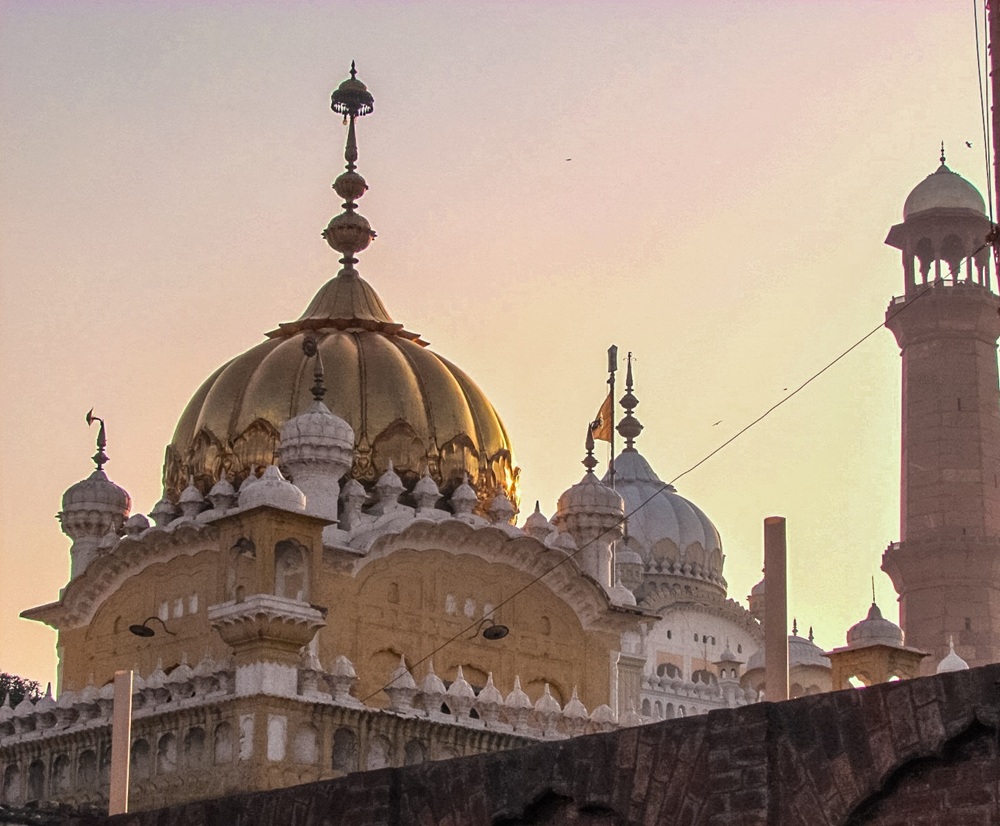
The golden and white domes of the Samadhi and Gurdwara Dera Sahib glow in the soft evening light.
Best Time to Visit the Samadhi of Maharaja Ranjit Singh
Cooler weather allows visitors to explore comfortably and appreciate architectural details. Nearby Tourist Attractions
A visit to the Samadhi of Maharaja Ranjit Singh can be combined with nearby landmarks:
These sites together offer a complete cultural and historical experience.
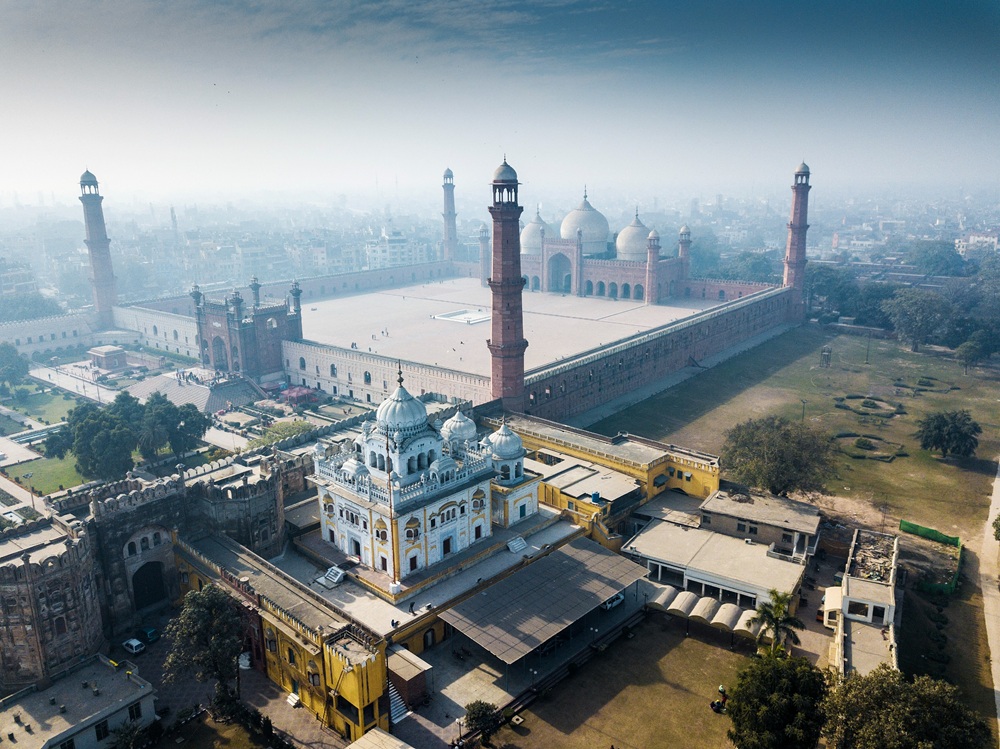
An aerial view showcases the architectural harmony between the Sikh Samadhi and the massive Badshahi Mosque.
The Samadhi of Maharaja Ranjit Singh is more than a historical monument; it is a symbol of unity, leadership, and shared heritage. It offers travelers a chance to reflect on a period of tolerance and cultural balance in Punjab’s history. For anyone exploring Lahore beyond surface-level tourism, this samadhi provides a meaningful and enriching experience.
You may also like: