Written by: Prof. Dr. Mamoona Khan
Posted on: November 03, 2024 |  | 中文
| 中文
Untitled
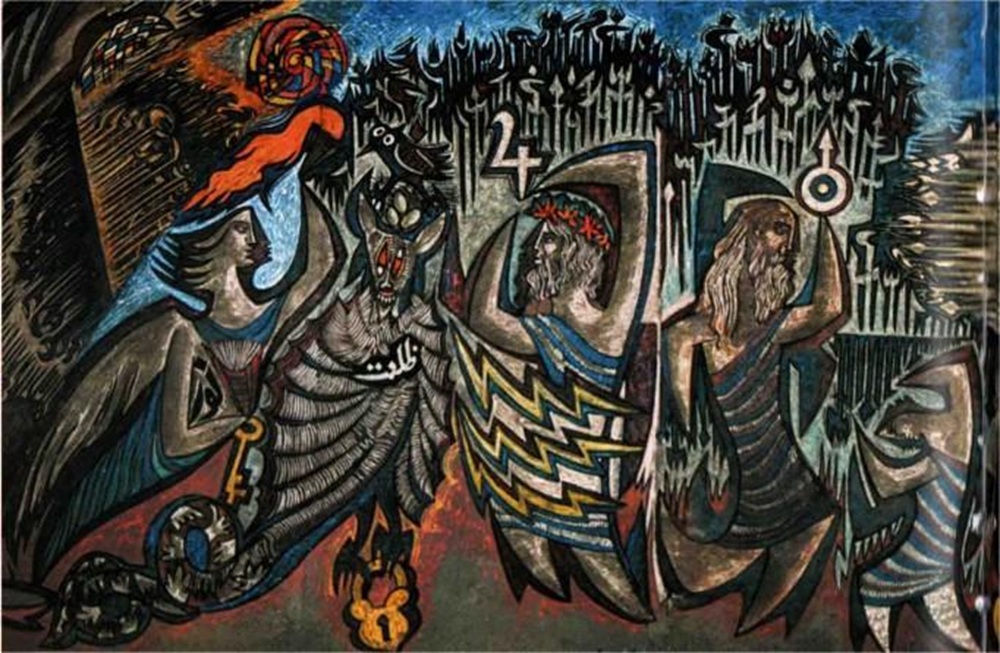
The unique book on Sadequain written by Dr. Umaira Hussain Khan, titled The Ceiling of Gallery Sadequain; An Iconographic Marvel, is a quintessence of Sadequain’s entire journey, as an artist. The mural that adorns the ceiling and cornices of Frere Hall Karachi, is the last monumental creative endeavor of Sadequain, which remained incomplete due to his untimely demise. This is first ever documentation of the mural based on Dr Umaira’s doctoral research, digging deep the inconspicuous aspects of the philosophy, personality, and connotations of highly individual symbols devised by the artist from his own milieu, reflecting universality of the thought process of his soul.
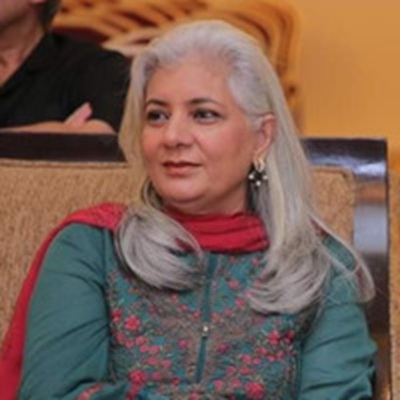
Dr. Umaira Hussain Khan
With microscopic perception, the writer deliberates so precisely upon the minute details of the mural that a reader feels to behold it. From physical description of motifs and imagery to the roots of their emergence, explicating their deeper connotations that explore intuitive mind of Sadequain, having deep concerns for mankind. With the aid of symbols, he exposes evil verses good and Zūlmah verses Nūr, even exploring the geometry of cosmos, technological progress defined through mechanical tools, seem to be marching forward forcefully, reflecting upon robust human powers. With trivial symbols Sadequain communicates profound meaning, explicated scholarly by the writer.
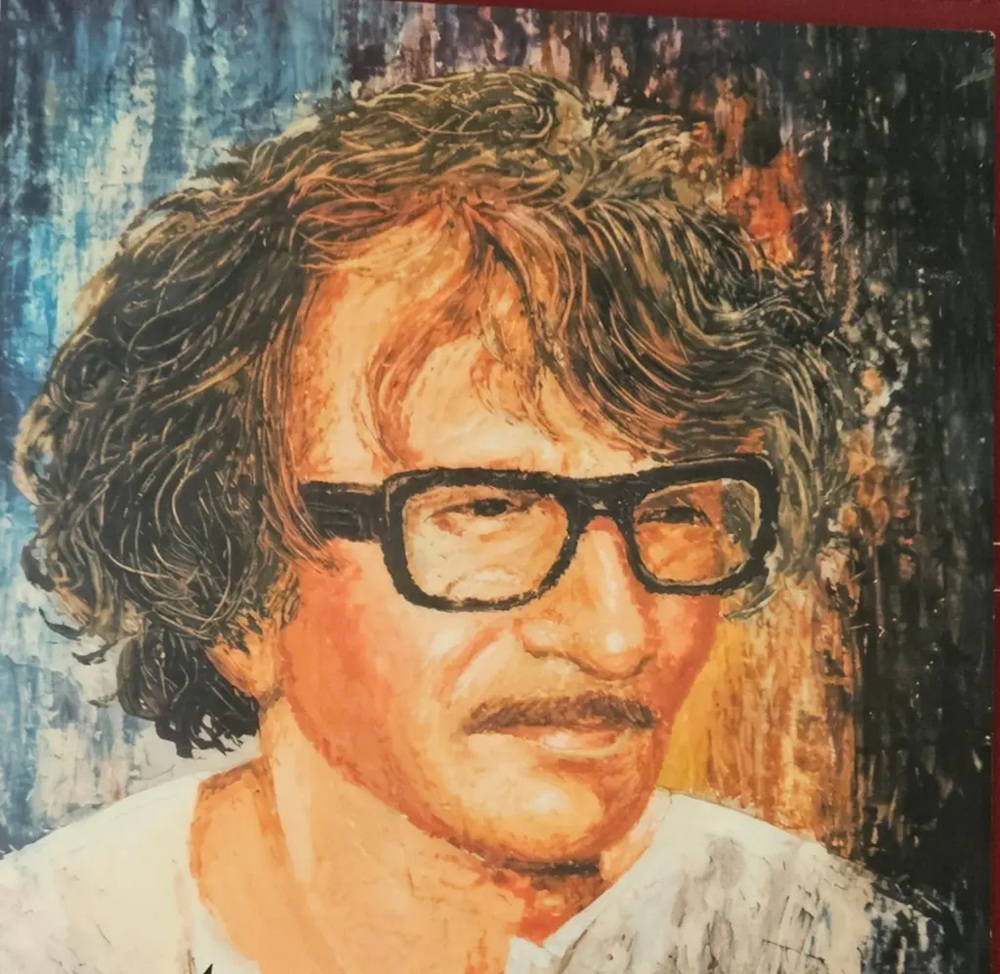
Sadequain
Many treatises are written on Sadequain and his aesthetic journey but numerous concealed dimensions of his self are explored in the book that will serve as a benchmark for future researches on the world-renowned Pakistani artist. The book is a useful source of many bygone facts, like the history of Frere Hall, its erection, architectural elements, materials used for its construction, expenditure, its dimensions, various compartments, important anecdotes related to the edifice, which provide auxiliary information apart from the mural itself.
Dr Umaira discloses some very interesting facts like initiation of the journey of fame of the artist which began from that very place, when in March 1957 Huseyn Shaheed Suhrawardy, the then president of Pakistan, inaugurated Sadequain first solo exhibition there. Right there, he ended his artistic sojourn by painting his last unfinished mural. In a polite manner the writer also discloses the Red Tapism of bureaucratic authorities that took three years of coveted struggle of Sadequain to get assent to adorn the Frere Hall with his imagery. The request was put up in 1983 and the approval was sanctioned on 1st Jan., 1986 on a tea party at Chief Secretary’s house, when the mayor of Karachi lodged a formal request to Sadequain to take up the project. Had the approval been bestowed earlier, we could have the complete treasure that Sadequain envisioned for the great building.

Untitled
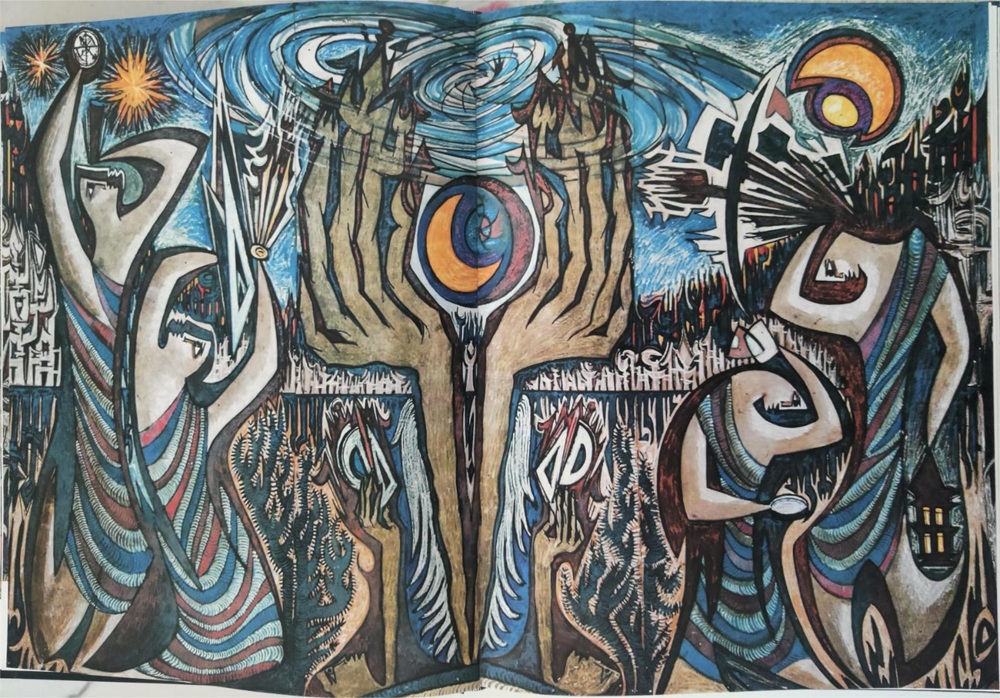
The hall, presently known as “The Gallery Sadequain” has vast dimensions of L.70 x W.28.5 x H. 35 feet, was worked out with Michelangelosque power and energy. Michelangelo took four years to complete the ceiling of Sistine Chapel, working while lying on his back, and when he came down after completion, he had to face numerous physical and neurological problems. But Sadequain ardently worked for only one year, completing all the cornices of four sides and more than half of the ceiling, when on 5th Jan. 1987 he was admitted to the OMI hospital Karachi, where, on 10th Feb., he left all, without fulfilling the promise of project’s completion.
Untitled
His devotion to work is candidly defined by the writer, quoting quite a number of anecdotes related to him that further add information about the life and personality of Sadequain. A riveting incident is quoted, when a six years old girl, while meeting the artist asked his grandfather “is he Michelangelo”? and Sadeqauin answered “No, better is Sadequain.”
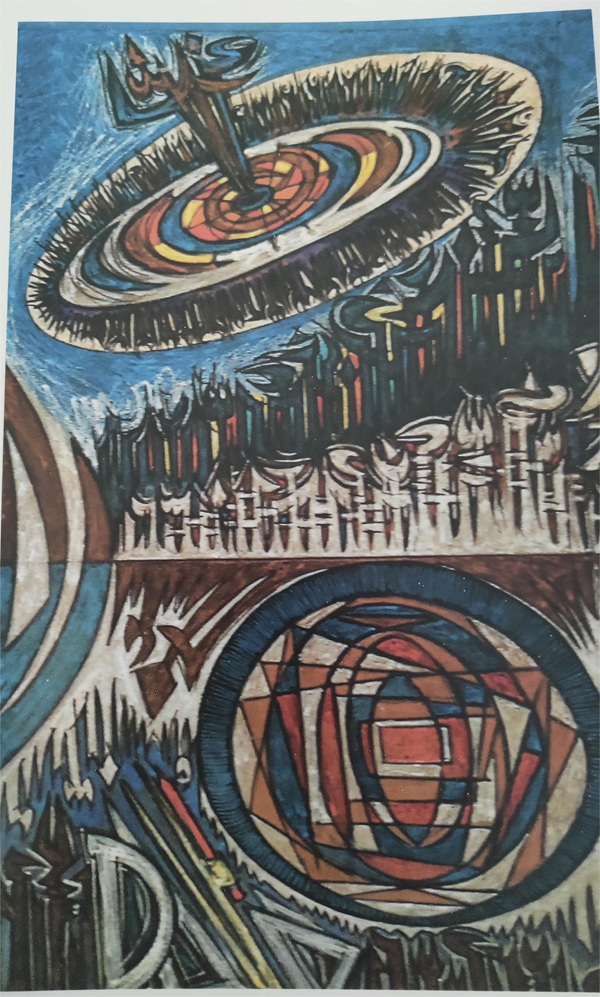
Scrutinizing the mural, Dr Umaira not only documents but provides a thorough thematic and iconographic analysis of the imagery, intricately weaving on the four cornices around the ceiling, including the ceiling itself. With minute observation she has deciphered themes concealed within the apparent icons, cannot be held by plebeian, such as on the cornice ,A (Southern side), the act of creation, on Cornice B (western side), the triumph of intellect, on C (northern side), Struggle of opposites and on D (eastern side), Social stagnation, while on the central part that is ceiling, centrality of knowledge and practice are explored. Detailed analysis is provided by the writer. Individual chapters are allocated for each cornice and for the ceiling itself. Additionally, she also explicates the logic behind the interlacing sequence of these themes, besides the intrinsic analysis of the artist’s style, added with providing epitome of Sadequain’s lifetime works, all defined in an independent chapter.
Untitled
Aside from the priceless information, attraction of the book lies in exquisite imagery of the mural; complete images of the ceiling and cropped out closer views of various sections are so striking that it absorbs a reader to another dimension. Closer views reveal that at places calligraphed text, in his individual style is added to provide auxiliary meaning concealed within the images and symbols.
The writer is immersed so deeply in the imagery of the mural that she has exposed artist’s use of direct and implied lines too, defining their hypnotic, rhythmic, mesmerising, rotating and multifaceted characters. She defined Sadequain’s use of crisscross, spiky, parallel, inorganic, organic, calligraphic, curved, thick, thin, including directional lines of vertical, diagonal, horizontal, loose parallel, etc., to produce certain visual effects attached with particular vocabulary of the line, exposes another unique dimension of the style of Sadequain. During the course of research, a hypnotic impact empowered the writer’s creativity, that led her unconsciously to start painting under the sway of Sadequain. She stopped writing for a while and produced a solo show at Shakir Ali Museum. Exhibition was titles “Resurrecting Sadequain”, held on 25th June, 2011. Similarly hypnotic energy is released from the book that captures a reader once he/she opens it.
You may also like: