Written by: Mubashir Hasan
Posted on: May 13, 2026 | 
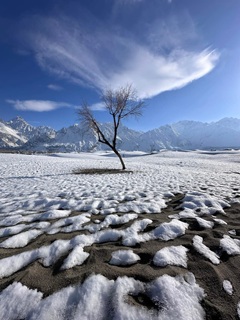
Perhaps, a desert with dazzling dunes set amidst snow-covered mountains is one of the rarest sights on the planet. Such an extraordinary view is offered by the Sarfaranga Cold Desert, one of the highest cold deserts in the world, situated at an altitude of over 2,200 meters (7,500 feet) above sea level. It is located in the Shigar district of Gilgit-Baltistan, where golden dunes stretch beneath the icy peaks of the Karakoram Range, creating a mesmerizing landscape. The desert separates the famous Skardu City, known as the Tourism Hub of Pakistan, from the surreal Shigar Valley, a serene natural region with a population of almost 80,000. The Sarfaranga Cold Desert enjoys a stunning location, surrounded by two rivers, a lake, and the Shigar Valley. The world’s 40th-longest river and Pakistan’s longest river, the mighty Indus River, surrounds the eastern and western sides of the desert like a majestic crescent. The Shigar River, a tributary of the Indus, borders the entire eastern part of the desert, ending at the famous Blind Lake, while the Shigar Valley lies to the north.
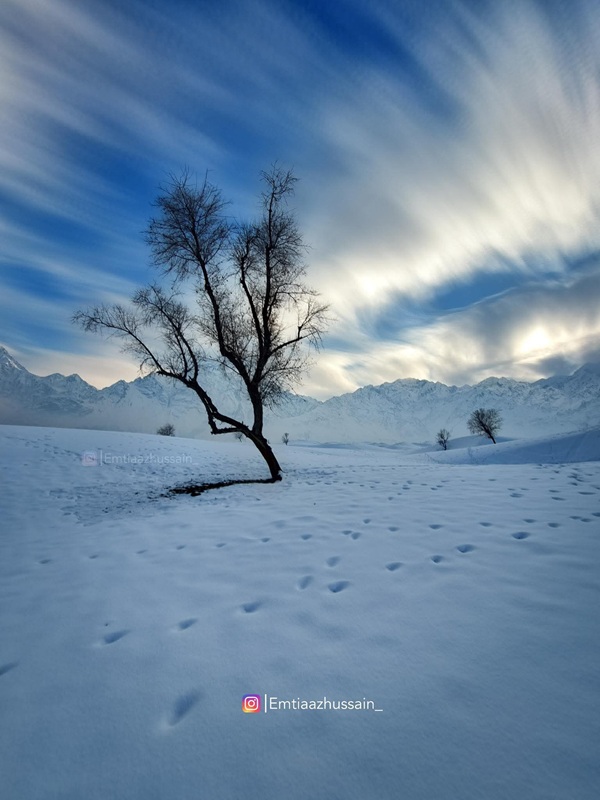
Sarfaranga Cold Desert during winters (picture credits to Imtiaz Hussain photography).
The very name of the Sarfaranga Cold Desert has been derived from the tiny scenic village located at the eastern corner of the desert along the banks of the Shigar River. This is the only village in the entire desert area. With a population of fewer than 1,500 people, the village has served as a bridge between the city of Skardu and the Shigar Valley since ancient times. Here, the culture, customs, folklore, and lifestyle of Gilgit-Baltistan can be vividly observed. It offers a serene glimpse into the traditional life of the region, where residents live simple lives rooted in agriculture and local traditions. For generations, local farmers and herders have used the periphery of the desert for grazing livestock throughout the year.
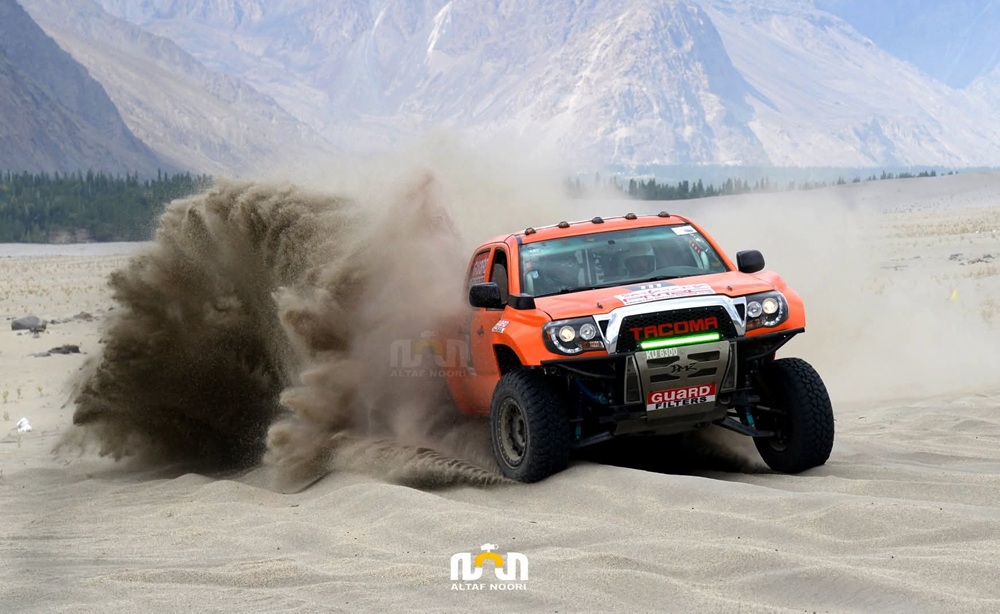
The Cold Desert attracted sudden global tourist attention in 2017, when, for the first time, a Jeep Rally event was organized there. Afterwards, the event became the hallmark of the desert and has now evolved into one of Pakistan’s most exciting motorsport events. Although the Jeep Rally is primarily dedicated to jeep racing, it has also gained attention for several other reasons. It has turned into a mega-cultural program, where cultural festivities, local music, and traditional food transform the desert into a vibrant celebration ground. A significant number of professional drivers, along with local and foreign tourists, participate in the event with great enthusiasm every year. For spectators and travellers, watching powerful vehicles conquer the shifting sands against a dramatic mountain backdrop is an experience that can remain etched in their memories for a long time.
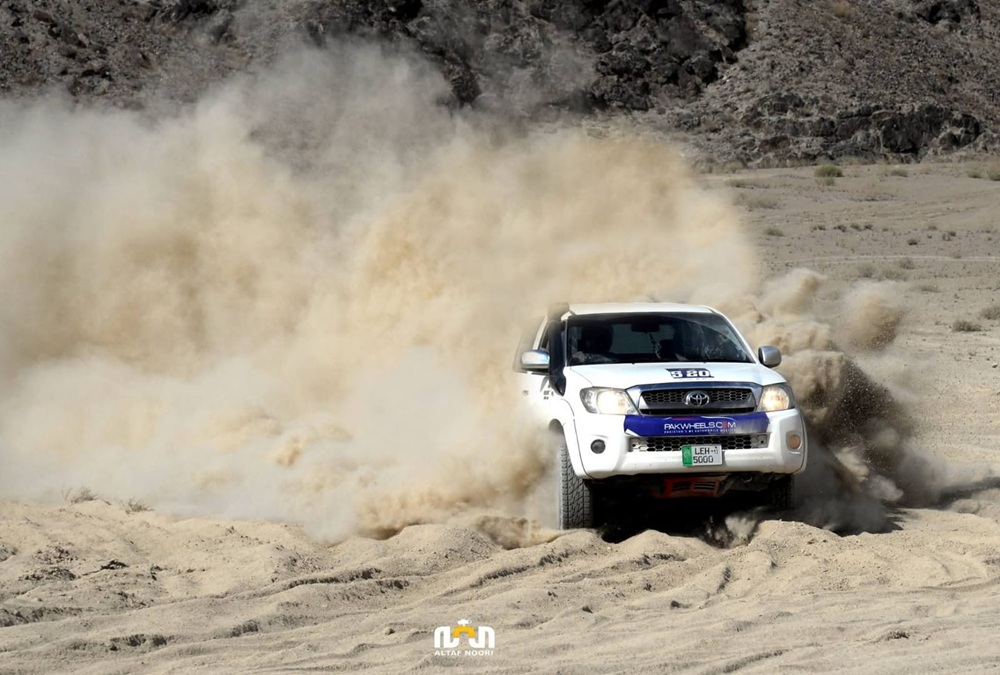
The annual Sarfaranga Jeep Rally (picture credits to Altaf Noori).
Nevertheless, apart from the annual Sarfaranga Jeep Rally, a wide range of adventure activities continues throughout the year. These activities mainly include jeep safaris and desert driving, ATV and dirt bike rides, paragliding, horse riding, and camping under the stars at night. Tourists and travelers can enjoy these experiences year-round.
The dramatic visual contrast offered by the Sarfaranga Cold Desert is truly remarkable. At one moment, one’s eyes may be fixed upon the razor-sharp snowy peaks of the Karakoram, and the next, they may observe rolling dunes rising above the waves of the mighty Indus and Shigar rivers. However, despite being surrounded by these two rivers and the snowy peaks that often trap moisture-laden clouds, the entire desert region remains arid and receives minimal rainfall. In summer, the weather remains relatively mild but dry. Winters, however, are extremely harsh, with temperatures dropping to -25°C, transforming the desert into a frosty landscape. This rare combination makes it an ideal destination for both summer and winter tourism.
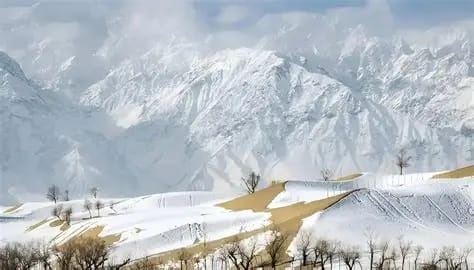
A holistic view of the desert (picture credits to Imtiaz Hussain photography).
Furthermore, during autumn and spring, the Sarfaranga village at the eastern corner of the desert becomes even more majestic. The surrounding trees turn fiery orange and yellow, making the golden dunes appear like a living natural painting.
As the entire region of Gilgit-Baltistan stands at the brink of climate change risks, the Sarfaranga Cold Desert also faces multiple environmental challenges. Its delicate surface is potentially threatened by littering, unregulated jeep safaris, and the absence of designated camping zones. The golden dunes are gradually being compacted by uncontrolled vehicle traffic and waste left behind by visitors. Although the local community and tour operators have initiated awareness campaigns, conservation efforts remain minimal. Therefore, preserving the Cold Desert requires the enforcement of sustainable tourism practices.
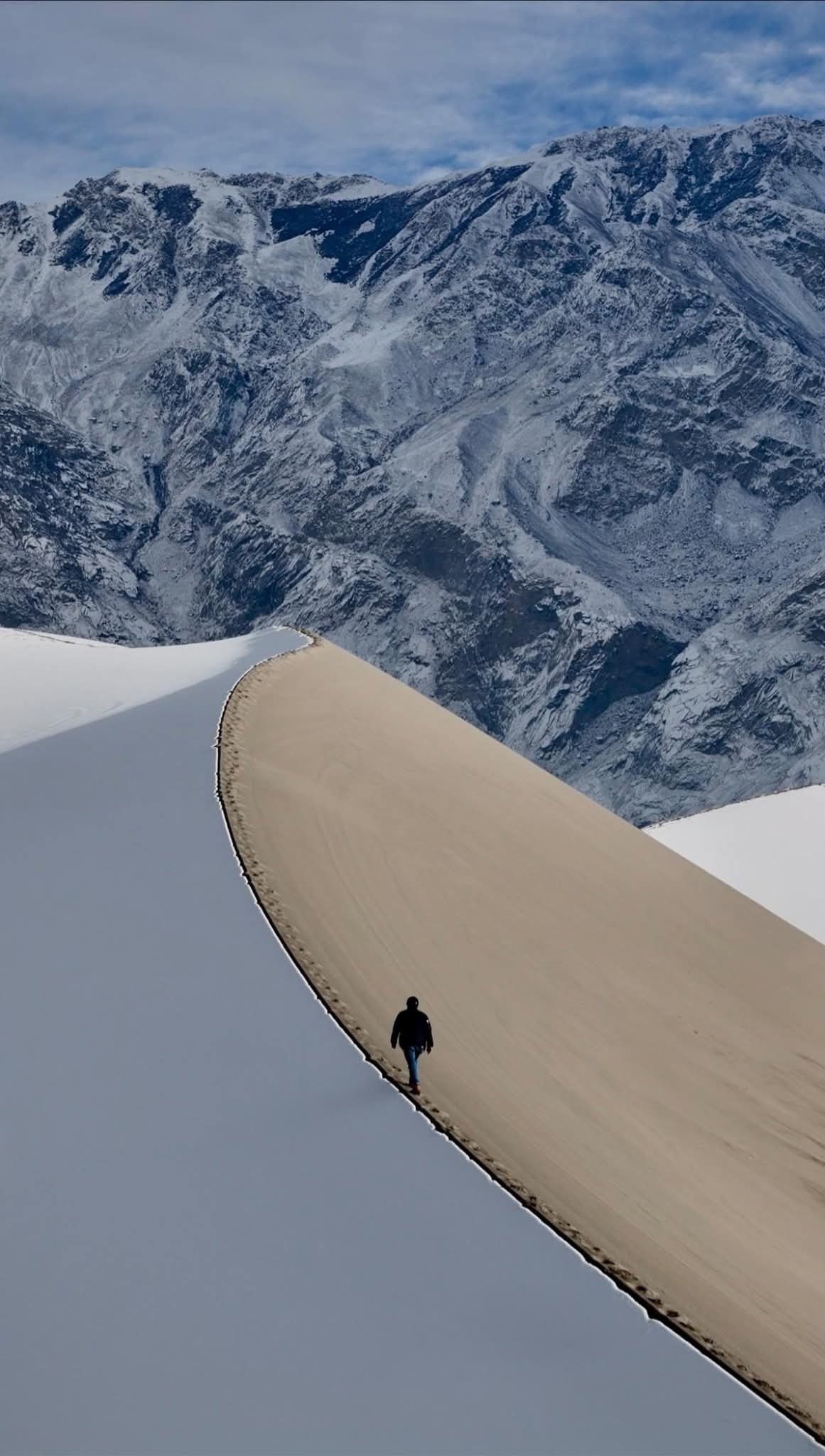
A view of the Sarfaranga Desert (picture credits to Imtiaz Hussain photography).
Despite its extraordinary landscape, beauty, and growing popularity among tourists, many aspects of the Sarfaranga Desert remain largely unexplored and underdeveloped due to several factors. For instance, the lack of well-developed infrastructure, including roads and tourist facilities, prevents visitors from fully experiencing the vast beauty of the desert. Insufficient investment and limited promotional efforts continue to pose major challenges to its development. Therefore, eco-friendly initiatives at the local government level are urgently needed, such as establishing designated dune-bashing corridors, waste collection points, and proper camping regulations. Sustainable development in infrastructure, transportation, tourism facilities, and management could transform Sarfaranga into one of the finest tourist destinations not only in the region but also internationally.
You may also like: