Written by: Nadeem Alam
Posted on: July 28, 2025 |  | 中文
| 中文

Amrita Sher Gil with her paintings (1930s)
After the creation of Pakistan, the visual art story is considered incomplete without the contribution of female artists. However, it is a fact that the earliest patterns of modern art in Pakistan were also defined by some strident and determined female artists.
These artists fought against the unfavorable circumstances and survived the unfriendly cultural mindset of the 1940s and emerged as the pioneers of modern art styles in Pakistan. Whenever the journey of the evolution of art in Pakistan is uncovered, the three most influential and resilient female artists ascended from the depths with a strong standing, challenging every force that stood in their way.
The diversified and multidimensional nature of art in Pakistan evolved from a background of the local and Mughal miniature painting, and the British Colonial modern art styles and genres. The Miniature tradition developed under the genius of masters like Ustad Haji Muhammad Sharif, Abdur Rehman Chughtai and Ustad Shujaullah.
However, the modern genre of watercolor and oil-color painting, lithograph and realistic drawing, was introduced to the subcontinent by the British Colonial period artists of 19th-century; William Simpson, William Carpenter, Lady Charlotte Cannings, Henry Ambrose Oldfield and John Lockwood Kipling are few such names.
The city of gardens Lahore has always been a hub for such artistic activities, first through the Mughal regime and later in the Sikh and British rule. During the last decade before the Partition in 1947, Lahore opened its gates for two very talented artists from Europe; Amrita Sher-Gil and Anna Molka Ahmed, and tenderly nurtured the modernist spirit of Zubeida Agha, making them the three graces of Lahore.
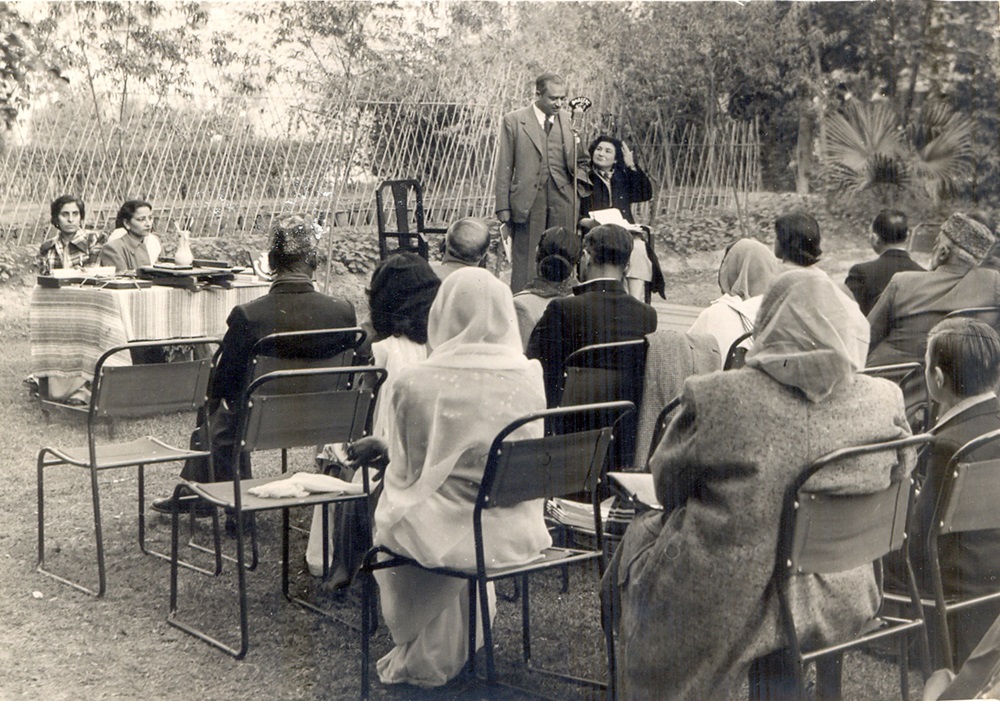
Anna Molka Ahmad with Students and Colleagues (c. 1950)
Amrita was of Sikh and Belgian origin, while Anna Molka was from an English and Jewish bloodline; both were taught and skilled in renowned art institutions of Europe. Whereas young Zubeida Agha, who was born in Faisalabad and educated at the Kinnaird College for Women in Lahore, studied modern art in England, and came back to Lahore to introduce abstract and semi-abstract art to this part of the globe.
All these three female artists provided solid ground to the first generation of artists in Pakistan after 1947. Amrita Sher-Gil with her two solo exhibitions in Lahore in 1937 and 1941, bearing western style and technique, and immersed in the indigenized subject matter and color palette, sowed the initial seeds of modern art in the northern parts of the subcontinent.
Amrita Sher-Gil’s presence in Lahore dynamized the art circle of the city of gardens and stirred the stagnant waters of traditional aesthetics. The bold and the beautiful Amrita possessed a persona of an Aphrodite, causing emotional turbulence to many bigwigs of that era, including politicians, artists and writers. Her mysterious death at 23 Ganga Ram Mansions on the Mall Road, on a freezing evening of 06 December 1941, still haunts the room, where she breathed her last.
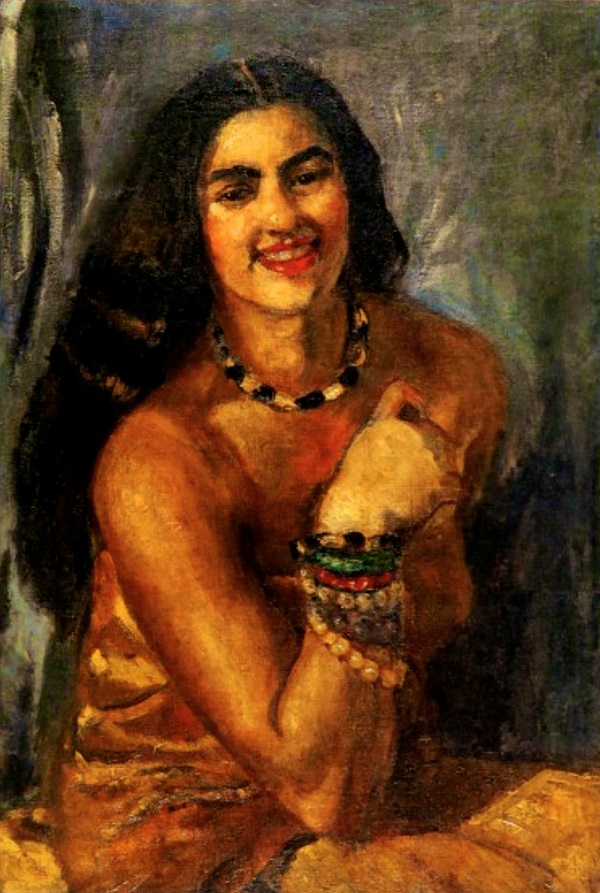
Self Portrait (1935) by Amrita Sher Gil
The first solo exhibition by Amrita Sher-Gil in Lahore, at the corridors of Faletti's Hotel in 1937, is marked as the iconic event. It offered a visual dialogue between tradition and modernity by unveiling the native characters and indigenous figures rendered in a Western painting technique and style. The second one she planned at the Shahdin Building at the Mall Road was tragically inaugurated posthumously, for Amrita died just a week before this show in 1940 in suspicious circumstances. However, the impact of these two exhibitions is immense in terms of introducing modern art in Pakistan as early as in the 1930s and 1940s.
“This romance enticed the sensitive Amrita to explore a world of deprivations and dreams which she had been oblivious of, during her early life in Europe. Her paintings, ‘Group of young girls’, ‘Bride toilet’ and ‘South Indian villagers going to market’ present the Indian atmosphere and characters.” (Alam 10)
The unmatched Zubeida Agha might easily be considered the sole practitioner and founder of abstract and semi-abstract art in Pakistan. She has been an important pillar of modern art practice in Lahore during the 1945-46; well before even Shakir Ali, who brought modern and abstract styles of painting to Pakistan in 1958. Shakir Ali introduced the non-representational style of art mainly to his students through an academic platform provided to him by the National College of Arts Lahore in the 1960s. Zubeida Agha, with her unconventional rather contemporary style, introduced this part of the globe to the very dynamic and forceful style of painting, rooted mainly in abstraction.

Zubeida Agha
During the 1940s, Agha had the opportunity to work with B. S. Saniyal, the pioneer of modernism in the subcontinent and vice-principal of the Mayo School of Arts, Lahore. Moreover, she also met Mario Perlingieri, an Italian artist and a prisoner of war, who was given the task of restoring the Lahore Gymkhana in 1946. These two masters shaped her inclination towards modernism, which later was polished during her studies at the St. Martin’s School of Arts, London.
In 1949, Agha mounted the first-ever exhibition of abstract and semi-abstract art in Karachi, which was met with criticism, or rather astonishment, by the public and even art critics, as the local taste had not yet developed an appreciation for such non-representational styles of painting at the time. Profoundly influenced by Cubism and Picasso, Agha approached art without gender boundaries and is thus recognized as a pioneer in Pakistani art.
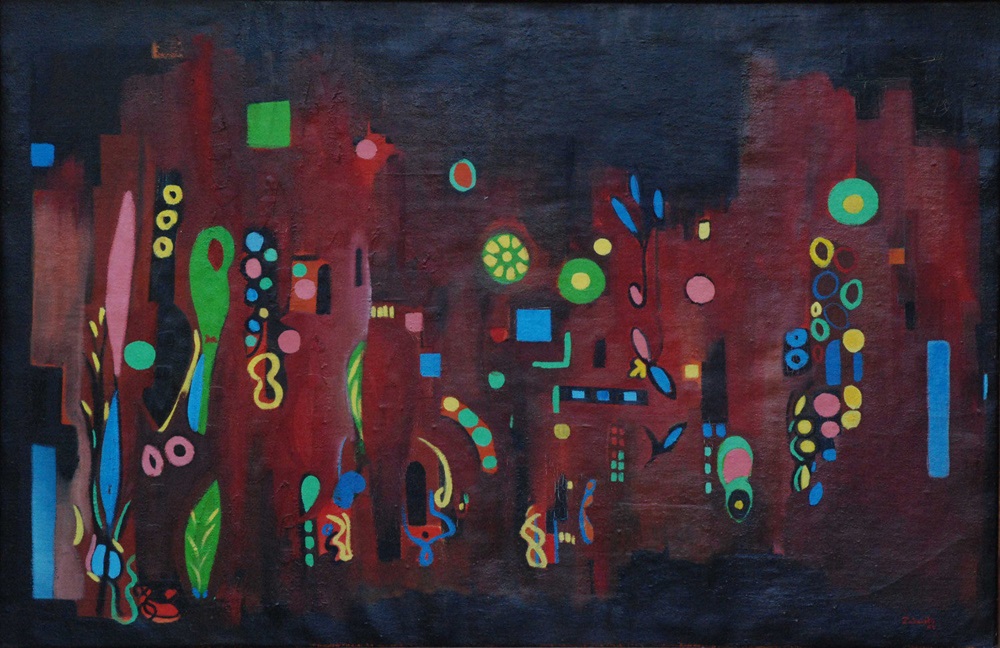
Evening (1980) by Zubeida Agha
S. N. Gupta, who served as the curator of Lahore Museum in 1921, and as principal of the Mayo School of Art Lahore (1929-1942), commented on her work as:
“Zubeida Agha is the only abstractionist painter in Pakistan. The alphabet of her painting is largely unknown here…The first response to Miss Agha’s painting in one’s mind is of wonder.” (Hashmi 34)
Anna Molka Ahmed, with her efforts as an art academician and practitioner, initiated the very sought-after academic art programs when she founded the Department of Fine Arts at the University of the Punjab Lahore, in 1940. The establishment of this art institution was unique in its nature with proper syllabus and curriculum for Fine Arts. Across the road, the Mayo School of Arts was serving the same subject, however, it flourished flamboyantly after being converted to the National College of Arts in 1958.
As another harbinger of Western style art, with patterns and shades of Expressionism, Anna Molka Ahmed, profoundly practiced painting and sculpture in her European skilled style. She also drafted the coursework and practice method for the students of the newly established Fine Arts Department. Many of her students, especially the females, accomplished and shaped their talent as art educators and went on to establish Fine Arts Departments at major academic institutions in Lahore, Karachi, Rawalpindi, and Peshawar.
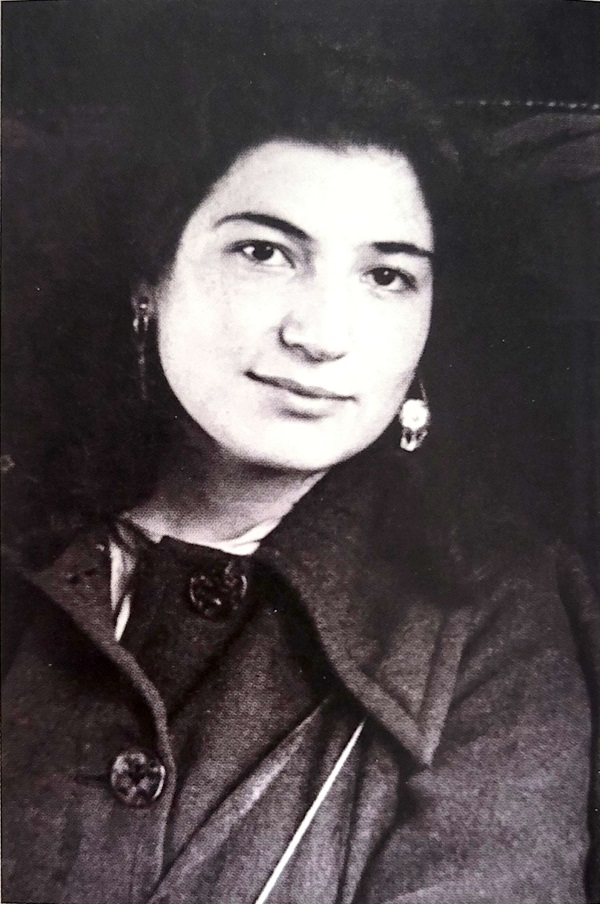
Anna Molka Ahmed (c. 1940)
“Anna Molka Ahmed began the Department with no other faculty, no space, no syllabus, and no student. She got down to designing the furniture, which was made in teak on the insistence of the VC, as a result of which the drawing boards were impenetrable by drawing pins.” (Hashmi 16)
More than painters, these three women became instrumental in a visual renaissance by molding the aesthetic soul of Lahore and sowing the seeds of modern art that blossomed in the early years and left a lasting fragrance for the decades to come in Pakistan.
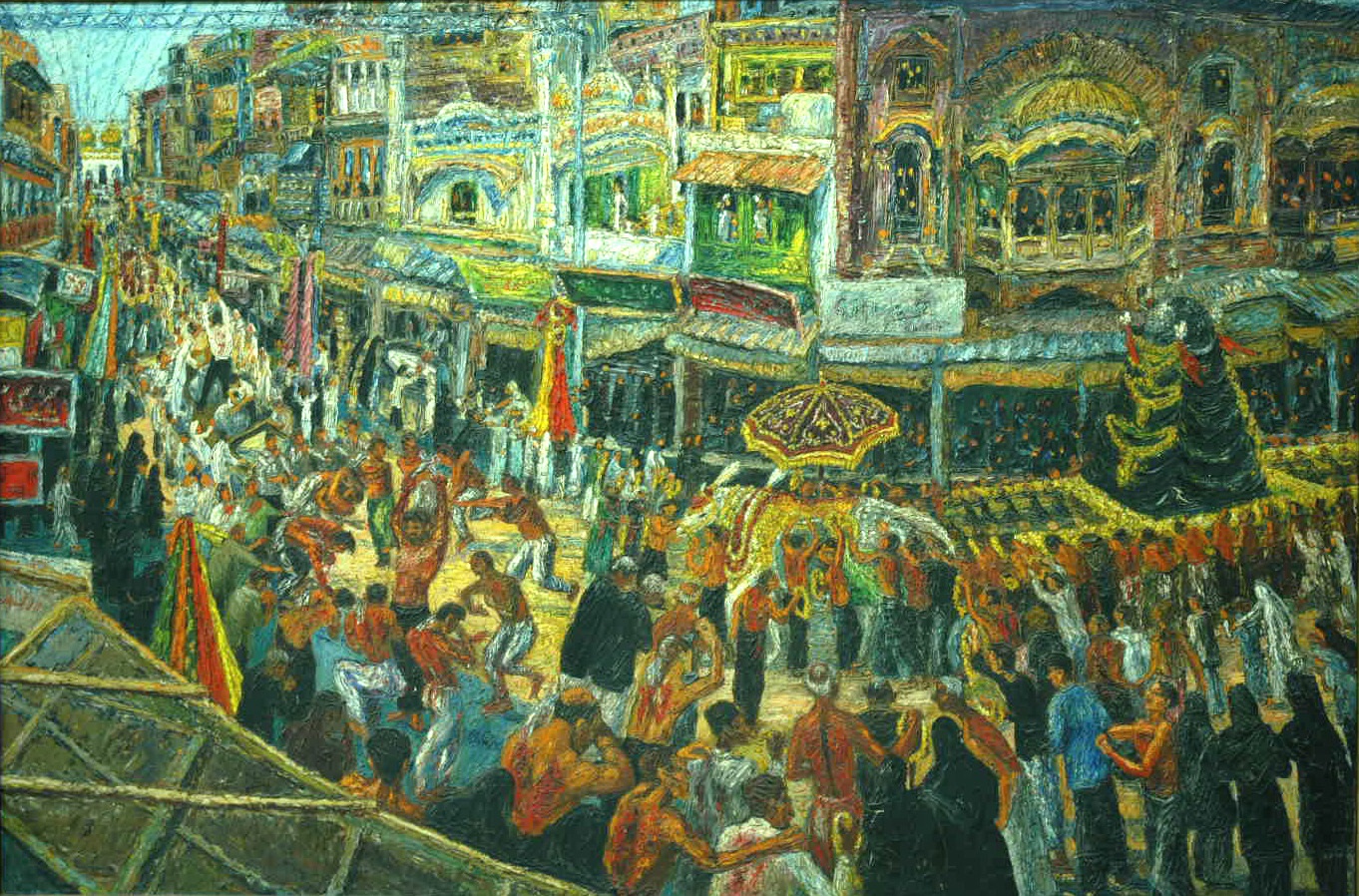
Ashura Muharram at Rangmahal Chowk (1984) by Anna Molka Ahmed
References:
• Alam, Nadeem. “Homage: Still looking for Amrita.” Images: The Dawn 24 August 2014: 10.
• Hashmi, Salima. Unveiling the Visible: Lives and Works of Women Artists of Pakistan. Islamabad: Actionaid Pakistan, 2002.
(The writer teaches Art History and Criticism at the University of the Punjab, Lahore)
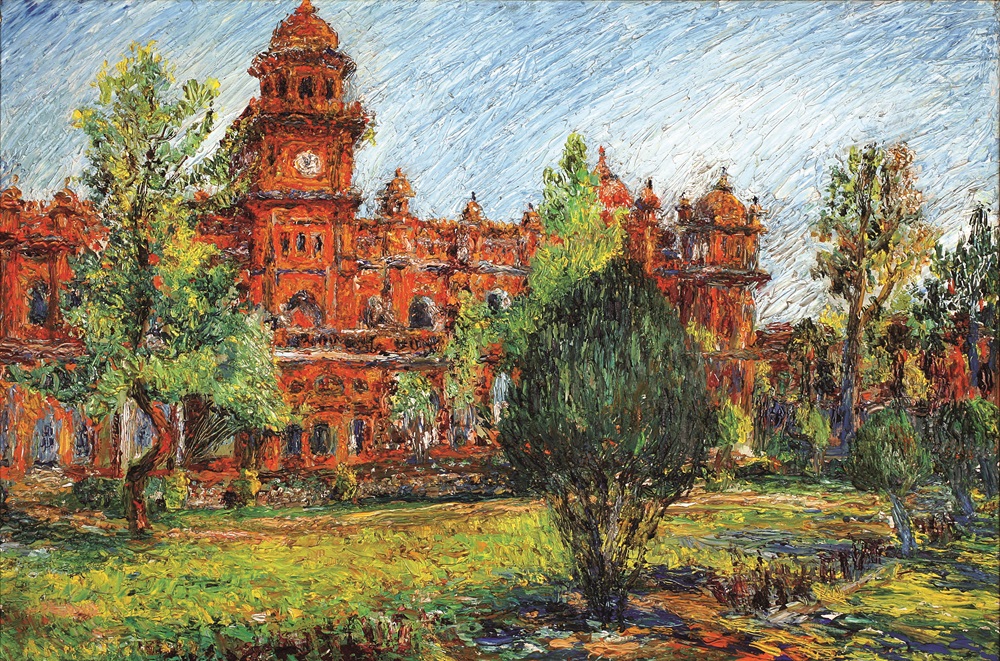
Old Campus (1985) by Anna Molka Ahmad
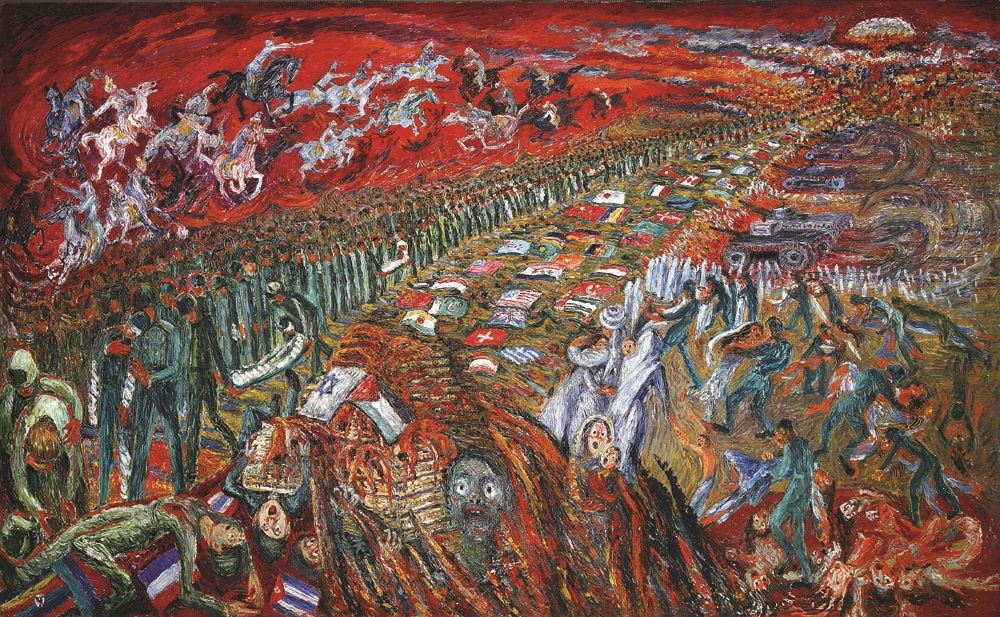
International War (1960) by Anna Molka Ahmed
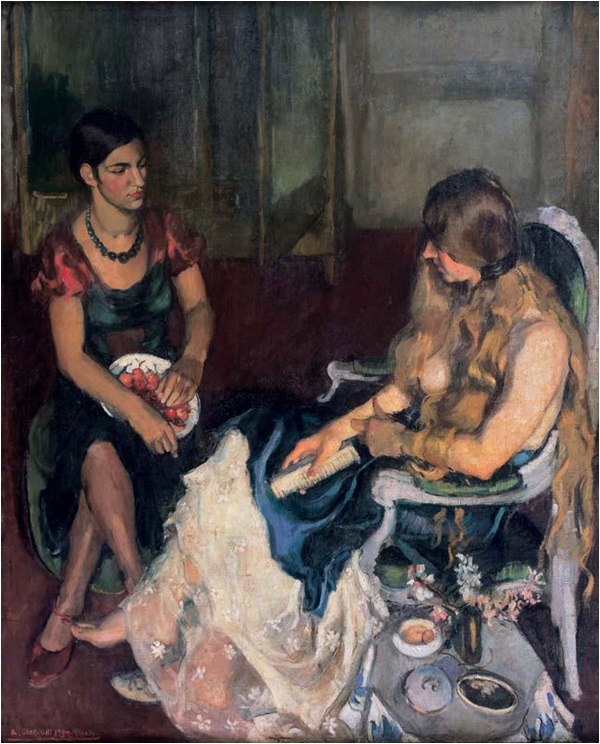
Young Girls (1936) by Amrita Sher Gil
You may also like: