Written by: Muhammad Hamza
Posted on: December 01, 2025 |  | 中文
| 中文
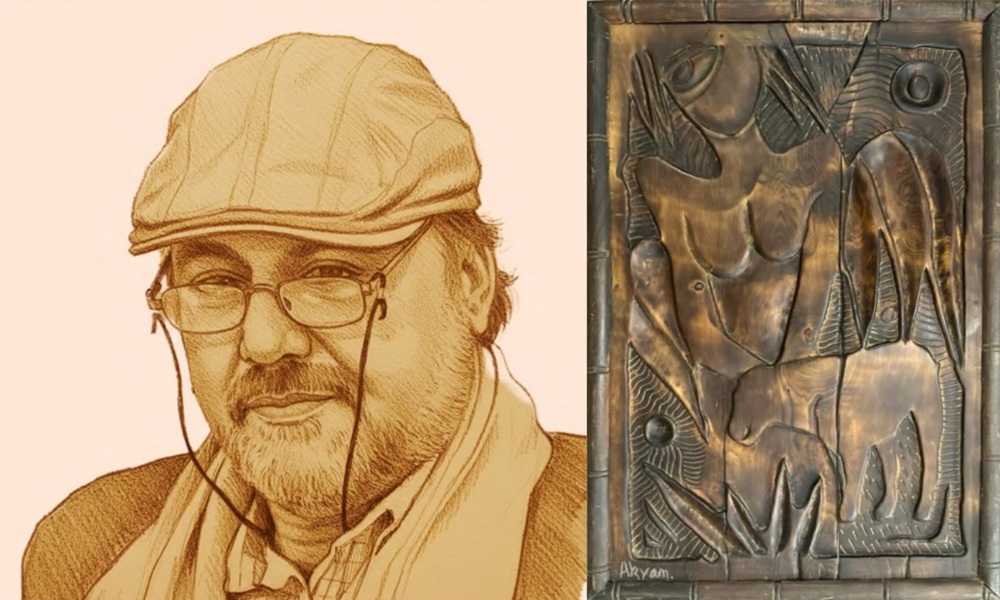
Akram Dost Baloch and Relief sculpture carved in Deodar wood
Akram Dost’s exhibition, Totems of Time, invites us into a quiet world of carved wood where stories of people, animals, and dreams come alive. Each piece is a relief sculpture, cut deep into deodar wood, a material that feels warm and alive under the fingers. As curator Dr. Arjumand Faisal writes in the catalogue, these works stand against the rush of digital life. They celebrate the slow touch of hand tools, the grain of wood, and the pull of shared memories. Dost, a sculptor with roots in traditional crafts, blends cultural symbols with modern feelings. His art speaks of belonging, loss, and the search for roots in a changing world.
In this review, I focus on five standout pieces from the collection. Each one pulls the viewer into its own story, using simple forms and bold cuts to stir deep emotions. These sculptures remind us that time is not just a line forward, it’s a circle of faces, hands and creatures that echo our past and future. Through easy lines and rich textures, Dost crafts totems that guard our human spirit.
The first piece that catches the eye is a tall female figure with wings, like a guardian from ancient myths. Her body rises from the wood in smooth, flowing curves, her arms folded close as if holding a secret. Large, almond-shaped eyes stare out, wide and knowing, framed by feathers that fan out like soft rain. The wood’s natural swirls add to her mystery, making her skin look alive with hidden patterns. Below her, waves of carved lines suggest water or wind, pulling her form into motion even as she stands still.
This sculpture feels like a protector of forgotten dreams. The wings are not for flight but for shelter, wrapping around the empty space like a hug from the sky. Dost carves with care, letting the wood’s knots become part of her story, perhaps scars from old storms. In a busy gallery, she draws you close, whispering of strength in quiet poses. Her face, half-smile and half-serious, mirrors how we all carry burdens yet yearn to soar. It’s a totem of resilience, where the female form becomes a symbol for all who navigate change. Standing before her, I felt a pull toward my own roots, those family tales half-remembered but always there. Dost’s skill lies in this balance: bold cuts that shout presence, yet soft edges that invite touch. This piece sets the tone for the show, proving wood can hold the weight of time without breaking.

The Winged Guardian
Next comes a pair of faces locked in a gentle gaze, their profiles leaning toward each other like old friends sharing a secret. The man’s hand rests light on the woman’s cheek, while her fingers trace his jaw in return. Eyes meet in the center, large and liquid, surrounded by hair that flows like vines. The wood here is etched with tiny hearts and loops, symbols of love that twist and turn without end. Their bodies merge at the edges, blurring where one ends and the other begins, as if time has woven them into one.
This work captures the soft side of connection, far from grand drama. It’s the everyday magic of touch, the way lovers see worlds in each other’s eyes. Dost uses the wood’s warmth to make their skin glow, with shadows playing in the carved grooves to hint at hidden depths. The patterns around them, small flowers and waves, feel like memories piling up, sweet and tangled. In a world quick to forget bonds, this totem stands as a reminder of intimacy’s power. It makes you think of your own close ties, those quiet moments that build a life. The sculpture’s calm pulls at the heart, urging us to slow down and listen to the whispers of care. Dost’s touch is light yet sure, carving not just forms but feelings that linger long after you step away.
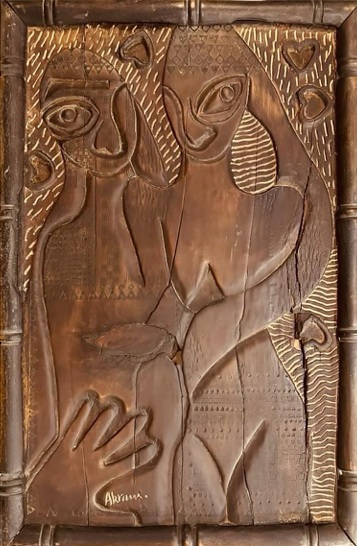
Lovers in Whisper
A bolder energy fills the third piece: a horse’s strong form charging from the wood, its mane wild and arched like a crown. Beside it looms a human figure, half-hidden, reaching out with open palms as if to calm the beast. The horse’s eyes are fierce dots, muscles rippling in deep relief, while tribal marks stripe its side like ancient tattoos. The man’s pose is steady, feet planted, body twisted in quiet command. Around them, geometric shapes, circles and lines, frame the scene like a story told in symbols.
This sculpture pulses with the raw force of nature meeting human will. The horse isn’t just an animal; it’s a spirit of freedom, wild and untamed, pulling against the reins of daily life. Dost carves the wood to show struggle and harmony, where the grain follows the horse’s curves for a sense of speed frozen in place. The human figure, with its simple lines, grounds the chaos, suggesting we all tame inner storms. It’s a totem of balance, echoing myths where beasts teach us courage. Viewing it, I recalled childhood rides through fields, the thrill of speed mixed with trust. Dost invites us to feel that pull, the wild heart we keep leashed but never fully quiet. His cuts are sharp here, full of life, making the wood breathe with motion. This piece challenges the eye, rewarding close looks with layers of meaning about control and release.

The Horse's Shadow
Deep in the gallery sits a watchful lion, its head high and mane flowing like flames. The body curls protective, paws firm on the ground, while eyes, round and piercing, scan the space ahead. Ears perk forward, and a tail flicks in subtle curve, surrounded by dots and swirls that mimic stars or spots on fur. The wood’s texture shines through, with rough patches for the mane and smoother planes for the face, giving it a living depth.
As a totem, this lion guard’s thresholds, fierce yet thoughtful. Dost shapes it not as a roaring king but a silent sentinel, embodying strength that comes from stillness. The patterns around the eyes suggest tears or wisdom marks, hinting at battles won through patience. In carved relief, the form pushes out boldly, casting shadows that dance like prey in the light. It speaks to our own watchful sides, the inner voice that stands firm amid fear. I found myself drawn to its gaze, feeling seen and safe at once. This piece roots in cultural lore, where lions symbolize power passed down through generations, yet Dost makes it personal, a mirror for modern guards we all play. The wood’s natural hue warms the ferocity, turning predator into protector. It’s a highlight of the collection, proving simple forms can roar with quiet power.

The Lion's Watch
The final piece I linger on is a mother cradling her child, their bodies intertwined under a crescent moon. Her arms wrap full and sure, the child’s head nestled against her shoulder, tiny hands clutching cloth folds. Eyes are closed in peace, faces soft with shared breath, while leaves and vines border them like a natural frame. The moon above curves gentle, its light implied in smooth hollows that catch the gallery glow.
This sculpture hums with nurture’s quiet song, a totem of beginnings and bonds that time can’t erase. Dost carves the figures with tender lines, letting the wood’s flow mimic a heartbeat, steady and warm. The child’s form is small but solid, a promise of growth, while the mother’s back arches strong, bearing the world’s weight with grace. Surrounding motifs, stars and waves, add a dreamlike layer, as if this moment floats beyond clocks. It evokes the universal pull of family, those arms that hold us through nights. Standing near it, memories flood: lullabies sung low, the safe curve of a hug. Dost’s vision here is pure, using relief to layer emotion without excess. The piece ends the review on a hopeful note, reminding us that in wood’s enduring grain, love carves its own eternity.

Mother and Moon
Echoes of Wood and Soul across these five pieces, Akram Dost builds a world where wood becomes memory’s keeper. From the winged guardian’s shelter to the lion’s steady watch, each totem weaves personal tales into shared human threads.
The curator’s words ring true: these carvings bridge cultures, letting natural textures speak fluent modern tongues. Dost’s hand feels present in every groove, a craftsman’s love for material that fights the fade of fast lives. Collectors and casual viewers alike will find solace here, art that doesn’t demand but draws you in, layer by layer.
Totems of Time isn’t just an exhibition; it’s a pause, a carved invitation to touch the past and face the now. It’s been long enough.
You may also like:

From the Horn of Africa to Bahria Town: Habesha Café Brings Centuries of Coffee Culture to Rawalpindi
(October 15, 2026)