Written by: Muhammad Suhayb
Posted on: February 10, 2026 |  | 中文
| 中文
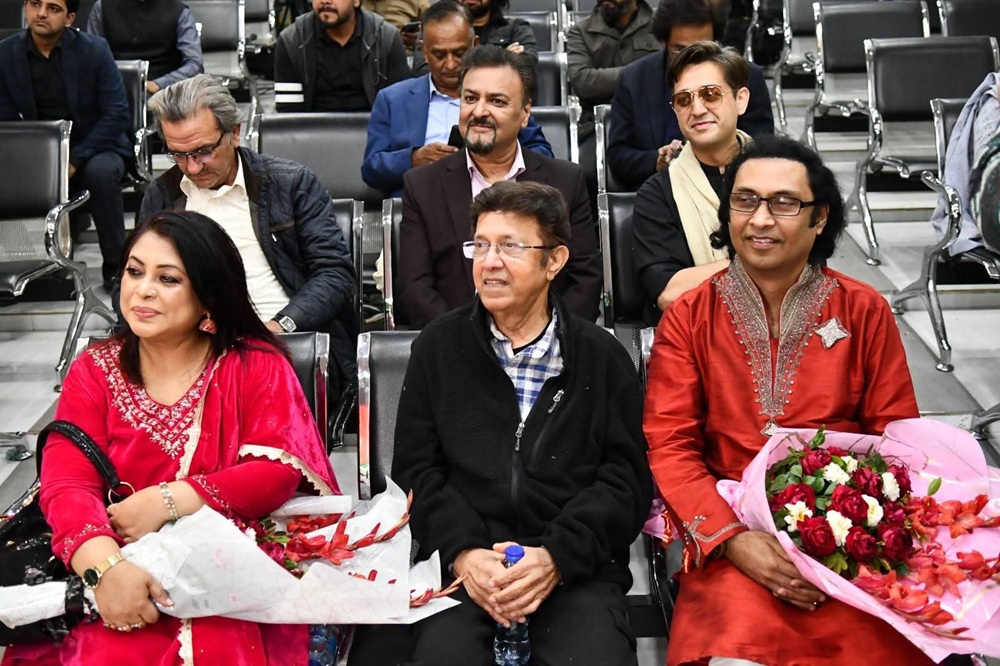
Humaira Bashir, Alamgir and Raja Bashir in the first row, with Shafaat Ali in the second row (extreme right).
After a 14-year hiatus, the first direct flight between Pakistan and Bangladesh touched down at Jinnah International Airport on Thursday night, as Biman Bangladesh Airlines completed its inaugural journey from Dhaka to Karachi. The flight carried more than the promise of renewed air connectivity; it brought with it a deeply symbolic homecoming. Among the passengers were the children of Bashir Ahmed, the East Pakistan–born singer, poet and music director whose timeless melodies once shaped a shared musical heritage across borders. Their presence marked a poignant reminder of the enduring power of music to bridge time, distance and history.
Renowned for composing the music of timeless Darshan and lending his voice to films such as Milan, Talaash, Qasam Uss Waqt Ki and Hill Station, Bashir Ahmed, who - alongside Muslehuddin, Robin Ghosh and Karim Shahabuddin, helped enrich Urdu cinema from East Pakistan - was fondly remembered at a special evening organized by the Naghma Saaz group. The event also paid tribute to the legendary Alamgir, another musical icon who hailed from East Pakistan, and who, like Bashir Ahmed, played a pivotal role in shaping Pakistan’s musical landscape.

(L to R) Tanveer Afridi, comedian Ayaz Khan, Alamgir, Humaira Bashir and Raja Bashir.
Known as the “Elvis of the East” and widely regarded as the pioneer of pop music in Pakistan, Alamgir has been living in the United States for the past thirty years, returning periodically to Pakistan for performances and tribute events. His presence added an intimate sense of continuity, linking past and present in a celebration of shared cultural memory.
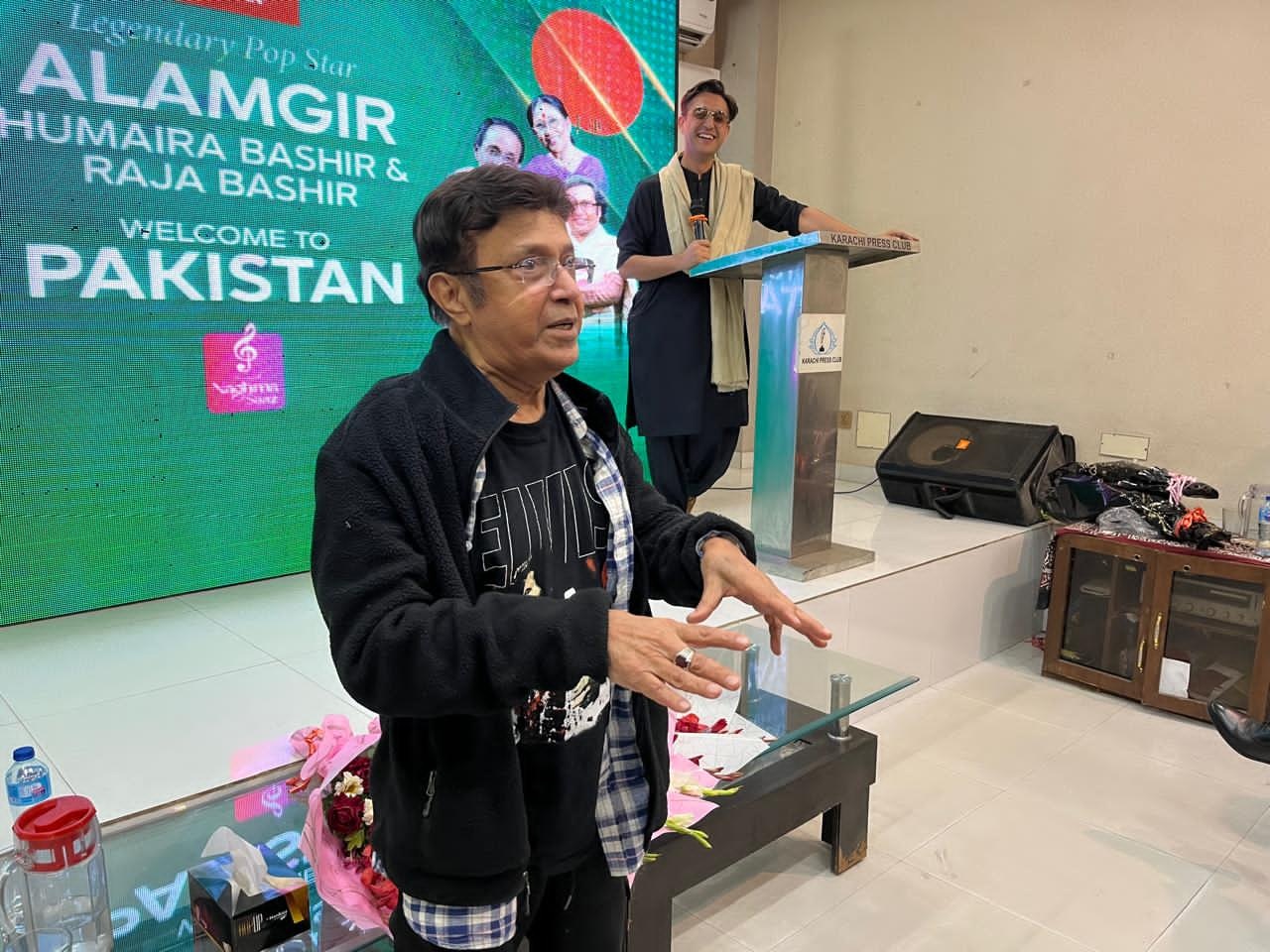
Alamgir thanking the attendees of the event, while Shafaat Ali in the background.
Under the warm and lively moderation of renowned mimic, actor and host Shafaat Ali, the evening unfolded as a heartfelt celebration, opening with tributes to both legends, moments that stirred memories, evoked nostalgia and set the tone for a night steeped in music, emotion and reverence. Veteran actor Behroze Sabzwari described Alamgir as a singer of two generations, a remark that Shafaat Ali gently amended by calling him timeless. Sabzwari, famous for his role as Qabacha, also reflected on a friendship with Alamgir spanning more than five decades, and paid homage to Bashir Ahmed by graciously humming his iconic song Hum Chalay Chhor Kar from Darshan.
One of Shafaat Ali’s anecdotes sent a chill through the audience. He recalled meeting a fighter pilot in 2017 and asking him about the famous “stopping-on-the-dot” moment during the filming of Alamgir’s Tum Hi Se Aye Mujahido. The pilot explained that the sequence dated back to the 1990s, when he was flying an F-16 and executing breathtakingly intricate aerial maneuvers, even stopping the plane perfectly for the song’s filming. That pinpoint precision, he said, was inspired by Alamgir’s voice itself—its power and emotion capturing the spirit of every fighter pilot, a feeling he felt bound to honour in the skies.

(L to R) Singer Ghulam Abbas, singer Faisal Latif and music teacher Ustad Nafees
Legendary ghazal singer Ghulam Abbas also turned back the clock, reminiscing about the days when Alamgir was still climbing the ladder of success. Ghulam Abbas, who assisted Alamgir’s mentor the legendary music director Nisar Bazmi, described the ‘pop singer’ as a lighthouse, guiding younger artists and helping them navigate the complexities of their own musical journeys. Similarly, music maestro Azhar Hussain and sitarist Nawaz Nafees Ahmed shared personal reflections, recalling the golden era when Pakistan was united and East and West Pakistan were not just geographical distinctions but part of a shared cultural heartbeat.
Addressing a small gathering at the Karachi Press Club, Alamgir grew visibly emotional as he reflected on his early years. He recalled that becoming a trendsetter had never been part of his plan, and that his path had been shaped by sincere friends and dedication rather than ambition or the desire to assume the airs of a superstar. The humble singer, who endured years of kidney failure and survived on regular dialysis, recently underwent a successful kidney transplant. He expressed heartfelt gratitude to those who had stood by him and continued to remember and honor his music.

(L to R) Ghulam Abbas, Raja Bashir and Alamgir
Like Alamgir, the multi-talented children of Bashir Ahmed also graced the occasion. Raja Bashir, a renowned music director in Bangladesh TV and films along with his sister, singer, composer Humaira Bashir brought with them waves of emotion and memory. Coming to Pakistan after nearly four decades, the moment proved overwhelming, not just as a physical journey, but as a deeply emotional homecoming. They expressed quiet gratitude, admitting that they had arrived unsure if their immensely gifted father would still be remembered so many years after his passing. The warmth and reverence shown by the audience quickly dispelled those doubts, reaffirming that Bashir Ahmed’s music continues to live on, cherished well beyond time, distance and generations.
Adding a unique touch to the evening, composer Raja created a special song for the occasion, crafted to honour the legacy of Bashir Ahmed. Humaira Bashir and Tanveer Afridi, the force behind the Naghma Saaz Group, brought the composition to life in Bangla, performing it with remarkable precision and deep emotional resonance. “Chailay tumi shapno amar, aaj keno haralay” translates to “You were my dream—why did I lose you today?” a line that speaks of a dream once cherished and rediscovered after a long time. ’The song powerfully evoked a shared past, recalling an era when East and West Pakistan were one—undivided, unlike today.

Tanveer Afridi talking to the audience
Each note and lyric resonated deeply with the audience, capturing both the nostalgia of a shared musical heritage and the pride of witnessing those melodies celebrated across generations.
Though hurriedly prepared in the hotel room, the Tanveer Afridi-Humaira Bashir combo, completely in Bangla language, brought back memories of the song from Qasam Uss Waqt ki (1969) “DUTI MON MATANO SHONDAY” BY BASHIR AHMED & RUNA LAILA, which was sung in Urdu and Bangla.
Alamgir also performed an unforgettable unplugged rendition of his iconic song Chahay Aandhi Aye Ray, uniquely resonant for its bilingual lyrics in both Urdu and Bangla.
The evening, attended by journalists, veteran music maestros, and members of the television fraternity, unfolded as a heartfelt celebration of talent, memory and legacy. It concluded on a note of warmth and unity, with love, admiration, and gratitude lingering in the air, leaving everyone present with a profound sense of connection to the music, to the legends and to one another.
You may also like:

From the Horn of Africa to Bahria Town: Habesha Café Brings Centuries of Coffee Culture to Rawalpindi
(October 15, 2026)