Written by: Amna Naseem
Posted on: December 17, 2025 |  | 中文
| 中文
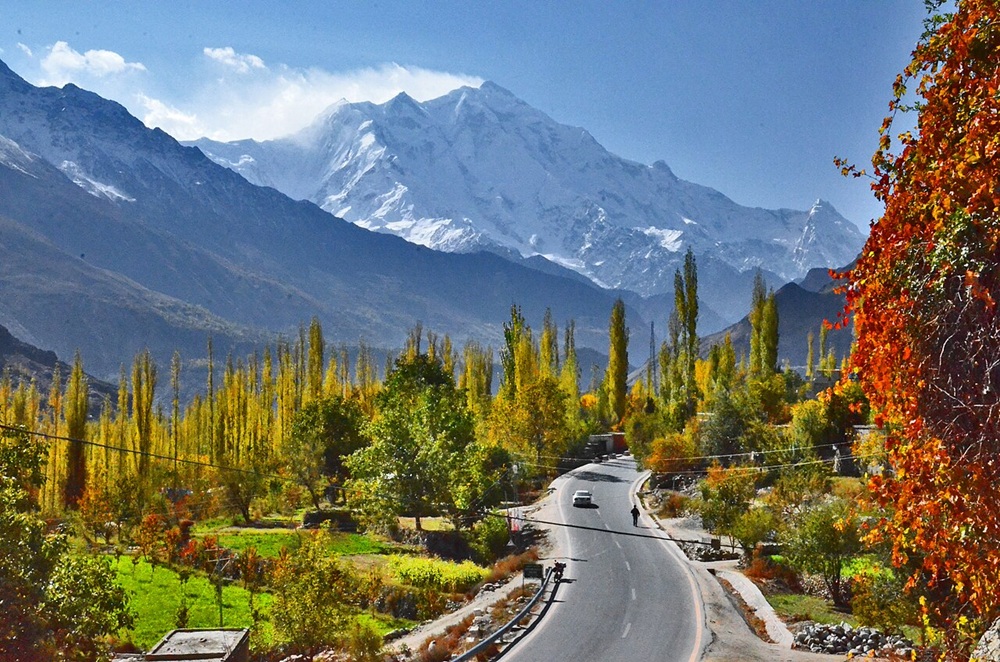
View of Rakaposhi, located in Nagar, from Hunza
Located in the heart of the Karakoram Mountain Range, the Hunza Valley of Pakistan is not only home to breathtaking landscapes but also a spirit of resilience and determination that transcends gender stereotypes. Beyond its stunning scenery, the valley stands out for the strength and perseverance of its women, who are leading their paths to become entrepreneurs. Hunza stands at the forefront of education across the Gilgit-Baltistan region, a proof to the community’s progressive mindset. Families here place great emphasis on learning, encouraging their children, both sons and daughters, to pursue quality education. This inclusive approach has nurtured a sense of confidence among women, empowering them to take charge of their lives and transform ambition into action.
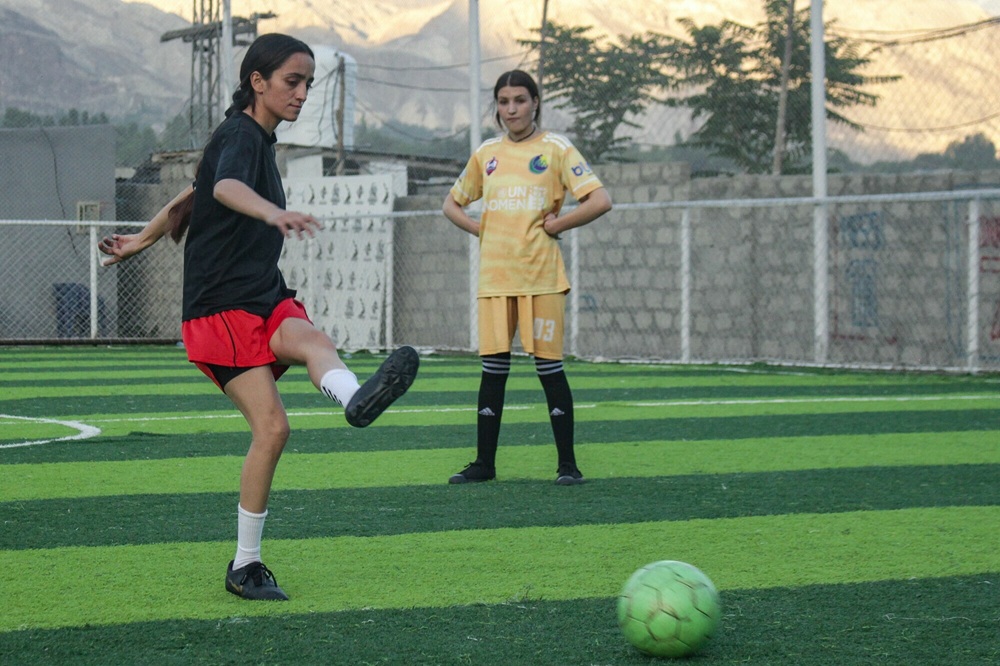
Girls play football in Gojal, Hunza
A large majority of the population follows the Ismaili tradition, a faith rooted in the principles of learning, gender equality, and improving quality of life. This influence has played a significant role in shaping Hunza’s progressive outlook, encouraging families to prioritize education for both boys and girls and cultivating a culture where knowledge and empowerment go hand in hand. Bibi Amina is widely recognized as the first woman carpenter to emerge from the Hunza region. In a country like Pakistan, where most trades, especially carpentry, are traditionally dominated by men, her women-led workshop stands out as a breath of fresh air, symbolizing determination, courage, and the breaking of long-standing barriers. Amina Bibi was just 30 years old when she established her own carpentry shop in 2008. Since then, she has not only grown her business but has also created employment for 22 individuals. Her workshop has evolved into a training ground as well, equipping nearly 100 women with valuable skills and a sense of independence.
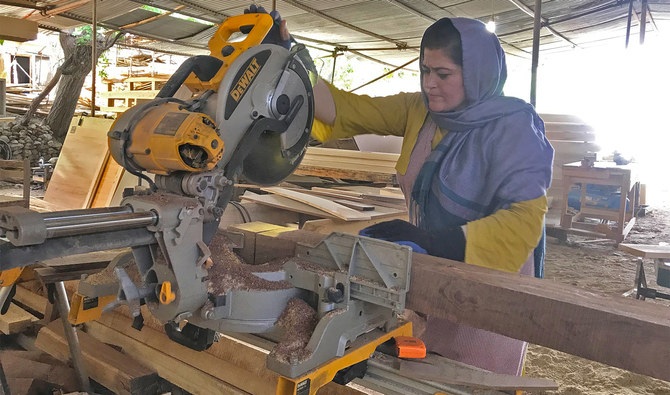
A woman carpenter in Hunza
After completing her formal training through the Aga Khan Foundation, she went on to contribute her expertise to the restoration of the centuries-old Altit Fort. Her craftsmanship later opened doors to high-end opportunities, earning her commissions from luxury hotels across the region.
Another remarkable woman from Hunza who challenged societal expectations and embraced entrepreneurship is café owner Lal Shehzadi. She is considered a trailblazer behind the rise of women-led cafés and restaurants in the valley. Her journey began humbly, using only her husband’s modest army pension to launch a small food venture. Lal Shehzadi soon became a favorite among both international and local travelers, who repeatedly returned to sample her authentic Hunza dishes. What started as a one-woman effort gradually grew into a thriving establishment. Sixteen years later, she now employs 11 people, most of whom are women.
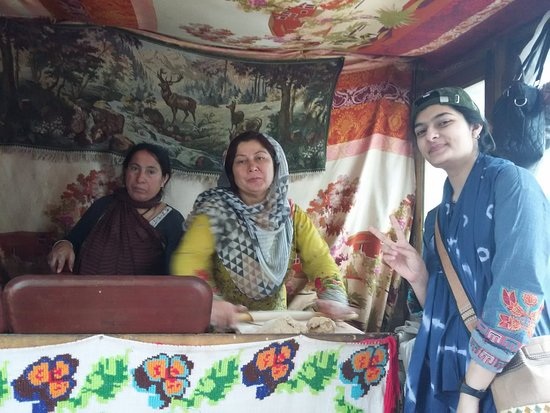
Lal Shehzadi
Another motivating women-operated business was Bozlanj Café, which was started by two friends, Malika Sultana and Rashida Begum, who pursued their dream at an age when most people usually give up on their aspirations. Over the years, Bozlanj Café became a local favorite, attracting both local residents and foreign visitors who wanted to indulge in real Wakhi food. In a twist of fate, Bozlanj Café went through a tragic experience in 2025 due to catastrophic floods in Hunza. The café was completely destroyed, and the two friends were forced to close temporarily. Once again, the local community came together to help Bozlanj Café, alongside activists and social workers, and is working towards restoring their dream.
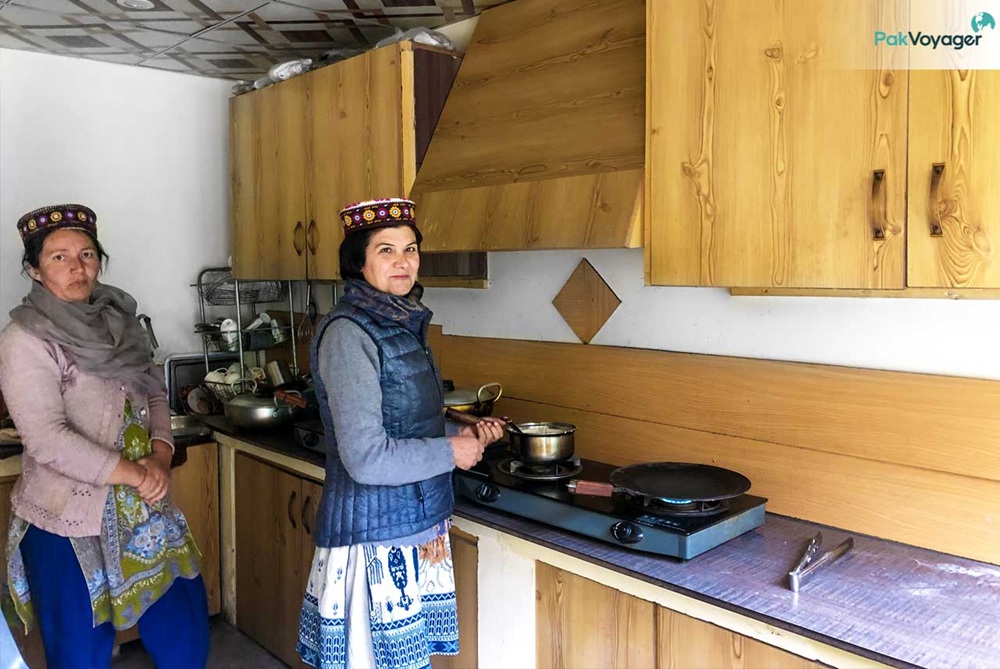
Bojlanj Cafe
While there has been significant progress among women in Hunza, their entrepreneurial experience is still riddled with challenges. One of the issues the women face is access to financing. Many women, especially those living in rural areas, lack proper access to loans or investment to grow their businesses. Although tourism is a primary economic lifeline for male and female entrepreneurs, tourism is seasonal, so income can be unpredictable. The recent disaster brought to light another painful reality: climate change and increasingly extreme weather pose a risk to the lives, livelihoods and heritage of thousands of people in Hunza.
Still, women in Hunza are pushing their way through obstacles. Community collaborations, microloan initiatives, and programs such as the Aga Khan Rural Support Programme (AKRSP) provide women the confidence, resources and skills to help them increase or maintain their businesses.
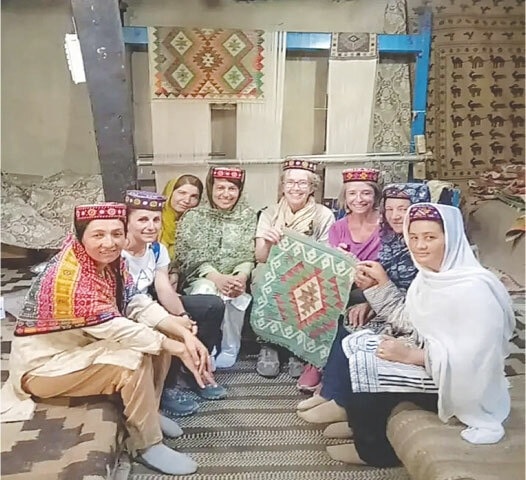
Visitors pose alongside the female workers at the Korgah Carpet Centre in Hunza.
Women in Hunza not only participate in the economy of the region, but they are innovating it too. With skill, determination and vision, they have changed their traditional roles, forged places of empowerment, and transformed a male-dominated landscape. Their narratives exemplify the essence of Hunza: resilient, optimistic and rising. And like the mountains that surround them, solid and unshakeable, these women continue to rise tall, inspiring generations to come to dream big and carve their own opportunities.
You may also like:
From the Horn of Africa to Bahria Town: Habesha Café Brings Centuries of Coffee Culture to Rawalpindi
(October 15, 2026)