Written by: Fiza Husnain
Posted on: January 28, 2026 |  | 中文
| 中文
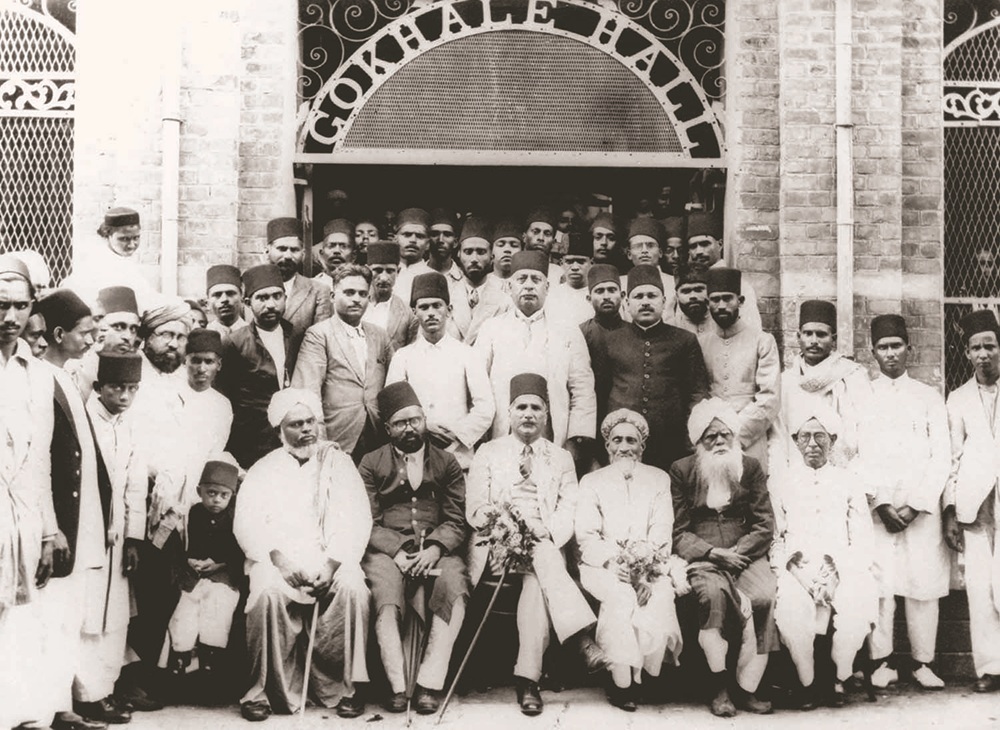
Allama Muhammad Iqbal (front row, centre) at the Gokhale Hall in Madras (now Chennai) in 1929 after delivering a lecture.
Alama Muhammad Iqbal (1877–1938), poet-philosopher of South Asia, is widely recognised not just as a literary giant, but as a critical voice against colonial economic and epistemological domination and a shrewd critic of Western civilisation. Ironically enough, he was educated in the very heartlands of the imperial West: Cambridge, Munich, and London. Iqbal’s engagement with European thought was never passive it was a rigorous and reflective critique. His poetry became his theoretical site on which he contested the western modernity. His poetry unfolds a multi-layered confrontation, never simple to shame the West at large, with colonialism’s political, intellectual and moral dimensions.
One of the most important facts is that his intellectual journey in Europe (1905–1908) proved pivotal to his intellectual journey as a critic. While he initially found Western civilisation dazzling, he soon saw its exploitative, imperialist and materialist core. Reflecting on this shift, Iqbal stated:
“The iridescence of modern civilisation dazzles our eyes, / But this artistry is an artifice of false jewellery.”
Kheera Na Kar Saka Mujhe Jalwa e Danish e Farang, Surma Hai Meri Ankh Ka Khak e Madina o Najaf
No glitter of Western science could dazzle my eyes
The dust of Medina and Najaf is the kohl upon my eyes.

Iqbal's poetry (Picture credits to International Iqbal Society)
These verses (from Kulliyat-i-Iqbal, Urdu) illustrate not only disillusionment but what could be termed an anti-colonial epistemic awakening. The West, with its promise of material glory, is seen as a failed model. This marked as the start of the rejection of superficial wisdom for deeper moral insight. In these lines, Iqbal rejects Western material splendour as hollow, preferring spiritual wisdom rooted in Islamic heritage. Western materialism comes in contrast to Islamic fiqar time and again in his poetry. The above-mentioned couplet poses the same dichotomy the Khak (soil), that is the soil of heart of Islamic civilization, is preferred over the dazzling epistemological agenda of the West.
Iqbal’s critique extends beyond political ideological dominance into the cultural ethos of the West. In his critique of western civilisation, he emphasised that material achievements devoid of moral and spiritual grounding are not true progress, pointing towards the debate of project of progress which was the heart of western colonial modernity, aka the white man’s burden. Scholars note that Iqbal viewed Western civilisation’s relentless pursuit of materialism as spiritually corrosive. The more you own, the more you’re unaware of yourself. To seek self is to question the comfort of obsessive material pursuit. Iqbal is of the view that Western “knowledge” that “does not touch the heart” fails the test of humane ethics, and becomes the critique of western epistemology.
Ilm ka Maqsood or, faqar ka Maqsood Or
The education has another goal; Faqar has an altogether different goal.
Iqbal’s philosophical pursuit to find the inner self tanslates itself into his concept of Khudi, in Asrar-e-Khudi (“Secrets of the Self”), he argues that colonial subjugation is first psychological; only a reinforced selfhood (khudi) can undo it. For Iqbal, colonialism thrived because colonised societies internalised Western superiority. The same argument was given by the African intellectuals included Franz Fanon, that it’s the psychological colonialism that solidify the political colonialism.
Iqbal writes; In slavery, neither swords nor strategies succeed. But when the taste for certainty is born, the chains fall away.”
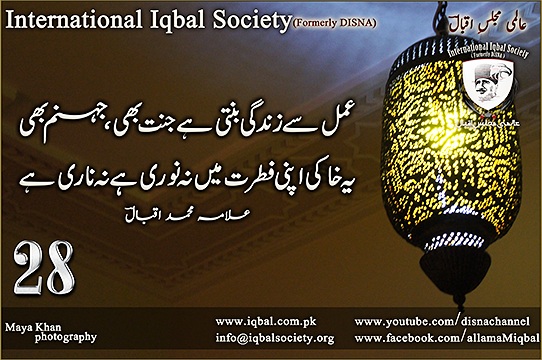
One of Iqbal's most famous verses (Picture credits to International Iqbal Society)
Here, the “chains” of colonialism are metaphorically dismantled by an awakened self, not by mere political revolt, a philosophical reorientation that problematises colonial domination at its intellectual roots. Kudi, Iqbal suggests, becomes the catalyst for the change that is needed at the mass level.
Nuqta.e.parkar.e.haq mard.e.kuda ka yaqeen, or ya Alam tamam waham.o.talism.o.majaz
The true axis of reality is the God-intoxicated man’s certainty;
All else in this world is illusion, passing magic, and just a metaphor.
That faith, that certainty comes with the awakened self, Khudi, the reclamation of self.
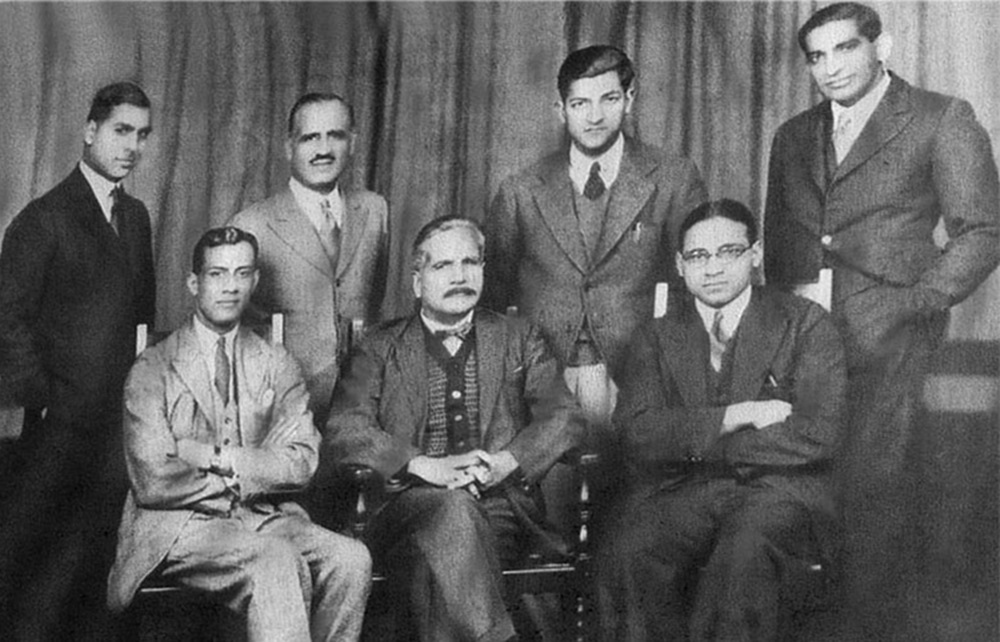
Iqbal (centre) with Chaudhry Rehmat Ali (left), Khawaja Abdul Rahim (right), and a group of activists in England, 1932.
Iqbal did not merely criticise colonial armies and politicians; he saw Western political models, elections, parliamentary systems, and even democracy used as tools of cultural infiltration. In the AFKĀR Research Journal, scholars argued that Iqbal’s rejection of Western democracy was imported into colonial India as a “garb to cover the darker face of Western culture.” Iqbal could see through history. He knew what was coming. If we look at the history, after the revolts started happening in India, it was only then British government cleverly came up with the idea of democracy and constitution, and representative government, all fancy ideas to keep the control intact. Iqbal writes,
Dar-i istabrad jamhuri qabaa main pa-i kot To samajhna hai ye azadi ki hai neelam pari
Majlis-i Ain-o-Islah-o-riayat-o-huqooq Tibb-i Maghrib main mazay meethay asar khwab awari
In the house of despotism, clad in a tailored democratic robe
Freedom itself stands like a fairy put up for auction.
Assemblies of constitution, reform, welfare, and rights
all Western medicine to put you in sweet sleep, numbing narcotics
He even questioned the deception that nationalism can hold:
In Taza Khudaon Mein Bara Sub Se Watan Hai
Jo Pairhan Iss Ka Hai, Woh Mazhab Ka Kafan Hai
Country, is the biggest among these new gods!
What is its shirt is the shroud of Deen (Religion)
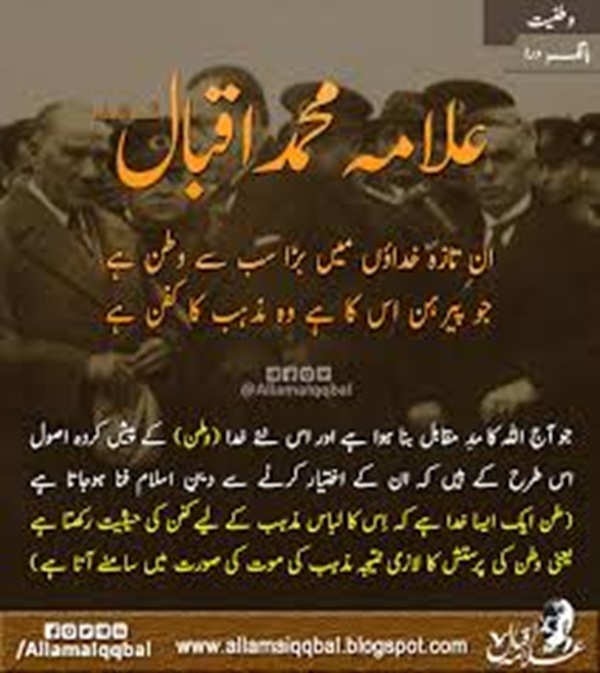
Allam Iqbal's poetry
In poems such as those in Pas Cheh Bayad Kard Ay Aqwam-e-Sharq, he ridicules the hollow allure of political labels (elections, councils, presidencies) that mask continued domination, and a subtle but incisive critique of Western political ideology as another instrument of cultural imperialism. Iqbal exposed the hypocrisy of imperial powers claiming a “civilising mission.” His poetry often confronts the West with its own barbarisms, especially after the devastation of World War I and the continuing subjugation of Asian and African nations. Iqbal saw Western civilisation as having “extorted bread from the hand of the weak” and having dressed exploitation behind the veneer of commerce, enlightenment and progress. This condemnation portrays Western imperialism not as a benign pedagogue but as morally bankrupt, revealing the paradox of a seemingly advanced civilisation that claims something else but delivers nothing but violence and exploitation.
Iqbal, in his Payam-i-Mashriq (“Message from the East”), was explicitly conceived as a reply to Goethe’s West-östlicher, a literary dialogue that reverses the civilizational gaze. Rather than unidirectional admiration for Western literature, Iqbal contested that the East, too, had an intellectual canon to offer the world. Thus, Iqbal questioned the colonial narrative that positioned the West as the universal arbiter of civilisation. His poetry situates Islamic civilisation as a civilisational partner, not a passive subject in global discourse.
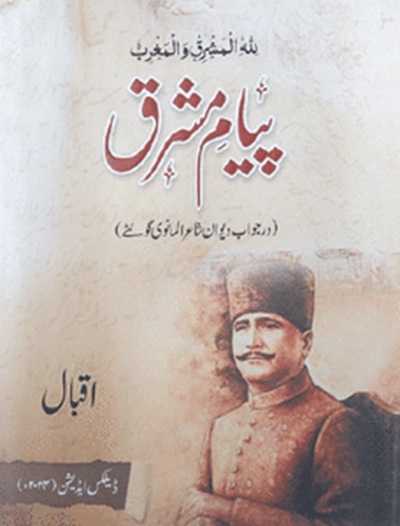
Payam e Mashriq
At the core of Iqbal’s polemic is his insistence that political freedom without spiritual freedom is work half done. Iqbal’s verses frequently link inner moral awakening to outer liberation. His poetry does not merely critique the West; it seeks to reconfigure the intellectual orientation of colonised subjects, urging self-revival anchored in ethical strength rather than imitation of Western models. That makes it not a romantic rejection but strategic differentiation: colonial domination is defeated when colonised reclaim the authority over their spiritual, cultural and intellectual heritage, reclaiming a sense of self beyond the imperial gaze. Turning the very Khak of Medina as their collyrium, seeking the Khudi, and dismantling the hegemonic ideological structures.
Iqbal, in his poetry, articulates a comprehensive intellectual resistance, one that confronts colonial structures, critiques imperial moral paradoxes, reframes Western achievements vis-à-vis spiritual vacuity, and calls for an autonomous framework of selfhood (khudi). Iqbal insisted that true liberation, be it political, intellectual and spiritual, emerges not from mimicking Western paradigms, but from a reinvigorated self that is aware of its own historical and moral agency.
You may also like: