Written by: Muhammad Hamza
Posted on: April 22, 2026 |  | 中文
| 中文
Sankraman
Tazeen Fatima is a painter from Lahore who studied at the National College of Arts. Her new exhibition, Kashf, brings together oil paintings that look deeply into human feelings. She explores the push and pull between hiding emotions and letting them surface. At times, her work blends ideas of feminine softness and masculine strength. She draws from her own life as well as from what she observes in society. Through careful brushstrokes and rich layers of color, she creates scenes that feel alive with quiet tension. Her paintings do not shout. Instead, they invite the viewer to pause and reflect on the small inner battles people face every day.
Fatima questions what strength really means. She shows how holding back feelings can create pressure in relationships and daily life. Her paintings use everyday settings such as rooms, homes and outdoor paths, making these ideas easy to connect with. The colors are warm and earthy, with deep browns, yellows and reds that suggest both warmth and sadness. In Kashf, she chooses scenes that feel familiar yet reveal hidden layers. This article looks closely at six key works that capture the heart of her message.
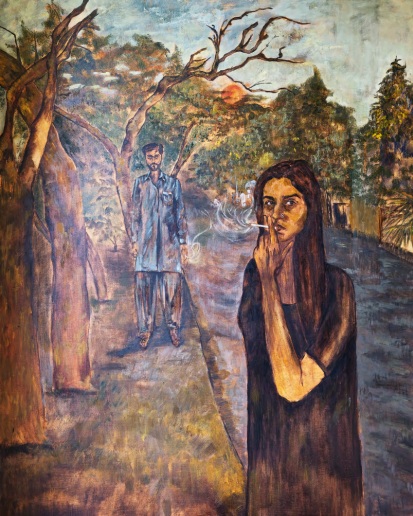
Adarsan
This artwork unfolds along a winding outdoor path lined with trees. In the foreground, a woman with long hair stands still, holding a cigarette as white smoke curls around her face. Her eyes look far away, as if weighed down by heavy thoughts. Further along the path, a man walks alone, carrying something in his hand. The trees frame the scene, while a soft glow from the sky lights the ground. Warm oranges and greens fill the painting, with darker shadows stretching across the path. The drifting smoke becomes a soft line that connects the woman to the empty space around her. The scene feels like a quiet story of parting. The woman remains rooted while the man moves on. It highlights the pain that grows when emotions stay unspoken. Fatima shows how small habits like smoking can become ways to release inner pressure. The distance between the two figures reminds us how silence can create loneliness, even between people who once walked the same path.
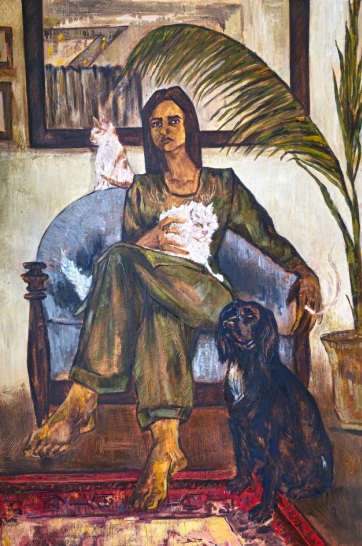
Viyoga
This work offers a softer and more comforting view of daily life. A woman sits in a large chair wearing green clothes, gently holding a white cat in her arms, while another cat rests behind her. At her feet, a black dog sits quietly, looking up. Plants and a bright rug fill the room, giving it a lived-in feeling. The woman gazes ahead with calm eyes, yet there is depth in her expression. The colors are rich greens and warm browns that make the scene feel safe and full of life. Fatima paints the animals with the same care as the human figure, making them part of the emotional story. This painting celebrates care and nurturing as a form of strength. At the same time, it hints that even in peaceful moments, people carry unspoken thoughts. It shows how everyday acts of love can ease the tension between holding feelings in and letting them flow.
Strisila
This painting turns the focus to a single man. He stands tall at the center of the canvas, dressed in simple white clothes. His hands rest at his sides, and he looks directly at the viewer. The background fades into soft grays and browns, making him stand out clearly. His face is serious and steady, but the loose paint around his shoulders suggests something unsettled beneath the surface. The title hints at a veil that hides the true self. Fatima uses this upright pose to explore what it means to appear calm while holding emotions inside. The painting questions the idea that men must always seem strong and untroubled. There is a quiet sense of effort in his stillness, as if keeping emotions contained requires constant control. Through simple lines and earthy tones, the work reflects the strain of living with unspoken feelings.
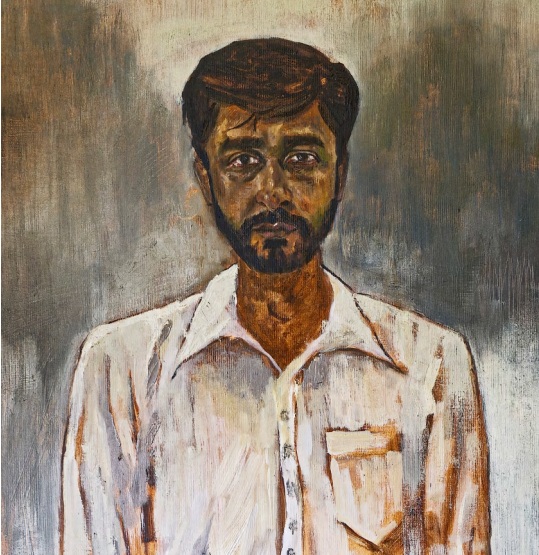
Dar parda-e-khud (detail)
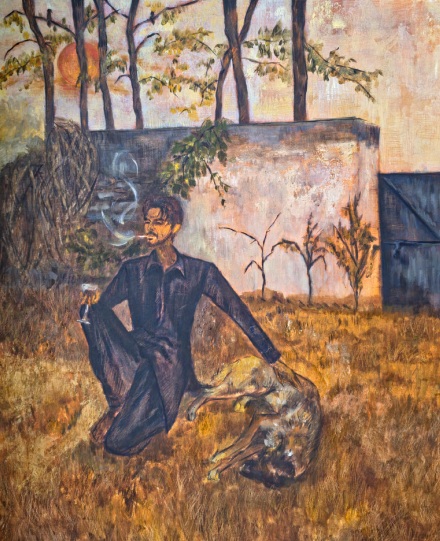
This painting moves the scene outdoors again. A man sits in a grassy field beneath a line of trees. He holds a glass in one hand, while smoke rises from a cigarette in his mouth. A dog lies peacefully beside him. The sun hangs low in the sky, casting a warm golden light across the field. Trees and open land stretch into the distance, creating a sense of openness. The colors blend soft yellows, greens, and blues, giving the scene a calm, flowing quality. Fatima captures a moment of rest where the man appears at ease, yet still thoughtful. The drifting smoke feels like a gentle release of inner weight. The painting speaks about finding moments of calm even as life continues to move. The open landscape contrasts with the earlier indoor scenes, suggesting how stepping away from daily routines can ease emotional pressure.
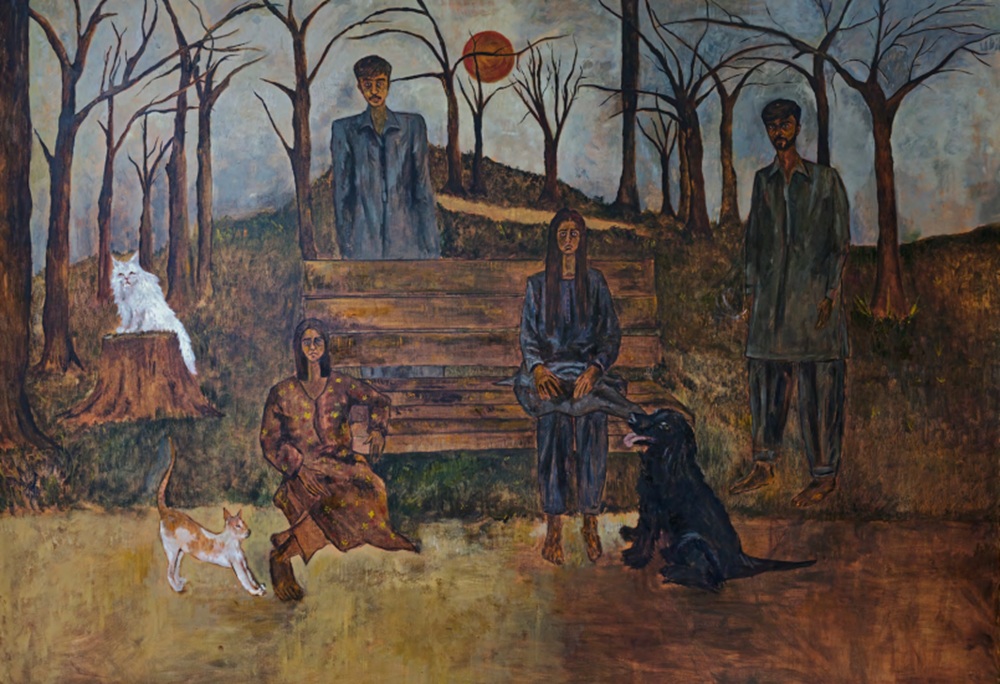
Sokun-dar-harkat
This work brings several figures together in a wide landscape. A woman sits on a wooden bench beneath bare trees, while another rests on the ground nearby. Two men stand apart, one on a small rise and the other closer to the group. A black dog sits near the bench, and cats appear within the scene. A large red sun hangs in the sky above the branches. The ground blends browns and soft greens, while the figures wear muted tones. Each person occupies their own space, yet they share the same environment. The painting feels like a group caught in a moment of change. Fatima uses this quiet gathering to show how different emotional worlds exist side by side. The title suggests transition or crossing. The work captures how people move through life together while carrying private struggles.
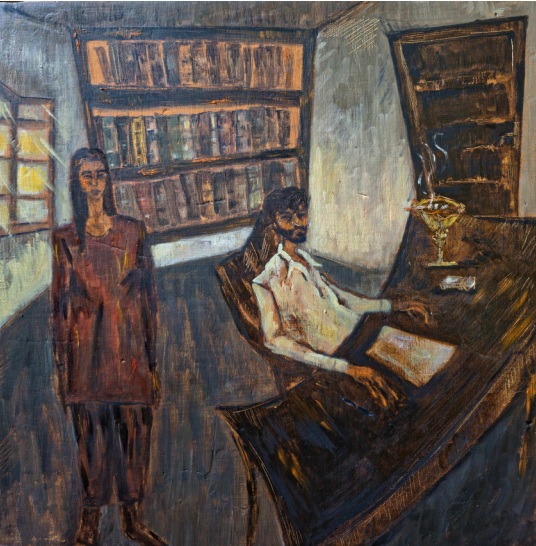
Together, these six paintings unfold like parts of a single story. They move from indoor spaces to open landscapes, from solitary figures to shared scenes. In each work, Fatima focuses on small details such as a hand resting on a page, smoke drifting in the air, or the gentle presence of animals. These details make the emotions feel close and real. Her brushwork adds texture, giving the surfaces a sense of life. The warm, grounded colors keep the scenes intimate rather than distant. Through Kashf, she creates space for viewers to recognize their own hidden tensions. She does not offer clear answers, but instead reveals the beauty and difficulty of balancing strength with softness, duty with feeling, and silence with expression.
Anyone who walks through the exhibition is likely to reflect on their own inner world and relationships. Fatima reminds us that emotional honesty is not weakness, but a path toward deeper connection. Her paintings speak quietly, yet they linger long after one has moved on. Kashf offers a thoughtful reflection on what it means to be human in a world that often asks us to hide what we feel.
You may also like: