Written by: Muhammad Bilal Ramzan
Posted on: April 20, 2026 |  | 中文
| 中文
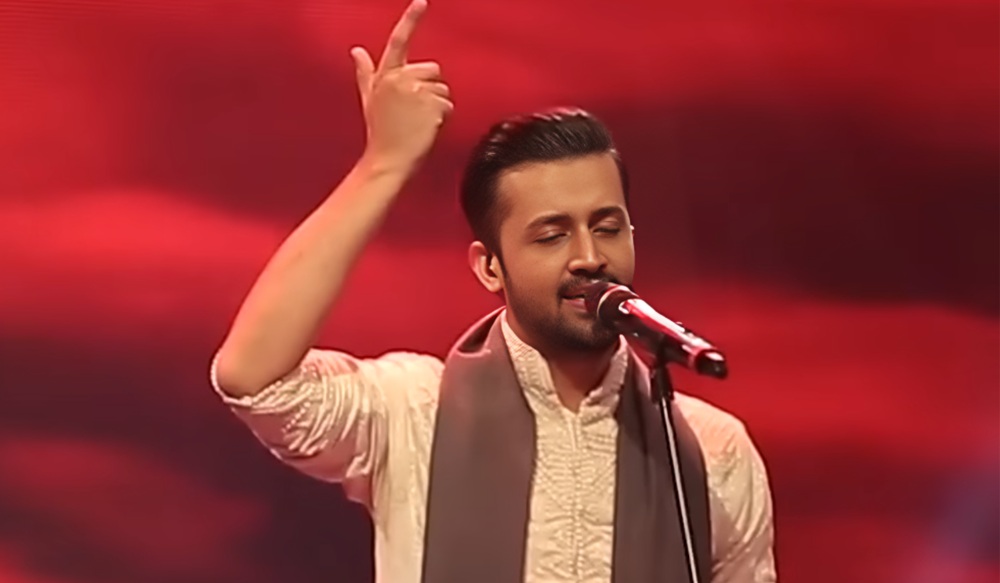
Atif Aslam in Tajdar-e-Haram for Coke Studio
In a BBC Asian Network interview, A. R. Rahman was asked about Pakistani music and the possibility of future collaborations, including one with Atif Aslam. He acknowledged that the current situation would not allow such collaborations. But when he spoke about Atif Aslam, his tone shifted. “Atif was such an original,” he said. “We never heard a voice like that ever before. His vibrato… the way, you know… that’s why he stands out.” It was not a dramatic statement, but coming from someone like A. R. Rahman, the remark carried real weight. He has spent decades working with singers known for their control and technical precision, and yet in the case of Atif Aslam he was noticing something else. Not discipline or perfection. Just difference.

Atif has a huge fan following
That difference becomes clearer when one goes back to Aadat. It was released in 2003. This was a time when songs didn’t arrive through algorithms. They travelled differently, Bluetooth transfers, pocket radios, MP3 players, burned CDs, someone passing a track from one Sony Ericsson phone to another saying, “listen to this.” It quickly became more than a song; it settled into university hostels, long bus journeys, and quiet late-night moments. Aadat wasn’t just heard, it stayed and became an anthem. Even now, the moment those opening guitar notes play in a crowded stadium, the energy shifts instantly. It’s no longer just a performance; it’s a shared exhale of nostalgia from a thousand people remembering exactly where they were when they first heard it.

Aadat by Jal Band featuring Atif Aslam
What stood out in that song stayed with Atif Aslam. His voice was never built on smoothness. It carried a rasp, and his high notes often felt stretched, like he was reaching just beyond what was comfortable. At times it even seemed like the voice might slip. But it didn’t. It gave his singing a kind of tension that listeners kept returning to. This raw edge, which some early critics dismissed as lack of training or inconsistent pitch, became the very element that demanded repeated listening.
He was criticised by music mentors and contemporaries alike. Questions were raised about his training, his pitch, and whether a voice like that could sustain itself over time. There was also scepticism when he parted ways with Jal, with many assuming that his success might not carry forward as a solo artist.
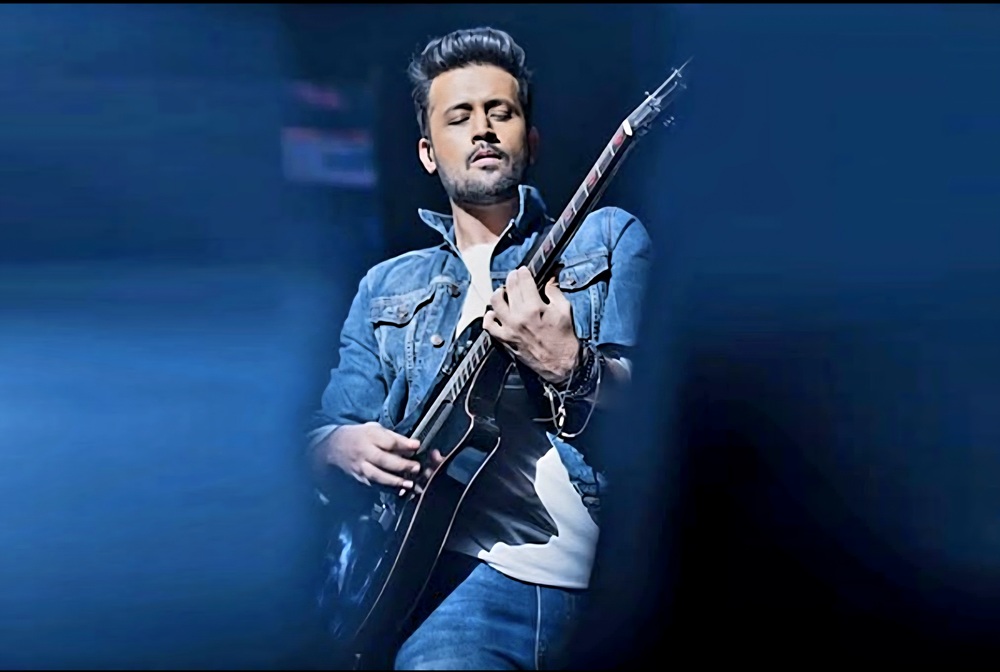
Atif's popularity amongst youth is immense
But that is not what happened. His solo career not only endured but steadily expanded. Albums such as Jal Pari (2004), Doorie (2006), and Meri Kahani (2008) delivered consistent hits. His entry into Bollywood made him one of the most widely recognised voices across South Asia and, in many ways, signalled a shift in playback singing. Many producers noted that after Atif, the whole 'vibe' of a romantic track changed. One way to understand that influence is to look at how openly it has been acknowledged within the industry itself. Indian singer Palash Sen once remarked that Atif Aslam had “made the maximum impact on Bollywood’s music and most singers over the last 15 years.” He pointed to that distinct vocal style that many singers began to imitate, adding that even music directors started borrowing from that sound. A whole generation of singers began to adopt that same texture, that same emotional weight that used to be considered a flaw.

Atif has rendered voice to many Bollywood songs
Beyond South Asia, his presence has been just as visible. Large concerts in the UAE and across the Middle East regularly draw audiences from the Pakistani and Indian diaspora. In Canada and the United States, his shows have become gathering points for audiences from different backgrounds. Even in places like Nepal, Bangladesh and Mauritius, where language and industry boundaries might have limited reach, his popularity remains strong, with crowds singing along from the first line.
His work in Coke Studio highlighted the range of his voice. Performances like Dholna, Channa, Tajdar-e-Haram, and Wohi Khuda Hai showed how the same voice could move across different moods and traditions. Bollywood songs like Tere Sang Yaara, Tum, Auliya, and many others reflected a similar versatility. His movement into the Sufi and devotional space added another layer to his identity. He has released kalam and naat that connect deeply with a large audience, and for many listeners this side of his work holds just as much importance as his mainstream songs. Take his recent work with Sami Yusuf on ‘Noor.’ There’s no effort behind it. That spiritual side of his voice doesn’t sound rehearsed or forced. It sounds like he’s just breathing, letting the music carry him.

Atif Aslam is a generational talent
Today, his reach is undeniable. Even after several years without new Bollywood contributions, his relevance has not diminished. With tens of millions of monthly listeners, he remains one of Pakistan’s most streamed artists. Calls for his return continue to surface periodically, especially trends on X (formerly Twitter), where fans who call themselves ‘Aadeez’ continue to push for his return. Last year Atif Aslam launched a music label named “the Borderless World” and it brought back a familiar sense of the earlier Atif, reminiscent of the Aadat era with songs like Peeran and Kinaray.
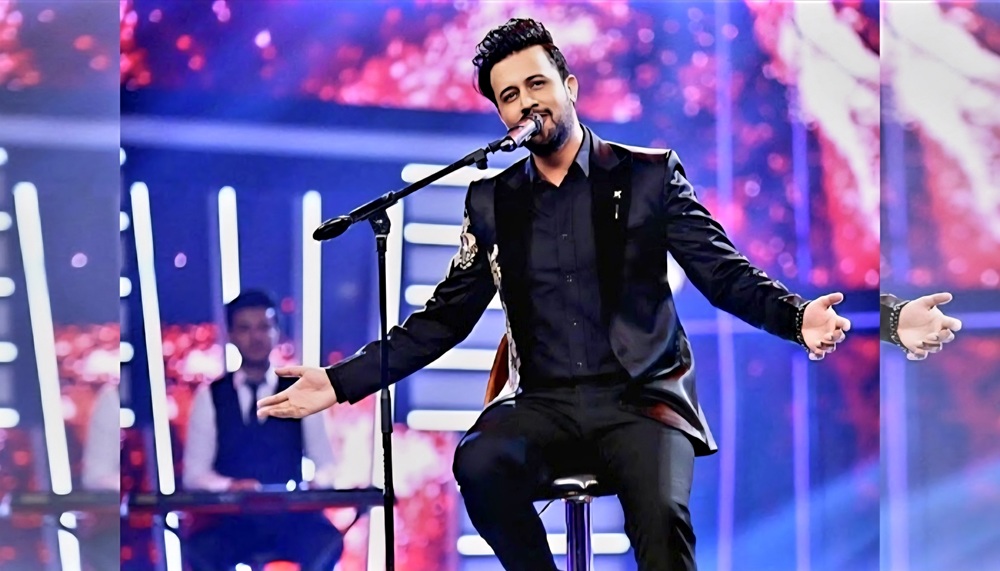
Atif Aslam
Perhaps the most characteristic element of Atif’s journey is his silence. While the industry was busy with comparisons, critiques and the usual noise, he just stayed quiet. He didn't build his career on responses or rebuttals. He just kept moving, letting the work do the talking for him. The conversations around him never really stopped. Some still point to what the voice lacks. Others stay with what it carries. And that tension never really fades. But there’s one thing that doesn’t need much debate. You hear a single line, and you know exactly who it is. That kind of recognition doesn’t come from training alone. It comes from sounding like yourself, and staying with that, even when everything around you is asking for something else. He didn’t just change the sound of a generation; he taught us that sometimes, being yourself is the loudest thing you can do.
You may also like: