Written by: Aroosh Ammad
Posted on: April 13, 2026 |  | 中文
| 中文
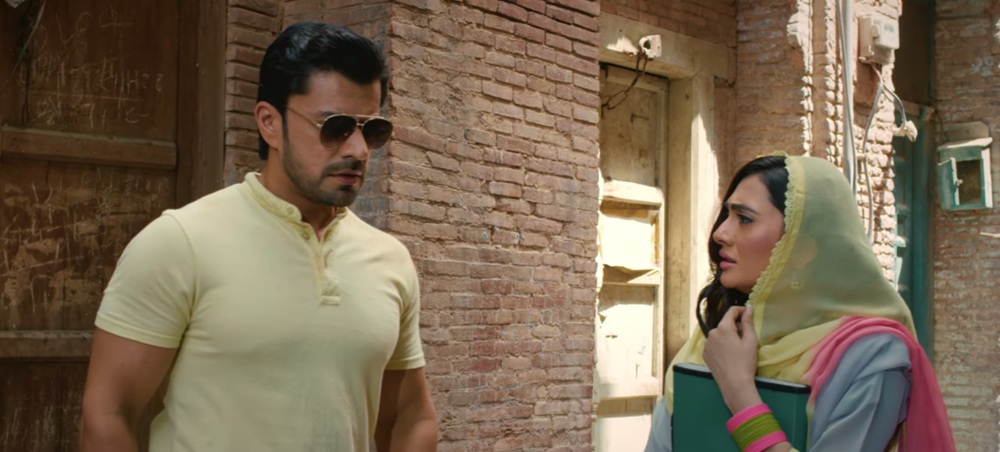
Yasser Khan and Suzain Fatima
Our Pakistani film industry is deeply rooted in the radiant streets of Lahore, Punjab. It has witnessed a great comeback with the release of the new film Delhi Gate on 21 March 2026, which is scheduled in cinemas on Eid-ul-Fitr. The film is not just another addition to Lollywood, but it is a wilful and consequential effort by director Nadeem Cheema, who tends to bring back Pakistani filmmaking that is inherited in Lahore after decades of an industry that was previously dominated by Karachi-based production.
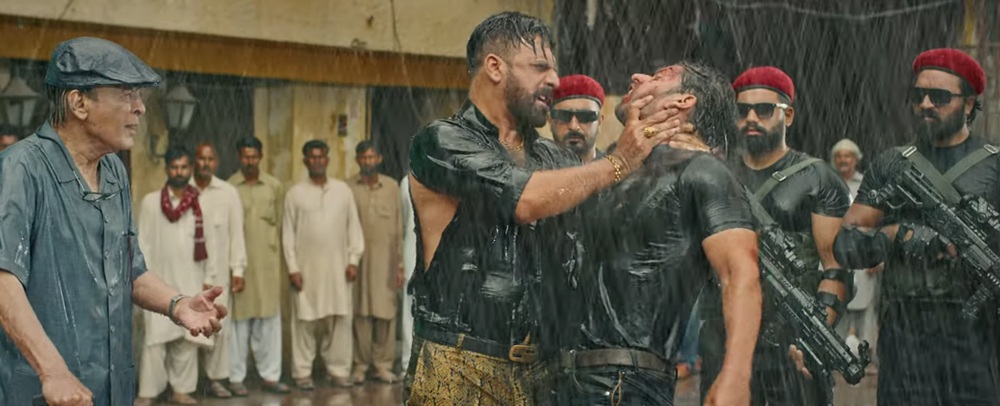
Shamoon Abbasi and Yasser Khan in Delhi Gate
Essentially, the film Delhi Gate is an energetic romantic and action-based movie that shows a contemporary story of the walled city, which has narrow streets and tight lanes. If we talk about the main characters or protagonists, they play roles that belong to vastly different worlds. One is Aamir (played by Yasser Khan), who struggles to document the hidden stories of the inner-city Delhi Gate, whereas Anya (played by Suzain Fatima) has returned to Pakistan from Canada with an entrenched secret and is a brilliant software engineer. These two strangers encounter each other at the most iconic place called Delhi Gate, which is part of the old city with twelve historical entrances of Lahore. It begins as a chance romantic story that turns into a nightmare when they inadvertently witness a shocking criminal case involving a large underground network of criminals. This incident thrusts them into a dangerous conspiracy directly linked to high-ranking powerful people who are trying to cover up an organization operating within the city’s historical veneer. The film shows how, as they escape for their lives, love versus power, and the weight of culture and the strength of the common man come together in opposition to corruption.
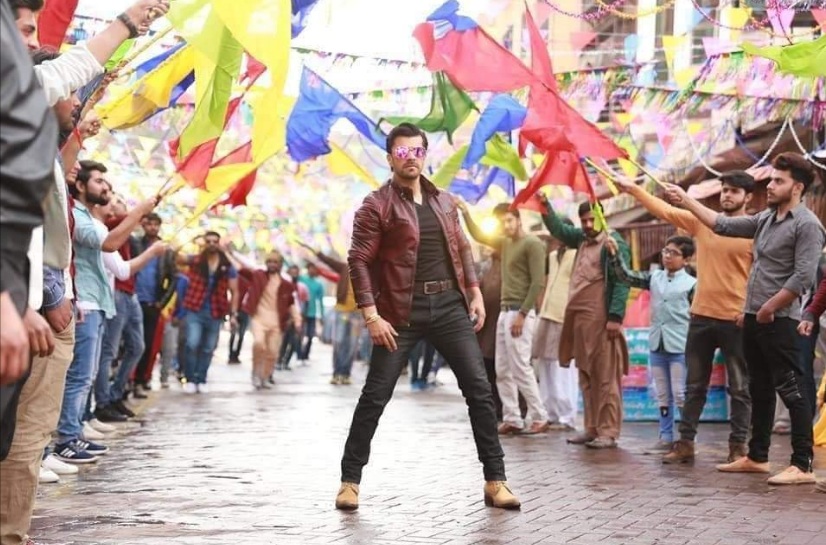
Yasser Khan in Delhi Gate
In this film, the antagonist is Malik Gold. A very impressive part of the movie is the depiction of Malik Gold, who is the antagonist, and his role is played by veteran actor Shamoon Abbasi. Unlike other villains, Malik Gold is portrayed as an intelligent antagonist, a sophisticated, wealthy, and well-known millionaire who views Lahore as his personal chessboard. Abbasi, known for his powerful roles, brings intensity that challenges the sanctity of the old world. His encounters with Aamir and Anya provide twists and turns in the movie, building the love story to its breaking point.
Perhaps this movie includes a star-studded and poignant cast, but the production faced many delays as it was initially planned for release in 2020 but was postponed due to the COVID-19 pandemic and several other production-related issues. Despite all these challenges, the film ultimately proved to be worth the wait. The film also features legendary actors who play vital roles and deliver strong cinematic performances, including Qavi Khan and Khalid Butt, making the movie an outstanding tribute to earlier contributions to the arts.
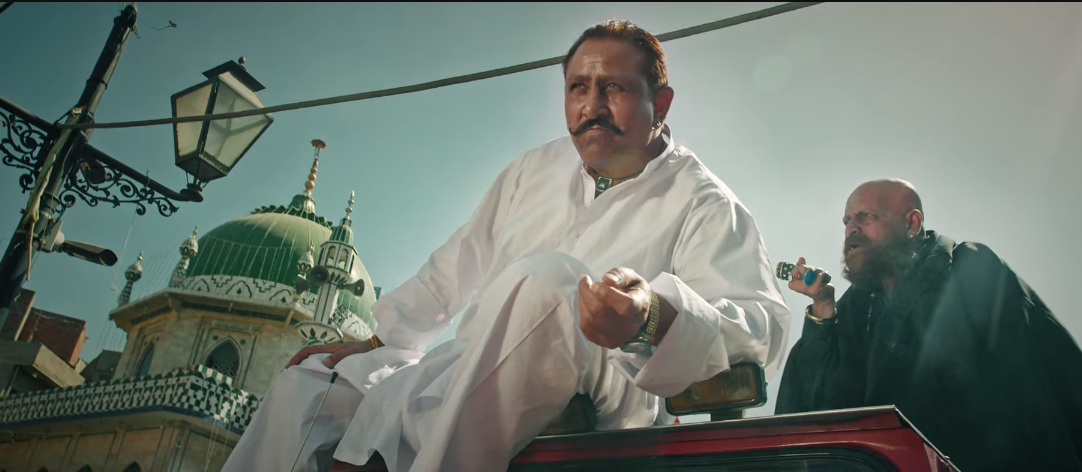
Shafqat Cheema in the film
Furthermore, the supporting roles are equally strong and impressive, including actors like Javed Sheikh, Shafqat Cheema, and Rashid Mehmood. Together, they help bridge Pakistani cinema between new leads such as Yasser Khan and Suzain Fatima.
The Walled City has its own character. Nadeem Cheema as director and M.A. Mustafa as cinematographer both utilize the Walled City of Lahore as a living character rather than just a backdrop. Most shots are captured within the streets of Delhi Gate and historical areas, portraying old Lahore and its aesthetics, which are rarely seen in modern 4K cinema. The visual narrative shows a contrast between sleek, dusty, and sun-drenched sites, as well as the old interiors of Malik Gold’s empire. Scenes shot at the Badshahi Mosque and nearby streets and markets reflect native culture and authentic settings, aiming to showcase the real beauty of the region for both international and local audiences.
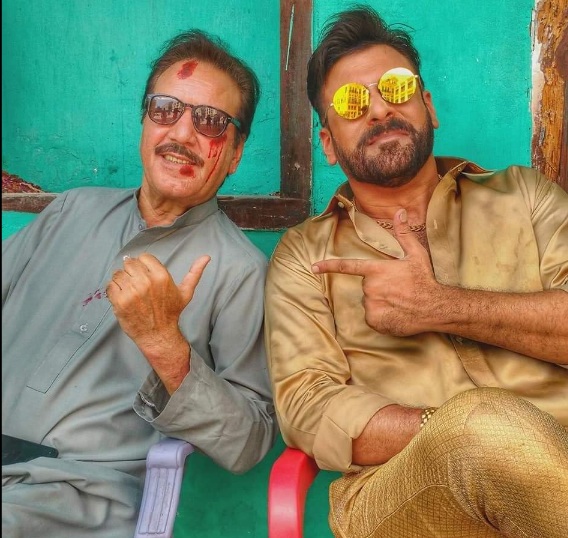
Javed Sheikh and Shamoon Abbasi
The film is further enhanced by its music, where a great musical grandeur adds a soundtrack featuring well-known names in South Asian music. Soulful tracks are performed by Rahat Fateh Ali Khan, with compositions by Sanvel Khan and, last but not least, the iconic Atif Aslam. The music includes Sufism-inspired romantic melodies and shifts between high-energy scores, reflecting the dual nature of the plot.
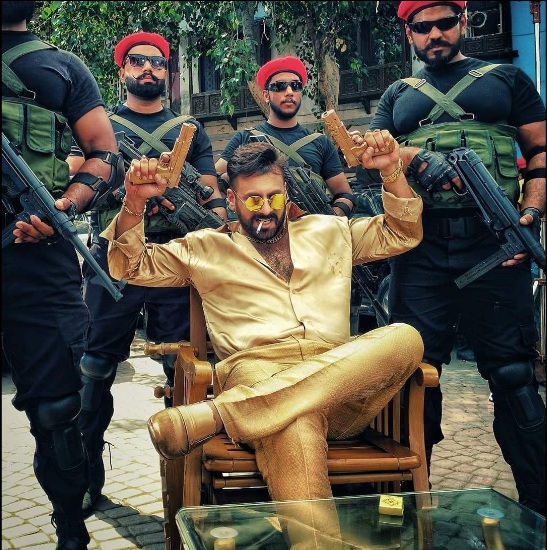
Shamoon Abbasi in the film
The song “Allah-Hu”, released as a single during the peak of its promotion, became an instant hit that blends traditional and spiritual themes within a modern cinematic style. Production and Vision: The film is produced by Sky Fall Films and Nadeem Cheema’s Films. The script was written by the late M. Kamal Pasha and was designed as a worthy entertainer, a complete package of drama, music, action, and emotion. Nadeem Cheema, who is the brother of Shafqat Cheema, entered the project with the vision of proving that Lahore-based technicians and studios can produce world-class films and cinema.
You may also like: