Written by: Muhammad Suhayb
Posted on: September 30, 2025 |  | 中文
| 中文
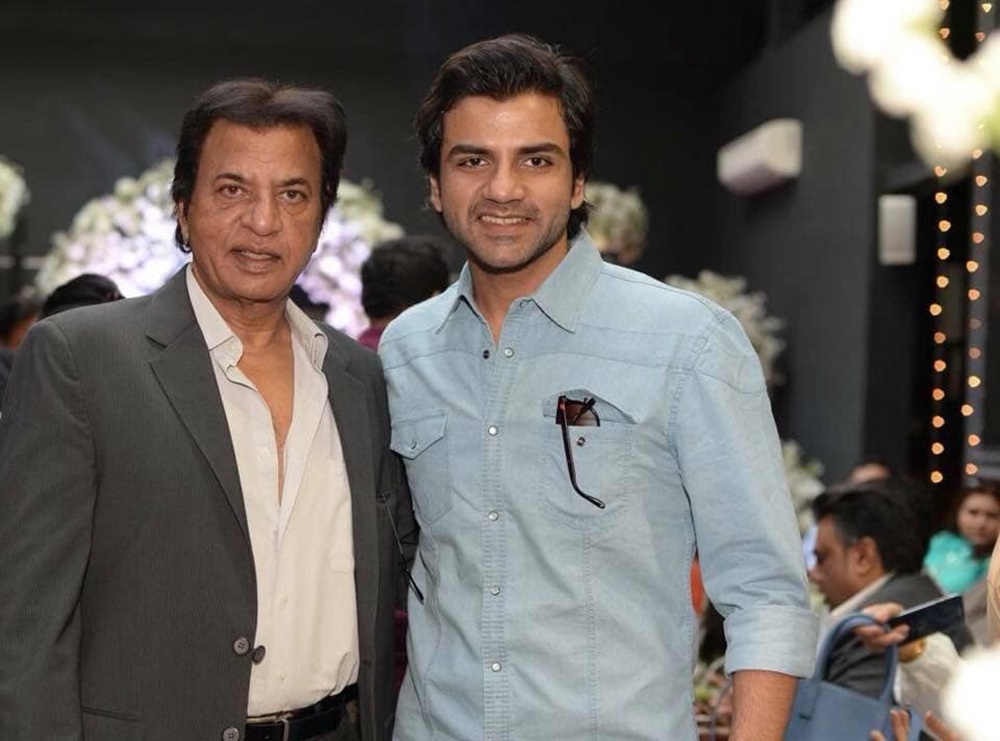
Ghulam Mohiuddin and his son, Ali Mohiuddin, who made his film debut with Savaal 700 Crore Ka.
Legendary actor Ghulam Mohiuddin has recently marked an extraordinary milestone—fifty illustrious years in the world of cinema, and still going strong. From his debut in Mera Naam Hai Mohabbat, released in August 1975, to becoming one of the most enduring icons of Pakistani film and television, his journey has been nothing short of remarkable, defined by versatility, dedication and an unwavering passion for his craft.
His career reflects resilience, brilliance and an irrepressible love for acting. Fondly known as “Gullu Bhai”, he is an actor who breathed life into every character he portrayed. For audiences, his films are not just entertainment, but cherished memories woven into the cultural fabric of Pakistan. Truly, his five-decade journey is a testament to the power of art and the endurance of talent.
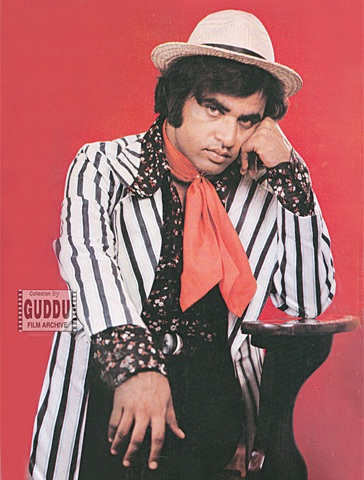
Ghulam Mohiuddin in his debut film Mera Naam hai Muhabbat
Although he began his career in radio and television, it was cinema that elevated him to superstardom. Born in 1950 in Hyderabad Deccan, Ghulam Mohiuddin migrated to Pakistan with his family in 1958 and settled in Nazimabad, a neighborhood known for being home to many intellectuals, journalists and media personalities.
After completing his graduation, he started acting in Radio and television plays. His tall frame and deep voice were exactly what Lollywood lacked in its second generation of actors. By the early 1970s, Muhammad Ali had transitioned to elderly and character roles, leaving a vacuum for younger talent. It was Shabab Keranvi, the seasoned producer-director, who spotted Mohiuddin’s potential and offered him the lead role in Mera Naam Hai Mohabbat (1975).
The film, co-starring Babra Sharif, turned out to be a blockbuster. Not only was it praised for its engaging story and melodious soundtrack, but it also made history by becoming the first Pakistani film since Baaghi (1958) to be screened in China.
After this breakthrough, every major producer wanted Ghulam Mohiuddin in their films. At a time when Pakistani cinema was struggling to break free from formulaic romances and searching for a hero who could match the intensity of Amitabh Bachchan and the effortless charm of Mithun Chakraborty, Ghulam Mohiuddin, fondly known as Gullu, emerged as the perfect answer. Lean, intense and blessed with unconventional looks, he became the go-to actor for roles that demanded grit and daring. Whether as a fearless police officer, a rugged cowboy, a charming anti-hero with grey shades, or a fiery Punjabi Jutt, he delivered with conviction. Another dimension of Ghulam Mohiuddin’s versatility was his mastery of recurring character types. He made the roles of Makrani and Sikh characters distinctly his own, appearing in several films where these identities were central to the story. Over his long career, he acted in more than 200 films, roughly half in Urdu and half in Punjabi, establishing himself as one of the most prolific stars of his era.
During the late 1970s and 1980s, Gullu was often paired with Babra Sharif and Mumtaz, both relatively new at the time. Yet, he also shared screen space with veteran heroines Deeba, Rani and Shabnam, who had already been reigning since the early 1960s. By the time he emerged as a leading man, he had the fortune of romancing these established stars on screen. He appeared in 8 films with Waheed Murad and over a dozen with his idol Muhammad Ali, who was reducing his work in films. Ali sahib rarely went abroad for shooting and it was Gullu who accompanied him for a Pak-Thailand co-production Aag aur Sholay (1987).
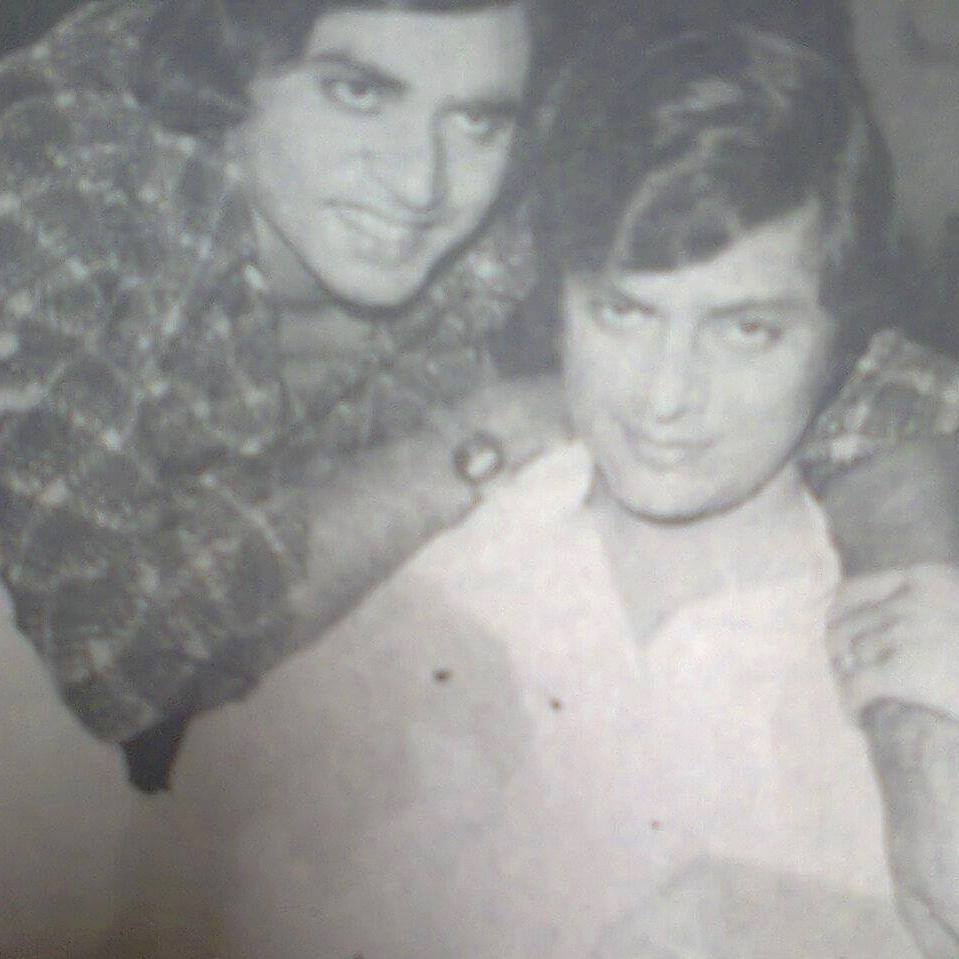
Ghulam Mohiuddin with Waheed Murad
One of Mohiuddin’s greatest strengths was his ability to switch effortlessly between good and evil roles. Watching Awaaz (1978), Lazawal (1984), and Zid (1991), one can hardly believe they feature the same actor. He performed his own stunts, which gave an edge of authenticity to his action roles, and unlike many of his contemporaries, he was approachable, humble, and never hesitant to take on supporting roles. In fact, despite being nine years younger, he convincingly played Nadeem’s elder in Muhabbat Aur Mehengai, Mutthi Bhar Chawal, and Lazawal.
Initially, Mohiuddin struggled with Punjabi and refused several offers. However, with determination, he mastered the language and by the 1980s, when Urdu films were in decline, he transitioned seamlessly into Punjabi cinema. His pairings with Najma, Nadira, Neeli and Reema became hugely popular, and he continued to be a top draw well into the late 1990s.
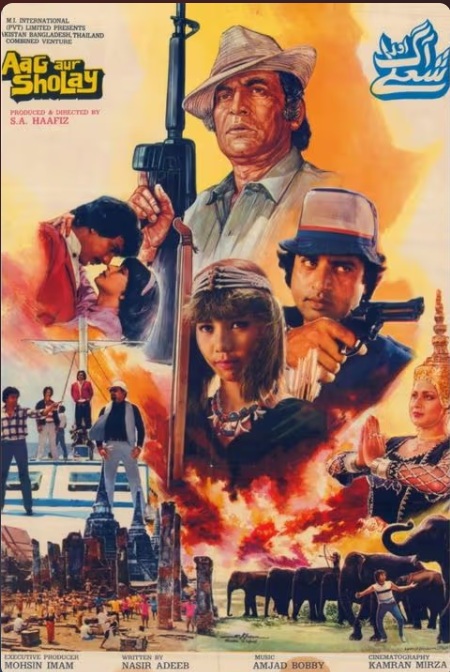
Aag aur Sholay, 1987
“Gullu” was also the first choice for experimental cinema. Director S.A. Hafiz cast him in Pakistan’s homegrown cowboy westerns, beginning with Aansoo Aur Sholay (1976), followed by Aatish (1980), and culminating in Aandhi Aur Toofan (1984). Inspired by Sergio Leone’s spaghetti westerns, Hafiz had long envisioned a Pakistani “man with no name,” and Gullu brought that vision to life.
Similarly, when ad filmmaker–turned–director Saeed Rizvi sought a lead for his sci-fi fantasies, he turned to Gullu. After the success of Shaani (1989), Rizvi made Pakistan's first horror film Sar Kata Insaan (1994), where Mohiuddin played perhaps the most unusual role of his career. The bizarre plot involved a scientist transplanting a cop’s head onto a bandit’s body. As the Sar kata insaan (headless man carrying his own head), Gullu terrorized enemies before an internal struggle restored the cop’s conscience. Though eccentric, the film highlighted his fearlessness and range as an actor.
With the decline of cinema in the 2000s, Ghulam Mohiuddin gracefully transitioned to television. In addition to acting, Ghulam Mohiuddin also ventured into film production. He produced Savaal 700 Crore Ka, casting his son Ali in the lead role. Although the film carried promise and Ali showed considerable potential, the project proved to be too ambitious for the realities of Lollywood at the time. He continued to appear in films occasionally, special appearances in Chambeli (2013), voice work in the animated hit The Donkey King (2020), and comedy shows, but television became his primary medium. His adaptability ensured that he remained relevant across generations.

Javed Sheikh, Ali Mohiuddin and Ghulam Mohiuddin in Sawaal 700 Crore Ka
Beyond cinema, Ghulam Mohiuddin also played a pivotal role in bringing together Pakistan’s entertainment and sports communities. He was one of the first actors to streamline and organize the ‘Stars’ cricket team, a celebrity-driven initiative that blended glamour with philanthropy. Over the years, he arranged and participated in more than 200 charity matches, often featuring international stars and leading cricketers of his era. These matches were not merely exhibitions of sport, but heartfelt efforts to raise funds for causes such as flood relief and earthquake victims.
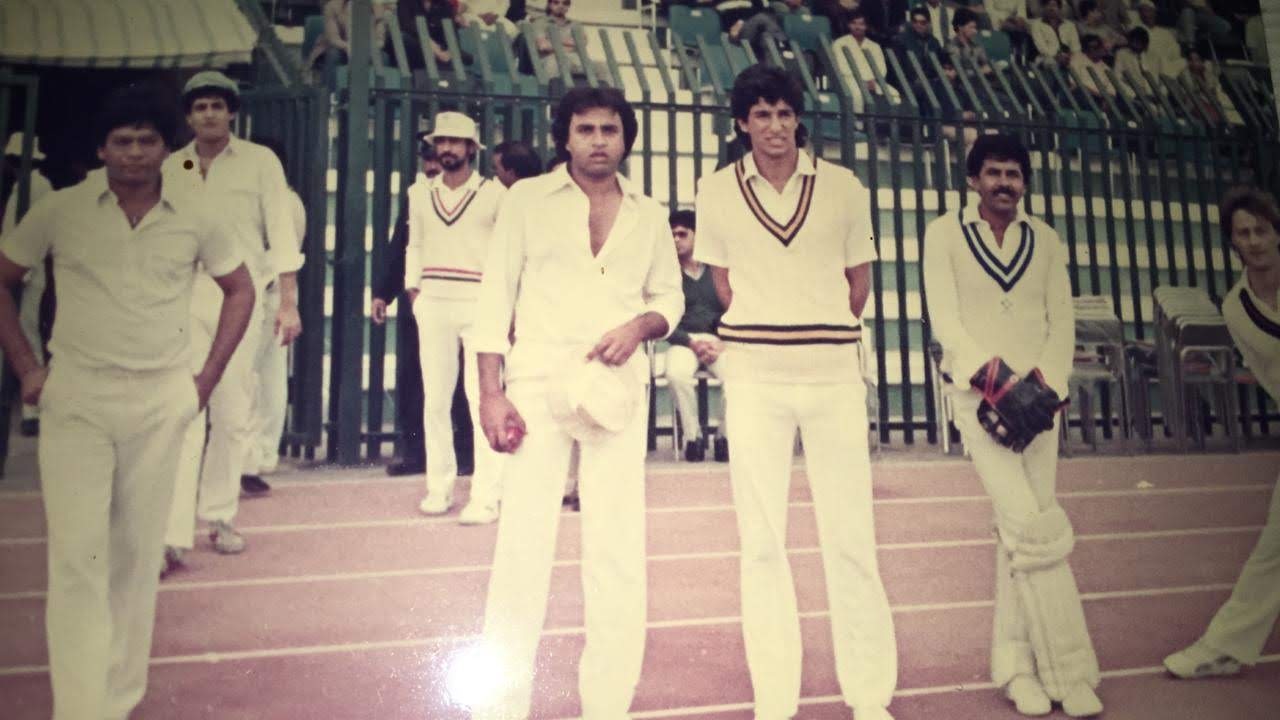
Ghulam Mohiuddin with Waseem Akram in a charity cricket match.
His contributions have been recognized at both state and industry levels. In 2020, he was awarded the Pride of Performance, one of Pakistan’s highest civilian honours, by the President of Pakistan for his outstanding services to the film industry. Beyond government recognition, he has won numerous Nigar Awards, often referred to as Pakistan’s Oscars.
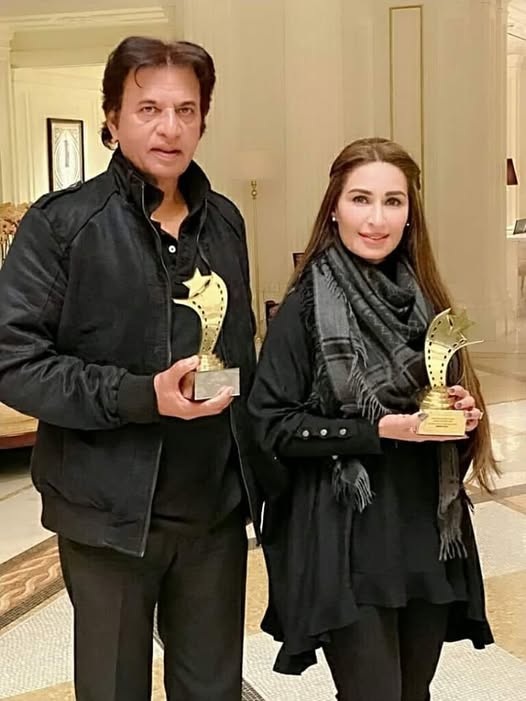
Ghulam Mohiuddin and Reema Khan at Pakistan Int'l Screen Awards Ceremony in Dubai.
Today, Ghulam Mohiuddin stands as a living legend of Pakistani cinema, an actor whose career has spanned genres, languages and mediums. Despite the passage of time, he remains active, passionate, and full of energy. As he often says, he is still “young at heart,” and indeed, he can still give the younger generation a run for their money.
Five decades on, his journey continues, not merely as an actor but as an enduring symbol of the resilience and spirit of Pakistani cinema.
You may also like:

From the Horn of Africa to Bahria Town: Habesha Café Brings Centuries of Coffee Culture to Rawalpindi
(October 15, 2026)