Written by: Amna Naseem
Posted on: December 02, 2025 |  | 中文
| 中文
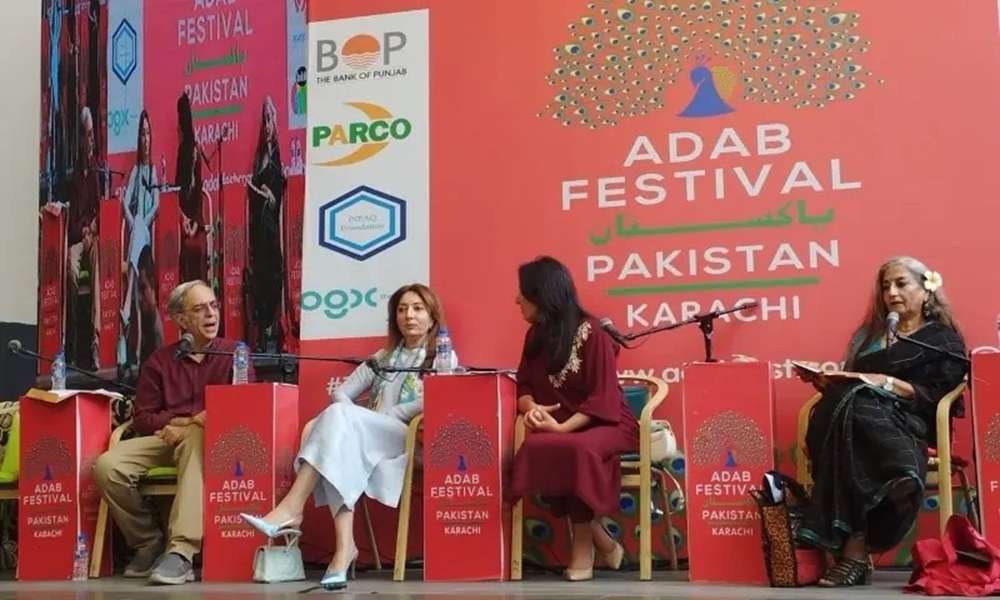
(L to R) Journalist Zarrar Khuhro, Sharmila Faruqui, Saira Awan Malik and Sheema Kermani at Adab Festival 2025.
Pakistan has long been a nation that deeply cherishes its languages, cultural heritage and artistic traditions. From poetry and literature to visual and performing arts, the country continues to create meaningful spaces for people to celebrate and preserve the cultural identity that defines us. This commitment is reflected in the many literary and artistic festivals held throughout the year, including the Karachi Literature Festival (KLF), the Lahore Literary Festival, the Aalmi Urdu Conference, the Islamabad Art Festival, the Children’s Literary Festival (CLF) and the World Culture Festival, each contributing in its own way to nurturing creativity and sustaining Pakistan’s literary legacy.
Among these major cultural platforms, the Adab Festival has emerged as a particularly significant annual gathering. Earlier this week, Karachi hosted its 10th edition (a two-day celebration on November 22 and 23) at Habitt City, bringing together writers, journalists, artists, poets, academics and enthusiasts from across the country and abroad. With its diverse programme and strong public participation, the festival once again demonstrated why it remains one of Pakistan’s most anticipated cultural events.
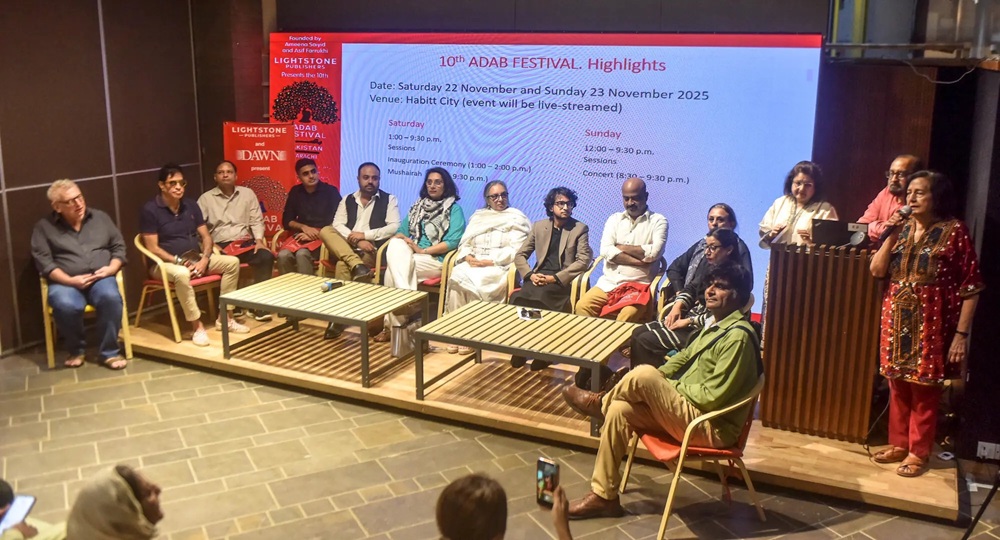
Ameena Saiyid (extreme right) speaking during the festival
The festival opened with an impressive variety of sessions. Early discussions delved into Karachi’s evolving art landscape, including a documentary-based conversation about the city’s creative direction and the forthcoming Karachi Biennale 2027. Curators and experts reflected on how the city’s identity shapes its arts, and how art in turn influences public imagination.
Celebrating Pakistan’s literary heritage was another central theme. One session revisited the iconic figure of Heer from the classic romance Heer Ranjha, exploring her narrative through a contemporary feminist lens. Alongside these traditional subjects, modern literary voices were also highlighted. Nadya Chishty-Mujahid discussed her novel Perennial College Tales, sharing insights into university life and the complexities of youth. Another notable panel, titled Hum Gunahgar Aurtain (We Sinful Women), brought together renowned poet Kishwar Naheed with other writers and scholars for a candid exploration of gender, societal expectations and creative expression, enriched by poetry recitations and classical dance.
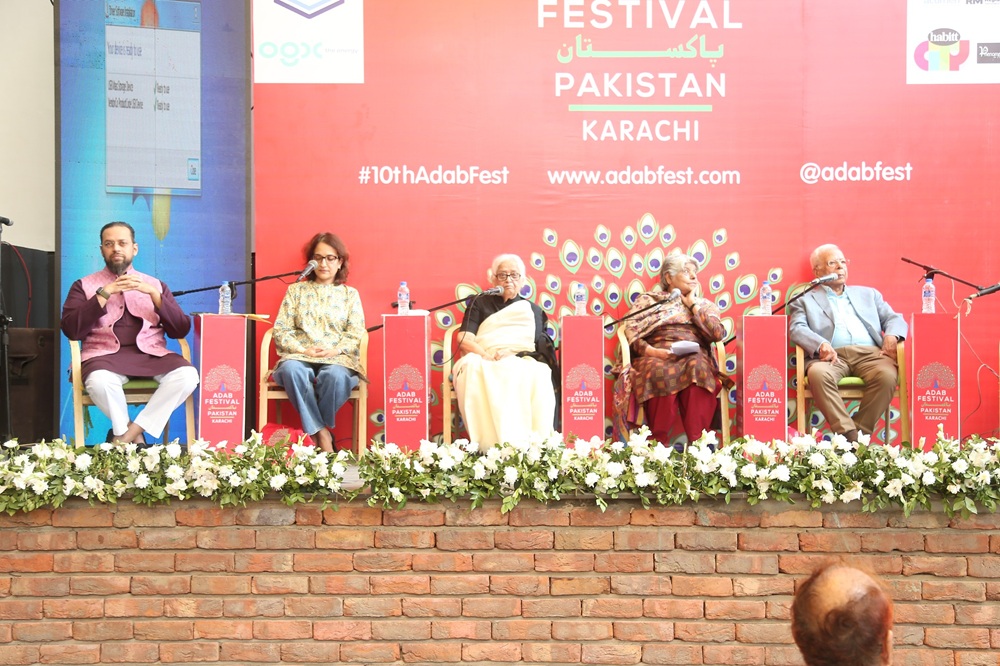
Shandana Minhas, Zehra Nigah (center), Kishwar Naheed, Dr. Ishrat Huusain (extreme right) with other panelists at Adab Festival 2025.
Poetry remained a cornerstone of the festival. The first evening hosted multilingual mushairas showcasing Pakistan’s linguistic richness, with poets performing in Siraiki, Balochi, Sindhi, Punjabi, Pashto, Burushaski and Balti. This was followed by an Urdu-centric mushaira featuring prominent literary figures such as Anwar Shaoor, Peerzada Qasim, Afzal Ahmed Syed and Waheed Noor.
The second day was more focused on the cultural offerings with additional panel discussions, book launches and musical performances. Singer Zara Madani graced the stage with her vocals, while folk musician Saif Samejo closed the festival with a spirited finale.
Children and teenagers were given a dedicated space within the programme as well. The “Children’s Literature Strand” ran across both days and attracted families in large numbers. Storytelling sessions, puppet theatre, book-making workshops and theatre-based activities encouraged creativity among younger audiences, while a teen writing workshop called “The Storymakers Studio” offered a platform for budding authors.
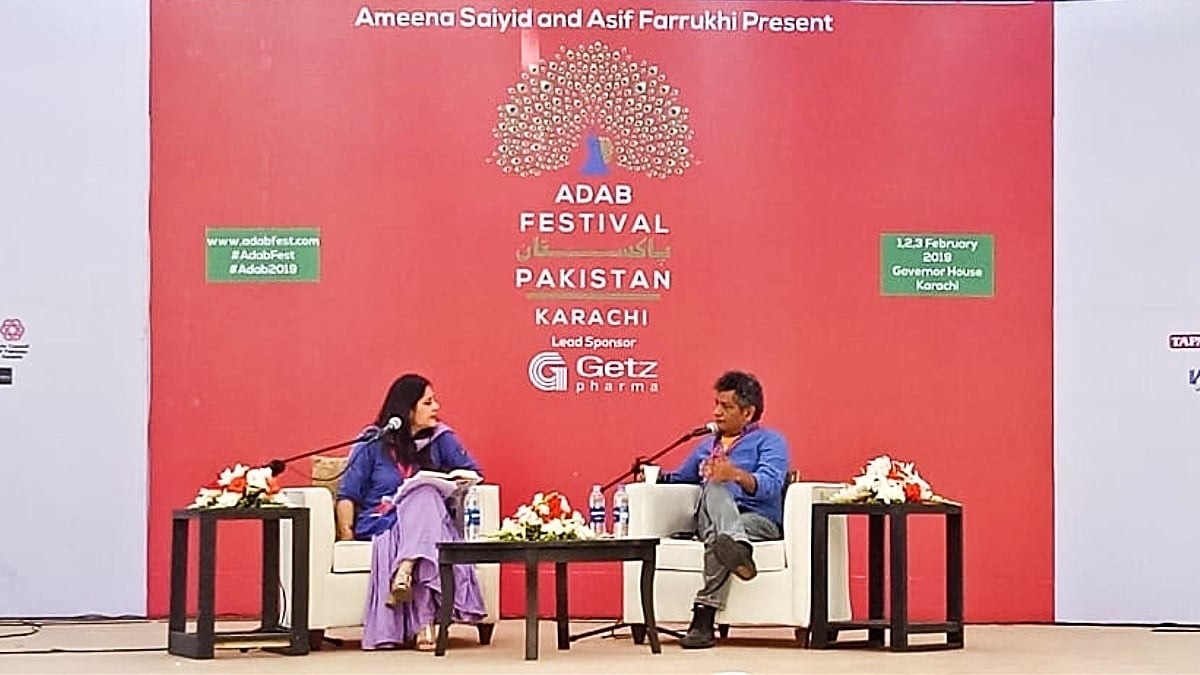
Muhammad Hanif speaking at the festival
Beyond art and entertainment, the festival also provided room for critical reflections on present-day challenges. A major session on artificial intelligence, titled “Designing Tomorrow with Artificial Intelligence,” provided deep-rooted discussion on the opportunities AI presents for education and publishing, especially in local languages, while also addressing concerns around ethics, digital inequality and responsible use.
Another significant discussion focused on journalism and the shifting media environment. Participants spoke openly about censorship, misinformation and the erosion of editorial freedom in the digital age. A separate panel explored Pakistan’s film and television heritage, considering the social impact of storytelling on collective identity and cultural values.
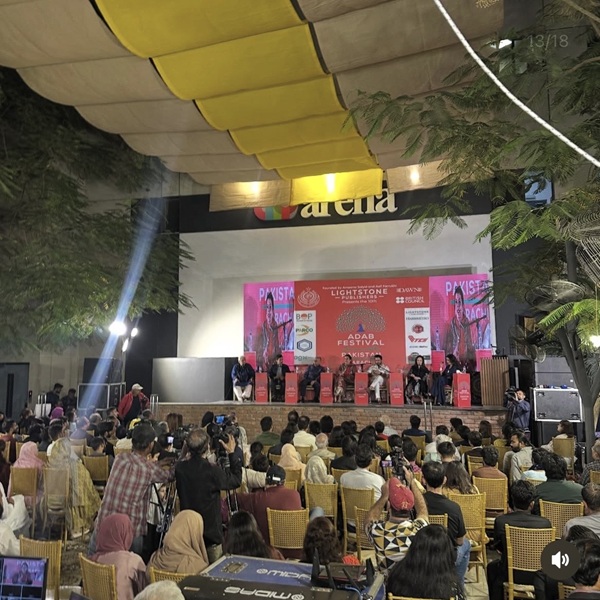
Audience and panelists in a session
The festival also held a special session to remember those who contributed to Pakistan’s cultural and intellectual landscape but passed away over the past five years. The segment titled “Tum Yaad Aaye: In Memoriam (2020–2025)” paid tribute to such individuals through music, poetry and deeply personal recollections.
Throughout the weekend, book stalls, craft booths and publishing stands drew consistent crowds. Reading and literary revival are still a key focus of the festival's mission. Organisers reiterated their commitment to elevating writers and authors to the level of public recognition often given to entertainment celebrities, thereby nurturing a stronger culture of reading.
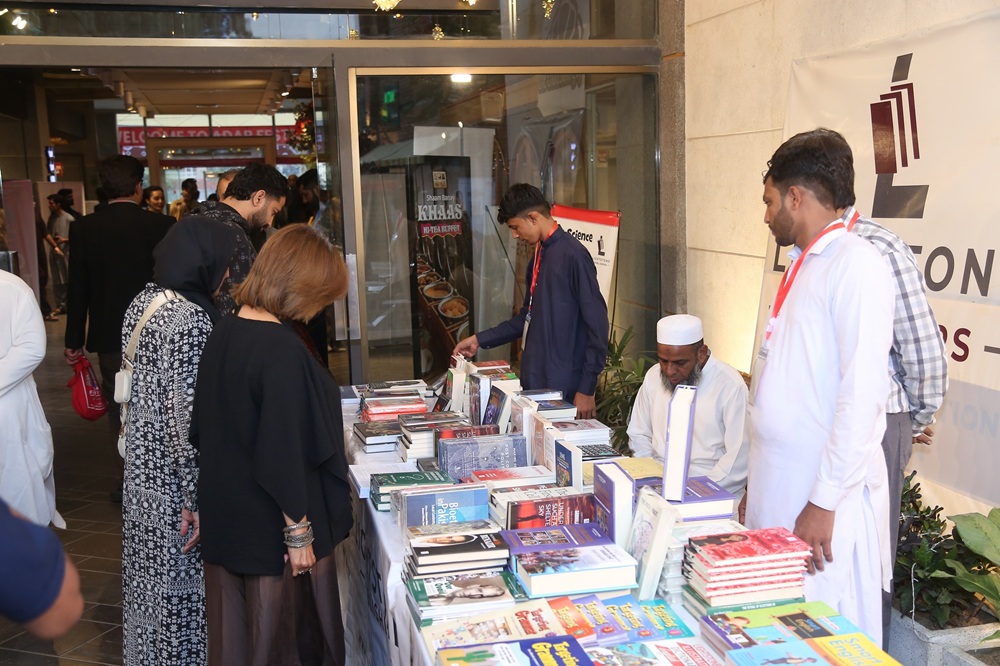
A book stall at Adab Festival
The 10th Adab Festival brought together poets, authors, artists, journalists, students, technologists, and families to showcase the richness and variety of Pakistan's cultural life. A welcoming and inclusive atmosphere was created by blending traditional aspects, like regional poetry and classical literature, with contemporary concerns, children's programming, and live performances. For Karachi, the festival served as a reminder that cultural expression, critical dialogue and literary appreciation continue to thrive. It reiterated that spaces that are dedicated to thought, creativity, and shared learning are crucial in sustaining the country's intellectual and artistic fabric.
You may also like:
From the Horn of Africa to Bahria Town: Habesha Café Brings Centuries of Coffee Culture to Rawalpindi
(October 15, 2026)