Written by: Muhammad Suhayb
Posted on: April 27, 2026 |  | 中文
| 中文
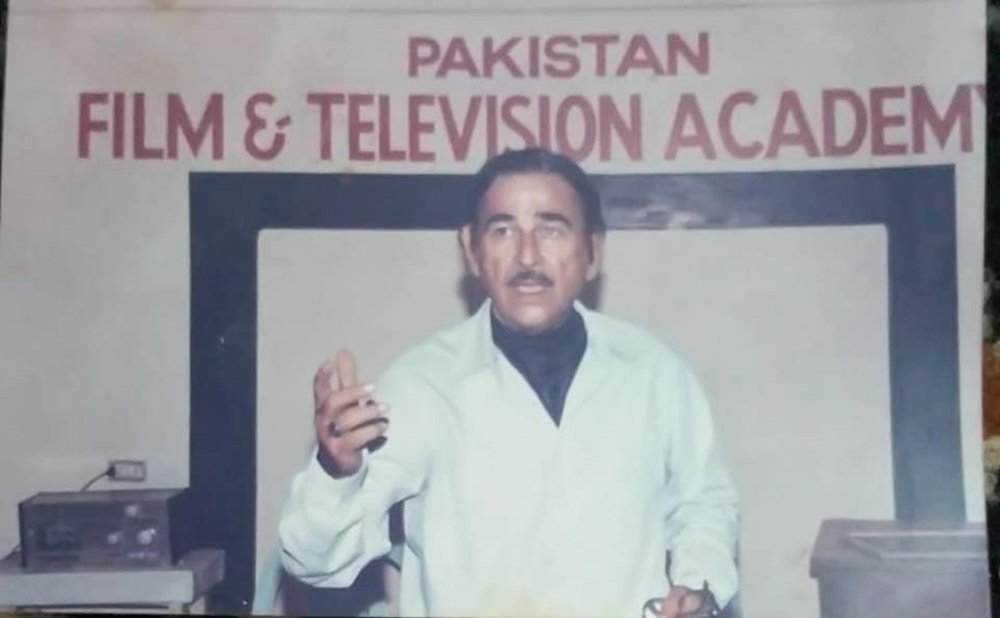
Syed Kamal's acting academy
Whenever the history of Pakistan’s film industry is revisited, one cannot overlook the towering presence of Syed Kamal and the evergreen playback singer Ahmed Rushdi. Songs like “Muhabbat Mein Tere Sar Ki Qasam,” “Hello Hello Mister Abdul Ghani,” “Baray Sangdil Ho,” “Tukra Woh Chand Ka,” “Aaj Is Shehr Mein,” and “Tujhay Apnay Dil Se” continue to echo in collective memory.
What many don’t realize is that the two shared a bond far deeper than their professional collaborations. Born just days apart in different parts of undivided India, they rose almost in tandem, leaving an indelible mark on Pakistan’s cinematic and musical landscape. Kamal, initially seen as a reflection of Indian showman Raj Kapoor, soon carved out his own identity through a diverse body of work across genres. Rushdi, inspired by Bollywood legends such as Muhammad Rafi, developed into a voice uniquely his own—one that would define an entire era of Pakistani film music.
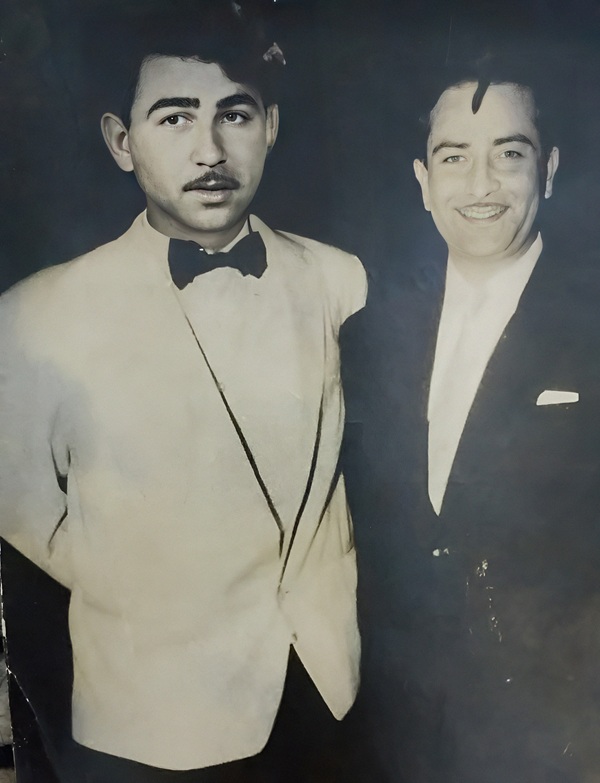
Syed Kamal and Raj Kapoor
Born just three days apart—Ahmed Rushdi (born Syed Ahmed Rashid on 24 April 1934 in Hyderabad Deccan) and Syed Kamal (born on 27 April 1934 in Meerut)—their parallel journeys often felt like that of soul brothers. Strangely, their inspirations were also closely aligned in timing, as Raj Kapoor and Rafi too were born in December 1924, just days apart.
Both Kamal and Rushdi were introduced by producer Shabab Kiranvi in different films in 1957, marking the beginning of careers that would span nearly three decades, concluding in the mid-1980s. Pioneers in their own right, they were also among the first of their generation to transition successfully to television. Despite spending much of their professional lives in Lahore, both eventually retired in Karachi, bringing their journeys full circle.
Rushdi became the defining voice of an era, effortlessly moving between playful pop and deep romance, setting a standard few could match. He not only lent his voice to stars like Waheed Murad, Muhammad Ali, Kamal, and Nadeem, but also helped shape the very identity of playback singing in South Asian cinema. His versatility and unmistakable tone made songs like Ko Ko Korina and Aisa Bhi Hai Mehboob timeless. Rushdi did not merely sing, he defined the sound of a generation.
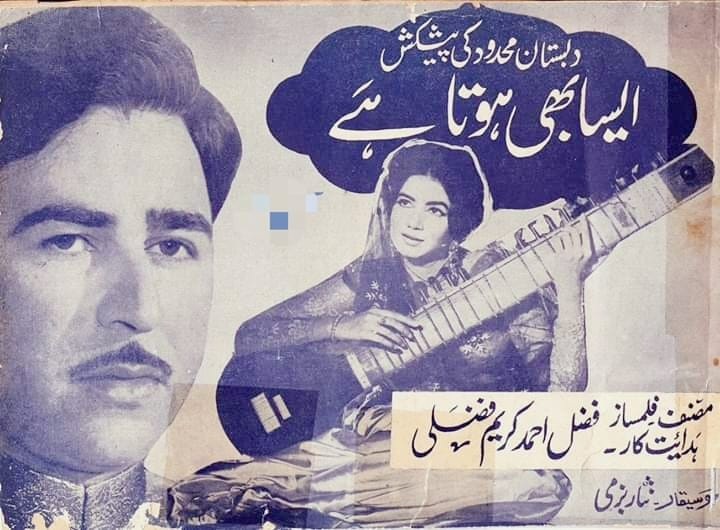
Aisa Bhi Hota Hai
As the industry evolved and regional shifts affected cinema in East and West Pakistan, Rushdi adapted, moving into television and advertisements. His memorable appearances in commercials such as “Chaaye Chaaye” and “Yamaha Japani,” along with his television program Bazm-e-Rushdi, where he performed and danced to his own songs, further expanded his reach beyond film music.
For Syed Kamal, the trajectory was equally compelling. After emerging as a Raj Kapoor lookalike in his debut film Thandi Sarak (1957), he gained recognition with Apna Paraya (1959). His striking screen presence soon led to a string of successful films. Writer and producer Ali Sufyan Afaqi famously compared him more to Errol Flynn than to conventional South Asian stars, noting that Kamal possessed all the essential qualities of a true screen icon.
This phase saw a fruitful collaboration with director Iqbal Yusuf, music director Muslehuddin, and playback singer Ahmed Rushdi. Films such as Zamana Kya Kahega, Daal Mein Kala, Dil Ne Tujhay Maan Liya, Nehlay Pe Dehla, and Joker not only succeeded commercially but also produced memorable soundtracks. Whether it was “Kaisa Safar Hai,” “Raat Saloni Aayi,” “Kyun Huzoor Kyun,” “Gori Zara Yun,” or “Palkon Ki Ghani Chhaon,” the synergy between Kamal and Rushdi defined the 1960s, making them almost inseparable in the public imagination.
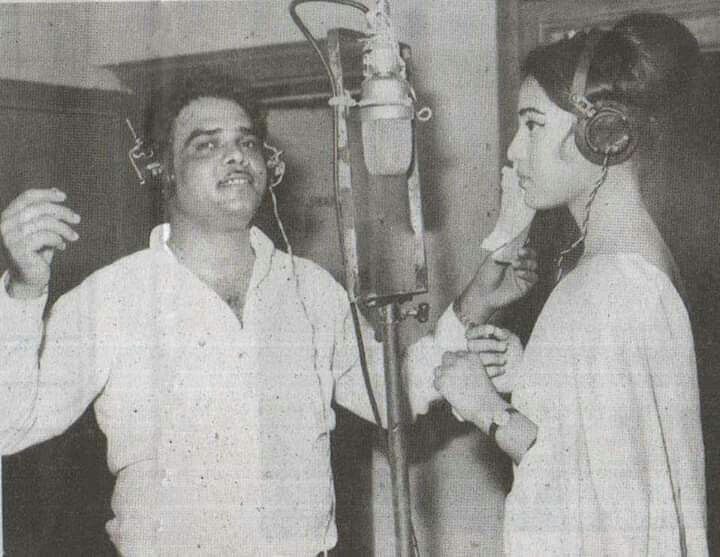
Rushdi singing a song
Kamal was known for his insistence on having Rushdi as his playback voice whenever possible, believing that Rushdi’s expressive tone perfectly matched his screen persona. This collaboration resulted in over a hundred songs picturized on him, despite a relatively modest filmography.
A pioneer in many respects, Kamal played the lead in Pakistan’s first road movie Road to Swat and became one of the earliest actor-producers to experiment with filmmaking outside studio constraints. Working on limited budgets, he emphasized real locations over elaborate sets. For his production Joker, he even utilized a travelling circus for stunt sequences and repurposed existing sets to maintain authenticity and cost efficiency.
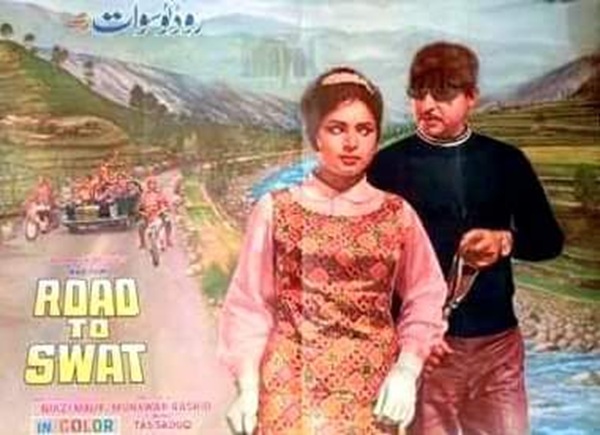
Road to Swat
He was also among the first to take Pakistani cinema abroad as a producer. Films like Honeymoon (Far East), Yahan Se Wahan Tak (Europe, Canada, USA), and Jatt Kamla Gaya Dubai (UAE) reflected his forward-looking vision and international ambition.
Kamal further balanced commercial success with thematic depth. His productions Aakhri Hamla (1972) and Insaan Aur Gadha (1973) stood out for their meaningful narratives—the former addressing the East–West divide, and the latter inspired by Krishan Chander’s Ek Gadhe Ki Sarguzasht. Both films reportedly brought him into conflict with authorities, highlighting the risks he took in pushing creative and political boundaries.
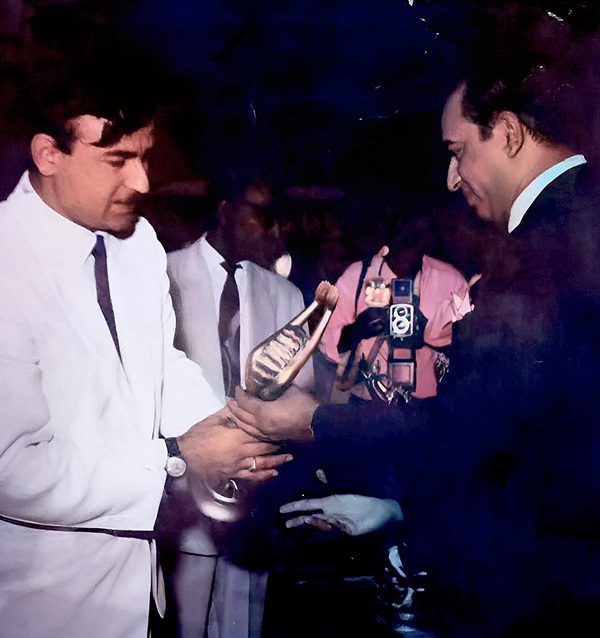
Syed Kamal getting award from Zulfiqar Ali Bhutto
Kamal embraced television early, launching Kamal Ka Show, a pioneering entertainment program that combined interviews, skits, and behind-the-scenes access to film sets and industry figures. The show ran successfully for over a year and a half, though it gradually distanced him from mainstream cinema.
Warned that he cannot return as a ‘hero’ in films, Kamal opted for Punjabi cinema. Despite not being a native speaker, he produced hits such as Jatt Kuriyan Ton Darda (1976), followed by Ajj Diyaan Kuriyan and Kal De Munde, among the earliest examples of sequel-like storytelling in Pakistani cinema.
After Yahan Se Wahan Tak (1979), Kamal was invited for an international project in Sharjah but ‘evil forces’ followed. He was replaced by Ghazanfar Ali, a PTV director to make ‘Doosra Kinara’ with no film experience. The film had Javed Shaikh and Shafi Muhammad in the lead with Indian actress Deepti Naval, though completed, the end result is still lying in the cans, unreleased. Kamal turned his focus toward his final film, Mashriq Maghrib (1985) which also marked the last occasion Rushdi lent his voice to him, with the song “Aayi Rut Mastani, Kahe Nakhre Kare,” symbolically closing their long creative partnership.
Kamal later briefly entered politics, driven more by idealism than ambition. Like the gentle “tramp” persona often associated with Raj Kapoor, he remained an anari at heart, someone who learned everything but hoshiyari. His political experience found reflection in his film Siyaasat, though it also distanced him from the cinematic world he had long defined.
After leaving films, Kamal devoted himself to nurturing new talent. He established an acting academy in the 1990s, training aspiring actors and singers. His television initiative Take 2 Acting Challenge on NTM revived public excitement around talent-based programming, echoing the popularity once enjoyed by Kamal Ka Show.
In the end, Syed Kamal’s life comes full circle as a story of brilliance, resilience, and quiet dignity. His final years may have unfolded away from the limelight, but his presence never truly faded—it lived on in his films, his risks and the paths he carved for others.
His journey was never confined to cinema alone; it was inseparable from the story of Pakistan itself. As a teenager during independence in 1947, he stood among crowds raising slogans of hope— “Le ke rahenge Pakistan”—embodying the optimism of a generation that believed in a new beginning. That same spirit defined his artistic life: pioneering, evolving, and striving to give Pakistani cinema depth and direction.
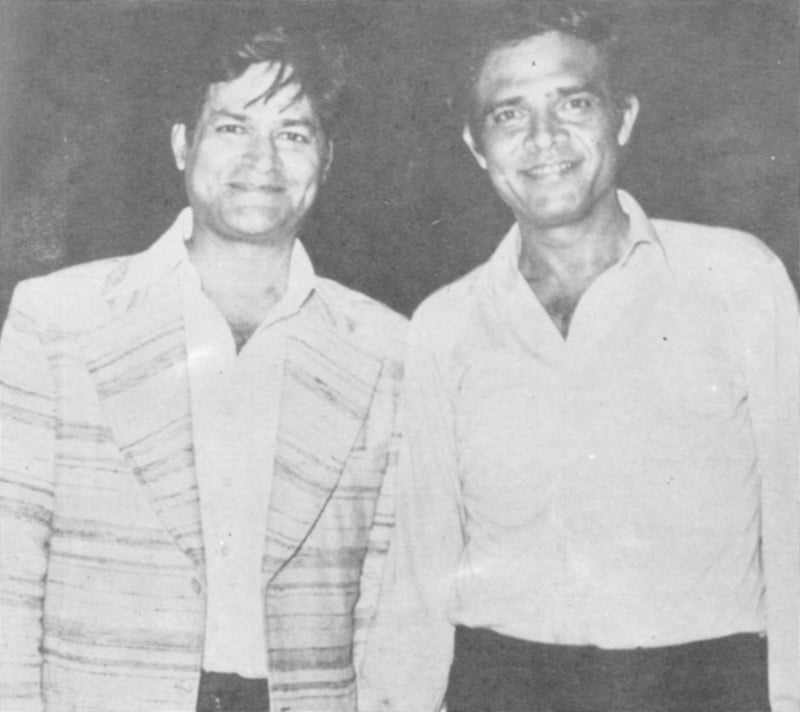
Sohail Rana and Ahmed Rushdi
His creative world was inseparably shaped by Ahmed Rushdi, who passed away in 1983 with little recognition at the time. Two decades later, in 2003, Rushdi was posthumously awarded the Sitara-e-Imtiaz by then-president Pervez Musharraf, acknowledging a legacy that had already become foundational to Pakistani film music.
Syed Kamal himself passed away in 2009, leaving behind a body of work that continues to speak for him. One is left with the hope that recognition does not always arrive in hindsight—and that his due acknowledgment, too, will not be delayed for another generation.
You may also like:
From the Horn of Africa to Bahria Town: Habesha Café Brings Centuries of Coffee Culture to Rawalpindi
(October 15, 2026)