Written by: Dr. Dushka H. Saiyid
Posted on: February 04, 2026 |  | 中文
| 中文
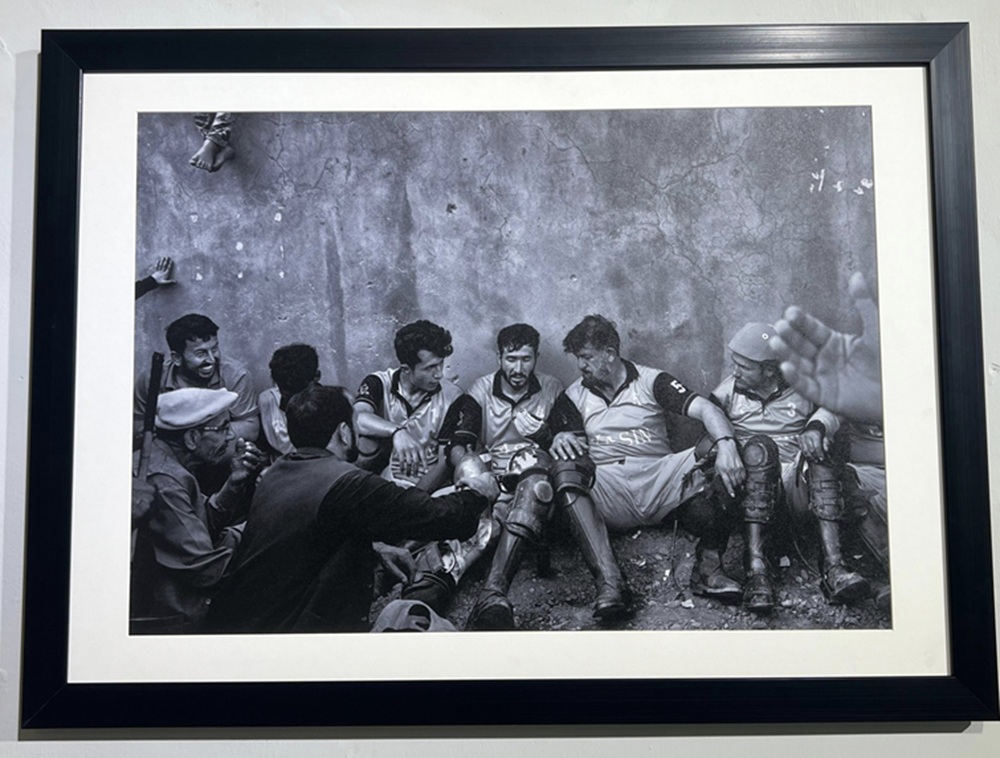
Yasin's freestyle polo team has just lost to the army team. This equestrian sport originated in central Asia around the 6th century BC. It was intended to train cavalry and stimulate combat.
Cédric Gerbehaye is a Belgian Award-winning documentary photographer and filmmaker. He has had his work regularly published in the National Geographic magazine, and his work on Kashmir was published as a double spread in the magazine. Mr. Gerbehaye has photographed the human conditions in the Democratic Republic of Congo, South Sudan, Azad Jammu Kashmir, and Indian-occupied Jammu and Kashmir. Cédric Gerbehaye recently launched his exhibition and pictorial book ‘Kashmir: Wait and See’ at the Pakistan Council of Arts. At the launch of the exhibition, Mr. Gerbehaye showed the author around and kindly consented to a sit-down interview at the author's home for Youlinmagazine.com.
Cédric: So I first visited Kashmir in 2017, and the reason why I came to Kashmir is because I saw an article in the French-speaking newspaper called ‘Libération’ – Liberation, and I felt there were some parallels with the Intifada in Palestine. I was already a journalist at that time, but as a journalist, you cannot be informed about everything. And as always in my project, I’m interested when I don’t know something. So I had initial questions. How come? How is it possible? Since when is it happening? What is the real reason of such situation? And as in all my previous projects, it is the will to understand that brings me to the place. And the only way to understand as a photographer is to travel, go to the place, listen to the people, see, and feel. And for me it’s very important. It’s through feelings that you can try to understand a situation by sharing the daily lives of the people. I think it is ordinary people living extraordinary circumstances, and that is what always moves me and makes me travel and invest myself personally in a project because most of my projects are personal projects. I’m independent. I am not assigned it. I am not being asked to work on that, and that has a price, the price of independence. You need to find the fundings, you need to write files to get grants, and sometimes you can ask some media, newspaper, or magazine to help you to produce the work. That’s why I prefer to say that I’m a documentary photographer than a journalist. Being a documentary photographer requires more time. As a photojournalist, you can be assigned and you can work, but the length or the period of time of the work is less important. When you want to document it, it requires more time from the person.
Cédric: So as I said, I started in March 2017 and went back on the anniversary of the independence in the summer. That was my second stay, and it was for National Geographic. Then I went back, and later I postponed my flight to come to AJK because of the Covid Pandemic. Afterwards, I came back to this part of Kashmir in 2021 for 3 trips, and I started working along the line of control in the villages that are in the Neelum Valley, where the situation is very different, where the people sometimes have to hide in bunkers that they construct next to their houses. In some places, the villagers don’t even know where the border is. It’s not marked. It’s totally unknown. And they are receiving the mortar fire and the shrapnel.
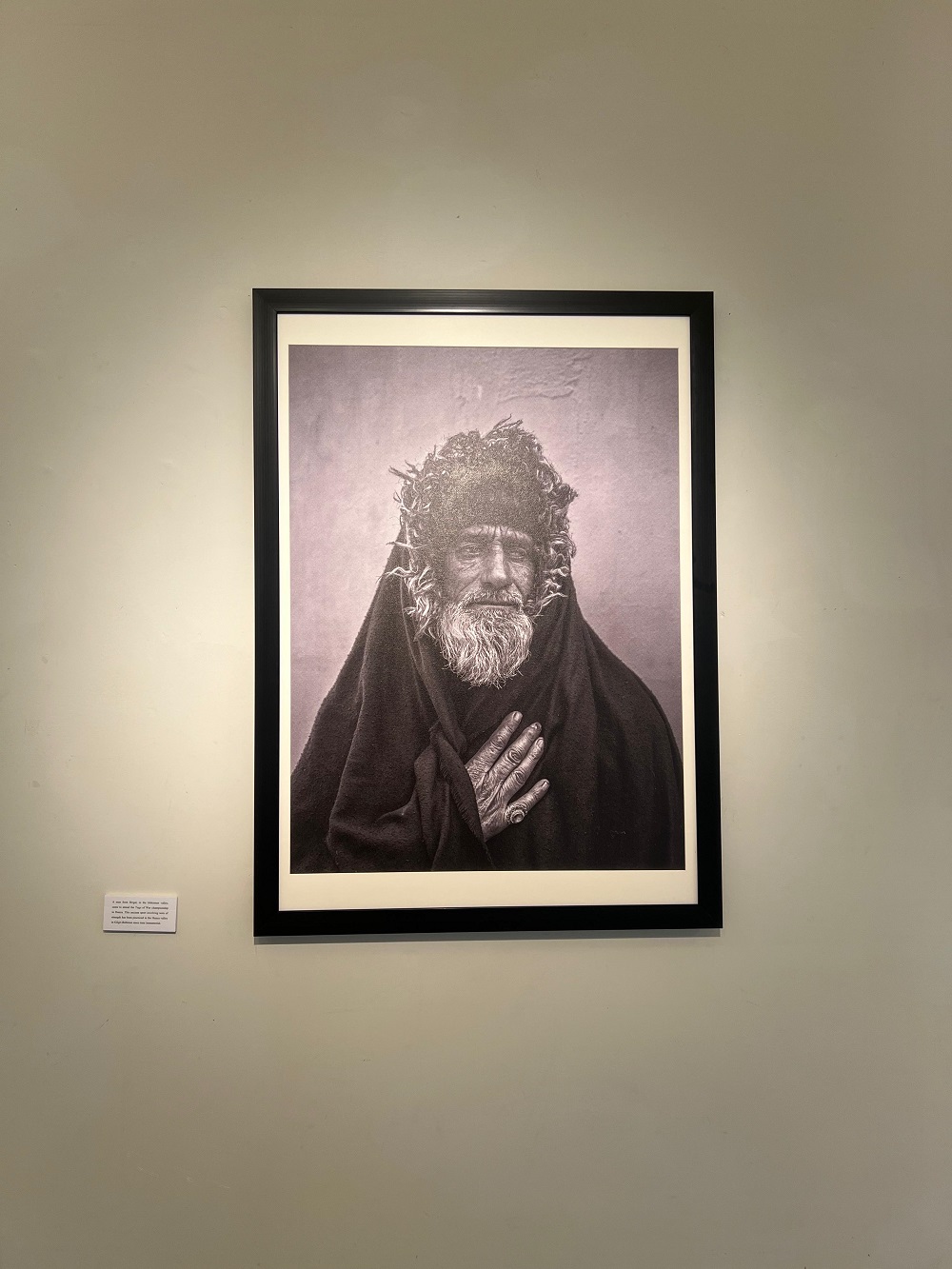
A man from Birgal, in the Ishkoman valley, came to attend the Tugs of War championship in Hunza. This ancient sport involving tests of strength has been practiced in the Hunza Valley in Gilgit-Baltistan since time immemorial.
Cédric: So 2017, two times in Indian -administrated Kashmir, and then from 2020 to 2022, I made three visits to AJK, Azad Jammu and Kashmir, and that’s when I travelled to the LOC in the village. I went to Muzaffarabad, I went to Mirpur, I went to Chakoti, and I followed the Neelum Valley up until the north. And then there’s a round of three other trips in 2023 and 2024 in GB; in Gilgit -Baltistan. I have worked in Gilgit city, in Skardu, in villages, in different valleys, in different districts, in Yasin, in the Chipursan valley, as well as in Hunza, where you have many cultural activities like the dancing with the Wahi people, the Balti people, the Ismaili people, the followers of the Aga Khan also, and I was lucky also to meet the Rajas. You know that that area was ruled by royal family and rajas, and they were in power at the time of the Britishers, and for me, going to that region was including the Kashmir under the former rule of the Maharaja.
Cédric: It’s not related to the image itself. It’s always related to the moment. It’s related to what people have shared with me. So it’s pretty much about the relation that is being built. You cannot do such kind of photography if you don’t get access to the people, if you don’t get close. This is the distance that I photograph. (as we were sitting opposite at a dining table) Maybe I would go at the end of the table, but further it’s too far away. So I need to be close to the people, and that means that I will use a wide angle with my camera so that you, as a viewer you can feel that you are part of what you see. So I want you to be close. I want you to connect with the people, with what they experience, what they live, and sometimes what they suffer. As you have seen, when we made the tour of the exhibition, I explained to you the eyes are very important. Because the best way to connect to human beings is to connect through eye contact. And this eye contact is very important.
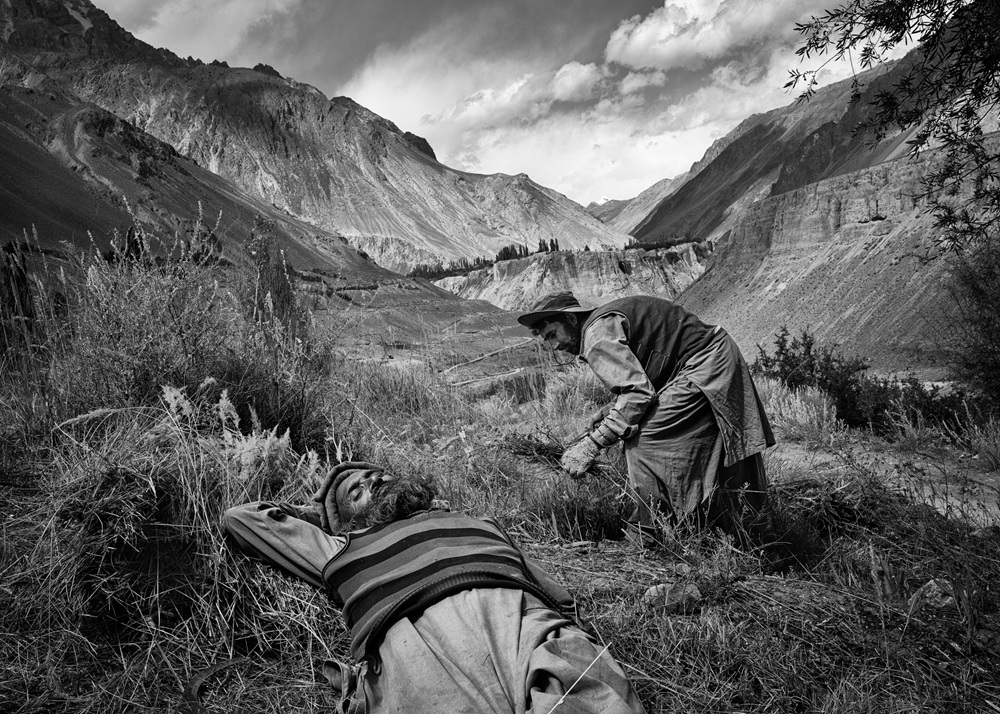
A man takes a nap while his friend cuts grass for the animals in the Chipursan Valley, Hunza District.
Cédric: So as I said before, I was interested in a region that I didn’t know. So it’s a means of understanding. I use a camera to explore, right? It gives me a reason to be there. It’s choice of life, right? So you can make choices about your studies, you can make choices about who are your friends, and hopefully make a choice about your profession. If you want to be a lawyer, if you want to be a doctor, if you want to be a businessman. Of course, I’ve studied journalism. But by choosing to be a documentary photographer, I chose a life. I chose a life of traveling, meeting people, and going places where normally people don’t go. So I’m interested in that. It’s trying to unveil the realities of this problem.
Cédric: So that’s part of the editing process. That you produce every time you come back from your trip. So it is digital photographs, so they’re all on a hard drive, and these digital photographs, I am looking at them for hours and days and days and days because you have to build up a narration, you have to tell a story. So the choice you make is what constitutes the story you are building, your narration.
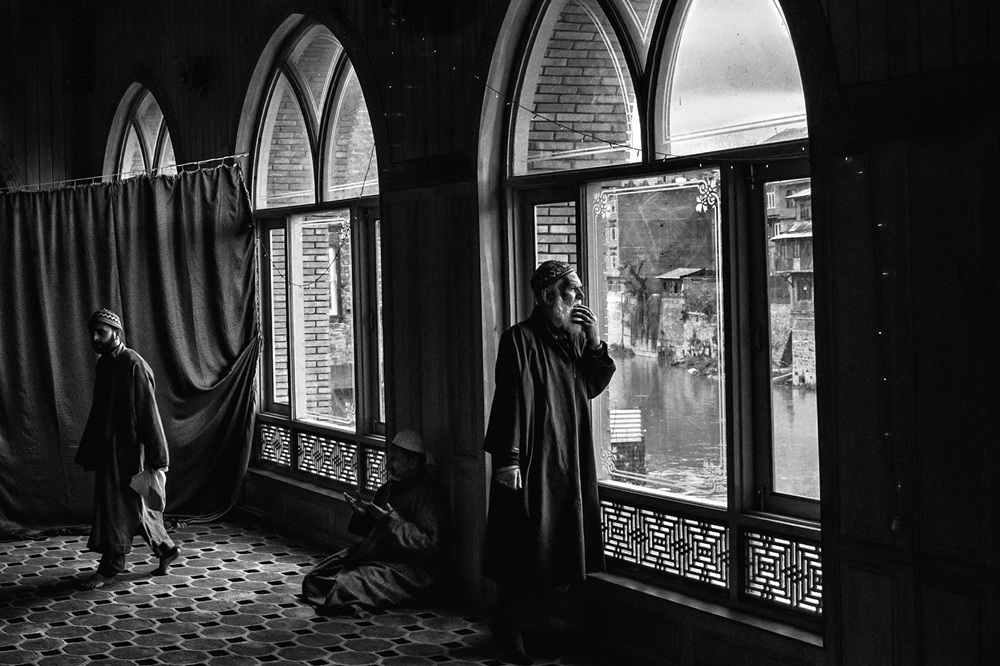
In Srinagar, inside the shrine of Bulbul Shah, a 14th-century Uyghur Sufi who introduced Islam to the region by converting the king of Kashmir, Rinchan Shah.
Cédric: So the story I built is based on what people are living on a daily basis. It could be the struggle, it could be the resilience, or it could be activities like what you’ve seen in some of the festivals, some of the championships, the tug of war, but also the people who are doing freestyle polo, it’s part of their identity. And for instance, when I show young kids playing cricket in Srinagar, I’m showing the importance of cricket culturally in both countries. We know that cricket is very important. These are all elements because I want to give key of understanding so that when you see the pictures, you might know about the people, but sometimes you might not, and I want you to ask yourself questions. My work as a documentary photographer is to raise questions. Whatever audience I’m trying to reach, it is great to be able to show the work here in Pakistan because it’s not that often that you can show the work in their place of origin. I have never done an exhibition in the Democratic Republic of Congo, for instance. Same for South Sudan. But also, you try to reach an audience back home, that’s in Europe, in Belgium, for instance. And you reach an audience with the press, with the magazines, with the newspapers, you can reach an audience with a book, and then another audience with the exhibition.
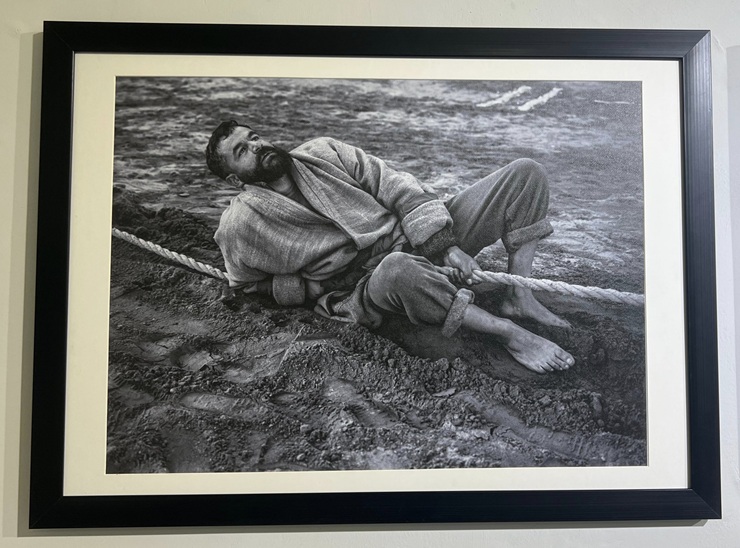
A member of the Aliabad Team at the Tugs of War Championship in Hunza takes part in the Tug of War showdown. These tests of strength have been practiced in Hunza since time immemorial.
Cédric: So, each trip is different because you get to know the people a little bit better, but in the end, on a daily basis, the program is changing. Sometimes you are working in a certain area, sometimes you work in another area, and you are meeting people. Sometime you have luck, sometimes you don’t. Maybe you are hoping to reach a place, and it doesn’t work out because there’s a landslide, for instance, so each trip is different.
Cédric: Well, the trips in Indian administrative Kashmir were very important to me because I was discovering a region, I was discovering a culture that I didn’t know. I had worked in Muslim countries, but coming to the north of India was very new to me, and I appreciated it a lot. When I came to Pakistan, the hospitality of the people touched me, moved me pretty much. But going north to Gilgit-Baltistan is really something else. You know Gilgit-Baltistan is the region in Pakistan where you have the least population. So it’s really vast. And you feel as a human being so small compared to the amazing landscape and the beauty of the mountains. And every time there’s a turn within a valley, there’s another view to discover. And that is amazing. Also, you know, for a photographer, we need light. Photography; “photo” in Greek means light, “graphy” means to write. So a photographer is the one who writes with the light. And what a beautiful opportunity it is to be in a place like those mountains, like the three different ranges, the Himalayas, the Hindukush, and the Karakoram ranges, where you have incredible light. So I feel very lucky to have been able to travel there and photograph with that specific light.
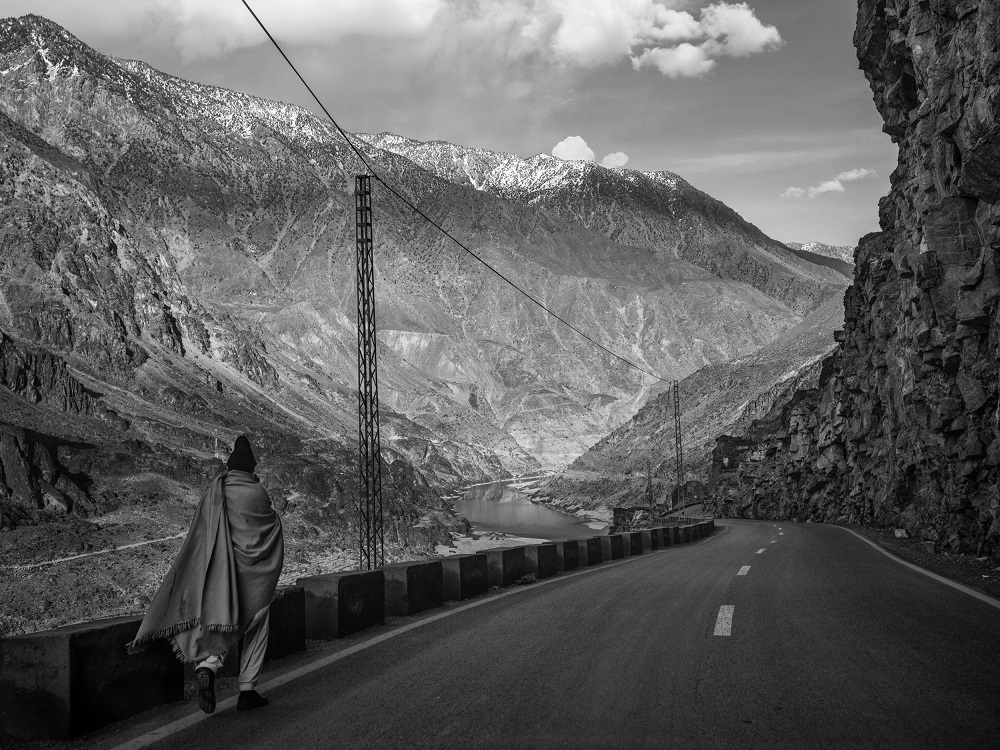
A villager walks along the Karakoram Highway (KKH), historically a caravan trail on the ancient Silk Road. Today, the KKH is part of the China-Pakistan Economic Corridor (CPEC), linking China to the port of Gwadar in the South.
Cédric: Okay, so it’s often questioned. People always ask me about why black and white. I follow the words of an Italian poet, his name is Moravia, saying that reality is in color, but black and white is more realistic. And that is the reason why I photograph in black and white, because I think that it goes to the essential. I don’t want to disturb with the beauty of the color. I want you to reach the emotions of the people directly
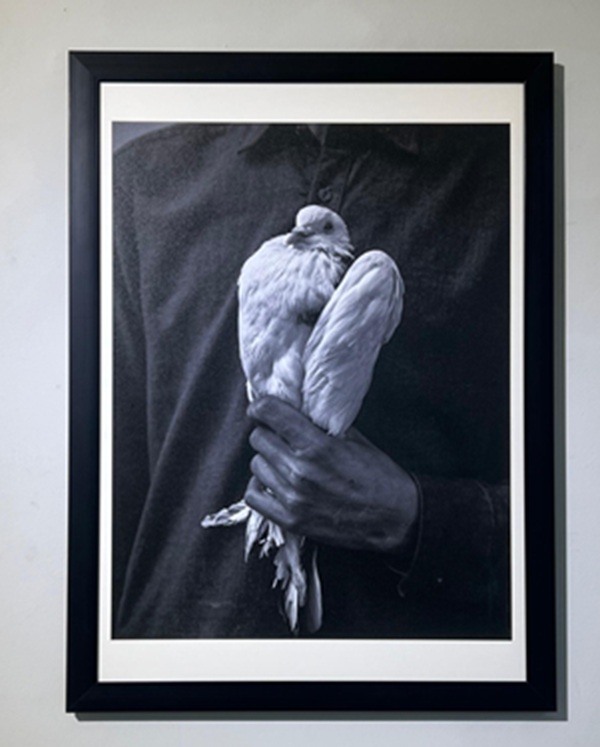
Calamba Khaplu, Ghanche District
Cédric: I would say the last ones. The ones that were in a 4x4, repeating the journey and having the possibility to discover the different valleys one after another. So, you know, in Gilgit-Baltistan you have different communities: Wakhi people, Balti people, Shina language and all of them have their specificities, and it’s really a pleasure to be hosted in these ancient houses of the Waki people, for instance, that get together around the fire. Every element changes the trip.
Cédric: What’s next for me? So I will finalize a book. It’s about a prison in the capital city of Europe, Brussels. I always have side projects, and I have been doing a documentary film inside the prison in Brussels. It was in my street where I used to live. I filmed for six years inside that prison. And at the end of the project, I got access to the archives of the prison. And with the archives of the first prisoners of that prison more than 100 years ago, I started the project, and I continued to photograph inside that prison. So now I’m preparing a book, an exhibition about that prison.
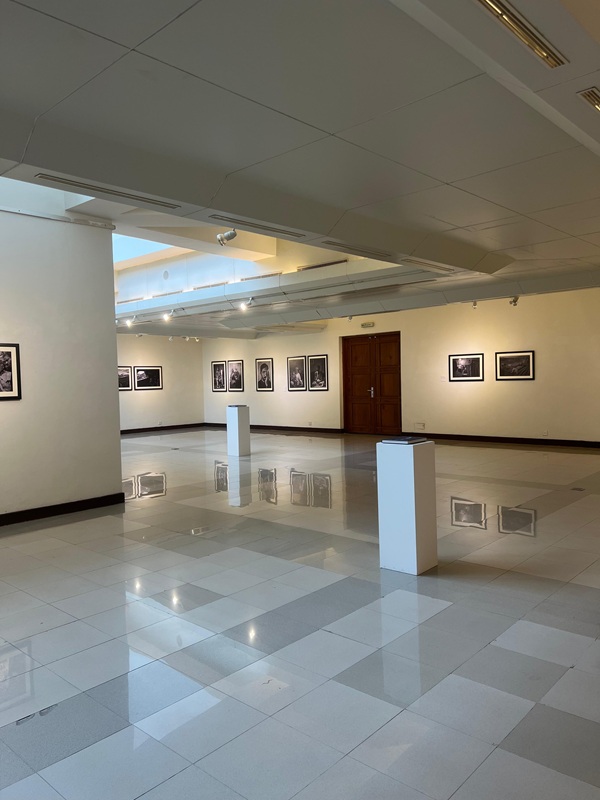
The 'Kashmir: Wait and See' exhibition at PNCA, Islamabad.
Cédric: Shukriya
You may also like: