Written by: Zulfiqar Ali Kalhoro
Posted on: March 09, 2026 |  | 中文
| 中文
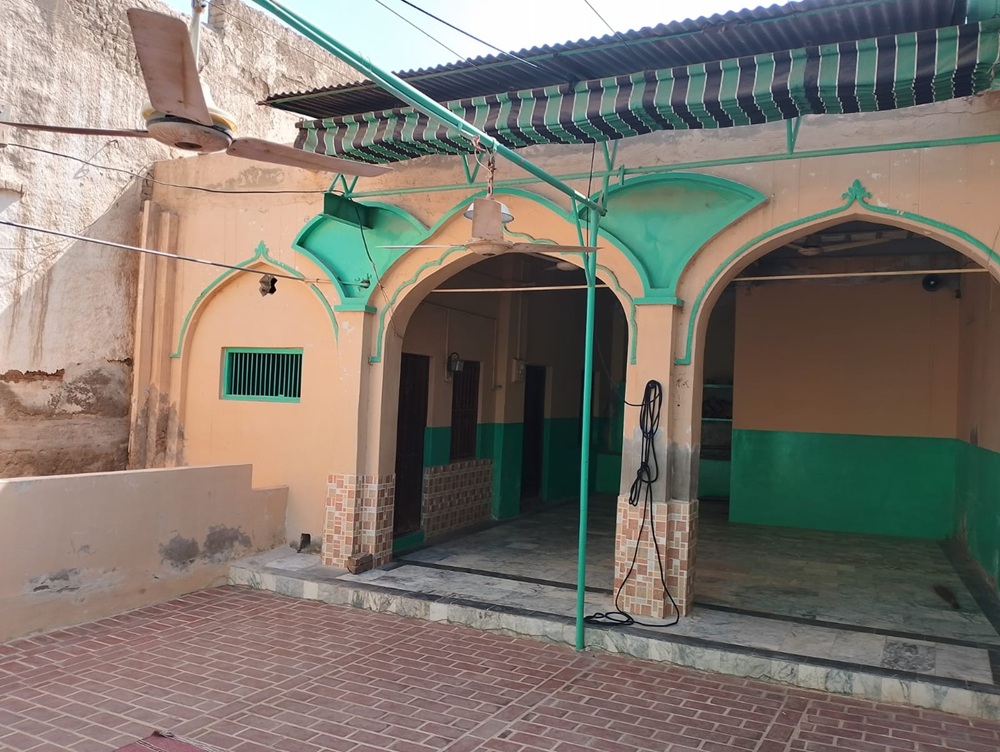
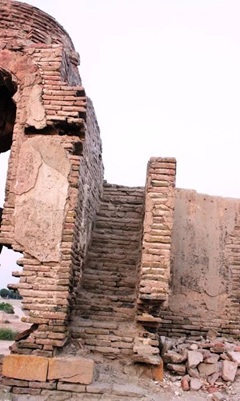
Hujra of Maulana Abdul Karim Chishti. (Picture credits to Aqeel Masroori)
Shikarpur has long been a cradle of knowledge and spirituality, giving birth to many eminent scholars, mystics, and intellectual luminaries who earned distinction in their respective fields. Among these distinguished figures stands Maulana Abdul Karim Chishti, a multifaceted religious scholar, political activist, educationist, and literary figure. He was not merely a religious scholar but also a guide, reformer, and mentor whose influence extended far beyond his immediate circle. Through his teachings, writings, and spiritual insight, he contributed to the intellectual and moral fabric of Shikarpur.
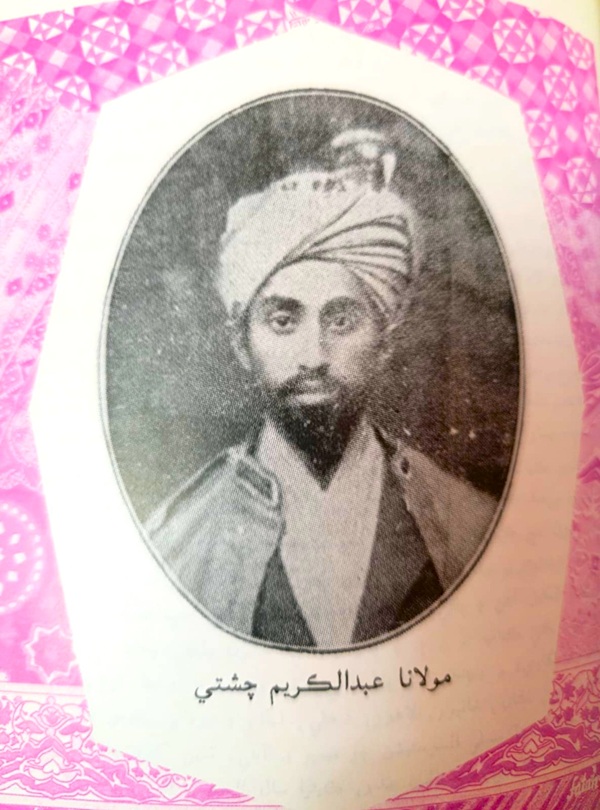
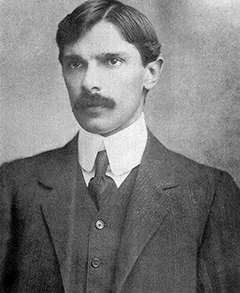
Photo of Maulana Abdul Karim (Courtsey, Sawaneh Hayat Mehran Quaterly 1958)
Several notable works by Dr. Anwar Fiqar Hakro, Professor Aminullah Alavi, Shahabuddin Chishti, and others provide detailed biographical accounts of Maulana Hakim Abdul Karim Chishti’s life, legacy, and contributions. According to Dr. Anwar Fiqar Hakro, the author of 'Sijj Jehra Pireen' (2018), Maulana Hakim Muhammad Abdul Karim Chishti was born in 1898 in Shikarpur. His father, Abdullah Chishti, was renowned for his piety and was a member of the family of Maulana Sahib Dino Chishti. He served as a deputy to Syed Amin Shah Chishti Sabiri, whose shrine is located in the Kiri Atta Muhammad neighborhood of Shikarpur.
Maulana Hakim Abdul Karim Chishti received his early education from Molvi Hafiz Abdul Rasool Chishti (d. 1902). After completing his initial studies, his father sent him to further his education under Khalifo Abdul Ghafoor, the son of Muhammad Akram Soomro. Khalifo Abdul Ghafoor was a learned scholar and an accomplished Hakim (physician).
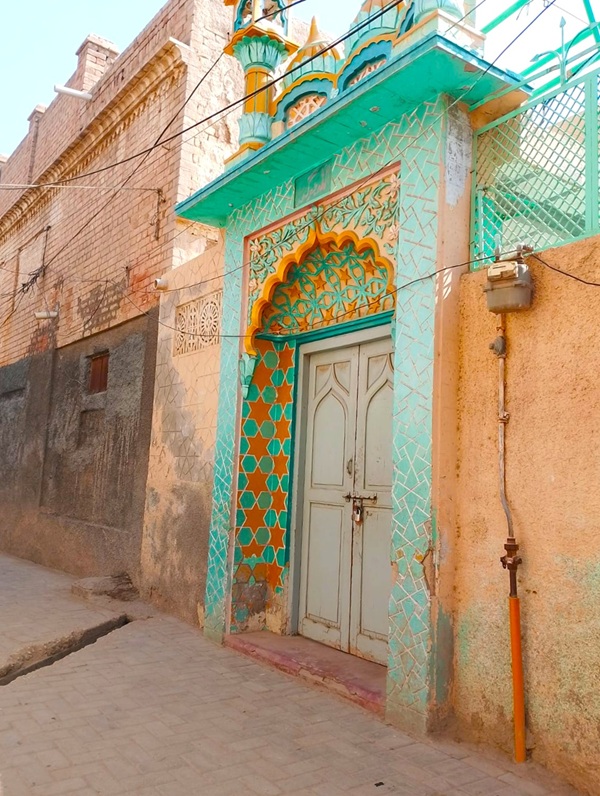
Main entrance to Maulana Abdul Karim Chishti Mosque, Shikarpur. (Picture credits to Aqeel Masroori)
Later, he was admitted to Victoria Jubilee Arabic School to pursue his Arabic studies, where he studied under the supervision of the distinguished scholar Maulana Abdul Rehman Memon. During his time at the school, he learned Fiqh, Tafsir, logic and literature from Maulana Memon, who was a distinguished religious scholar from Shikarpur, born in 1882 CE.
Maulana Hakim Abdul Karim Chishti also authored a biographical account of his teacher, Maulana Abdul Rehman Memon, which was published in a special issue of 'Sawaneh Hayat' in the Mehran Quarterly in 1958. According to Maulana Abdul Karim Chishti, Maulana Abdul Rehman died at the age of 40 on 8 Rabi al-Akhir, 1340 AH/December 7, 1921. He spiritually benefited from Molvi Hafiz Muhammad Hayat Qureshi and Allama Mufti Abdul aGhafoor Humayuni. Maulana Abdul Rehman Memon had many eminent students, including Maulana Abdul Karim Chishti, Hakim Fazalluh Soomro, Molvi Rehmatullah Memon, Pir Fazal Ahmad Sirhandi, and many others.
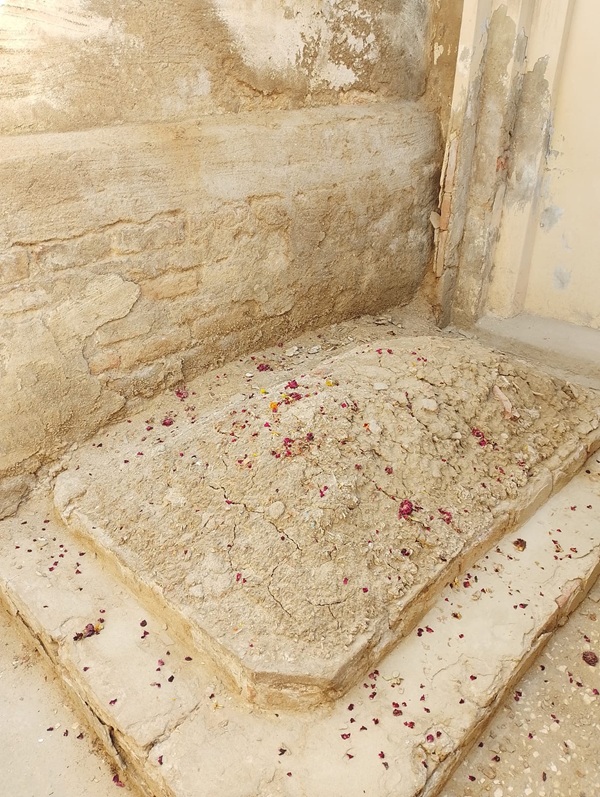
Grave of Maulana Abdul Karim Chishti. (Picture credits to Aqeel Masroori)
Maulana Hakim Abdul Karim Chishti completed his education in 1917. He also adopted the profession of Hikmat for a brief period. In 1336 AH (1917 CE), the first wave of freedom in India arose, and Maulana Abdul Karim Chishti joined the freedom movement from Shikarpur. In 1337 Hijri (1918 CE), he joined the Congress. Professor Aminullah Alavi (1984:121) states in the article "Shikarpur Ja Sufia Kiram," published in Shikarpur Mazi Ain Haal (Shikarpur: Past and Present), a book compiled by Dr. Memon Abdul Majeed Sindhi, that Maulana Abdul Karim Chishti became a member of the Khilafat committee in 1919. In 1920, he joined the Muslim League. He established Mahmudia Arabia Madrasa in 1921.
One learns from Shahabuddin Chishti's article, which was published in a special issue of Sawaneh Hayat of Mehran Quarterly 1958, that in 1924, Maulana Abdul Karim founded the “Anjuman Isha'at-e-Islam," whose purpose was to present the services and achievements of Islamic scholars before the public for the sake of Islam and the homeland. He worked for religious reform, aiming to remove un-Islamic traditions, and received public support. Maulana Abdul Karim Chishti actively participated in the independence movement and was once arrested after his speech in Jacobabad. He remained in jail for a month. After his release from jail, he continued his struggle. After some time, he was again arrested and imprisoned for 4 months.
With his continued preaching and struggle, he received public support. With his efforts, the Jaimat Ulema Suba Sindh meeting was held in 1923 in Shikarpur. It is said that over a hundred religious scholars participated in this meeting, which was presided over by Pir Ghulam Mujaddid (d.1958).
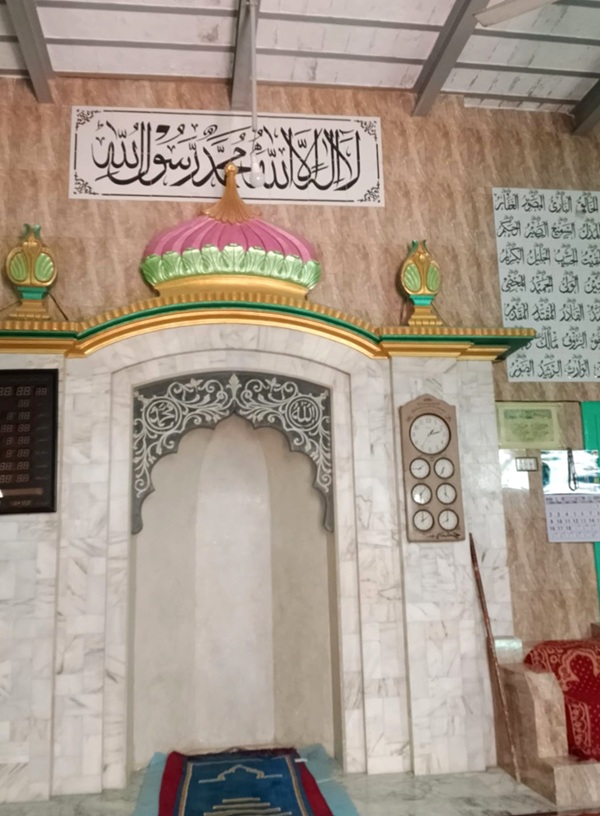
Interior view of Maulana Abdul Karim Chishti Mosque. (Picture credits to Aqeel Masroori)
According to Professor Aminullah Alavi (1984), Maulana Abdul Karim Chishti was actively engaged in journalism from 1927 to 1949. Shahabuddin Chishti (1958) believes that Maulana Abdul Karim Chishti authored 55 books, 7 in Persian and the rest in Sindhi. In 1950, at the 11th literary conference, he received the title of Subhan-e- Sindh (The Pride of Sindh). He also served as vice president and president of the Shikarpur municipality. Besides this, he was associated with several institutions.
In the early twentieth century, Maulana Abdul Karim Chishti emerged as one of the most influential religious figures in Sindh. With the passage of time, he became a focal point for the Muslim community, guiding them not only through scholarship but also through organized religious reform.
His stature rose further in 1926 (1345 AH) during the politically sensitive period of British rule. At a time when permission for Hajj required official approval, representatives of the Khilafat Committees were deputed. Owing to his integrity and scholarship, Maulana Abdul Karim Chishti was selected as Sindh’s representative. He was appointed head of Khuddam-ul-Hujjaj and received notable respect from Sultan Ibn Saud (d.1953). On behalf of the Khilafat, he presented 20,000 rupees to be distributed among the needy residents of the Holy Sanctuaries.
Maulana Abdul Karim Chishti was not merely a religious scholar but a visionary intellectual whose influence transcended regional boundaries. Performing pilgrimages in 1926, 1932, 1933, and 1944, he strengthened his spiritual and scholarly ties with the Hijaz.
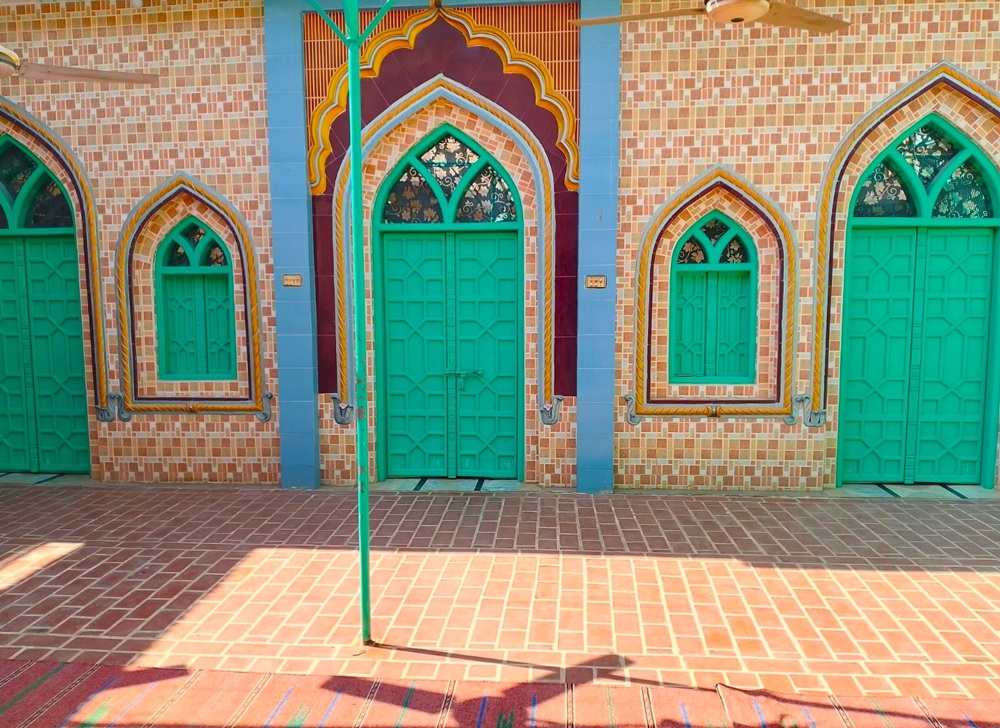
View of Maulana Abdul Karim Chishti Mosque. (Picture credits to Aqeel Masroori)
Throughout his life, Maulana Abdul Karim Chishti remained actively engaged in the political and Islamic movements of Sindh. His dedication was not symbolic but practical; he worked sincerely for reform, unity, and intellectual awakening. His close association with leading scholars such as Maulana Taj Mahmood Amroti and Maulana Ubaidullah Sindhi highlights his connection to broader anti-colonial and reformist currents of his time.
He passed away on March 21, 1964, and was buried in a mosque in Chishti Mohalla in Shikarpur. Molvi Hafiz Ghulam Rasool Chishti first built this mosque. According to Professor Abdul Hayee Morayani (2019:285), the author of Shikarpur Jun Masjidoon Ain Edigah (Mosques and Eidgah of Shikarpur), Molvi Hafiz Ghulam Rasool established a mosque in 1830. It was a small mosque that was renovated from time to time. He died in 1902. Maulana Abdul Karim Chishti restored it as a centre radiant with learning, worship, and spiritual remembrance. He established a hujra (room) and a library adjacent to the mosque. His library contained rare books on different subjects. After his death, the library's collection was lost.
Remembered for his humility, scholarship, and public service, Maulana Chishti left behind a legacy of principled leadership.
The writer is an Associate Professor and Anthropologist at the Pakistan Institute of Development Economics (PIDE), Islamabad. He has authored 18 books on Pakistan's cultural heritage and anthropology. He tweets @kalhorozulfiqar. He may be contacted at zulfi04@hotmail.com
You may also like: