Written by: Rana Kanwal
Posted on: April 03, 2026 |  | 中文
| 中文
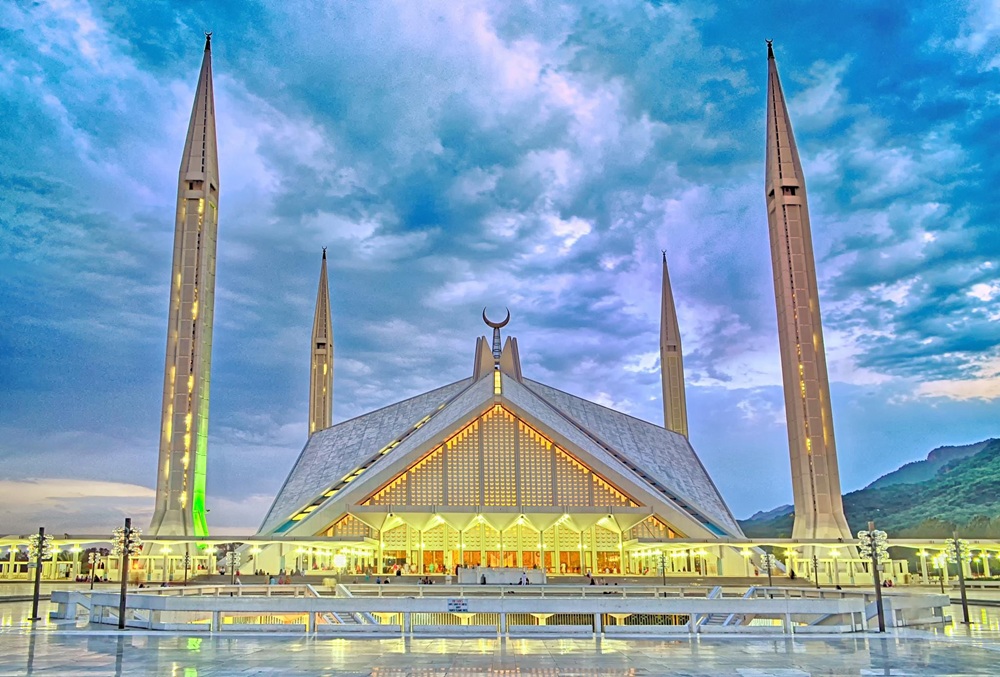
Faisal Mosque, a symbol of modern Islamic architecture.
In the shadow of the Margalla Hills, where stone meets sky in a quiet dialogue, stands a structure that redefined the architectural language of a nation. The Faisal Mosque is not merely a place of worship; it is a statement. A geometric whisper turned monumental. A modernist vision anchored in faith.
When it was completed in 1986, the mosque unsettled traditional expectations. There was no grand dome rising like an imperial crown, no cascading series of Mughal arches echoing the legacy of Lahore or Delhi. Instead, it offered a tent-like silhouette, sharp triangular planes, and soaring minarets that pierced the sky with mathematical precision. For some, it felt radical. For others, revolutionary. Today, it stands as one of the most compelling examples of modern Islamic architecture, a structure that bridges tradition and transformation without apology.
Designed by Turkish architect Vedat Dalokay, the mosque emerged from an international competition initiated and funded by King Faisal of Saudi Arabia. Dalokay’s proposal was unconventional. Inspired by the Bedouin tent, a symbol of simplicity, nomadic spirituality, and communal gathering he replaced the conventional dome with an eight-sided concrete shell structure.
This decision was not an aesthetic rebellion but a philosophical one. The absence of a dome does not diminish sanctity; rather, it redirects attention inward. The mosque’s roof, shaped like a folded desert tent, gestures toward humility and transcendence simultaneously. Its geometry is clean, restrained, and intentional. There is no ornamental excess. The lines are silent, yet eloquent.
The four slender minarets, each rising approximately 90 meters, echo Ottoman influences while maintaining modern minimalism. They frame the central prayer hall with balance and symmetry, functioning not only as architectural markers but as spiritual pointers guiding the gaze upward.
Geometry in Islamic tradition has always carried metaphysical meaning. From intricate mosaics in Andalusia to muqarnas in Persia, patterns symbolized infinity, unity, and divine order. The Faisal Mosque translates this heritage into modern vocabulary. Instead of elaborate tessellations, it employs structural clarity. Instead of decorative density, it embraces spatial purity. Its geometry becomes theology in concrete form.
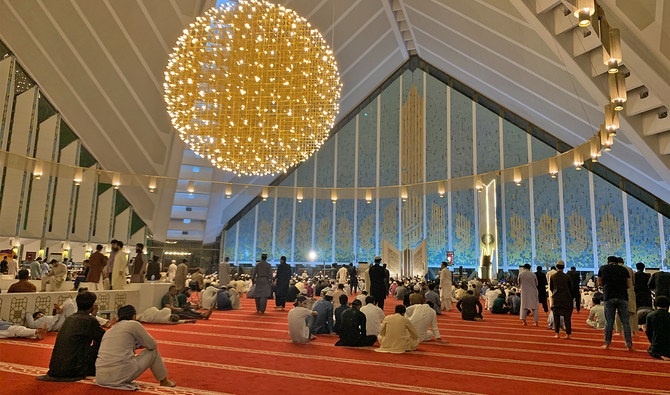
Inside the Faisal Mosque during Ramadan.
Between East and West: A Modern Identity
The architectural conversation surrounding the mosque reflects a broader cultural evolution. Post-independence Pakistan was still defining its visual and ideological identity when plans for the mosque materialized. The capital city of Islamabad itself was conceived as a modern, planned city, orderly, rational, and forward-looking.
In that context, the Faisal Mosque became more than a religious structure; it became a national symbol. It announced that Islamic architecture was not frozen in time. It could evolve, experiment, and reinterpret without losing its spiritual core.
Dalokay’s design was initially controversial. Critics argued that without a dome, it did not “look” like a mosque. Yet this criticism revealed a deeper assumption: that Islamic architecture must replicate historical forms to remain authentic. The Faisal Mosque challenged that notion. It demonstrated that authenticity lies not in imitation but in intention.
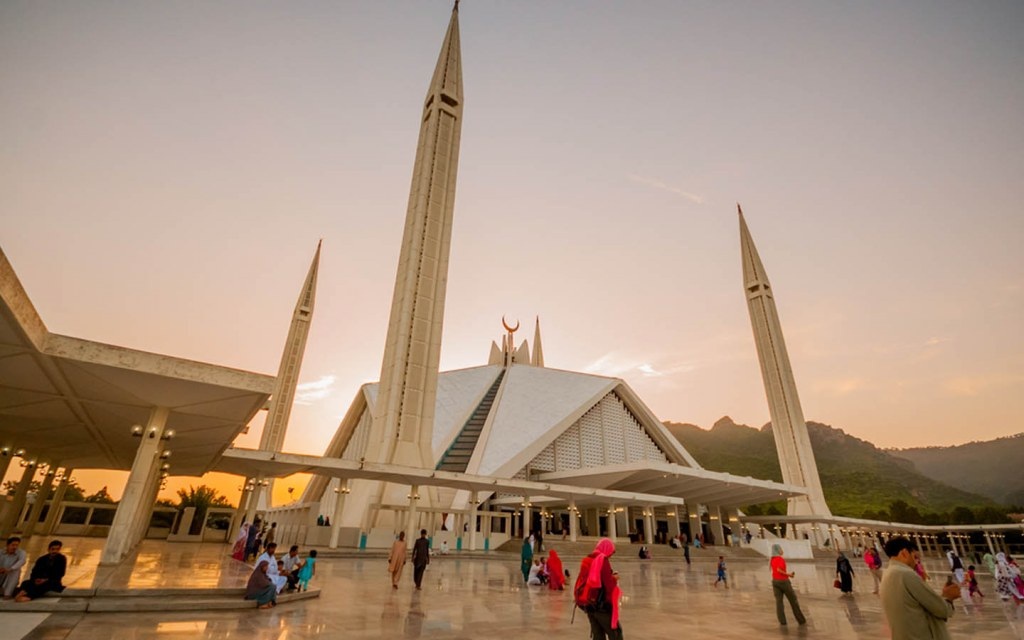
The corridors of Faisal Mosque in Islamabad
Modern Islamic architecture, as embodied here, negotiates between memory and innovation. It respects tradition without being imprisoned by it. It speaks to a globalized world while remaining rooted in faith.
One cannot understand the mosque without acknowledging its setting. Nestled at the foothills of the Margalla range, the structure feels both monumental and organic. The mountains form a natural backdrop that amplifies its sharp geometry. The white marble façade reflects sunlight by day and glows softly under night illumination.
Unlike older urban mosques compressed within dense cityscapes, this mosque breathes. Its vast courtyard accommodates tens of thousands of worshippers, dissolving the boundary between structure and sky. Here, architecture does not compete with nature; it collaborates with it.
This integration reflects a modern awareness of spatial experience. The openness invites contemplation. The horizontality of the courtyard contrasts with the verticality of the minarets, creating a visual rhythm that mirrors spiritual ascent grounded in earthly humility.
Stepping inside, the experience shifts from geometric spectacle to spiritual intimacy. The prayer hall’s interior avoids lavish ornamentation. Calligraphy adorns the walls with restrained elegance, reinforcing the primacy of the Qur’anic word over decorative display.
The mihrab, understated yet commanding, anchors the direction of prayer. Light filters through subtle openings, creating a play of shadow that changes with the movement of the sun. The design encourages stillness. It is architecture as meditation.
In many classical mosques, ornamentation overwhelms the senses, guiding the eye through elaborate visual journeys. Here, the simplicity directs the soul inward. It is a reminder that Islamic architecture, at its essence, is not about spectacle but submission.
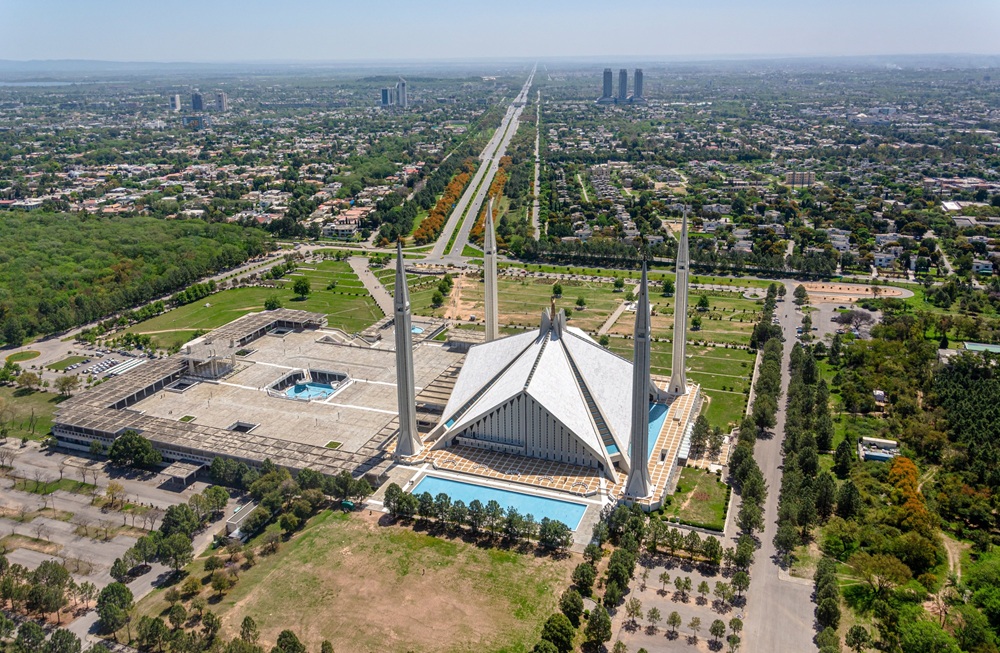
An aerial view of the Faisal Mosque
The Faisal Mosque participates in a broader global dialogue about Islamic modernism. Across the Muslim world, architects have grappled with similar questions: How should sacred spaces respond to contemporary materials and technologies? How can identity be preserved without resisting progress?
From the King Abdullah Mosque in Jordan to the Sheikh Zayed Grand Mosque in Abu Dhabi, varying responses reflect different cultural priorities. The Faisal Mosque’s answer is distinct: abstraction over replication. Structure over embellishment. Geometry over nostalgia.
Its international authorship, a Turkish architect commissioned by a Saudi king for a Pakistani capital, underscores Islam’s transnational character. The mosque embodies a shared spiritual heritage transcending borders. It is local and global at once.
Beyond its physical form, the mosque carries layered symbolism. It stands as a testament to diplomatic ties between Pakistan and Saudi Arabia. It symbolizes generosity, ambition, and faith-driven patronage. It also reflects Pakistan’s aspiration to present itself as a modern Islamic republic progressive yet principled.
For generations of Pakistanis, the mosque is more than architecture. It is memory. Eid prayers under open skies. University students walking across its courtyard at dusk. Tourists photographing its silhouette against a crimson sunset. It has entered the collective imagination as a landmark of belonging.
Its image appears in postcards, documentaries, and national narratives. Yet its deeper story often remains untold: that it redefined what a mosque could look like in the late twentieth century.
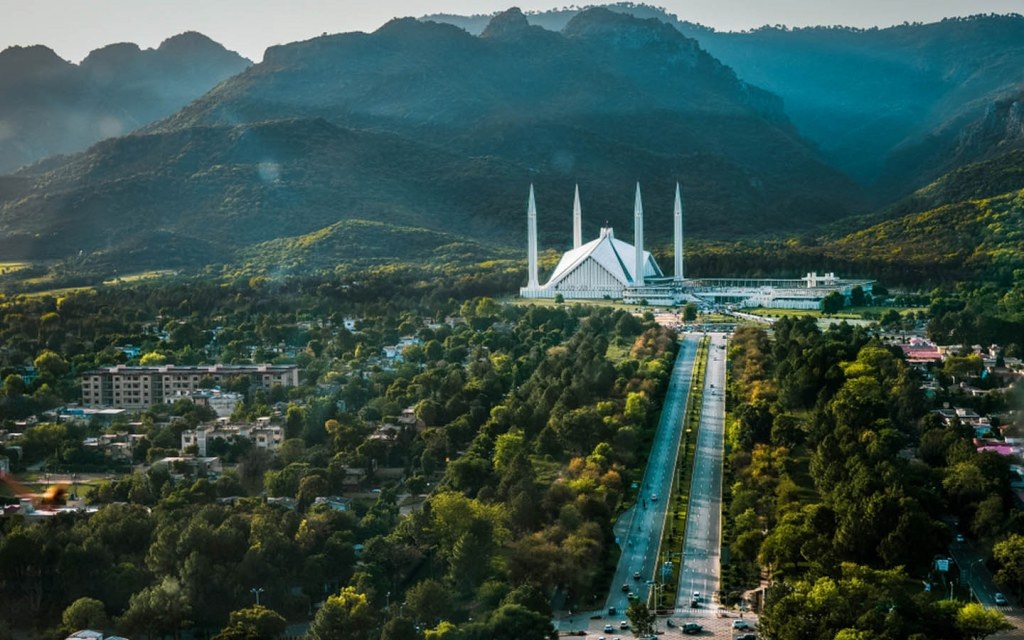
Faisal Mosque in Islamabad with the Margalla Hills in the backdrop.
Islamic architecture historically adapted to local cultures, absorbing Persian vaulting, Byzantine domes, Indian ornamentation. The Faisal Mosque continues this adaptive tradition, proving that modern materials like reinforced concrete and marble can serve sacred purposes without compromising reverence.
The mosque’s design avoids superficial mimicry. Instead of repeating Mughal domes or Ottoman cascades, it extracts the essence of Islamic spatial philosophy: unity, balance, orientation toward the divine. In doing so, it becomes a prototype for modern sacred design.
Its geometry is not decorative but structural. Its symbolism is not imposed but embedded. The building does not shout; it resonates.
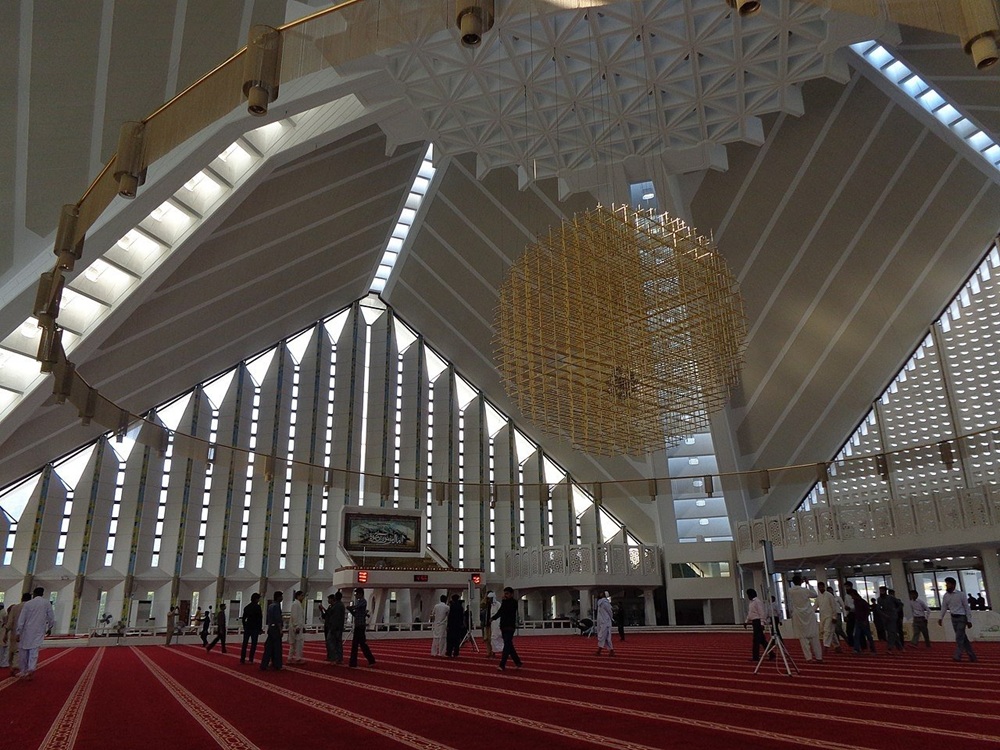
Faisal Mosque's prayer area
The Future of Sacred Modernism
As urban skylines transform and architectural trends shift toward sustainability and digital innovation, sacred architecture faces new challenges. Climate responsiveness, community integration, and technological adaptability are increasingly central to design discourse.
The Faisal Mosque, though conceived decades ago, offers enduring lessons. It teaches that modernity and spirituality are not adversaries. It shows that abstraction can evoke transcendence. It proves that sacred identity need not be visually conservative to remain authentic.
Perhaps its most profound message lies in its restraint. In an age of spectacle-driven architecture, it reminds us that silence can be powerful. Geometry can be poetic. Faith can be expressed through form without excess.
The Faisal Mosque stands not as a relic of the past but as a living conversation. It is a geometry of belief, a monument of quiet confidence. In its clean lines and open courtyards, one finds a dialogue between earth and heaven, tradition and transformation.
Its untold story is not merely about architectural innovation. It is about identity, a nation seeking its voice, an architect daring to reinterpret heritage, a community embracing change without abandoning faith.
Against the Margalla Hills, the mosque remains still. Yet in its stillness lies movement a continuous reimagining of what Islamic architecture can become.
And perhaps that is its greatest triumph: not that it stands tall, but that it invites us to look beyond height toward meaning.
You may also like: