Written by: Shameen Arshad
Posted on: May 15, 2026 |  | 中文
| 中文
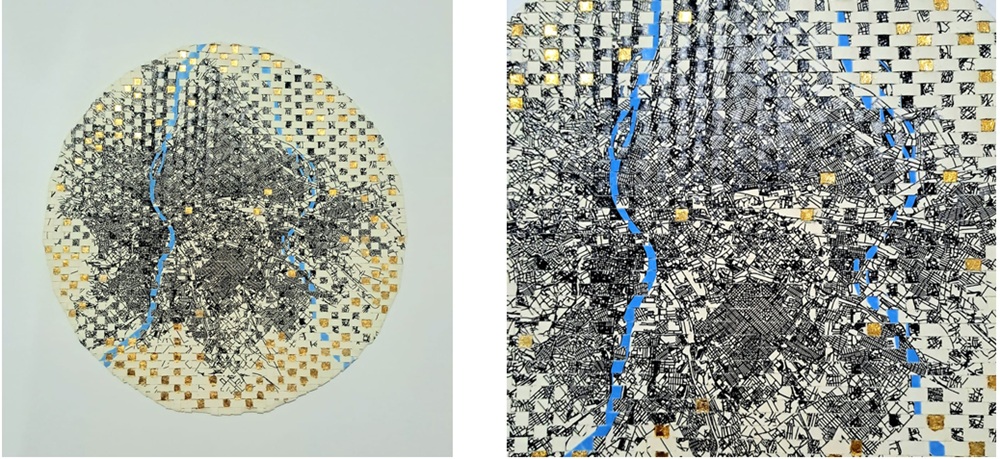
Over and Over IV by Mamoona Riaz
“The Shape of Home”, a group exhibition at Satrang Art Gallery, explores the idea that home is never a fixed construct. Opened to the public on the 5th of May, the exhibition presents three distinct manifestations of “home,” revealing its deeply subjective nature. Featuring works by Wajiha Batool, Farrukh Adnan and Mamoona Riaz, the show demonstrates how differently individuals experience even something as seemingly universal as home. For some, home exists in nature; for others, in community and relationships; and for many, within the concrete structures that shelter them.
Mamoona Riaz’s works immediately captivate viewers through their highly labor-intensive technique. Constructed from delicately woven strips of paper, the pieces draw the viewer inward through their intricate surfaces and meditative quality. The creative process reflects immense care, patience, and emotional investment, hinting at the painstaking effort involved in constructing a home for oneself. The works embody sensitivity and emotional depth not only conceptually, but materially through their complex structures.
Riaz’s practice navigates the realities of urban existence and the “concrete jungle.” The woven surfaces suggest the interconnected systems upon which cities are built, where each fragment supports another like a network of nerves. Works such as Like Clockwork VIII speak to the dry, repetitive, and mechanical nature of human existence within built environments that often overpower human sentimentality. The intricacy of the weave mirrors the complexities hidden within urban spaces and the emotional exhaustion embedded within contemporary city life.
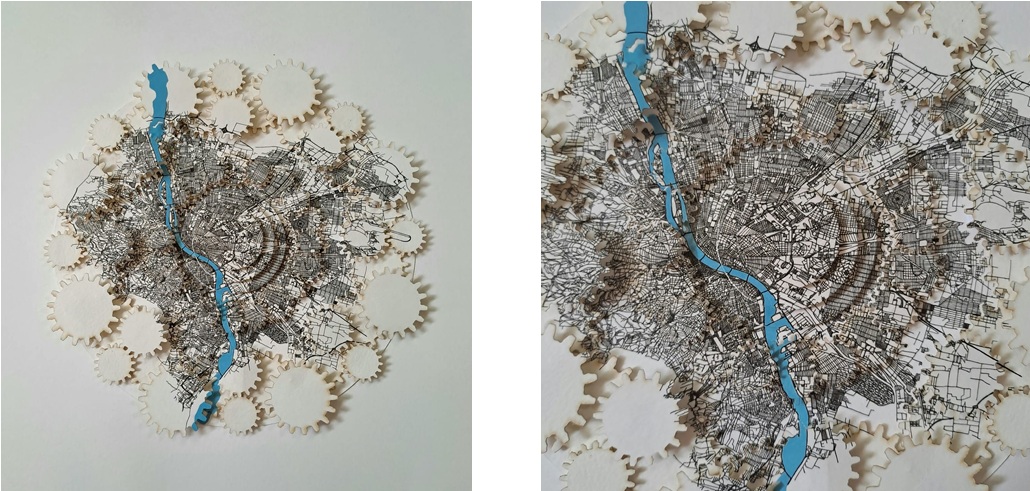
Like Clockwork VIII by Mamoona Riaz
A profound sense of loss and longing permeates Wajiha Batool’s work. Batool’s use of flowers is beyond mere ornamentation- they carry the weight of human sensibilities. They become vessels for the human spirit; embodying grief, vulnerability, hope and resilience.
The works possess a quiet fragility, creating space for an intimate exchange with its audience. Batool’s paintings present a single bloom, rather than a bouquet, compelling the viewer to focus on the individuality of each bloom rather than dissolving it into a collective mass. This isolation transforms the flower from a decorative object into an emotionally charged symbol. Through this, the artist hints at larger ideas individually, singularity or perhaps even autonomy. The simplicity of the imagery becomes haunting, initiating conversations the viewer may not be prepared to confront.
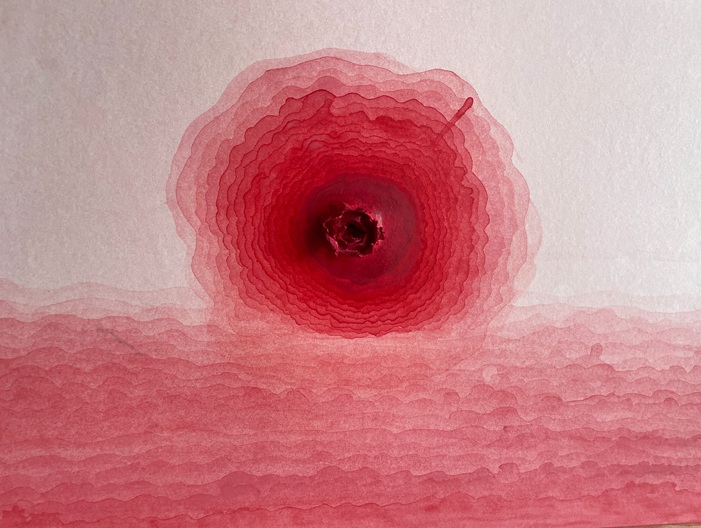
UQDA II by Wajiha Batool
In Uqda II, Batool presents an abstract floral form that appears to unravel before the viewer’s eyes. The flower dissolves into fluid, wave-like currents, suggesting both destruction and renewal, as though nature is returning to itself. The composition feels simultaneously implosive and radiant, raising suspicions as to whether it talks about deformation or revival. Similarly, in Yadish Bakhair, the flowers leave the viewer suspended in uncertainty. One cannot determine whether they are blooming or decaying, creating a tension between life and loss.
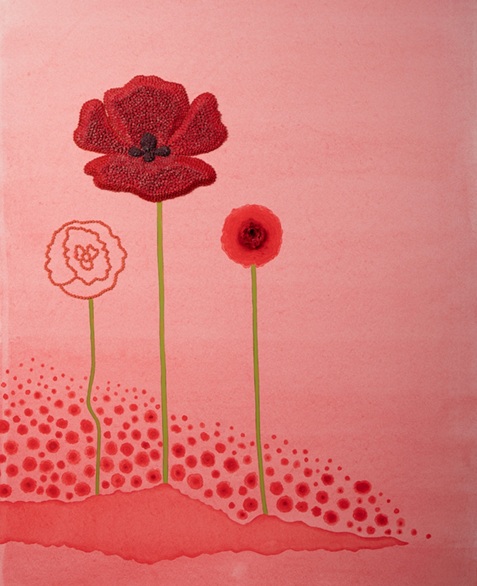
Yadish Bakhair by Wajiha Batool
Where Batool engages with emotion through symbolism, Farrukh Adnan attempts to give form to the intangible energies of nature itself. Through jagged, fluid, aggressive, and fleeting marks, he conveys sensations that resist verbal articulation and must instead be felt. His surfaces appear charged with urgency, as though multiple ideas and observations are being gathered and resolved simultaneously.
Adnan’s works possess an aggressive yet deeply thoughtful energy. The compositions resemble spaces where fragments from eclectic sources collide and coexist. Rather than appearing as polished final products, the works feel like intimate insights into the artist’s internal process of observation and interpretation. The restless linework guides the viewer’s eye across the surface in unpredictable ways, evoking the transient and unstable nature of landscapes, memories and lived experiences.
His works also celebrate eccentricity and divergence. Marks frequently escape boundaries or dotted frameworks, suggesting resistance against imposed structures and conventions. Through this, Adnan reflects on the varied cultural, historical, and social imprints embedded within land itself. The landscapes become metaphors for plurality, contradiction and coexistence.
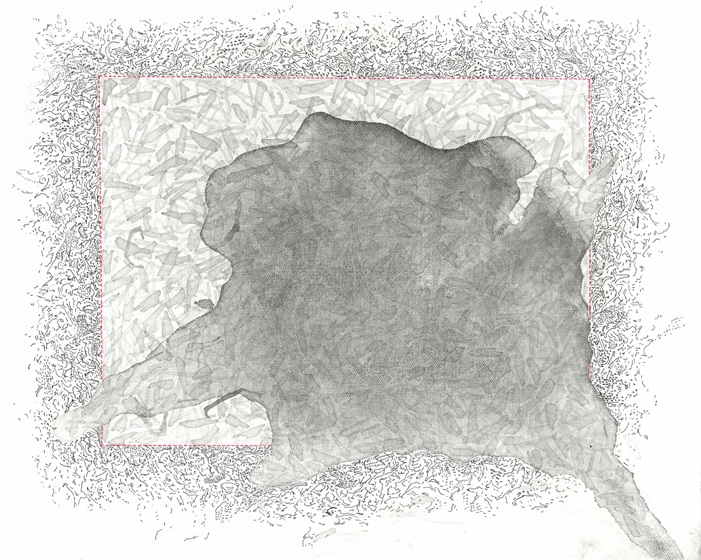
The land keeps its own record by Farrukh Addnan
Despite their frenzied appearance, Adnan’s mark-making feels highly deliberate, constructed through careful observation of space. Through layered imagery, he presents land as an accumulation of time, memory, and human intervention. The compositions possess a strong sense of dynamism, portraying the land as something ever-evolving - whether in rupture or in the process of nature healing and mending itself.
Pieces such as The Land Keeps Its Own Record and River as Archive directly reveal the artist’s concerns with history, geography, and memory. Though rooted in depictions of land, these works ultimately feel less like documentation of physical geography and more like personal reconstructions of space. In this sense, the landscapes become reflections of the artist himself - archives of perception, memory and emotional experience.
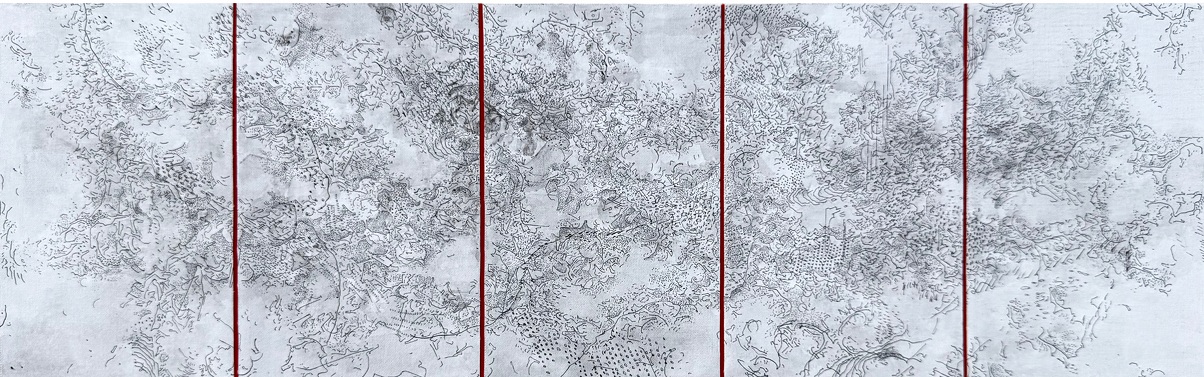
Rivers as Archive by Farrukh Addnan
Together, the three artists present vastly different yet interconnected understandings of home. The Shape of Home succeeds in revealing home not as a singular place, but as an emotional, psychological, and deeply personal condition shaped by memory, geography, labor, grief and belonging.
You may also like: