Written by: Muhammad Asif Nawaz
Posted on: June 25, 2025 |  | 中文
| 中文
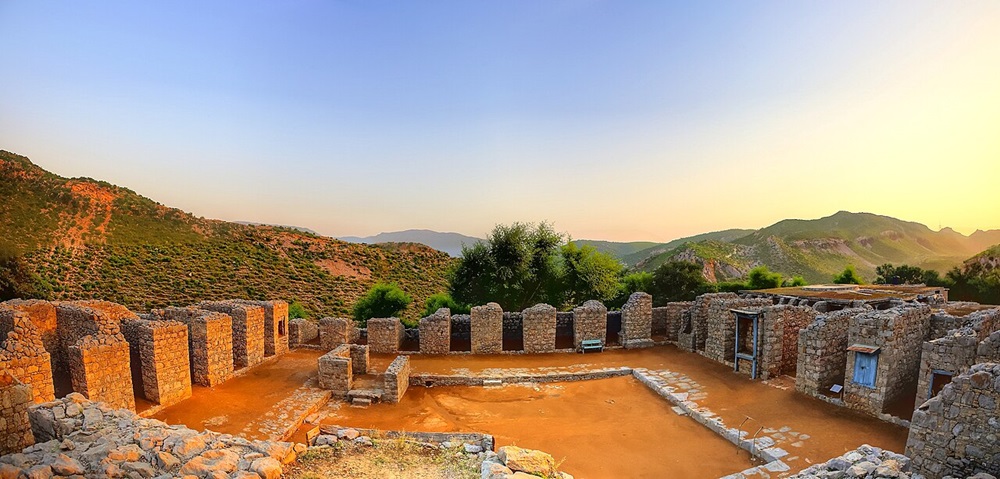
Jaulian Buddhist Monastery in Taxila
The city of Taxila, renowned for its immense resource of Buddhist ruins, was a bustling centre of commerce and culture for most of recorded history. It was built and re-built many times, changing its urban core often. Bhir Mound, the earliest known urban centre of Taxila was founded around 6th century BCE. Boasting of a Hellenistic grid plain, Sirkap was established and made the capital in the 2nd century BCE. Sirkukh was the last of the ancient cities, founded by the Kushan rulers. The Hindu epics of the Rig Veda and Mahabharta allude to it, and ruins from the Early Harrapan period have also been discovered here. When Alexander the Great invaded the Indian sub-continent in 326 BCE, Taxila was noted as a booming city: well-governed and cultured. Its strategic location on important trade routes of the time endowed that importance upon the city. When Asoka the Great ascended the throne, succeeding his father Bindusara as the third emperor of the Mauryan Empire, it spear-headed the transformation of Taxila into a Buddhist centre.
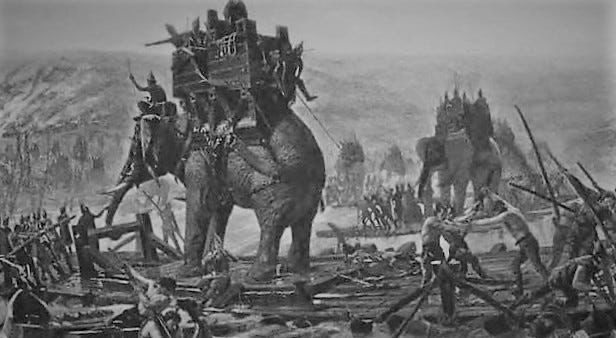
Depiction of Kalinga War
It was in the aftermath of the Kalinga War that Ashoka fully embraced the ideals of Buddhism. Shattered by partaking in the immense violence and bloodshed of wars, Ashoka, riddled with remorse, was inspired by Buddhist ideas of non-violence (ahimsa) and compassion (karuna). While the capital of the Mauryan Empire was Pataliputra (present day Patna, India), Ashoka’s newfound enlightenment permeated the city of Taxila, which was already a part of the empire. Chandragupta Maurya, Ashoka’s grandfather had conquered Taxila, and his advisor Chanakaya is said to have taught at the Taxila University. As an ardent Buddhist, Ashoka disseminated these teachings throughout his Empire, and Taxila, with its intellectual leanings, soon became a prominent centre of Buddhism. Ashoka also invested directly in the erection of Buddhist infrastructure in the city, and the most ardent reminder of that today is the Dharmarajika Stupa.
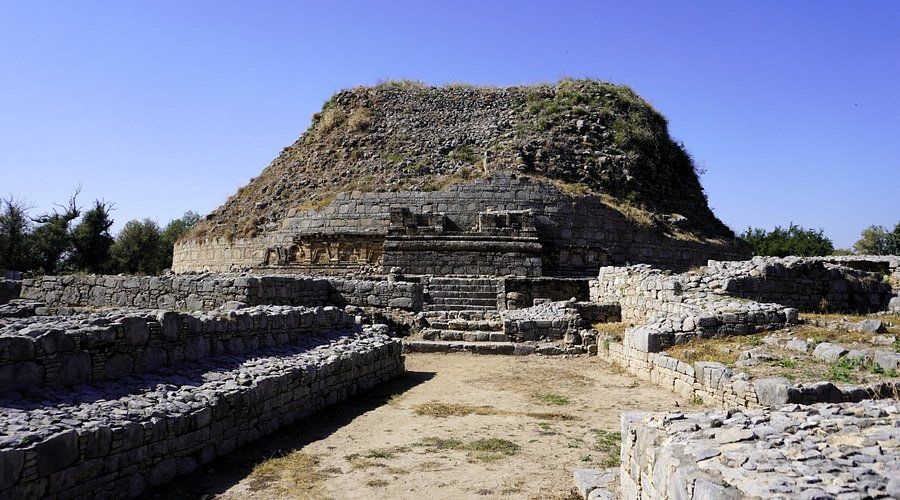
Tracing the Buddha in Pakistan
The Dharmarajika Stupa, also known as the great stupa of Taxila, is located 3 kilometres east of the Taxila Museum. The earliest and largest Buddhist monument of the Taxila region, the stupa is believed to have been built by Ashoka to enshrine relics of the Buddha. The primary reason for the importance of the stupa is the discovery of bone relics, believed to be those of the Buddha himself. Even though it is historically controversial and geographically unlikely, but the site has also been claimed to be the one where the Buddha delivered his initial lecture after achieving enlightenment. The complex comprises the main stupa, peripheral stupas and the monasteries, conforming to the Buddha’s recommendation that monasteries should neither be too far, nor too close to the adjacent towns. Destroyed by the White Huns in the 5th century CE, it was excavated by Sir John Marshall in 1913.
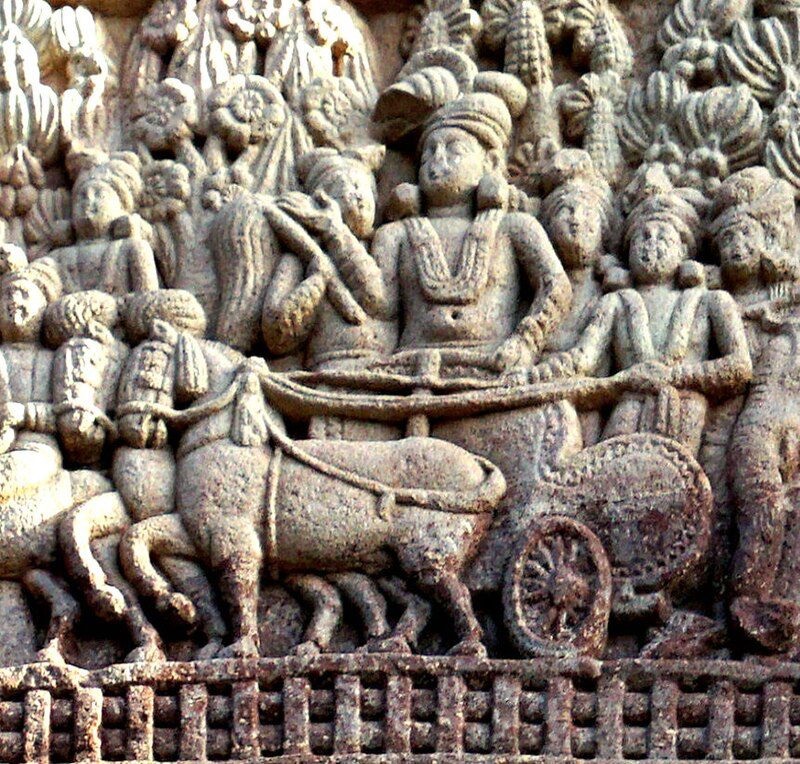
Depiction of Ashoka
It is important to clarify the nature of the University of Taxila before venturing further. It wasn’t a “university” according to the modern connotation of the word. Instead of being a singular institution, it comprised various learning centers, individual teachers with their own education centers. Think Oxford, minus the standardization. The subjects taught at the university included philosophy, medicine, astronomy, law, arts and crafts among others, with Buddhism becoming a later entry to the offering. This decentralized and individualised learning made Taxila University the centre of excellence for learning. Focusing on the Buddhist imprint of this phenomenon, the monasteries were an instrumental component of the whole.
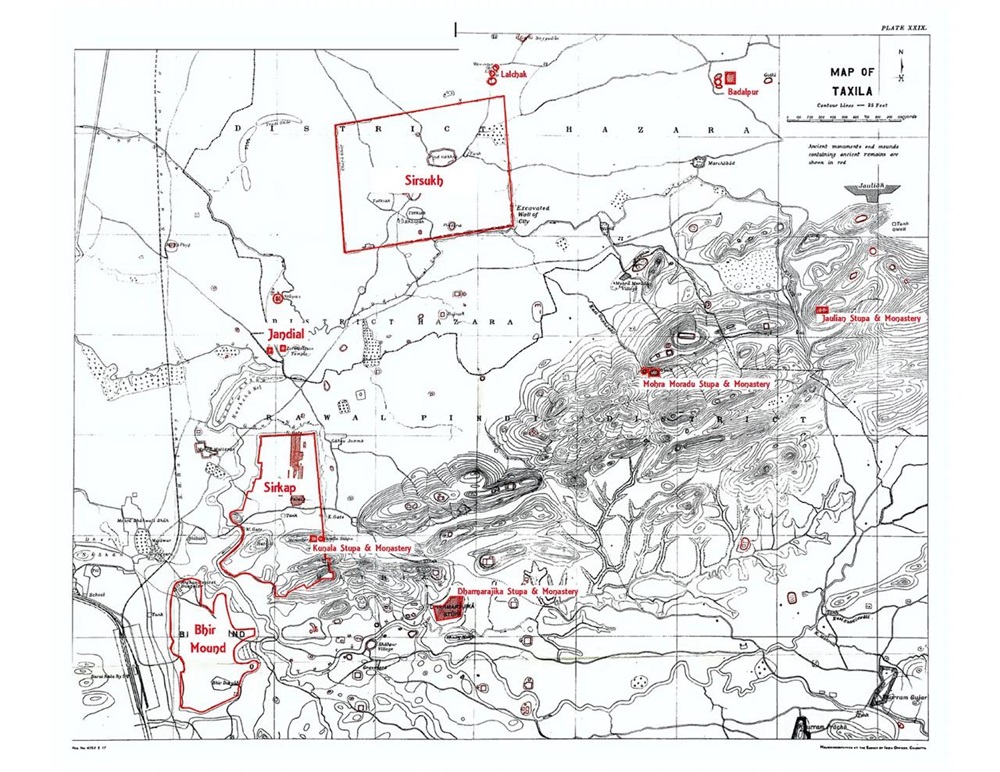
The historical Taxila
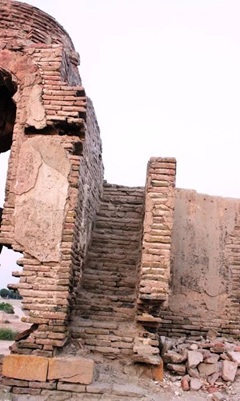
The monastic complex of Jinnan Wali Dheri is among the best-preserved Buddhist monastic complexes around the Taxila Valley. The most remarkable discovery here was the Buddhist mural paintings. The paintings depicted images of Buddha and Bodhisattvas in different states and figures of worshippers, something not yet found in any Buddhist sanctuary of Gandhara. Additionally, the Jaulian Monastery, along with its stupa, is often on the tourist map because of its picturesque hilltop location. It boasts of numerous chapels. Very close to this monastery is the Mohra Moradu Monastery, which consisted of 27 rooms for students and teachers built around a courtyard with pool. When first discovered, both the monastery and stupa here were buried under detritus from the surrounding hills, and the visible 1.5 meter of the ruined stupa had been cut in two by treasure hunters looking for precious relics. At the foot of the hills between these two lies the Pipplan Stupa. The monastery here dates from the late Parthian or early Kushan times, and has an open quadrangle in the centre with cells on all sides.
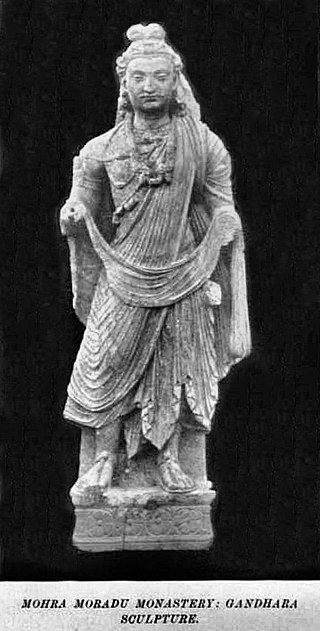
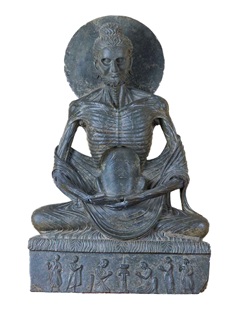
Bodhisattva, a Gandharan sculpture at Mohra Moradu
You may also like:
From the Horn of Africa to Bahria Town: Habesha Café Brings Centuries of Coffee Culture to Rawalpindi
(October 15, 2026)