Written by: Zainab Naseem Sheikh
Posted on: April 08, 2026 |  | 中文
| 中文
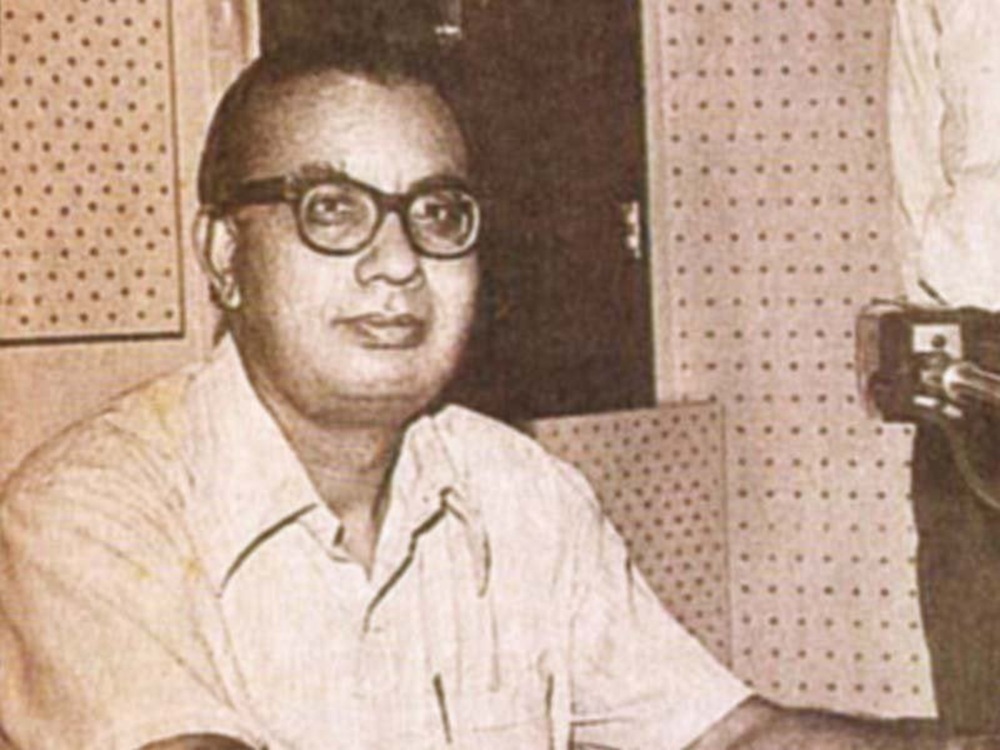
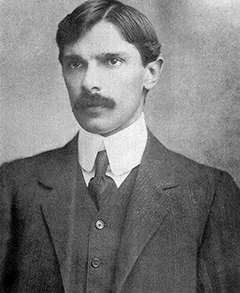
Ibn Insha
Travel writing in Pakistan has never been just about places. At its strongest, it has been about temperament how a writer moves through the world, what they notice, and what they choose to leave unsaid.
For many readers, Pakistani travel writing begins with Ibn-e-Insha. Books like Chaltay Ho To Cheen Ko Chaliye and Aab-e-Gum turned travel into quiet observation rather than grand discovery. He wrote as someone slightly out of place, amused by borders, languages and his own assumptions.
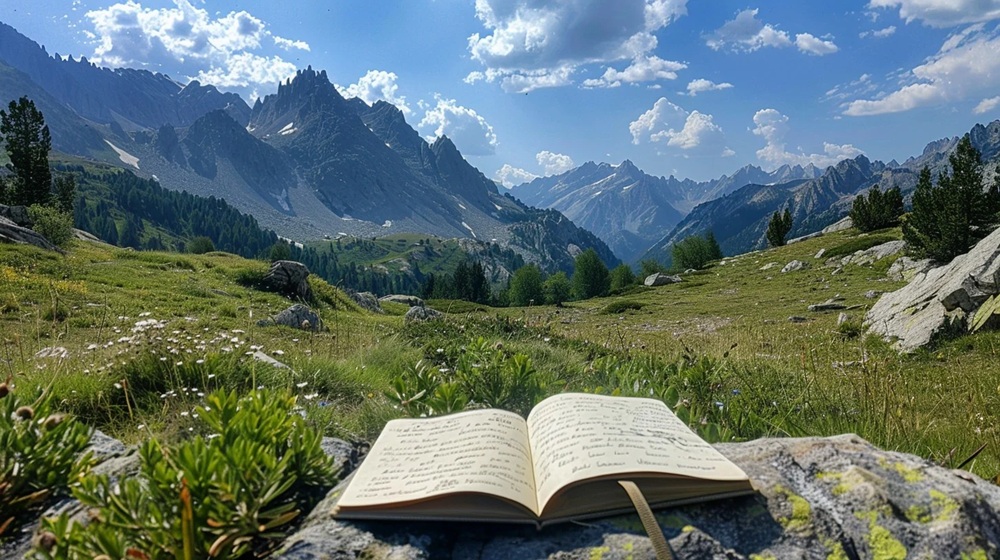
Travel writing has become very popular in the Instagram era.
What gave his writing longevity was its restraint. He paid attention to missed trains, awkward silences, and small misunderstandings. Travel, in his work, was never heroic. It was human.
Mustansar Hussain Tarar expanded this tradition through works such as Niklay Teri Talaash Mein and Udas Logon Ka Sheher. His travelogues are deeply tied to landscape, particularly the mountains and remote regions of Pakistan, yet they remain grounded in feeling rather than spectacle. Together, these writers shaped a style of travel writing that felt personal and reflective rather than instructive. Readers trusted their voices, not because they knew everything, but because they were honest about what they did not.
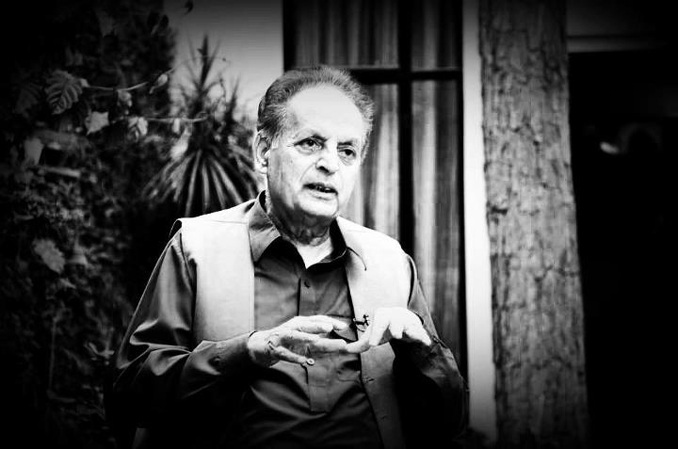
The Vagabond writer Mustansar Hussain Tarar
Before social media, travel writing in Pakistan lived mostly in books and long-form publications. The audience was smaller, but the engagement was deeper. Writers were not expected to recommend hotels or explain routes. A delayed bus or a conversation with a stranger could carry an entire piece. Language played a central role, especially in Urdu travelogues. The pleasure came from how something was said, not just what was described. Travel writing was closer to literature than lifestyle content.
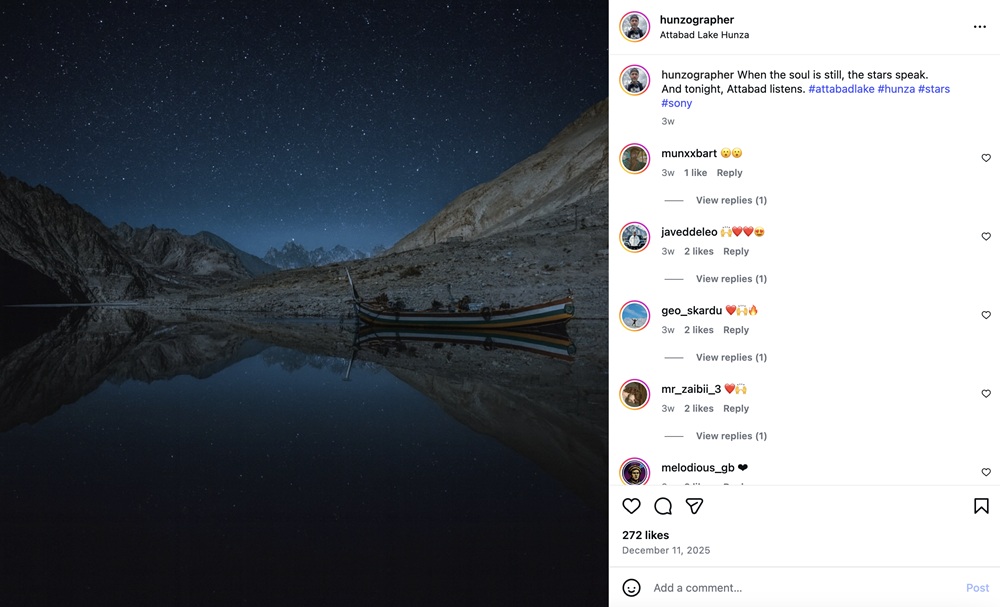
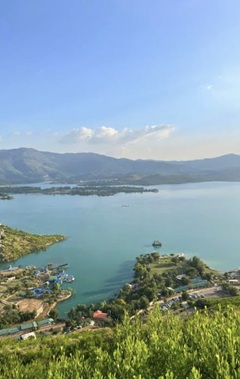
An aesthetic picture of Attabad Lake
The rise of blogs and social platforms changed this landscape quickly. Travel became visual, fast, and widely accessible. Stories were told through photographs, short captions, and location tags.
This shift brought new voices into the space. More people began documenting their journeys, including regions and experiences that had previously received little attention. In that sense, digital travel writing widened the map.
At the same time, the pressure to perform travel became stronger. Writing often took a back seat to visuals. Reflection was replaced by immediacy. Travel became something to be shown rather than processed.
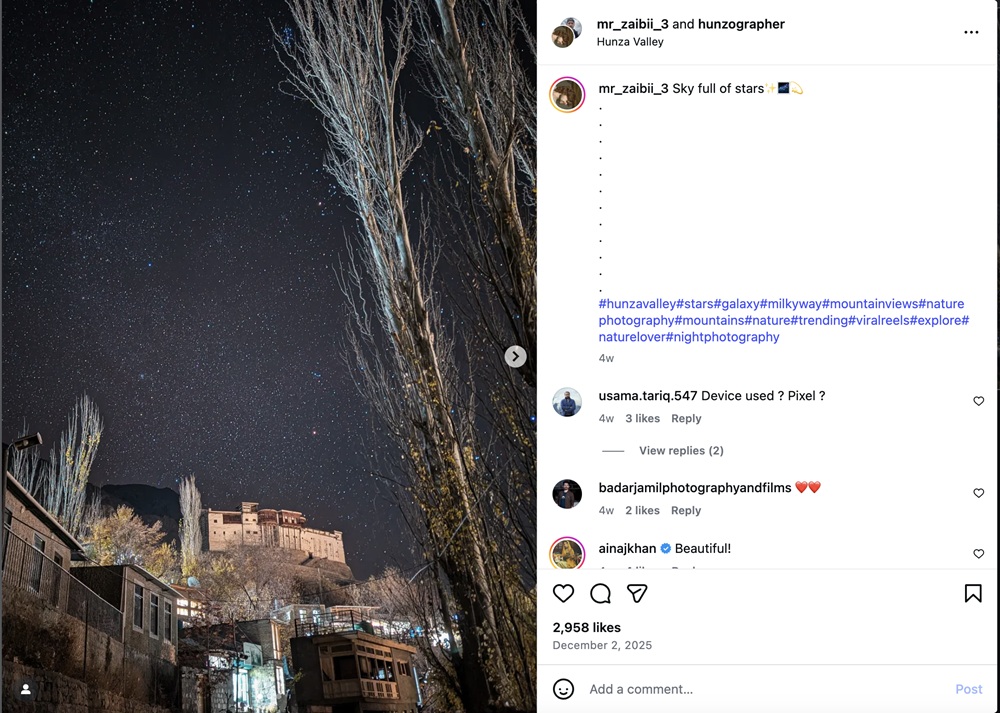
Sky full of stars in Hunza
The difference between earlier travel writing and today’s digital storytelling is not simply about quality. It is about intention. Earlier writers traveled first and wrote later. Today, many write while traveling, with an audience already in mind.
Yet the genre has not disappeared. Some contemporary Pakistani writers are consciously slowing down again. They pair images with longer reflections. They write about discomfort, silence, and uncertainty, not just beauty. This balance feels closest to the original spirit of Pakistani travel writing. It respects modern platforms without abandoning voice.
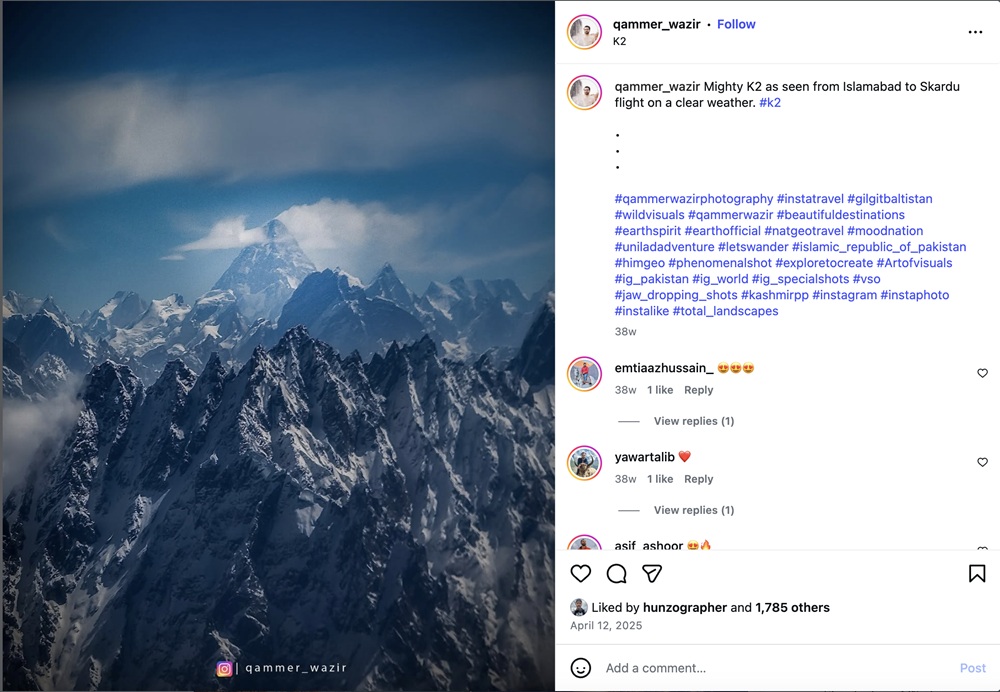
A picture of K2 shared on Insta by a creator
Travel writing shapes how a country sees itself. In Pakistan, where distances are vast and movement is not always easy, writing allows people to imagine places they may never reach. It also records how those places change.
From Ibn-e-Insha’s gentle observations to today’s digital narratives, Pakistani travel writing continues to evolve. The tools are different. The pace is faster. But the heart of the genre remains the same.
Good travel writing is not about proving where you have been. It is about understanding what the journey leaves behind.
You may also like: