Written by: Emma Alam
Posted on: January 6, 2026 |  | 中文
| 中文
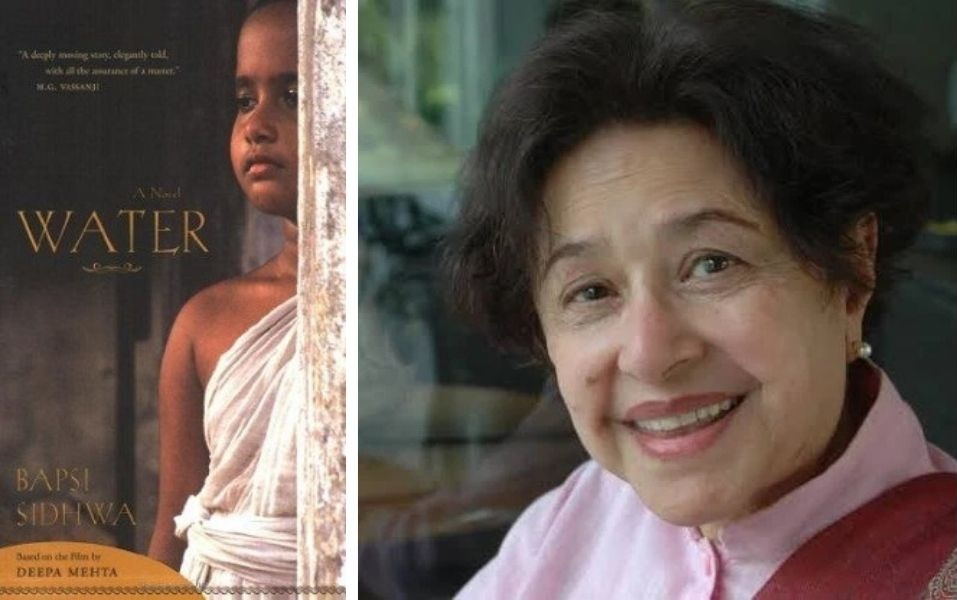
Cover of Bapsi Sidhwa's novel Water and Bapsi Sidhwa
Deepa Mehta’s substantial film Water (2005) might provide inspirational grounds to Bapsi Sidhwa, who wrote the adaptation of screenplay of this film as a novel under the same title that was published in 2006. The novel Water by Bapsi Sidhwa transports us to the era which was marked by the layered theme of sacrifice and liberation offered by the residents of Colonial India.
The inspired story proves as an index and mirror to the socio-political and cultural landscape of Crown-ruled India; unfolding during the twilight of the British rule, precisely in the settings of 1938. This literary work carries the portrayal of a realm, where faith, tradition, and imperial modernity collide at the crossroads of beliefs, caste, and gender.

Poster of Deepa Mehta's film Water
During 1930s imperial India, the native populace was transforming under the influence of British rule; hoisting the patriotic and freedom struggles progressively and steadily. Moreover, the civil society advocates were doubting generational belief structures and conventions.
At a time when India under the British rule was battling for Independence and democratic rights, the marginalized and enslaved segments of the society were dealing with the inhuman rituals and practices. These were the people who had been entangled within profoundly embedded class structures for centuries, especially the women of underprivileged and oppressed Scheduled Castes.
This novel does not portray the glory of imperial rule; rather, it focuses on the in-depth, subjective experience of relegated strata of society such as isolated widows in hermitage or Ashram, who were deprived of respect and individuality on religious grounds.
The repressive social regimes of colonized India are represented by the widow-hermitage (vidwa-ashram), to which the widowed kid Chuyia is sent. Although ostracism of widows is deeply rooted in Hindu society, mainly it is reinforced through monetary greed and patriarchy. Sidhwa unfolds two layers of colonization: the British hegemony in real life and the indigenized customs that manifest the intrinsic annexation of the female embodiments, preferences, and decisions.

Bapsi Sidhwa
Water acts as a convincing critique on inherent imperialism when it highlights the social injustice prevalent in the mindset of the occupied nation. On the literary front, it also narrates the internal monologue and patterns of the ‘stream of consciousness’ of different characters.
Narayan and Shakuntala embody progressive spirit that was gathering pace during 1930s. Narayan, who was well qualified and motivated by Gandhi's philosophy, envisioned a country freed from both British control and the constraints of customs and traditions. Shakuntala is facing an inner conflict between the obligation of her religion and torment imposed by religion. She endures a silent Ideological rebirth.
Fascinatingly, British imperial administrators mostly remain absent in the narrative, existing in a marginal role. “This absence operates as a signifying presence.” While the colonial regime enforces authority, at the same time it shows indifference towards structural inequalities within society. This negligence shows how imperial authority reinforces and allows obsolete traditions to grow under the pretext of honoring Indigenous traditions; provided that they do not cause any harm to the empire.
Sidhwa questions whether the political liberation alone is enough if civil reform is marginalized.

Author Bapsi Sidhwa with poet Parveen Shakir. (Picture credits to Dawn)
The novel summons the readers to browse history not only through sweeping political accounts but through hidden sufferings of day-to-day lives as well. It also prompts us to address how centuries-old traditions can become devices of governance and how self-realization becomes the root cause of change.
In this context, Water functions as a reminder that the aftermath of colonialism and male-dominated systems is not just a matter of history; it rather prevails in the present societies in the form of injustice, gender discrimination, and oppression. Ultimately, making this narrative quite relevant to modern times.
By focusing the discourse on women, children and socially ostracized, Sidhwa not only narrates the story of British-ruled India but also raises ageless questions regarding justice, independence and the societal consequences of collective silence.
You may also like: