Written by: Saram Maqbool
Posted on: March 13, 2026 |  | 中文
| 中文
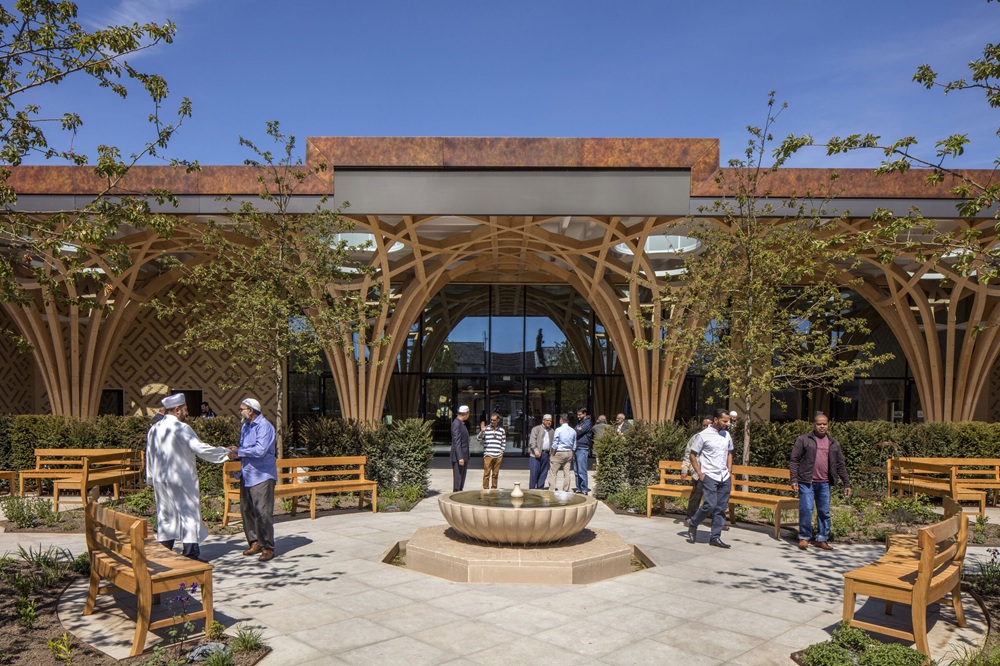
Cambridge Central Mosque
For quite a long time, mosque architecture has been associated with traditional design elements inspired by Ottoman, Persian and Mughal aesthetics. During the twentieth century, most mosques across the Muslim-majority countries leaned heavily on historical revivalism. The use of Ottoman domes, Mughal arches and Persian tilework was synonymous with mosque design. In Pakistan, this often led to domed silhouettes and decorative facades that paid homage to Lahore’s Mughal heritage. Today, however, architects are looking at mosques from a different angle. The overall design language for these religious structures is changing and asking questions that haven’t been asked before. What makes a mosque feel spiritual? What practical reason is there to make large domes in today’s technological era? Do we need a traditional minaret even today? Does a mosque feel spiritual due to these elements, or do intangible properties play a larger part, like the way light enters and the proportions make you feel humble?
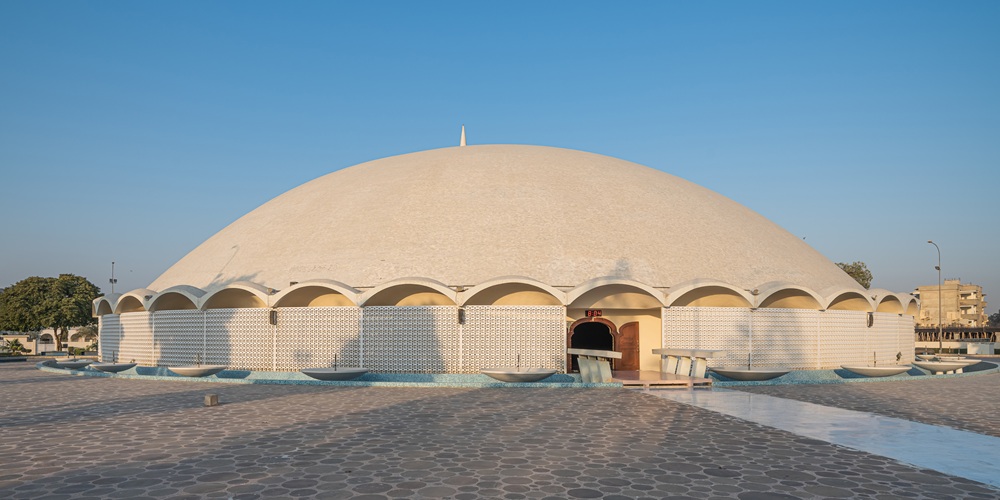
Masjid-E-Tooba in Karachi
Pakistan offers an early precedent for this departure in the Faisal Mosque. When it was completed in 1986, its tent-like geometry disrupted expectations of what a national mosque should look like. Instead of a central dome, architect Vedat Dalokay conceived a triangular, folded structure inspired by Bedouin tents. The four slender minarets referenced tradition, yet the overall composition felt unmistakably modern. While initially controversial, the mosque demonstrated that religious symbolism could be abstracted rather than imitated.
Internationally, similar questions have shaped recent mosque design. The Sancaklar Mosque by Emre Arolat rejects monumentalism entirely. Embedded into the landscape, its exterior appears almost anonymous, a low stone structure that merges with the earth. Inside, however, a dramatic play of filtered light and textured walls creates a contemplative atmosphere. Spatial depth and shadow are used to convey the sacred here.
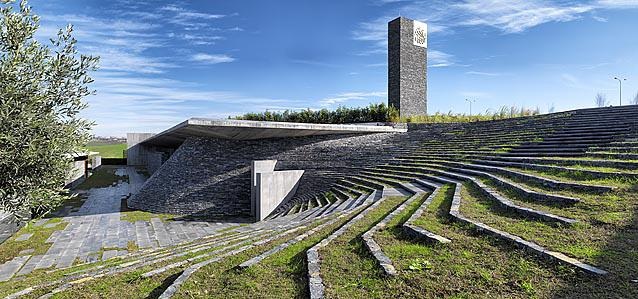
Sancaklar Mosque by Emre Arolat
Pakistani architects are increasingly engaging with this global shift. In urban centers such as Lahore and Karachi, smaller community mosques are being designed with minimalist sensibilities. Instead of ornate plaster and imported marble, exposed brick and concrete dominate. These materials are not only economical but deeply rooted in regional building traditions. Brick, used for centuries across the Indus region, carries climatic intelligence as it breathes, insulates, and ages gracefully. When arranged in subtle patterns or perforated screens, it filters light in ways reminiscent of historic jali screens without copying them directly. The result is an architecture that feels contemporary yet anchored in place.
It’s important to note that minimalism in mosque architecture reorients symbolism toward elemental experiences rather than just removing traditional elements. Projects such as the Cambridge Central Mosque showcase how abstraction can heighten spiritual experiences. Designed by Marks Barfield Architects, the mosque replaces conventional columns with tree-like timber structures that branch toward the ceiling. The gesture references both Islamic geometry and the image of a garden, a powerful Qur’anic symbol, without resorting to historical mimicry. Natural light filters down through skylights, animating the prayer hall with a quiet dynamism. Sustainability is embedded in the design, from natural ventilation to responsibly sourced wood, signaling that contemporary spirituality must also address ecological responsibility.
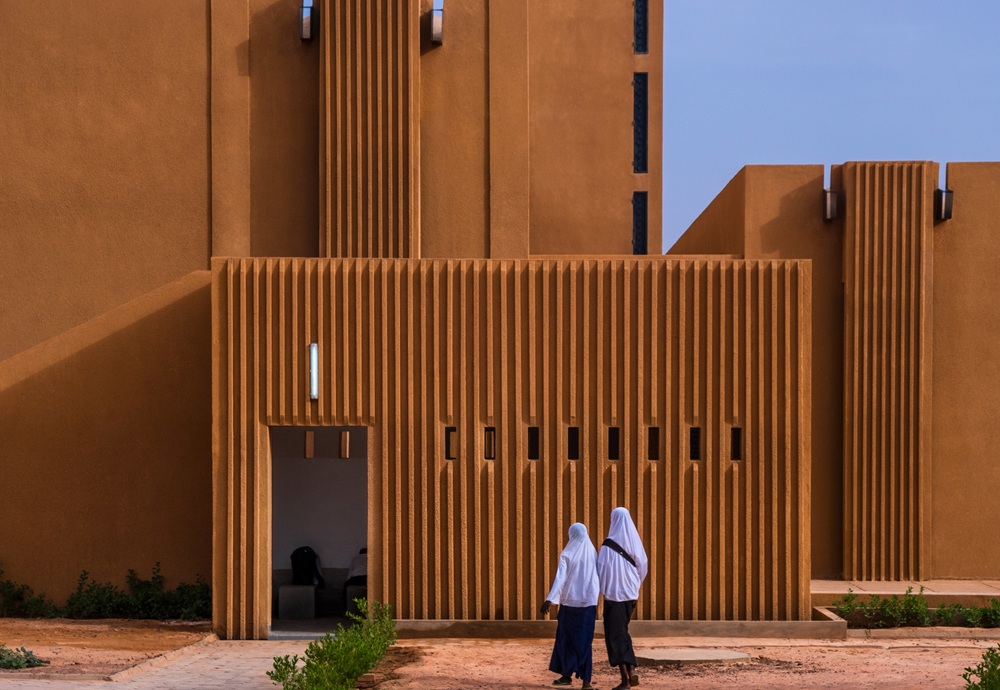
Dandaji Mosque in Niger
Functionality has also become central to mosque design. Contemporary mosques increasingly incorporate classrooms, libraries, community halls, and women’s prayer spaces designed with equal dignity. Internationally, the Cambridge Central Mosque exemplifies this multi-functionality, serving not only as a place of worship but as a cultural and educational hub. In Pakistan’s rapidly urbanizing neighborhoods, mosques often fill gaps in civic infrastructure. Architects are responding by designing flexible interiors that can host lectures, social gatherings, and community initiatives. This evolution reflects broader cultural currents. Muslim communities worldwide are navigating questions of identity in pluralistic societies. Architecture becomes a visible expression of how tradition and modernity coexist. In Western contexts, minimalist mosque designs often seek to harmonize with the surrounding urban fabric while maintaining a distinct spiritual character.
Importantly, contemporary mosque architecture does not reject history. Instead, it distills it. The geometric discipline of Islamic art, the climatic intelligence of courtyard houses, and the communal ethos of traditional mosques remain foundational. What has changed is the method of expression. Instead of ornate replication, architects are embracing abstraction, material honesty, and environmental responsiveness. This aligns Pakistan with a global architectural discourse that values restraint and sustainability over spectacle.
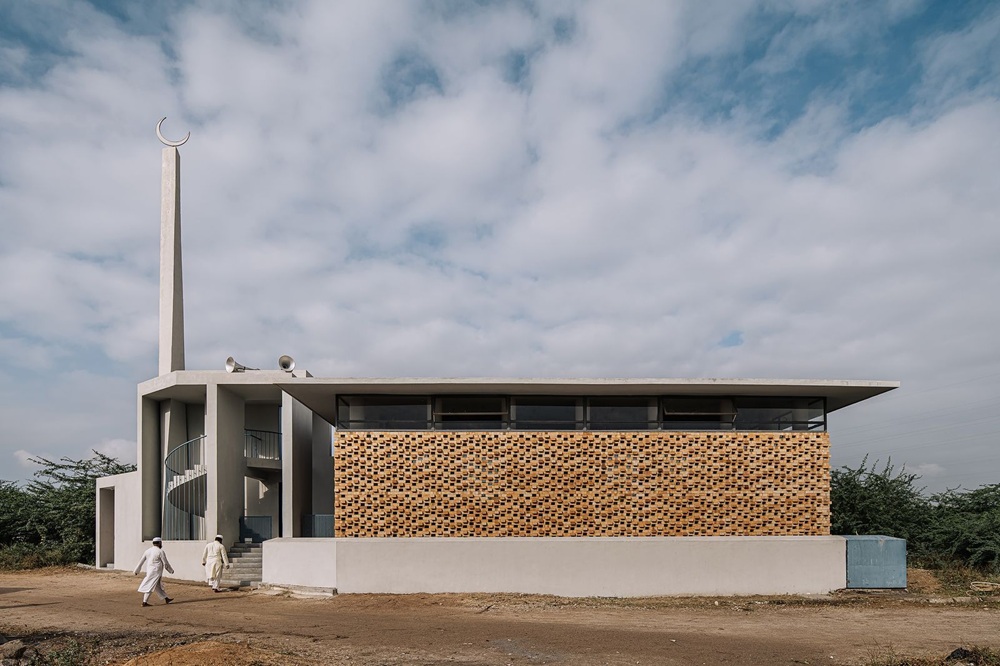
Masjid-E-Zubaida in India
The future of mosque architecture in Pakistan will likely continue to draw from both local and international influences. As architects engage with digital tools, environmental data, and evolving community needs, the mosque may become an even more experimental typology. Yet the guiding principle remains consistently focused on creating sacred spaces that are noy defined solely by form, but increasingly by atmosphere, intention, and collective experiences. In this convergence of global trends and local sensibilities, contemporary mosque architecture reveals its most compelling quality. It demonstrates that faith and modernity are not opposing forces. Through minimalism, local material use, and a nuanced balance between symbolism and function, new mosques in Pakistan, and around the world, are redefining what it means to build for the sacred in the present age.
You may also like: